
Well, the promised snow didn’t arrive. Instead, sleet and yet more rain. So I consoled myself with editing some more images from our wonderful trips in August and October to the Channel Island of Jersey.


Might have to go back again this year…

Well, the promised snow didn’t arrive. Instead, sleet and yet more rain. So I consoled myself with editing some more images from our wonderful trips in August and October to the Channel Island of Jersey.
Might have to go back again this year…
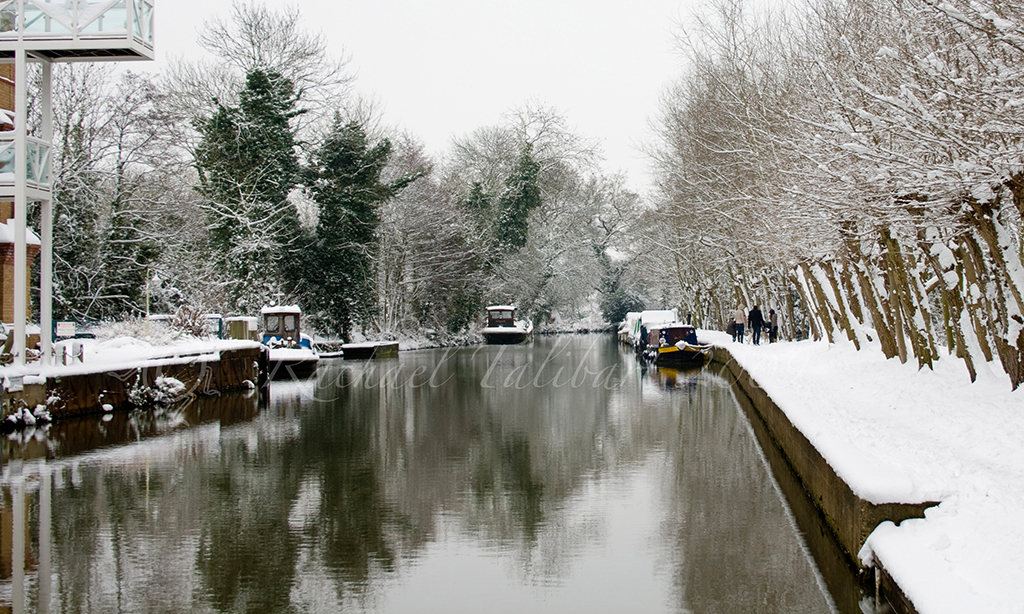
Winter on the Wey Navigation
Snow is forecast. We wait with bated breath. Services will grind to a halt, schools will close and we will make our annual pilgrimage to worship the fluffy white stuff before it melts.
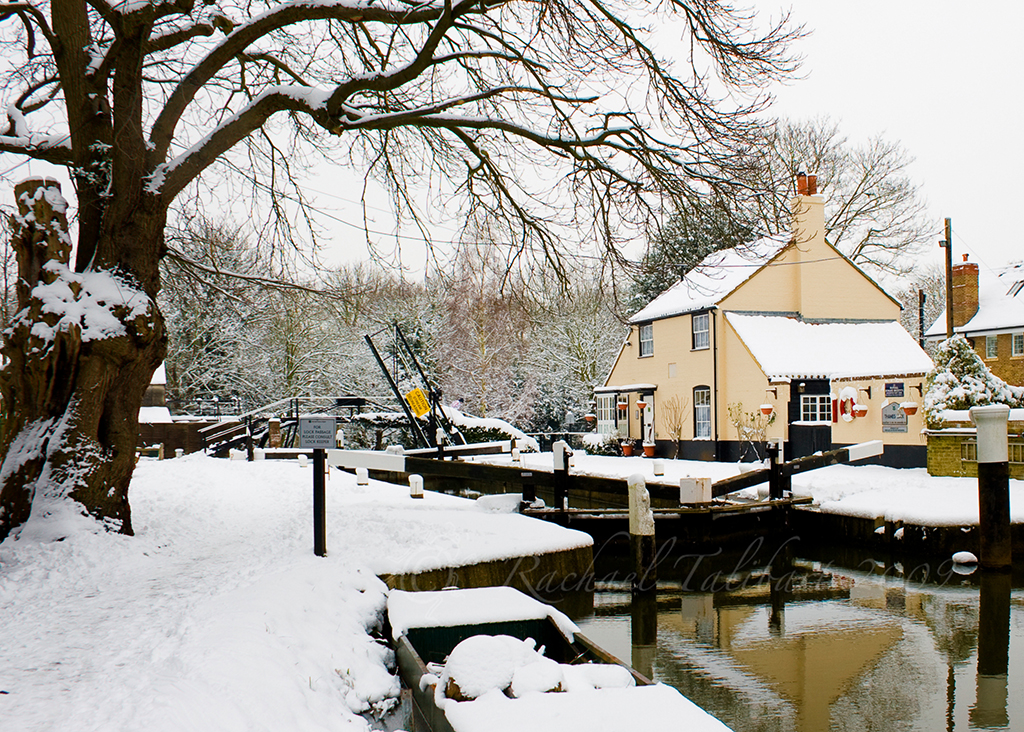
Thames Lock, Weybridge
“I love snow for the same reason I love Christmas: It brings people together while time stands still. Cozy couples lazily meandered the streets and children trudged sleds and chased snowballs. No one seemed to be in a rush to experience anything other than the glory of the day, with each other, whenever and however it happened” ― Rachel Cohn, Dash & Lily’s Book of Dares

The cityscape I shared earlier this week was taken last Saturday. Afterwards, we popped over to Leicester Square to see The Life of Pi at the Empire. I really liked the lights in the square this year.

Leicester Square lights
As it was a dry evening (and there haven’t been too many of those this winter), we walked back to Waterloo.

Charing Cross highwalk
Of course, I had to snap a few shots as we walked.
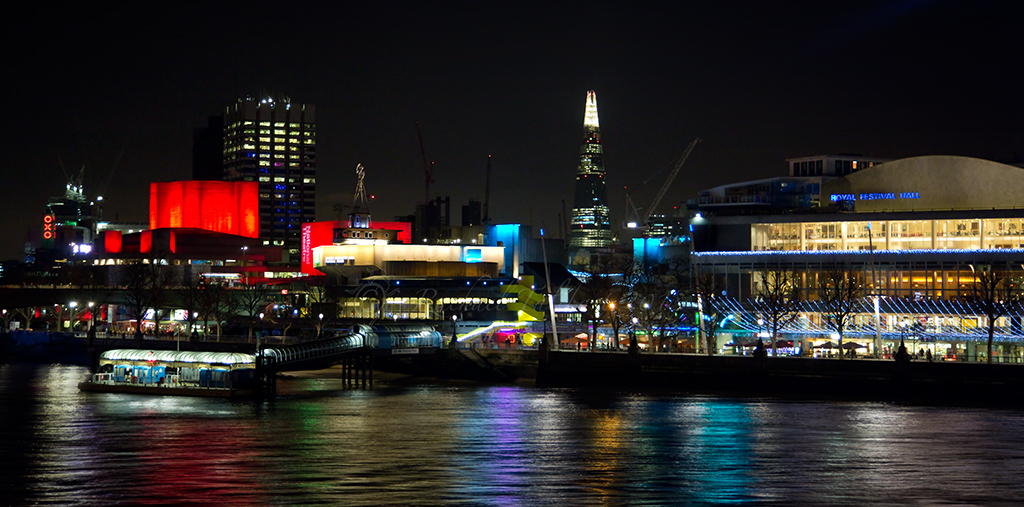
South Bank
I do like the South Bank and its devotion to the Arts. There’s always something to see or do, much of it free. A big playground for young and old, even if you haven’t got tickets for a play, concert or film.
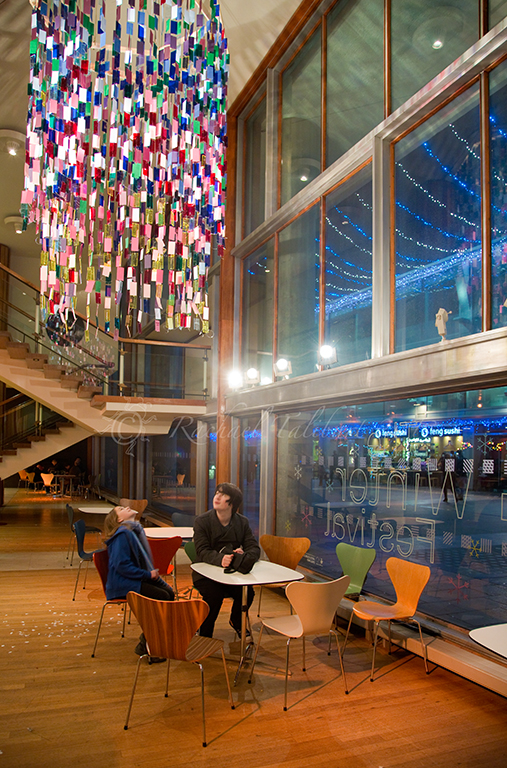
Royal Festival Hall foyer
The Royal Festival Hall foyer was cheerful and bright.
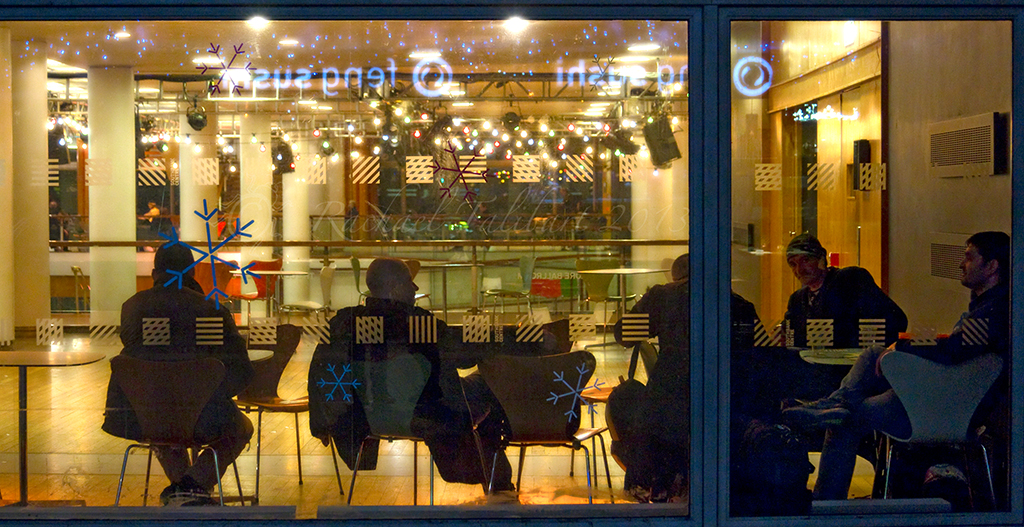
Relaxing after a long day’s work
The lights outside were pretty.
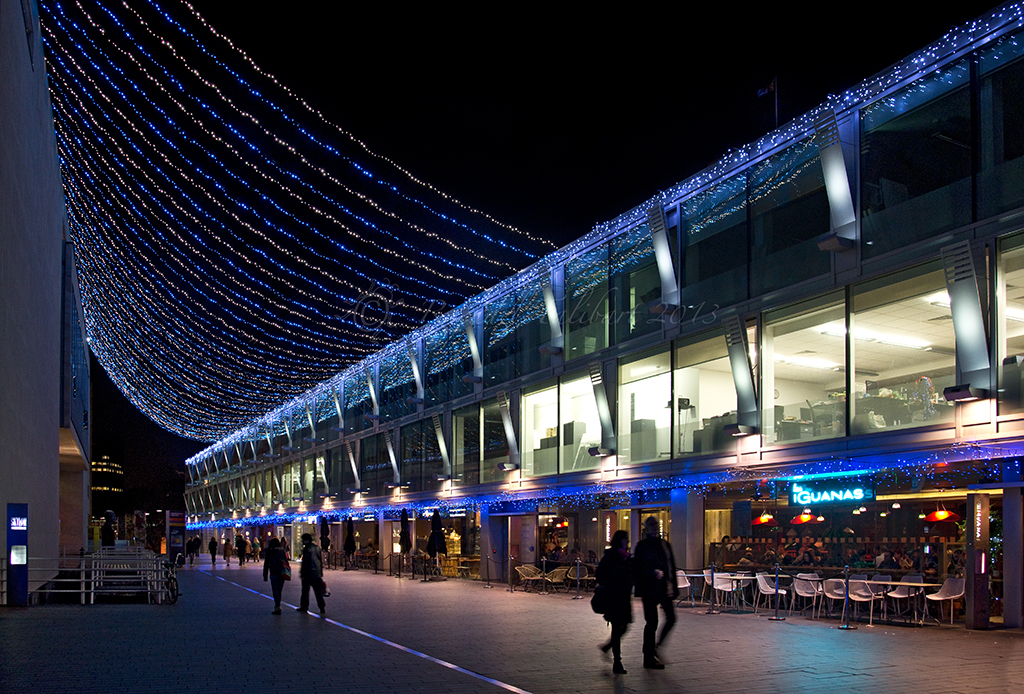
South Bank Winter Festival lights
We wished we’d managed to come up during the Winter Festival and vowed to make it a date for next year.
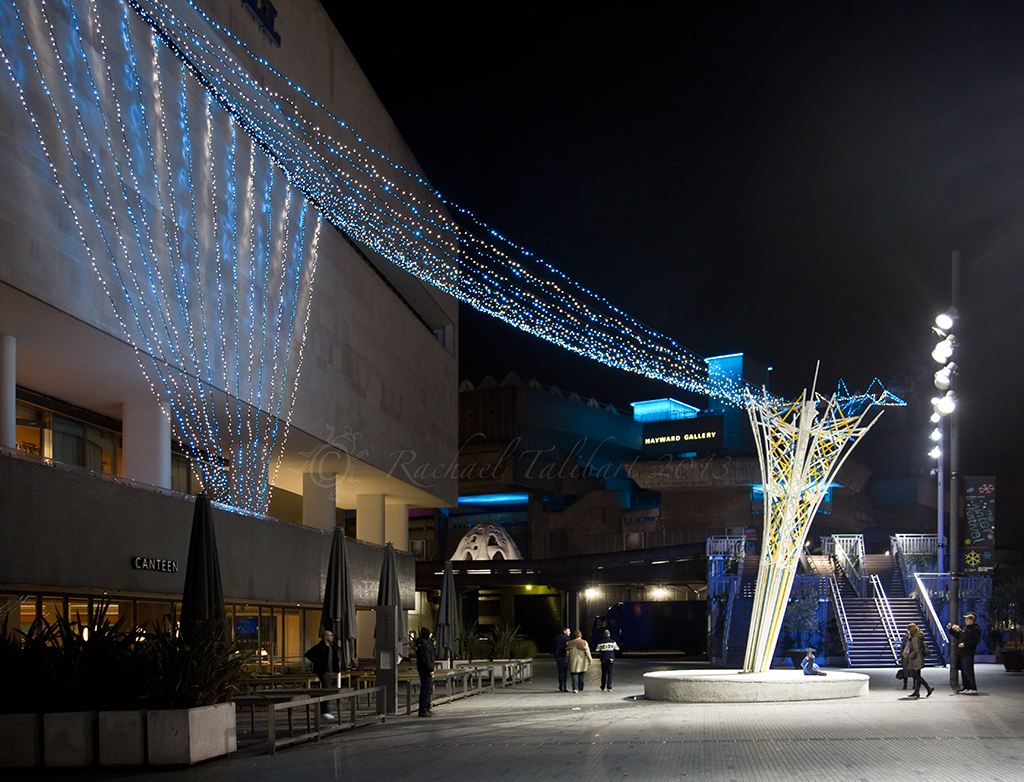
Can you see the igloo?
I love walking in London at night.
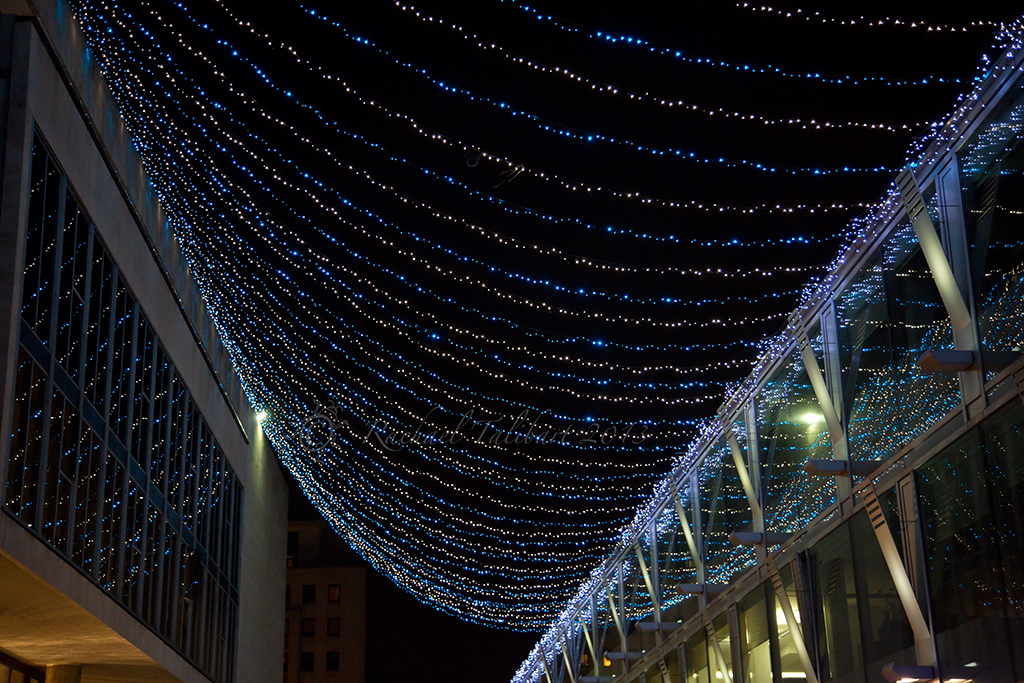
Winter lights
As promised, here is my review of the Sony NEX-7 I hired last week from the good folk at hireacamera.com. I am not going to try to replicate the thorough technical reviews you can find on-line. The experts can do a far better job. However, I will share my experiences of using the camera and maybe that will be useful to anyone thinking of buying a high end compact system camera. For high-end this little camera certainly is; with its 18-55mm kit lens, it will set you back well over £800.

This camera is aimed at enthusiast or professional photographers who want a lighter second camera but still want the flexibility of interchangeable lenses and high image quality. This is exactly what I am looking for but at that price, I want to make the best choice, hence the hire. I tested the camera in bright daylight in Dartmoor National Park and at night in the town of Dartmouth.

The camera is so light I hardly noticed it despite a long day hike on Dartmoor on New Year’s Day. I shot mostly in RAW, and the camera produced some great results, sharp, punchy images with good dynamic range. The electronic viewfinder works reasonably well so that you can still shoot in bright light that would make using the LCD screen difficult. The latter is, by the way, excellent. I found that the two dials at the back of the top plate were too touchy, easy to manipulate by mistake so you have to be very careful to check that you haven’t accidentally dialled in two stops of exposure compensation, a potentially disastrous mistake if not noticed.

The Sony NEX-7 packs a whopping 24 megapixels onto its APS-C size sensor. Considering this, noise control is reasonable. Not as good as my old 5Dii and not even in the same league as my mark III. But then, that’s not really a fair comparison. Images are very useable up to ISO 800, and some even at ISO1600 but not really beyond. I am a terrible pixel peeper (and there are lots of pixels to peep at) and at ISO 400, I found I wanted to apply some noise reduction. The noise reduction the camera applies to jpegs works reasonably well but there is a problem with it. It does very strange things to grass, as in the detail below from a jpeg taken at ISO 400.
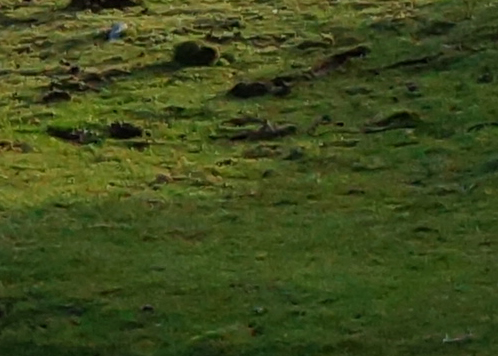
And to faces (the image below at ISO 800).

But the noise reduction in Adobe Camera Raw does a better job. Yet another reason to shoot RAW.
Although the camera does offer a number of automatic and creative modes for less experienced photographers, they are fiddly to use as the menu is far from intuitive. The menu system is perhaps the most frustrating thing about this powerful little camera. You can find yourself compromising on the type of image you shoot simply because it’s too much trouble to fight your way through the options to get to what you want. Using my 5DIII again on our return was an absolute breeze by comparison. Having said that, I did try a few of the creative modes. In particular, the in-camera HDR did a reasonable job with this high contrast scene.

I find the colours a little too vibrant but then I did select the vibrant option in the menu so that’s fair enough. On the whole, I found the creative modes were fun, but not for serious shooting. You can achieve the same effects only better in post processing. But life doesn’t always allow an opportunity to start getting the tripod out and bracketing exposures. If you are trying to squeeze your photography into odd moments on a family trip, setting the camera to HDR or whatever mode suits the occasion might be a good idea.
When I go out for dinner in the evening on holiday, I do not want to take my DSLR and tripod with me. But I usually see something I want to photograph. This is where the Sony NEX-7 really came into its own. With lens attached it is not really pocket sized but it is small bag sized. And it coped very well with my demands during a pre dinner stroll through Dartmouth.

Not too bad hand held at f.4.5, 1/8 and ISO 800.
I even gave it the difficult challenge of a shop window display at ISO1600.

With no grass or skin in sight, the in camera noise reduction did a great job with no serious noise issues even when I adjusted the underexposure of the shadow areas.

Popped onto a handy wall and used at ISO 100, the camera did an excellent job. In the next images, detail is retained from corner to corner, colours on white balance tungsten setting are good, and there is no visible noise, even after adding a considerable amount of fill light in ACR.

And look how close you can crop and still have loads of crisp detail.
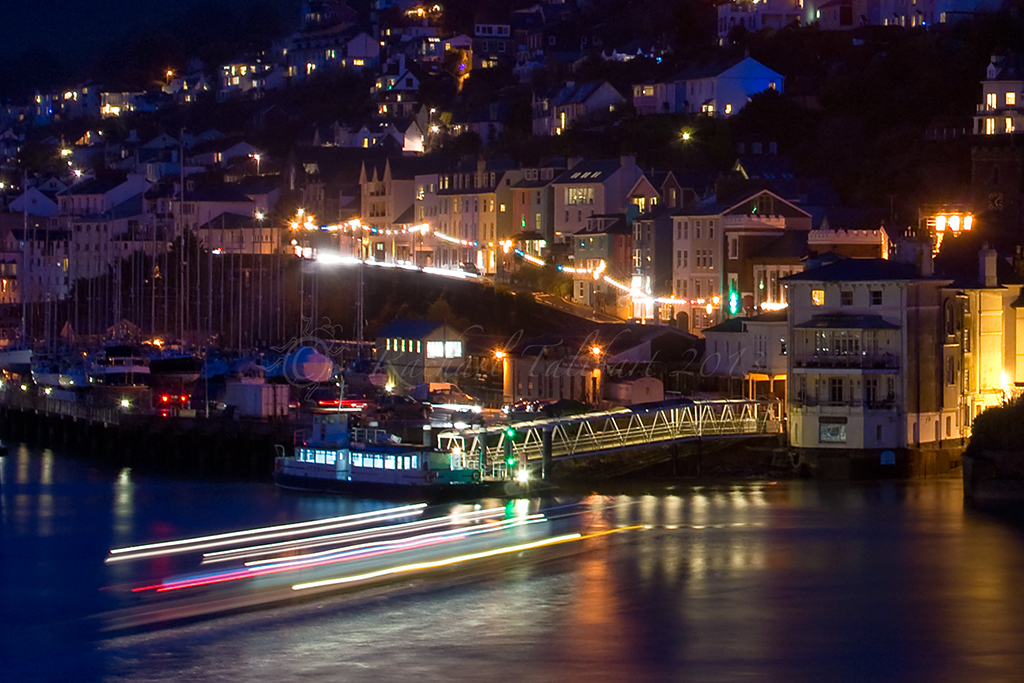
And that is the beauty of this little camera – you can pop it onto ledges, windowsills, car dashboards, and into day bags that simply would not accommodate an enthusiast level DSLR and lens. Is image quality as good as my Canon 5Diii? No, not even close. But it is better than my old Canon 400D and, as one might expect, a whole lot better than my iPhone 4.

I have one more camera to test, but the Sony NEX-7 is definitely a contender.

Still playing around with the long exposures I took while travelling last week, this time I layered several exposures to create more impact.


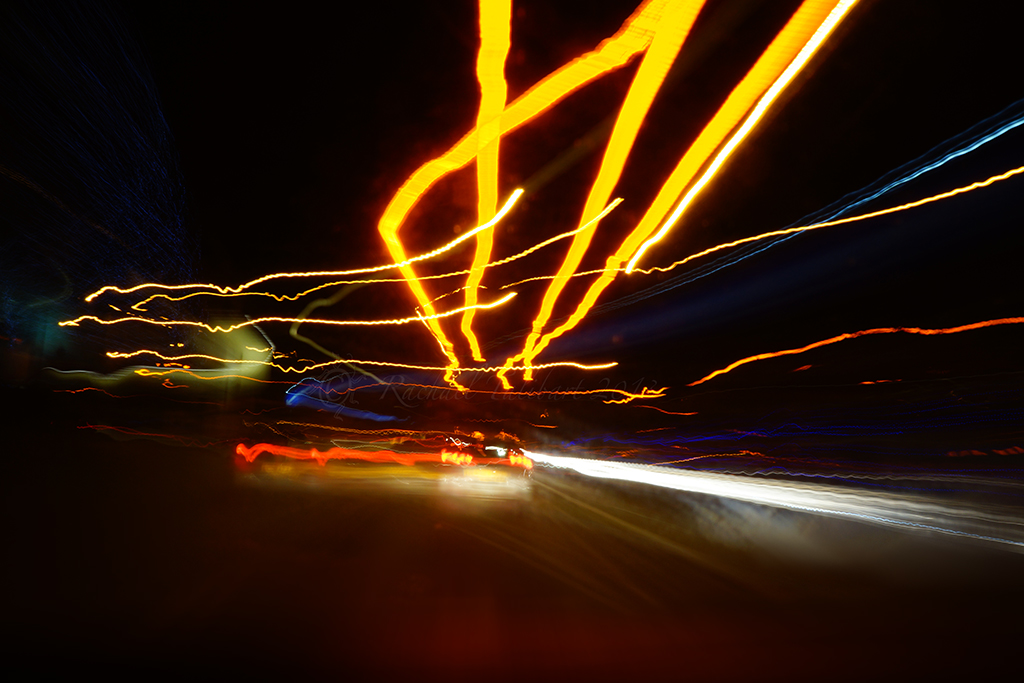
On our journey back from Devon last week, I amused myself with taking some abstracts of the view from my window. I hasten to add that my husband was driving, not me!

This technique is very easy. I manually focused beyond the window, then selected a reasonably narrow aperture (between f.14 – f.20) and a low ISO (most of these are at ISO 100). This gave me shutter speeds of between 8 and 20 seconds; perfect to get light streams and to even out the impact of some of the inevitable bumps. I also dialled in some negative exposure compensation. Then I sat the camera on the dashboard and pressed the shutter.
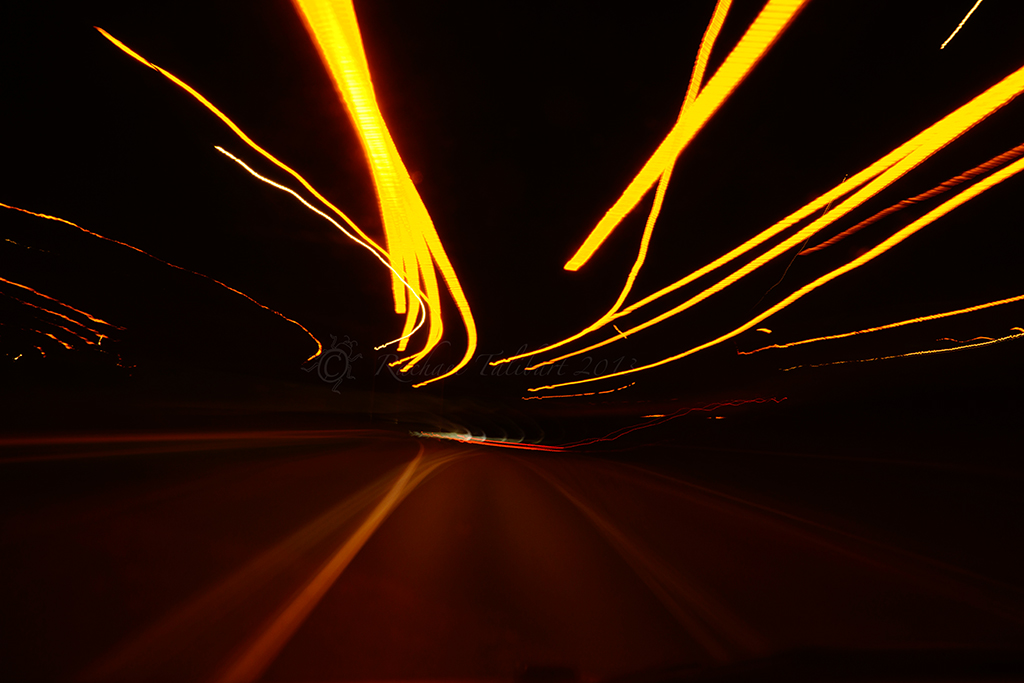
I used self-timer too, although as the camera is sitting in a moving vehicle, there will be some movement so any improvement to the shots from using self-timer is minimal.
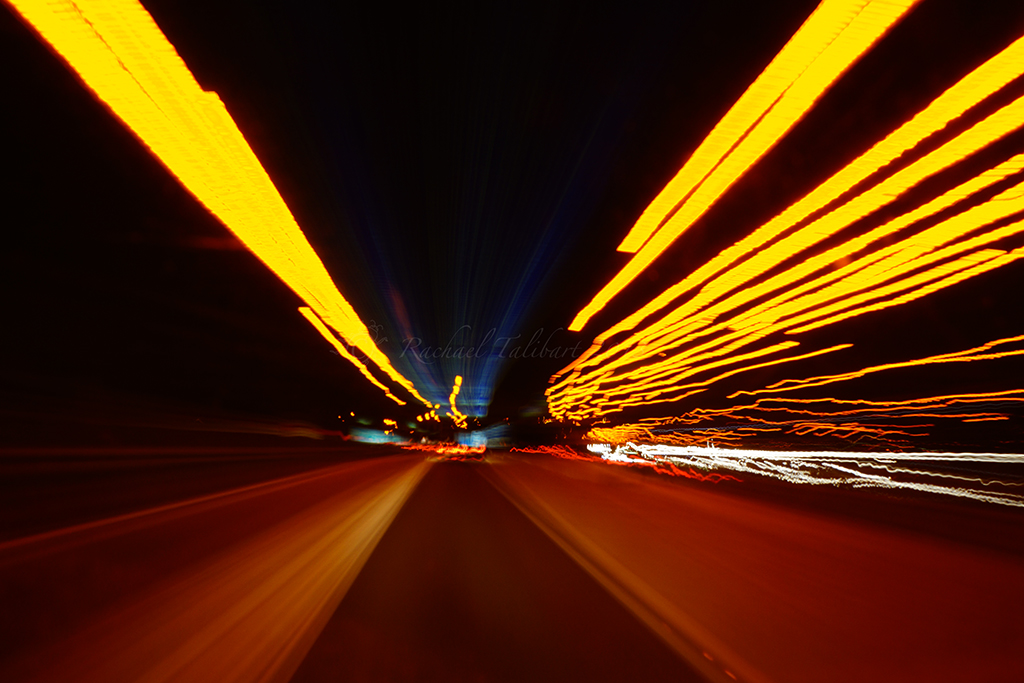
It’s great practice for a photographer who usually likes control. You have to let go with photography like this. That’s part of the fun. Who am I kidding? It’s all of the fun.

Here I have concentrated on images where the dominant colour is amber (street lights). These images do not really work on their own so well but, as a set, or maybe the best three as a triptych, they have more merit. At least, I think they do…

So, if you had to choose, which three do you think might work best together? I am pretty sure I like no.s 2 and 3, but not sure about the third choice…
By the way, I used the Sony NEX-7 for all of these and I think it’s done a fair job. In particular, I think the image stabilisation has coped marvellously with the vibrations from the car. Also, a DSLR would not fit on the dashboard.

Sunset over Dartmoor National Park
Yesterday, I shared an image I took on New Year’s Day at Dartmoor National Park. Despite having lived in this country for most of my life, I am ashamed to say this was my first visit to the Park. I will be back!
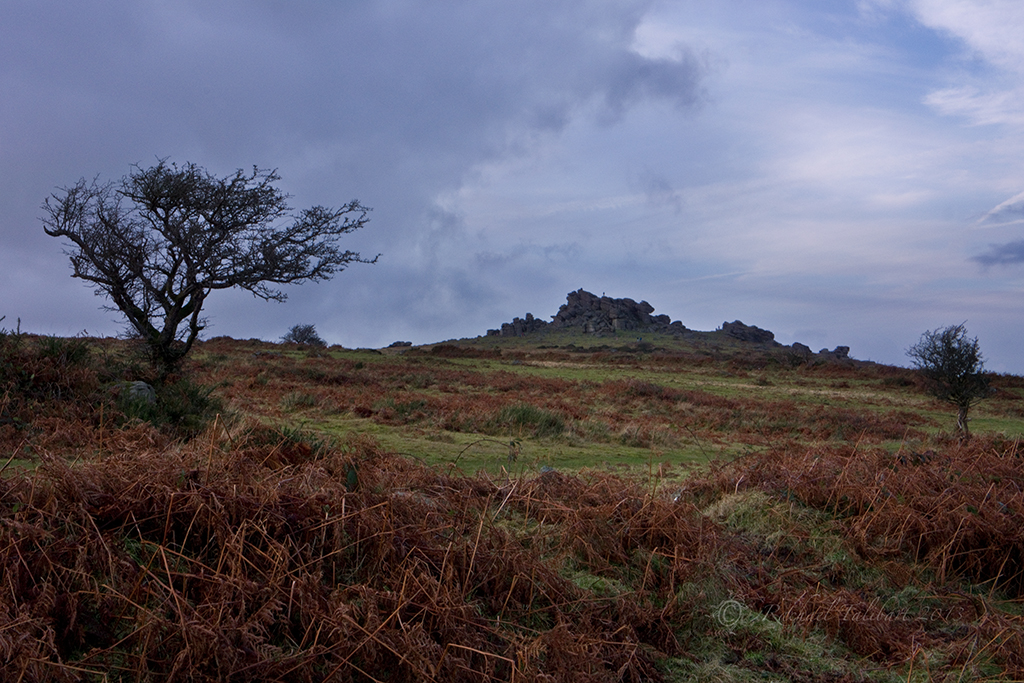
Haytor, Dartmoor
We hiked to two of the many rocky outcrops, known as ‘tors’, Haytor and Hound Tor, the latter thought to be the inspiration for Arthur Conan Doyle’s Sherlock Holmes adventure, The Hound of the Baskervilles.

Hound Tor, Dartmoor
I left my trusty Canon 5Diii at home and took instead the Sony NEX-7 I was testing. A compact system camera packing a whopping 24 megapixel sensor, it is a fraction of the size and weight of my DSLR and made a far less demanding hiking companion. But there are compromises, both in terms of ease of use and image quality. Although you cannot see at this size, these images, all taken at ISO 400 are far noisier than my DSLR would have taken. More tomorrow.

How did medieval people manage to celebrate Christmas for twelve whole days? I am beginning to regret launching myself into this series; once New Year festivities are over, I feel it’s time to move on.

Mind you, medieval folk probably didn’t start thinking about Christmas in September. I am quite sure they didn’t have to put up with cheesy perfume adverts in November, tinsel after Halloween and charity Christmas catalogues popping through their doors in July!

Anyway, today I have been thinking about New Years resolutions, or rather, I have been thinking about not making any. I am learning to live in the moment, not to project into the future but instead to notice the little things that are happening now. Cognitive Behavioural Therapists call it mindfulness.

The best thing I know to promote mindfulness is photography. I don’t need to resolve to take photographs since I can hardly help myself.

Anyway, here’s to living in the moment and, as an antidote to all that Christmas bling, some soothing black and whites.
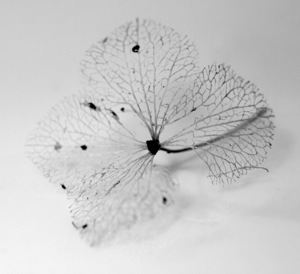


One tradition in our family that I particularly enjoy is the New Year’s Day walk.
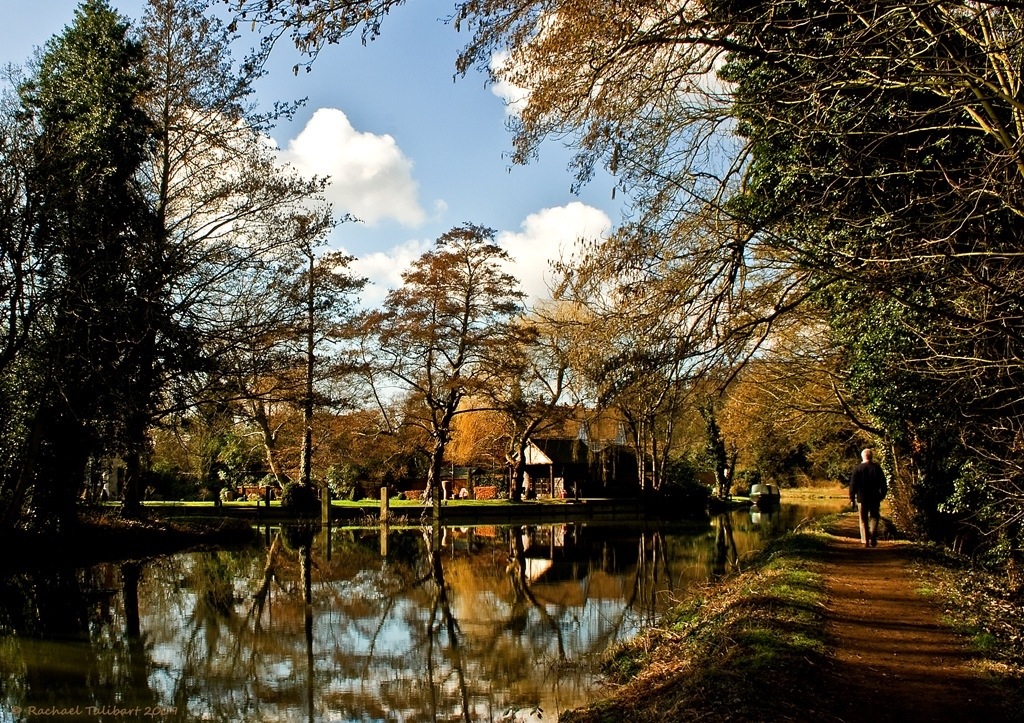
This year our walk was on Dartmoor. The pictures will have to wait until we get home. But a stroll through any part of Britain’s countryside is a lovely way to greet the new year.
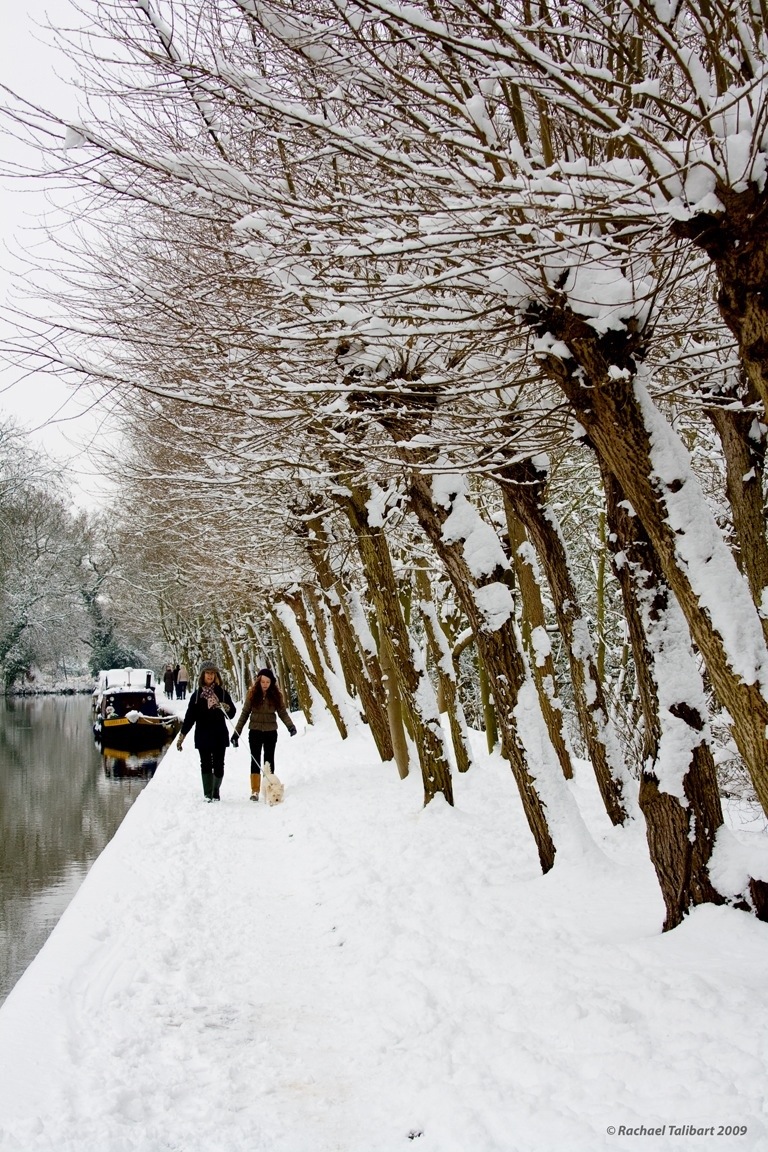
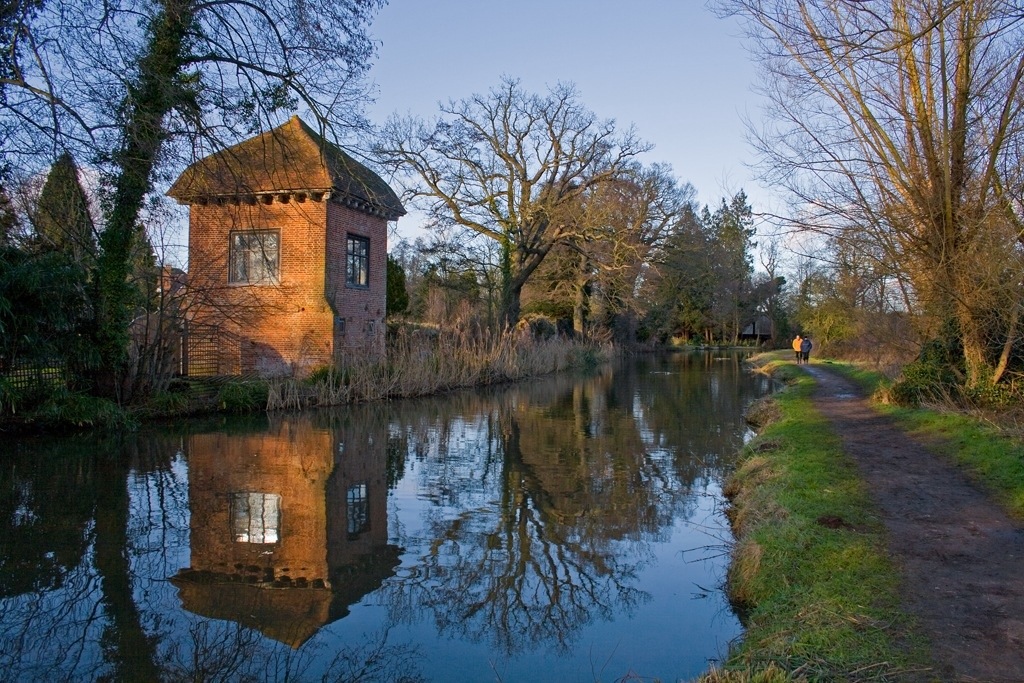
I like seeing families out together, often several generations. That’s not something we do particularly well in this country but somehow we do manage to get together at this time of year.
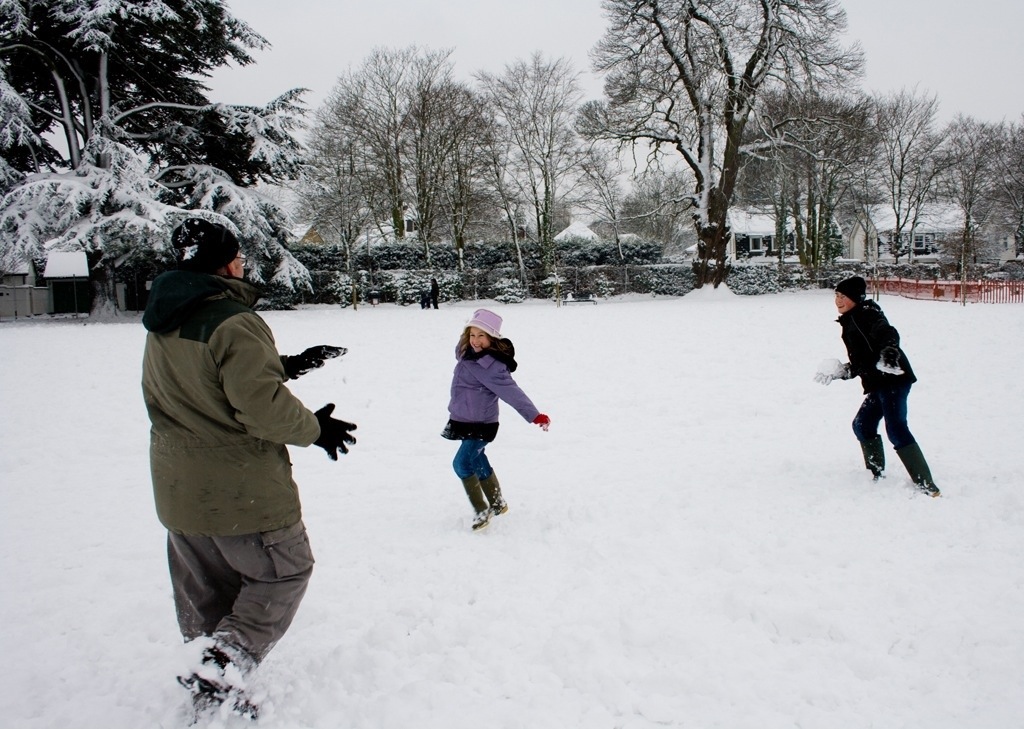
Did you go walking today? Where did you go

The three working days between Christmas and New Year can often seem rather anticlimactic. I thought this image of a discarded poinsettia ‘bloom’ in Painshill Lake captured something of that feeling.
More positively, poinsettias are of course a very popular plant at this time of year. They hail from Central America, particularly Southern Mexico and belong to the euphorbia family. The colourful ‘blooms’ are in fact leaves, not flowers.

Surfing the net today, I came across this sweet story about the origin of their connection with Christmas:
“There is an old Mexican legend about how Poinsettias and Christmas come together, it goes like this:
There was once a poor Mexican girl called Pepita who had no present to give the baby Jesus at the Christmas Eve Services. As Pepita walked to the chapel, sadly, her cousin Pedro tried to cheer her up.
‘Pepita’, he said “I’m sure that even the smallest gift, given by someone who loves him will make Jesus Happy.”
Pepita didn’t know what she could give, so she picked a small handful of weeds from the roadside and made them into a small bouquet. She felt embarrassed because she could only give this small present to Jesus. As she walked through the chapel to the altar, she remembered what Pedro had said. She began to feel better, knelt down and put the bouquet at the bottom of the nativity scene. Suddenly, the bouquet of weeds burst into bright red flowers, and everyone who saw them were sure they had seen a miracle. From that day on, the bright red flowers were known as the ‘Flores de Noche Buena’, or ‘Flowers of the Holy Night’.” http://www.whychristmas.com/customs/poinsettia.shtml

I rather enjoyed another piece of trivia I picked up on the same website: apparently, the plants are named after Joel Robert Poinsett, the USA’s first ambassador to Mexico, who introduced the plant into the USA. Mr Poinsett is also famous for having founded the Smithsonian Institute.
 Focused Moments