Dunstanburgh Castle

Northumberland

Today I thought I’d share some images taken at Dunstanburgh Castle on Northumberland’s beautiful Heritage Coast. The castle is the largest in Northumberland. In 1313, Earl Thomas of Lancaster, cousin of Edward II of England began construction and John of Gaunt added to it later in the century.

Northumberland

During the Wars of the Roses, the castle was badly damaged and it slowly fell into decay. The castle is now owned by the National Trust and in the care of English Heritage. It is a Scheduled Ancient Monument and a Grade I listed building.
en.wikipedia.org/wiki/Dunstanburgh_Castle

Dunstanburgh Castle

This beautiful and evocative ruin can hardly fail to inspire, perched on a rocky outcrop above the coast and the plain below.  Some great painters have immortalised it, including Turner and, one of my favourite contemporary artists, Michael Morgan.
Northumberland

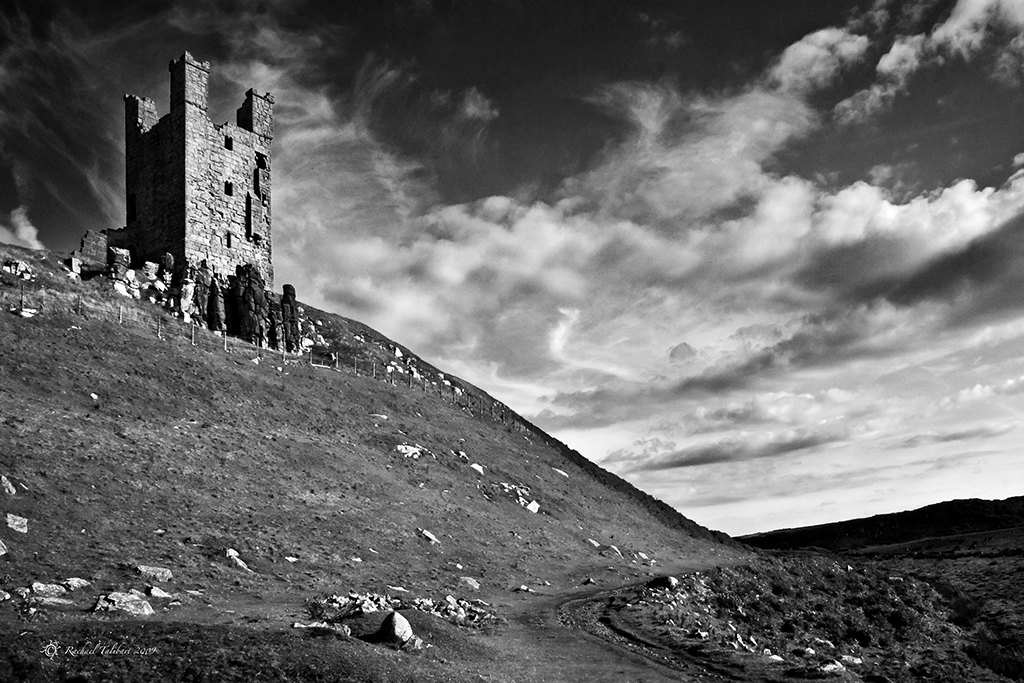
Lilburn Tower, the most intact of the castle buildings, seems to demand a moody black and white treatment. Can you imagine a knight riding along that path, perhaps to rescue a princess from the tower?  I kept thinking instead of Macbeth, riding to meet the three weird sisters, perhaps because Roman Polanski’s film, Macbeth was shot in the area.
Northumberland

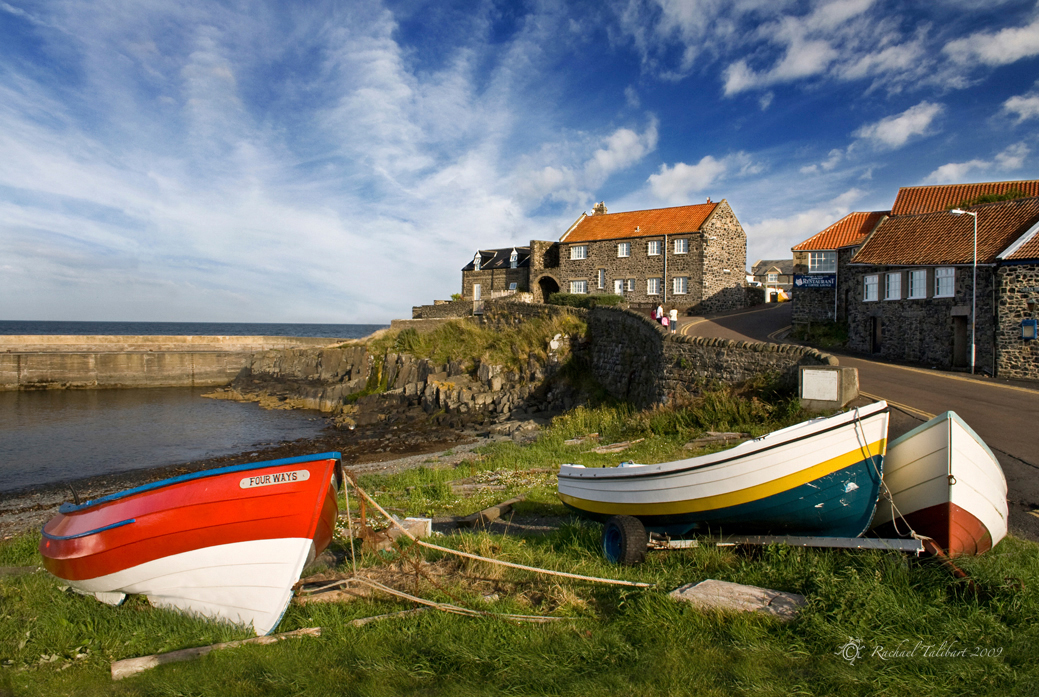
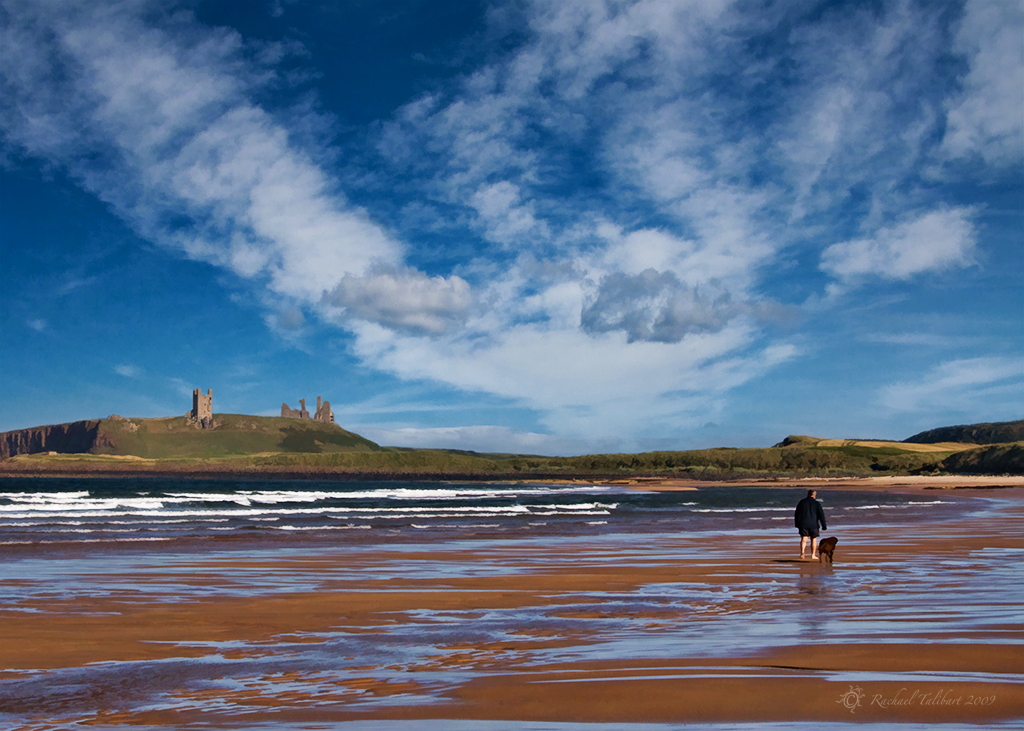
Dunstanburgh Castle is reached via a footpath from Craster, a sleepy fishing village to the South.  Or via the beautiful sands of Embleton Bay to the North.
Northumberland

I chased down a rainbow there on our visit, only just managing one hasty exposure before the colours faded, from which I made this, rather more painterly than usual, image with a little help from Topaz Simplify:

Northumberland

For all that I enjoyed the, admittedly rather over the top, colours of the last two images, it remains, for me, the black and white images that suit this location more.  If you get the chance to visit this atmospheric ruin, I thoroughly recommend it.
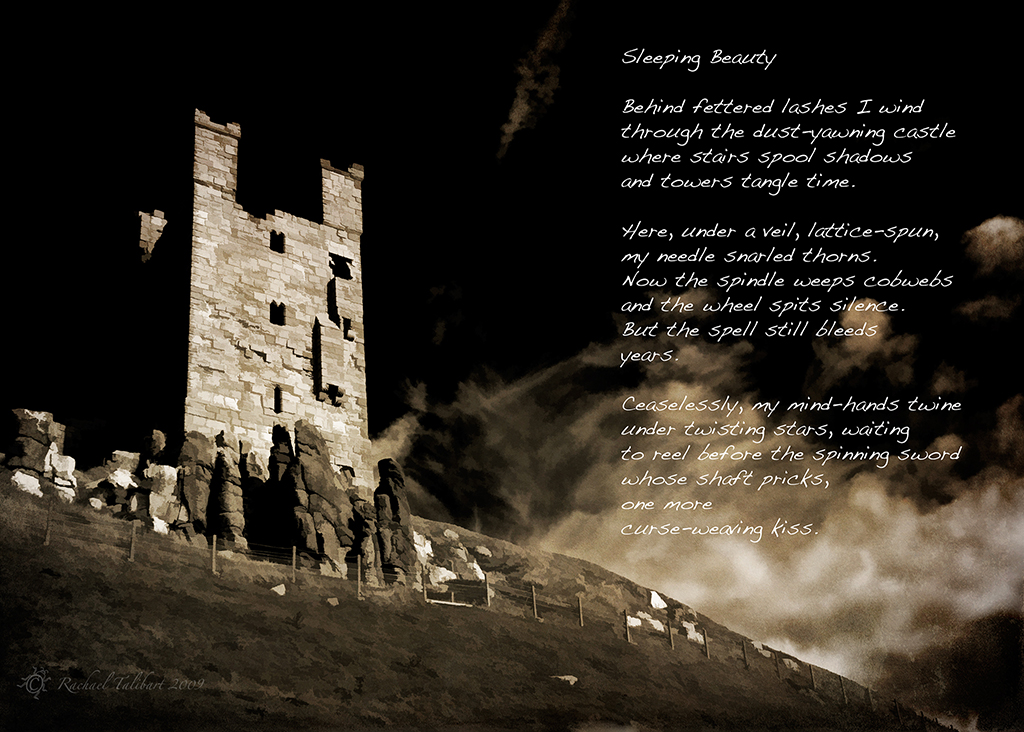
Lilburn Tower

La Corbière again

lighthouse, JerseyAnother photograph from my evening shoot on Jersey, in the Channel Islands, in August.  La Corbière (in JèrriaisLa Corbiéthe), is a lighthouse on Jersey’s SouthWestern tip.  We are going back there soon and I am hoping for some rougher seas for a different type of shot.

An Autumn garden

landscape garden
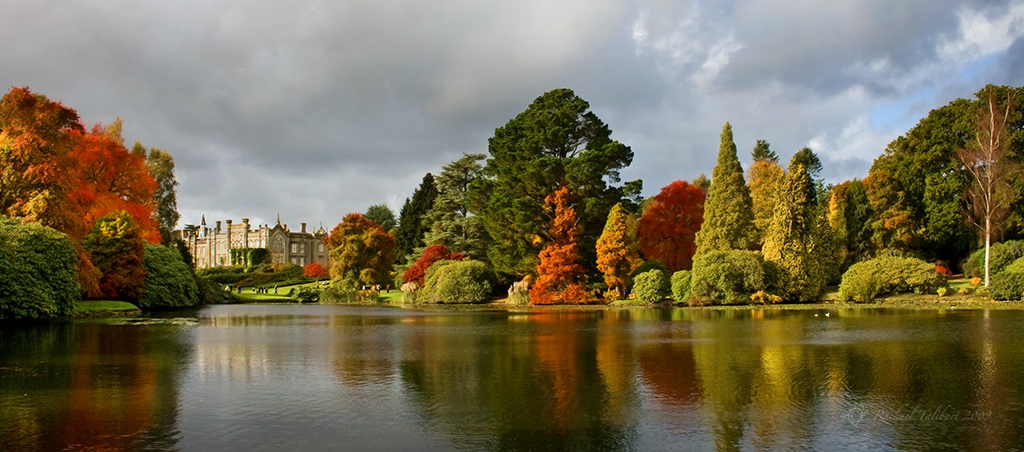
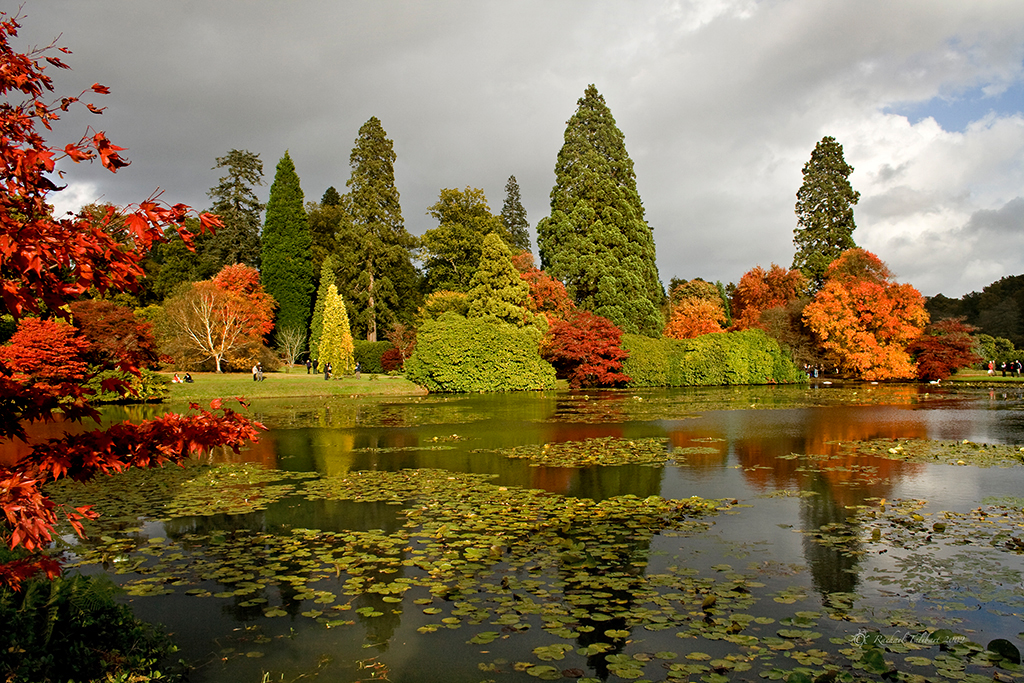
Sheffield Park is an eighteenth century landscape garden in East Sussex owned by the National Trust.
landscape garden
Sheffield (meaning sheep clearing) Park is mentioned in the Doomsday Book. The garden was landscaped first by Lancelot ‘Capability’ Brown and then Humphrey Repton.
landscape garden
In the nineteenth century planting for an arboretum was begun. Arthur Soames purchased the estate in 1910 and continued the massive planting programme, much of which still exists today, and is particularly regarded for its Autumn colour.
Sheffield Park landscape garden
We were a little early for the best leaves but there was still plenty of colour. If you live anywhere within striking distance of this beautiful garden, I recommend a visit. Just don’t forget your camera!

More Autumn colour tomorrow.

A detailed city

black and white cityscape

Vancouver waterfront

As a respite from the bug macros, I thought I’d pay a visit to one of my favourite North American cities, Vancouver.

black and white view of Vancouver

Striking shapes mingle with softer planting

I thoroughly enjoyed prowling round the most modern parts of this city, playing with angles and snapping details that caught my eye.

black and white view of Vancouver

The same place looking the other way

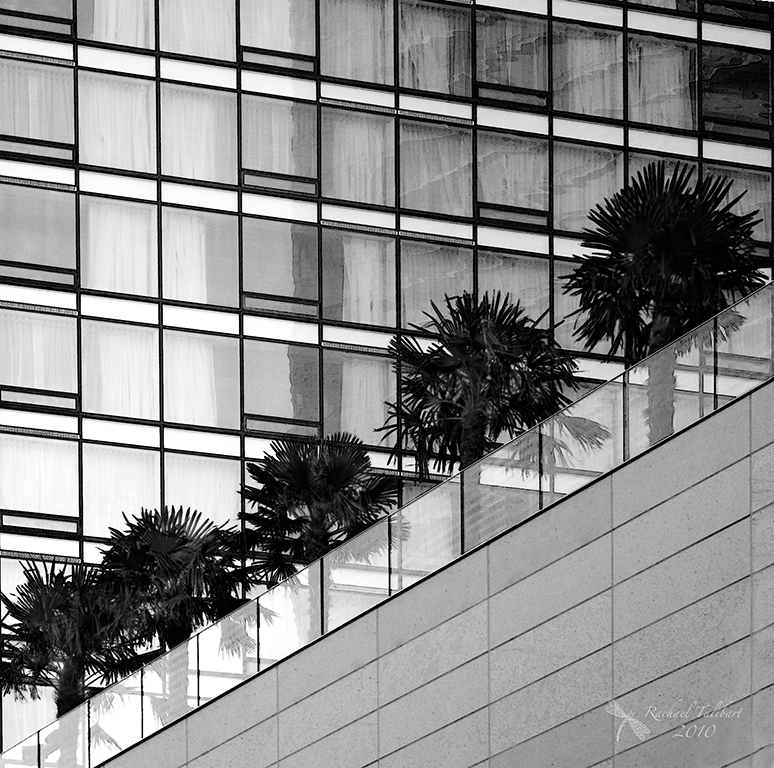
I often convert my shots of architecture to black and white to bring out the interesting shapes and patterns.

architectural detail

Diagonals meet verticals, and some palm trees

It can be fun to zoom in tight.

Architectural detail

Loads of contrast here

Or pull back for a wider view.

black and white Vancouver city

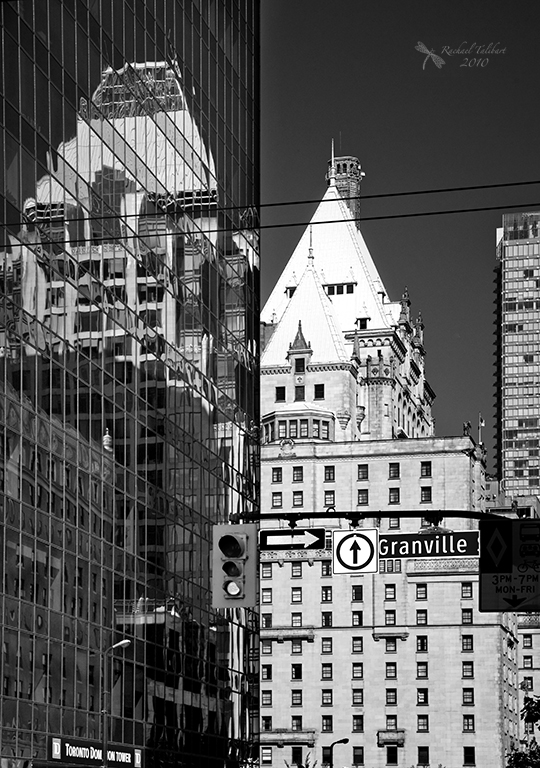
Contrasting new and old

Sorting out converging lines can be tricky with tall buildings but sometimes it’s fun not to bother…

architecture

Well, this building does actually lean anyway.

…or to go mad:

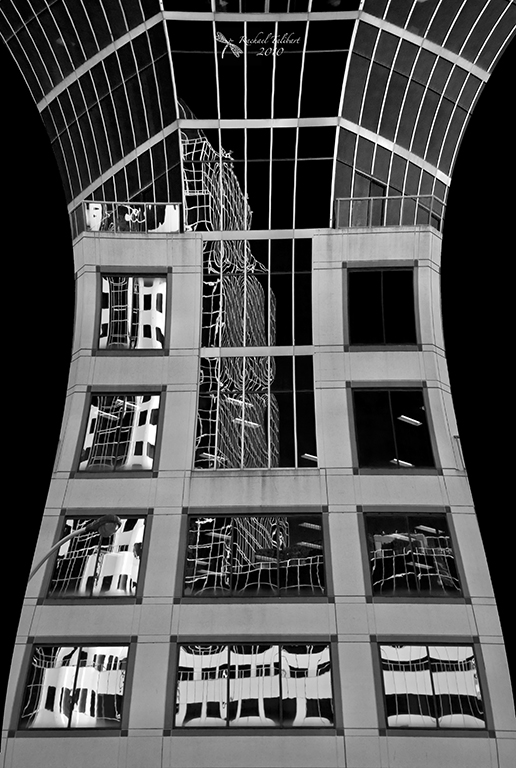
warped architectural detail Vancouver

One way to cope with those converging lines

Reflections are always a lot of fun.

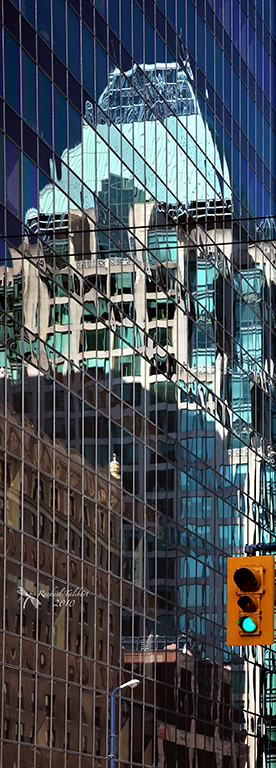
city detail

Fairmont hotel reflected in office block.

I did allow some colour, sometimes a lot of colour:

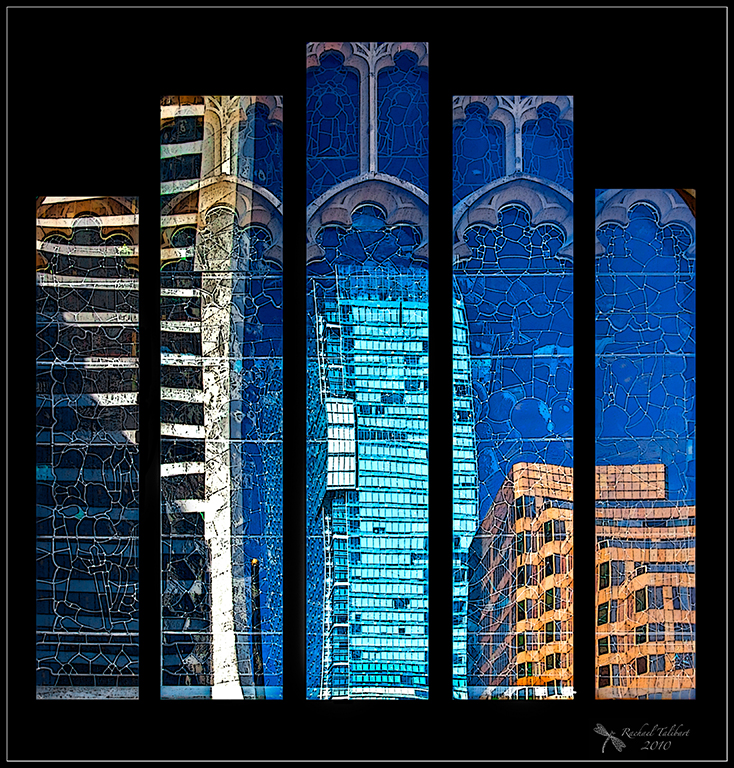
Five panels of city reflections

If a triptych is three panels, what do you call five panels?

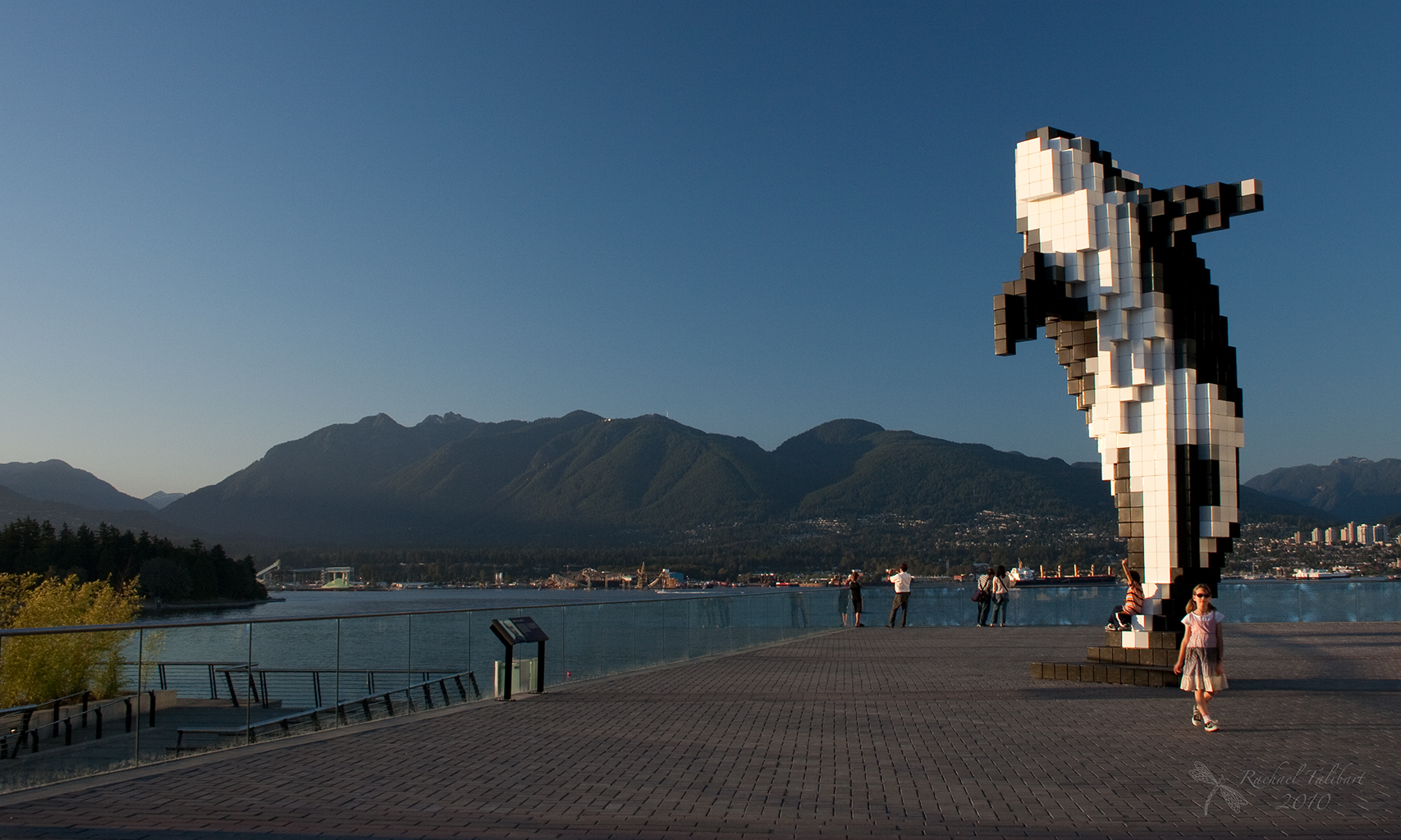
I hope you enjoyed my architectural safari. Vancouver really is a super city and there is, of course, much more to it than its modern architecture. More another time. I will leave you now with this thought: what’s not to like about a city that has a giant lego orca?

killer whale sculpture

You have to love Canadians.

Lighthouse to nowhere

20120927-083139.jpg
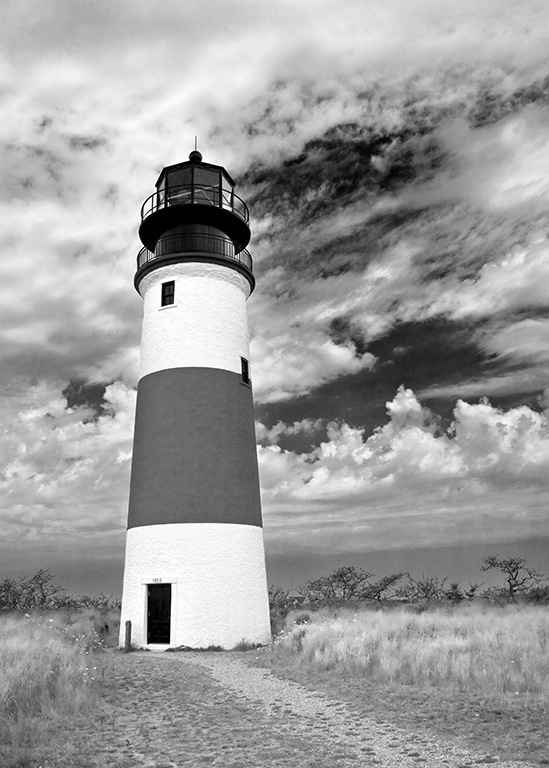
A shot from our trip to Nantucket in August 2011. The guidebook advertised this lighthouse as perched precariously on the cliff edge. ‘Photo op!’, thought I and dragged the family out there only to find that it had been moved! It is now situated in some fairly uninspiring and very safe scrub. At least the sky was interesting enough to make it worth converting this shot to black and white, pushing the blues towards black and the vegetation towards white to create a pseudo-infrared effect.

Whose dwelling is the light of setting suns

Jersey, Channel Islands

                            … For I have learned
To look on nature, not as in the hour
Of thoughtless youth; but hearing oftentimes
The still, sad music of humanity,
Nor harsh nor grating, though of ample power
To chasten and subdue. And I have felt
A presence that disturbs me with the joy
Of elevated thoughts; a sense sublime
Of something far more deeply interfused,
Whose dwelling is the light of setting suns,
And the round ocean and the living air,
And the blue sky, and in the mind of man;
A motion and a spirit, that impels
All thinking things, all objects of all thought,
And rolls through all things…

William Wordsworth, ‘Lines composed a few miles above Tintern Abbey’ (1798), ll.88-102

Last light at Kimmeridge

20120918-185658.jpg
Another photo from my evening shoot at Kimmeridge Bay last month. The iconic landmark on the headland is Clavell’s Tower.
Built in 1830 by Reverend Clavell as an observatory and folly, the tower has inspired writers ever since. Thomas Hardy took his sweetheart, Eliza Nicholl, to the tower and included an illustration of it in his Wessex Poems. It was also the inspiration for P. D. James’s novel, The Black Tower and was used as a location in the television adaptation of the story. Moreover, it appeared in the music video for The Style Council’s single, ‘Boy Who Cried Wolf’.

20120918-190649.jpg
Between 2006 and 2008 the whole tower was painstakingly moved, stone by stone, 25 metres inland to save it from cliff erosion that threatened to send it crashing into the Bay. It is now operated as a holiday let by The Landmark Trust.

Kite surfers do it in style

St.Ouen's bay jersey
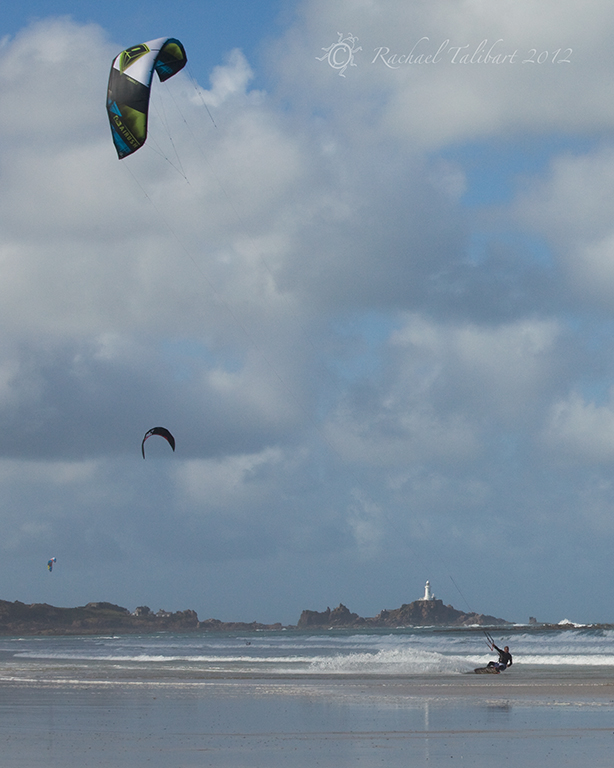
While I was on Jersey last month I had a chance to watch kite surfers doing their thing. What an amazing sport.
La Rocco tower, Jersey
I wonder what the eighteenth century builders of La Rocco tower would think if they could see this scene.
St.Ouen's Beach, Jersey
I got chatting to one of the surfers and he told me it’s really quite easy. Not sure I believed him. The lighthouse in the background is La Corbiere, which featured in a couple of my earlier posts.
La Rocco tower
One of the tricky things I discovered about shooting kite surfers is that you have to choose between wide shots to get the kite as well as the surfer or close ups to capture the jumps and rolls the surfers do. The trouble with the latter is that without the kite the shot can look a little weird. Needless to say, however, I gave it a good try and some closer shots will feature in a later post.

Grosnez castle

castle ruins, Jersey

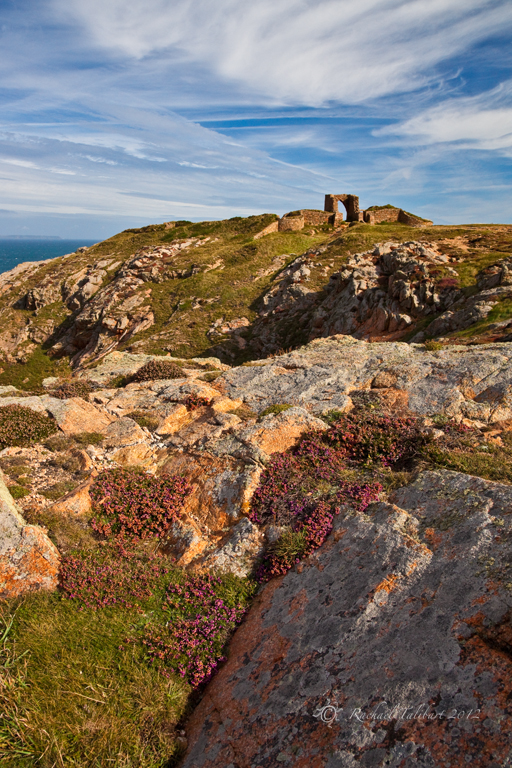
Our visit to Jersey gave me an opportunity to add to my castle series.  Grosnez Castle was built in the 14th century.  Little remains of the castle but it makes a very atmospheric ruin, perched atop the headland at the Northwest corner of the island.

Ruined arch of Grosnez Castle

‘Grosnez’ comes from the old Norse, grar nes, meaning ‘grey headland’, rather than the French for ‘big nose’.  According to an interpretation board at the site, the castle was probably built in around 1330.  It was taken by the French in 1373 and 1381 and was likely demolished during or shortly after the French occupation of 1461-8.

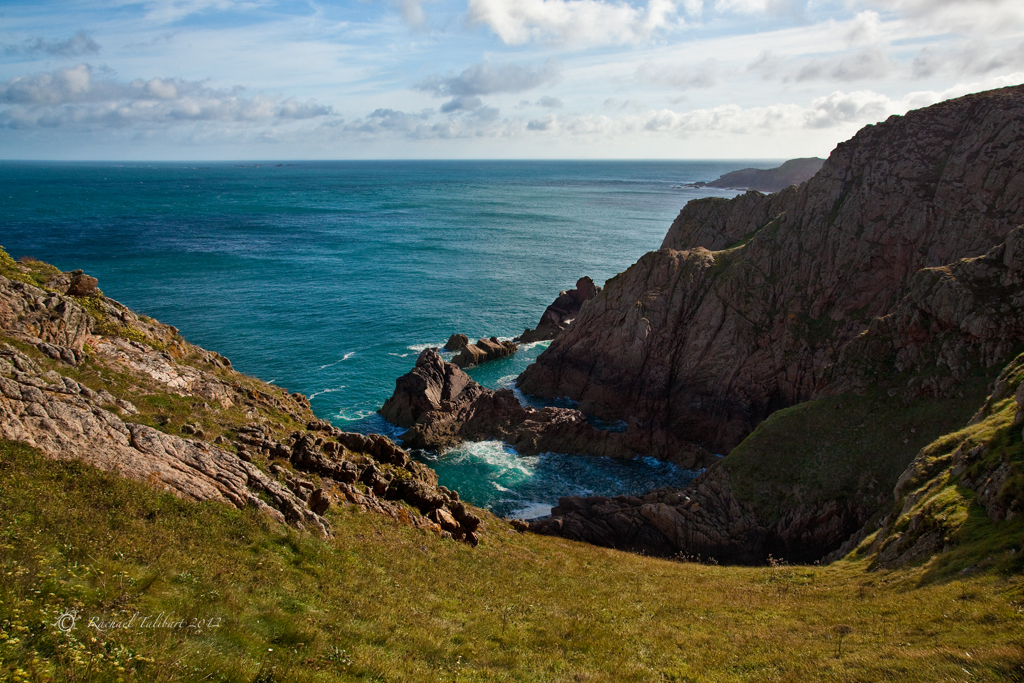
Jersey coastline

The castle certainly has a commanding view of the Jersey coast.  Just along the headland stands another martial construction taking advantage of those views, a German WW2 range-finder tower, part of Hitler’s ‘Atlantic Wall’.

Tower among heather on cliff, Jersey

It is a strangely forbidding construction, a stark contrast to the tapestry of heather and wildflowers at its base. The two structures together are a reminder of Jersey’s history of occupation, straddling some of her most beautiful landscape.

WW2 observation tower seen from Grosnez Castle, Jersey.