I HAD for my winter evening walk
No one at all with whom to talk,
But I had the cottages in a row
Up to their shining eyes in snow.
And I thought I had the folk within:
I had the sound of a violin;
I had a glimpse through curtain laces
Of youthful forms and youthful faces.
I had such company outward bound.
I went till there were no cottages found.
I turned and repented, but coming back
I saw no window but that was black.
Over the snow my creaking feet
Disturbed the slumbering village street
Like profanation, by your leave,
At ten o’clock of a winter eve.–Robert Frost
Monthly Archives: December 2012
Harlequins
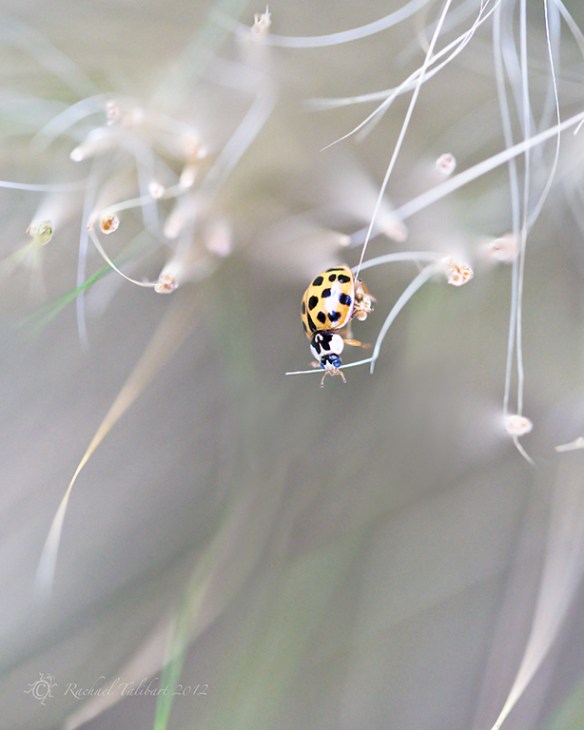
Some shots from September found languishing on my hard drive. I chose to use a high key look for these images, to capture a sense of the delicacy of the ladybird’s acrobatics on dry grass stems in my garden.
This beetle is a harlequin ladybird, or harmonia axyridis. The harlequin was brought from Asia into America and Europe as a form of biological control and it spread quickly, arriving in the UK in 2004. It has since caused a rapid decline in indigenous species of ladybird.
My own observations, for what they’re worth, bear this out; I rarely see anything but harlequins in my garden now. Pesky things. That doesn’t stop me photographing them though…
Winter abstracts
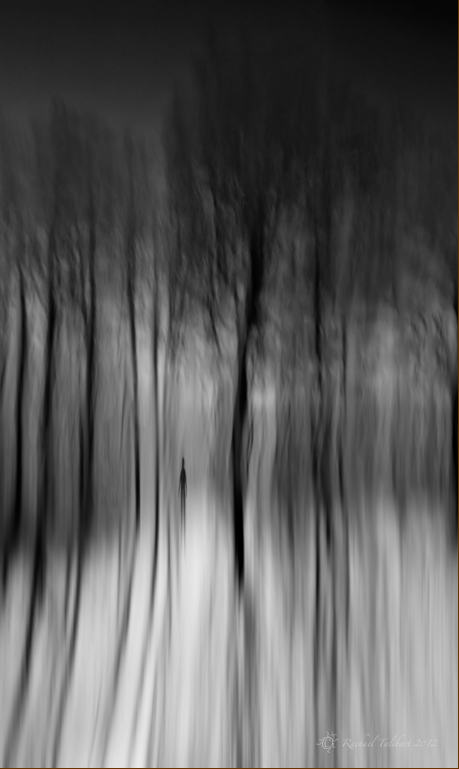
When winter closes in and the bare bones of trees are revealed, I like to create abstract images using ‘intentional camera movement’, or ‘panning’.
This technique is very easy. Simply select a slowish shutter speed and move the camera while the shutter is open. It helps to start the movement before pressing the shutter and to finish just after the exposure, to avoid jerky shapes in the image, unless that is what you’re after, of course! I also find the results generally much more pleasing if you move the camera in the direction of the dominant shape in your view, so vertically for trees.
Trees are not the only subject for this sort of technique. I have also panned landscapes, although there I move the camera horizontally rather than vertically. But winter forests do seem to be particularly suitable subjects.
I couldn’t resist including a mysterious figure in the last two images. The final one is for my son’s horror film project.
Do you ever play around with this technique? Please feel free to share your panned/camera movement images or other winter abstracts in the comments below; I would love to see them!
A dusting
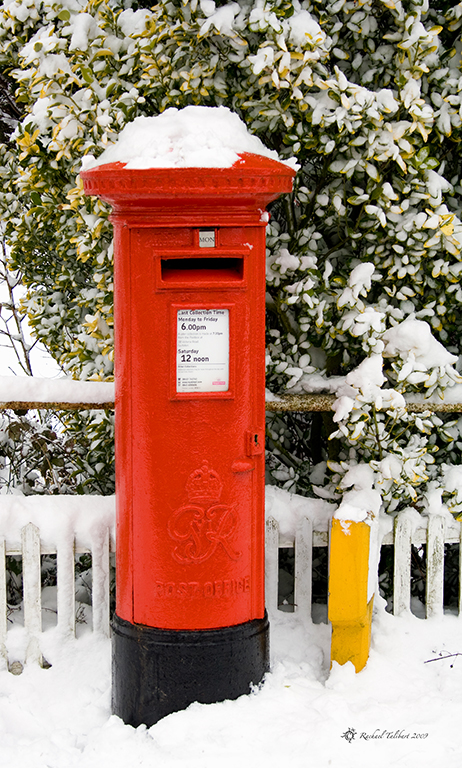
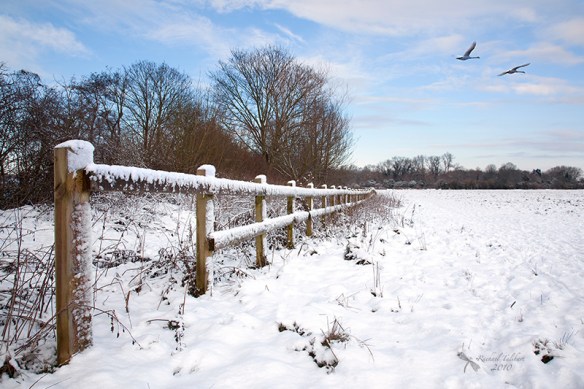
Winter arrived this morning with a dusting of snow. Really, we had no more than the merest of sugar frostings (not even as much as in these shots from 2009-10) but it was enough to freeze the train network. Commuter chaos ensued. Oh dear.
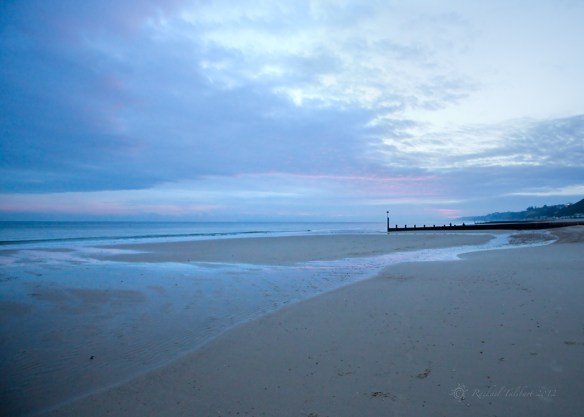
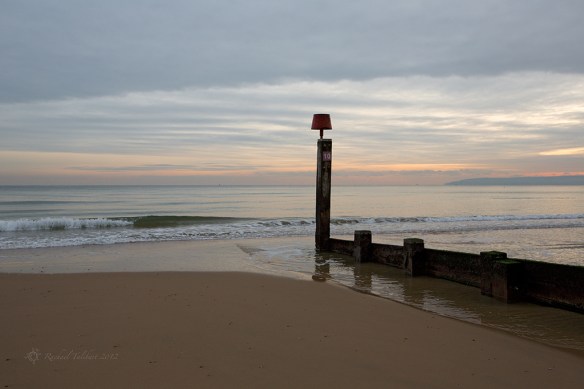
Blue hour on Bournemouth beach
On Bournemouth Beach
What a wonderful afternoon I spent on Bournemouth Beach on Friday. You have to love the British seaside out of season; gorgeous expanses of pristine sand (Bournemouth is a Blue Flag beach) and hardly a soul about. I set myself a challenge and went equipped with only my wide angled lens (16-35mm on full frame).
It wasn’t the most spectacular of sunsets but gentle, beguiling, like the lapping waves. When I came to process these images, they seemed to demand a naturalistic approach.
With the horizons more or less in the centre of the frame, these images break the rules. I think that composing with the horizon on a third often works well as the photographer thereby communicates clearly what he or she is most interested in, the foreground or the sky. However, here I found myself wanting to efface the photographer from the landscape. And, truth be told, I just couldn’t bring myself to crop out any of that view. Half is the new third?
Industrial landscape
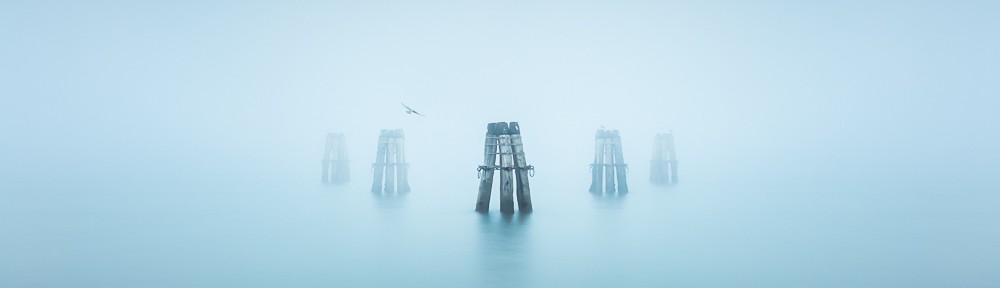
On Friday I visited Bournemouth and travelled there by train. I snapped a couple of shots of Southampton’s industrial area as we rolled by. James Corner, over at Country Corners, recently posted some photos of an industrial view near his home. He reminded me that a photographer should not automatically ignore the less ‘pretty’ landscapes. A more subtle, panoramic shot below.