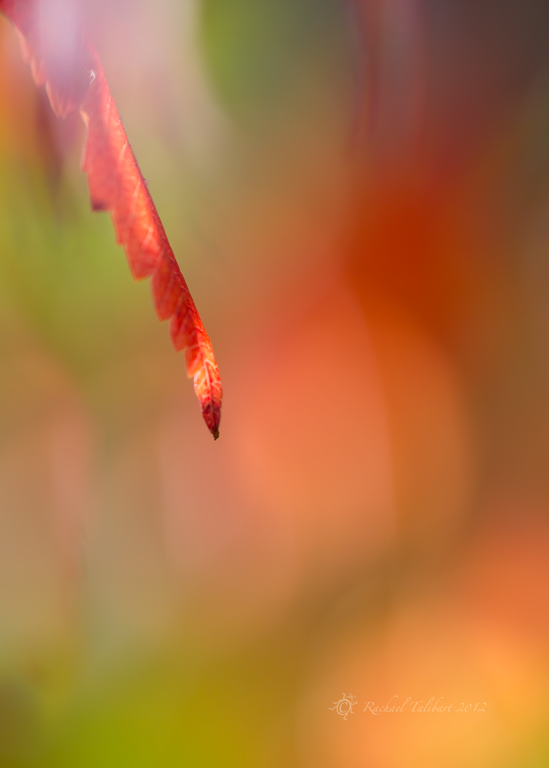
Continuing the Autumn theme, this post features images of my sumach tree. The leaves turn the most gorgeous shades of orange, red and even pink at this time of year. As the tree catches the last rays of sun to leave my garden, it is a popular spot with the garden’s minibeasts too.

A few days ago, I featured a tiny green spider which I misidentified as the cucumber green orb spider. I really should stop trying to identify minibeasts because I get it wrong oftener than I get it right! I now think that little critter was nigma walckenaeri. Oh well. I am, therefore not even going to try to identify this little gem of a spider crouching under a sumach leaf. Any spider experts out there, by all means chip in! Suffice it to say it’s a pretty little thing, for a spider.

Here it is again, toning in rather nicely with its colourful surroundings. I was trying to get under the tree to photograph the little fellow when an altogether more conventionally beautiful surprise visitor alighted on another leaf.
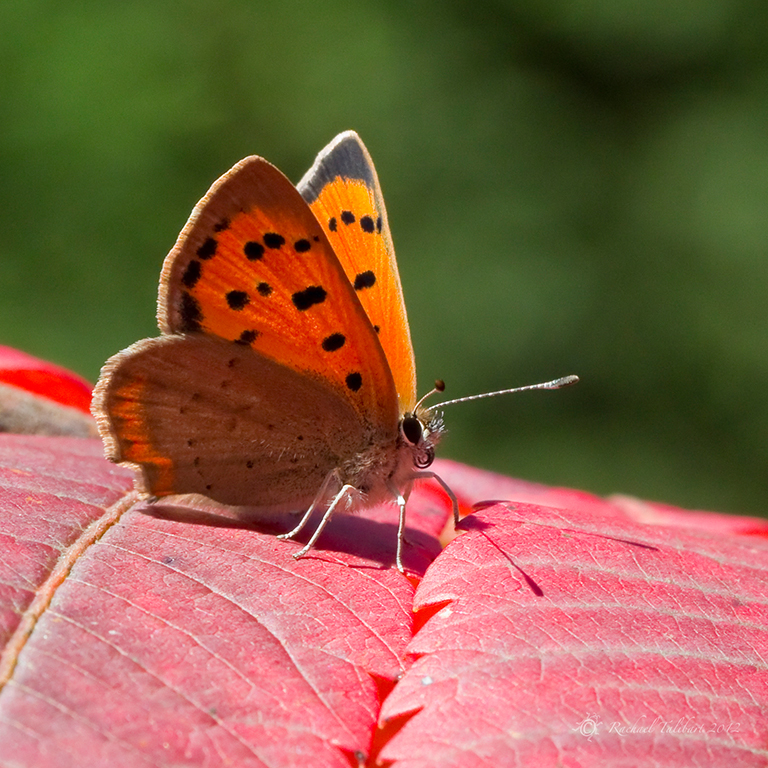
This delight is a ‘small copper’. I have never seen one of these in my garden before. It rested for a few seconds, just time for me to get a couple of hasty grab-shots.
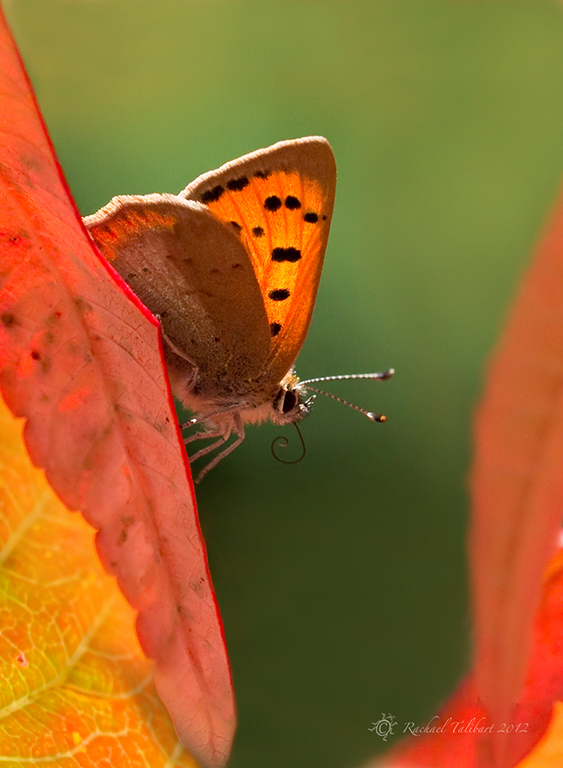
What a beauty, its colours perfect for Autumn! Seeing it quite made my day.

I was planning to fell this tree as it is in the wrong place for all sorts of reasons. It has made tons of small sumachs which I can plant in a better place. But, after all this colour and buggy action, to fell it seems rather ungrateful, doesn’t it?
Tag Archives: photographs
Autumn’s winged messengers

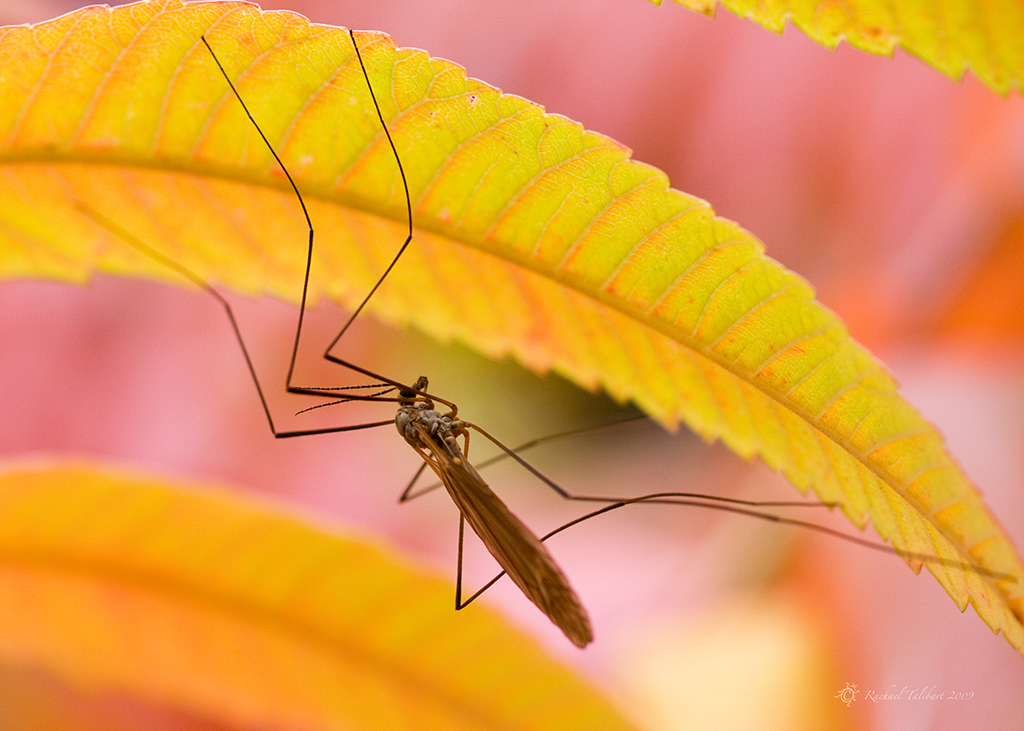
As Autumn sets in, leggy crane flies start to blunder into homes, mimicking moths in their attraction to light. They are not the most stylish of Nature’s creatures but this one manages to look almost elegant hanging under the pastel Autumn leaves of my sumach tree.
This is probably a female specimen of the UK’s most common variety, tipula paludosa. Not a thing of beauty, but an important part of the ecosystem. Its grubs, known as leatherjackets, feed on the roots of grass, which does not please those who love their lawns. However, they are a valuable source of food for many birds. I enjoy watching the green woodpeckers drilling for them. The crows quarter my lawn systematically, voracious terminators of leatherjackets. In the process, they incidentally save me the job of aerating the lawn and lifting the moss.


Needless to say, there are several varieties of crane fly in the UK. The best place I have found for identification is Nature Spot. I think this little crane fly resting on sedum flowers may be tipula confusa. And yes, I am confused.

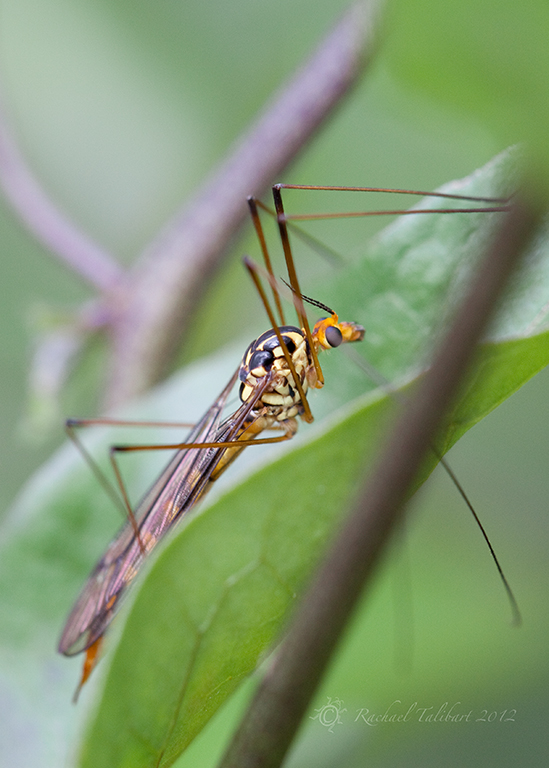
This one is a little more impressive. It could be nephrotoma appendiculata, the spotted crane fly. Or it could be nephrotoma flavescens.

But I think it is, in fact, nephrotoma flavipalpis. This is the first time I have noticed one of these in my garden.

Tomorrow’s Autumn post will be prettier, I promise.
An Autumn garden

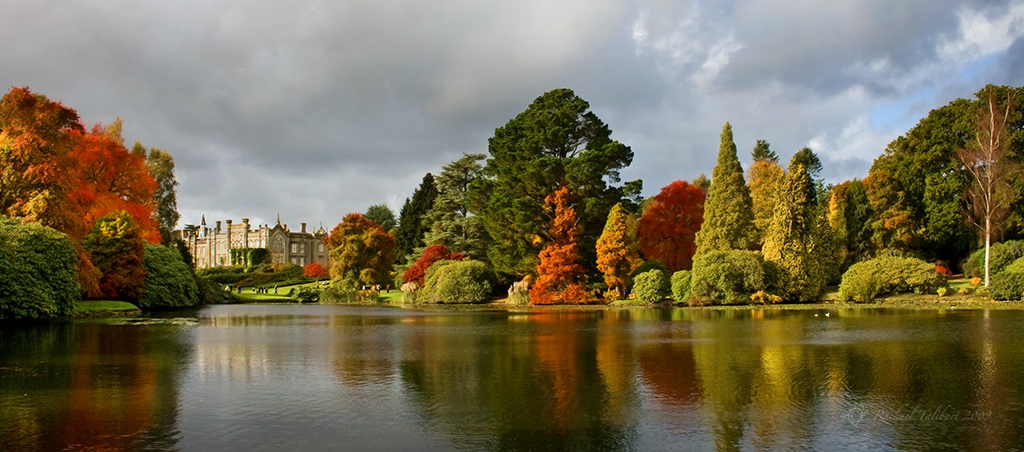
Sheffield Park is an eighteenth century landscape garden in East Sussex owned by the National Trust.

Sheffield (meaning sheep clearing) Park is mentioned in the Doomsday Book. The garden was landscaped first by Lancelot ‘Capability’ Brown and then Humphrey Repton.

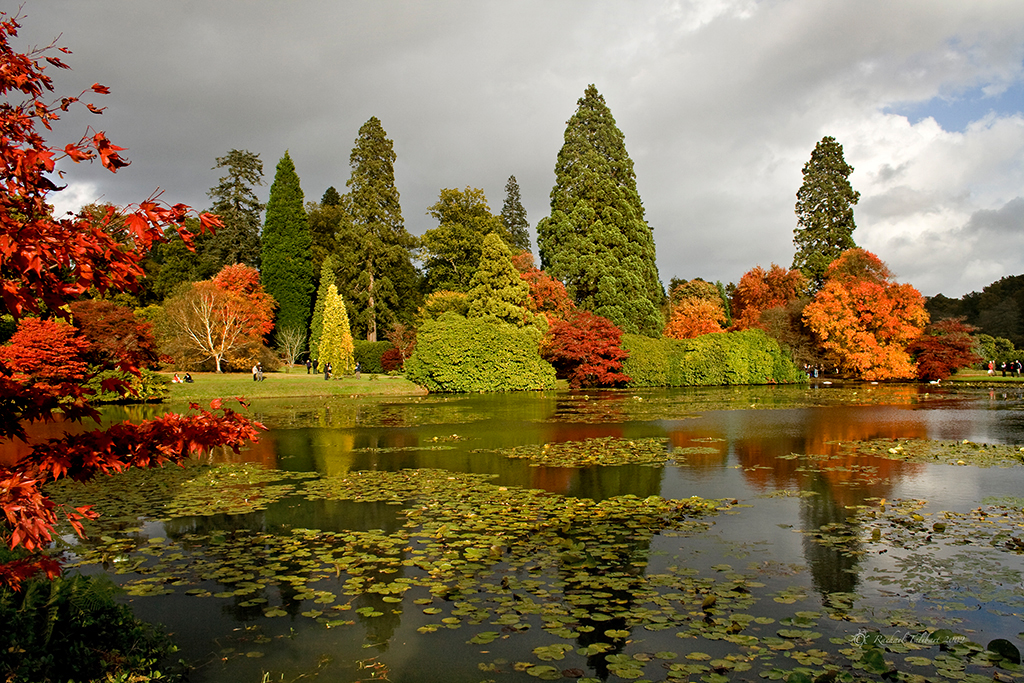
In the nineteenth century planting for an arboretum was begun. Arthur Soames purchased the estate in 1910 and continued the massive planting programme, much of which still exists today, and is particularly regarded for its Autumn colour.

We were a little early for the best leaves but there was still plenty of colour. If you live anywhere within striking distance of this beautiful garden, I recommend a visit. Just don’t forget your camera!
More Autumn colour tomorrow.
A detailed city
As a respite from the bug macros, I thought I’d pay a visit to one of my favourite North American cities, Vancouver.
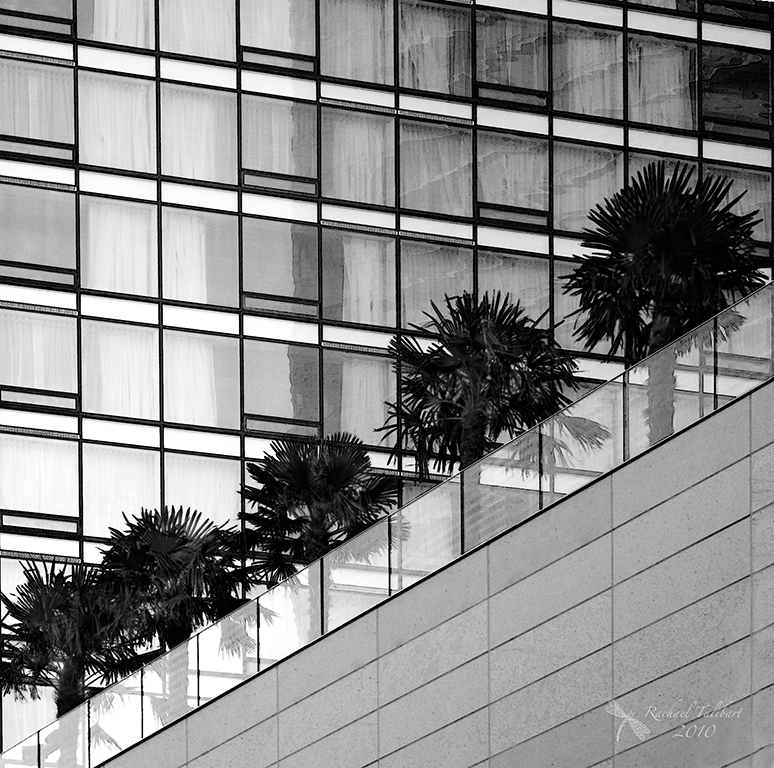
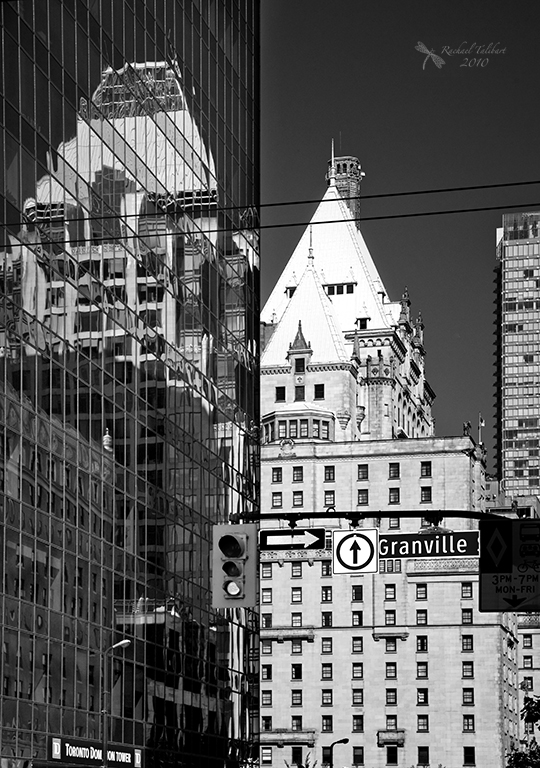
I thoroughly enjoyed prowling round the most modern parts of this city, playing with angles and snapping details that caught my eye.
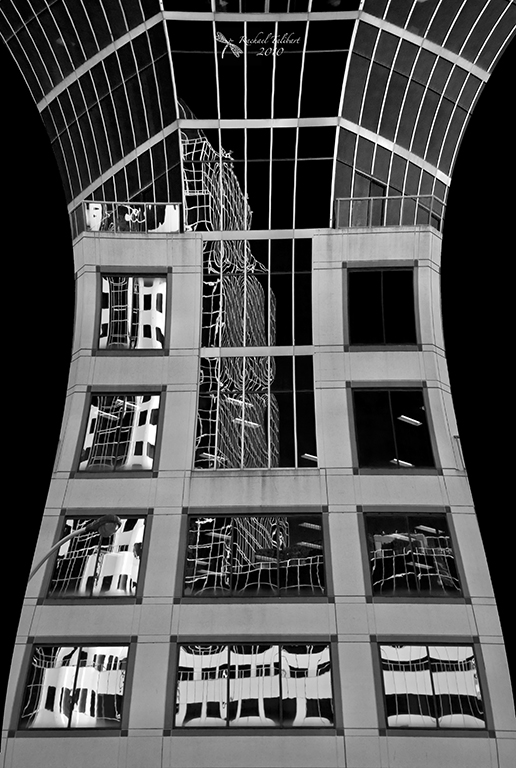
I often convert my shots of architecture to black and white to bring out the interesting shapes and patterns.
It can be fun to zoom in tight.
Or pull back for a wider view.
Sorting out converging lines can be tricky with tall buildings but sometimes it’s fun not to bother…
…or to go mad:
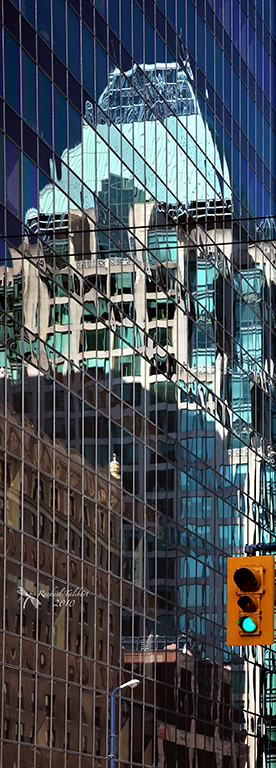
Reflections are always a lot of fun.
I did allow some colour, sometimes a lot of colour:
I hope you enjoyed my architectural safari. Vancouver really is a super city and there is, of course, much more to it than its modern architecture. More another time. I will leave you now with this thought: what’s not to like about a city that has a giant lego orca?
More tiny secrets
I thought I’d follow up yesterday’s post, The secret world of the smallest things, with more of the most miniscule critters in my garden. They are little more than moving dots to the naked eye but the macro lens and cropping reveals another world.
I am not going to be able to identify some of these tiny creatures. I know when I am out of my depth! I am content just to enjoy them, and their colourful landscape.
Some are not so welcome, or pretty. Don’t bite me! But isn’t the sumach leaf lovely?
I promise no insects tomorrow.
The secret world of the smallest things
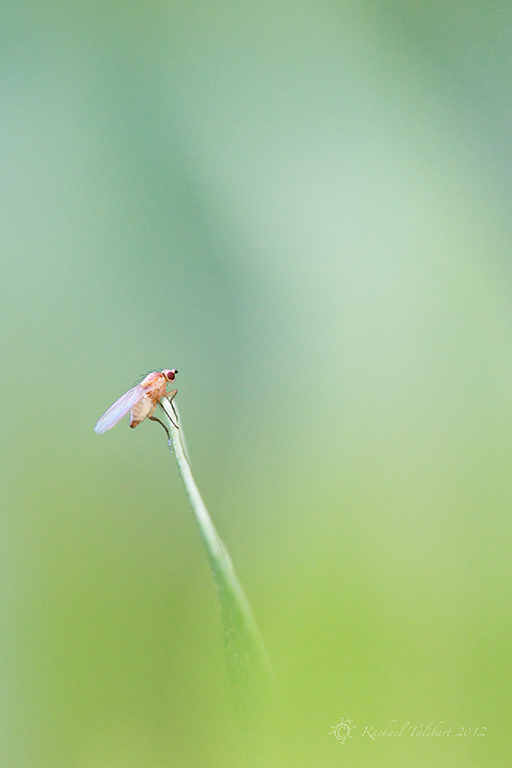
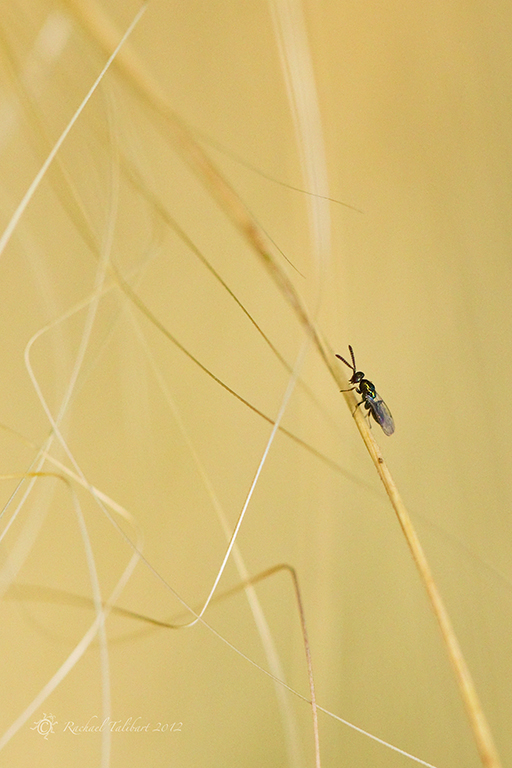
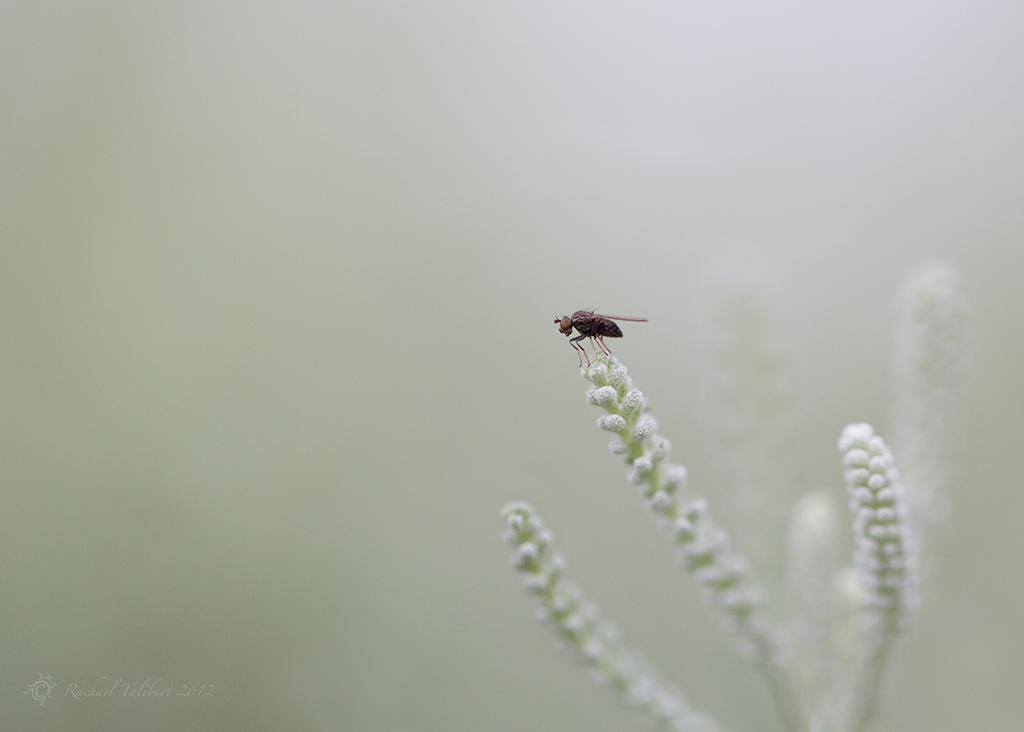
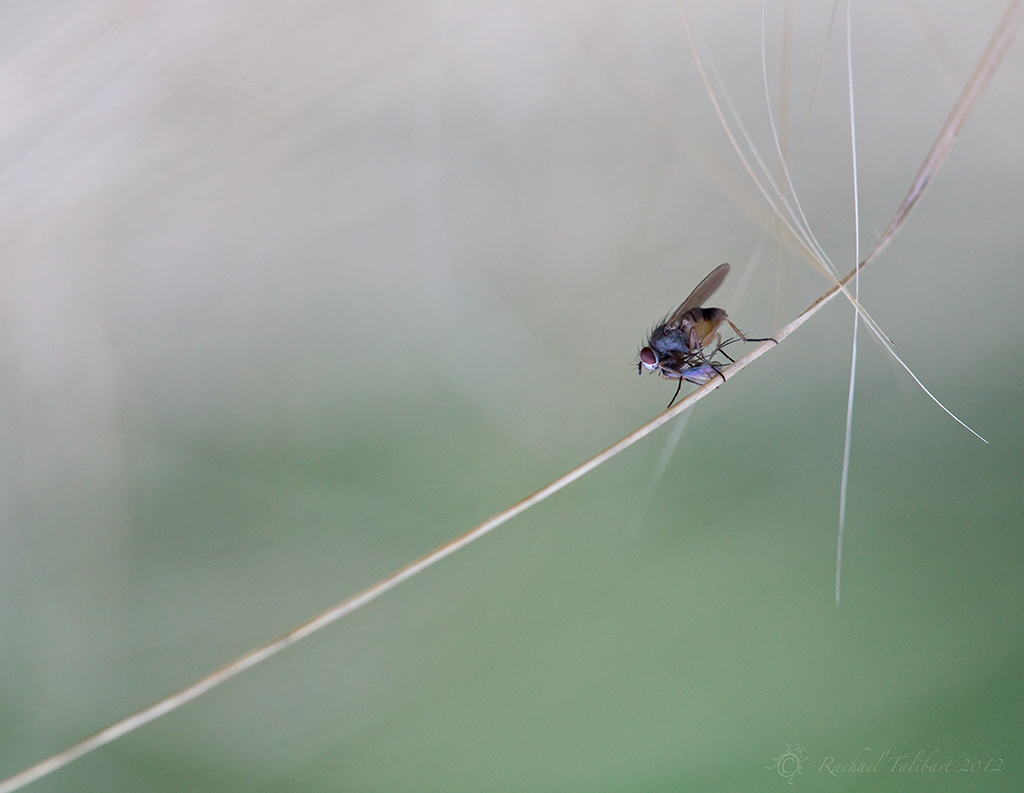
As Autumn sets in and the larger, more showy insects start to disappear, my macro lens turns to the smallest creatures, so small that I can only see the details by photographing them and cropping. Each of these critters is much smaller than they appear here, hardly noticeable as they go about their secret lives.
Carrying your prey across a tightrope of the thinnest grass stem is just showing off.
I like to show these critters with plenty of space around them, to show how very small they are. And their landscape can sometimes be as intriguing as the insects themselves.
Beware the silken hammock

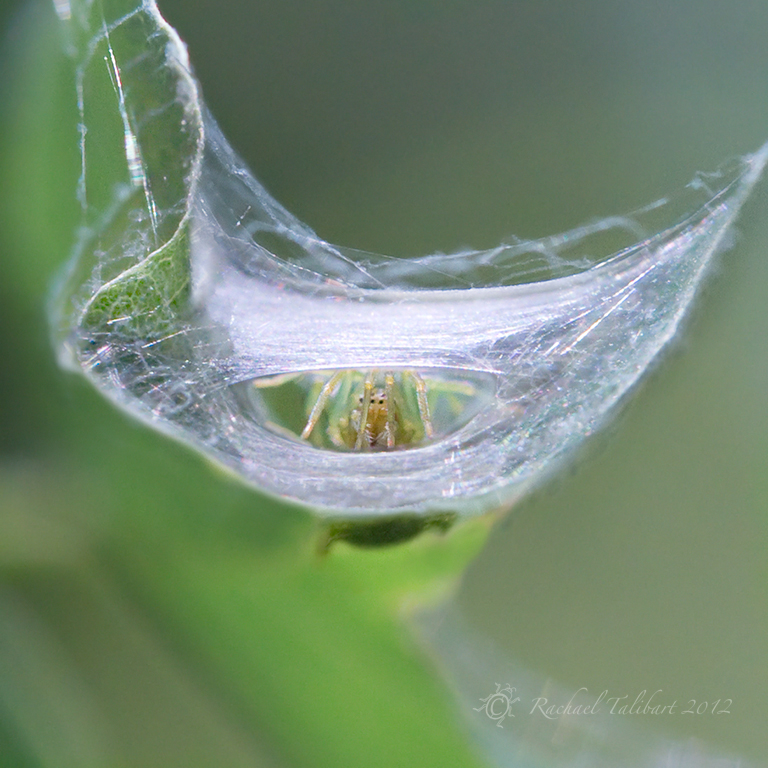
A beautifully woven hammock of silk catches the light. Inside, a tiny green spider awaits its next meal.

When I first posted this I identified it, rather hesitatingly, as araniella cucurbitina, the cucumber green orb spider. I suspected a female given the size of that shadow. The males are more streamlined:

However, I now think the spiders in this post may be nigma walckenaeri. Any experts around? There are several rather pretty spiders lurking among the turning leaves of my sumach tree. I can’t positively identify the next one through all the silk but it may well be another araniella cucurbitina. Or maybe not…

It is definitely spider season here. I wish all the huge ones presently invading my home looked like these instead.
Incredible flying bees

Despite the drop in temperatures over the last couple of days, the hardy carder bees have still been out and about, seemingly tougher than the honey bees who have almost disappeared. Believe it or not, this geranium is called ‘Jolly Bee’!

They are still happily visiting carder bee heaven. I can now be more specific than my earlier identification of it as a member of the mint family; it is Agastache ‘Blackadder’.

This one isn’t flying, but I liked the light so included it anyway.

There were a few bumble bees about this morning. This is the first time I have seen them feeding on the solanum jasminoides flowers. Perhaps they are less fussy at this time of year when other flowers are fading. Look at that pollen sac! Amazing that it can fly at all.
The first day of Autumn
This week there has been a nip in the air. There are suddenly fewer winged insects about and a first-day-of-the season safari round the garden this morning yielded some distinctly Autumnal sights. This harvestman was crouching on a fading rudbeckia flower.
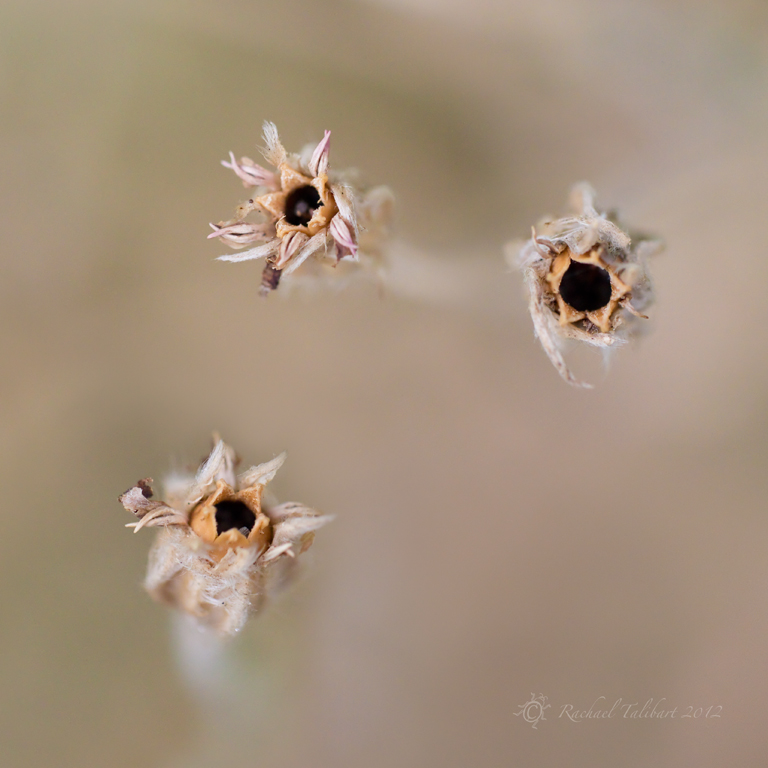
The lychnis coronaria have gone to seed. I took a quick photograph before shaking the seeds liberally over the border. They are very reliable self-seeders in my garden, even colonising the lawn given half a chance.
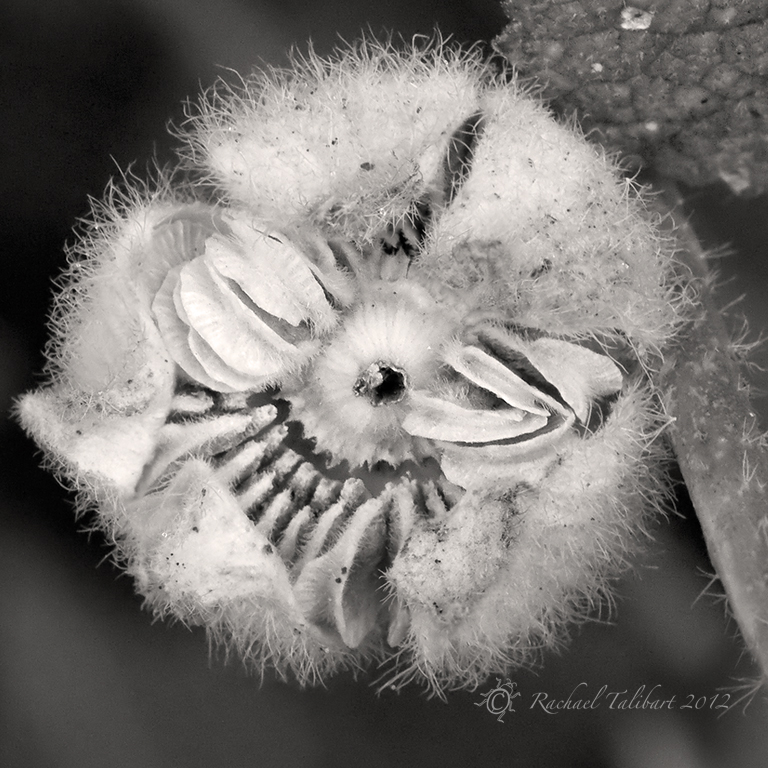
The hollyhock seed heads are opening. I do love the way the seeds are wedged in – they remind me of oysters.
Despite the chill, the speckled bush crickets are still about. This male stared at me rather belligerently, I thought.

All these shots were taken at 3,200 ISO. Not too shabby. The new camera passes the ISO test.
Tiny spider busy at work
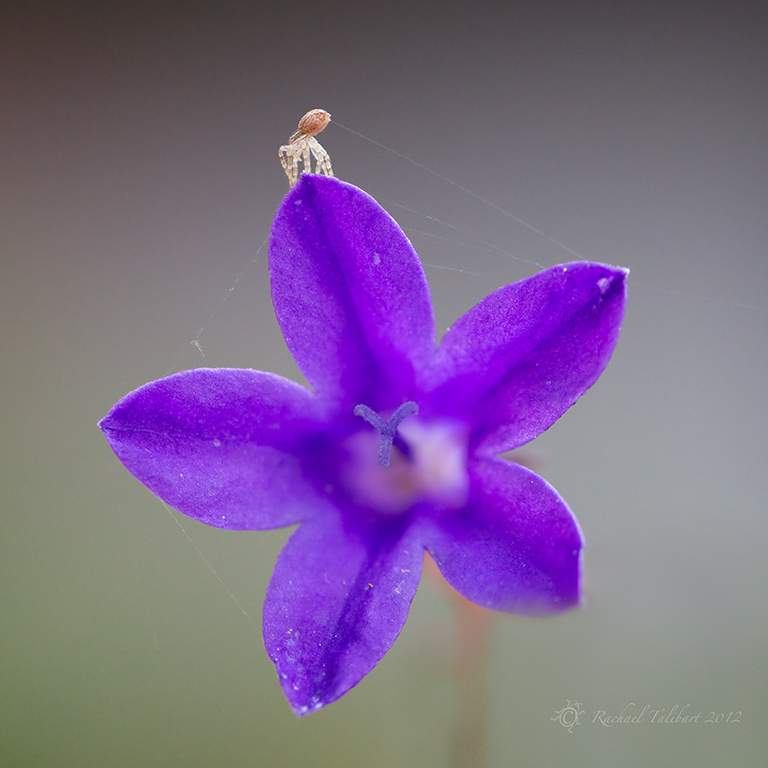
Why is nothing ever easy? My new camera arrived today but did I spend the afternoon putting it through its paces? No, I spent it trying to sort out all the pesky patches and downloads needed to enable my software to read the new camera’s RAW files. Anyway, I got there in the end. So this is its debut shot. To give some idea of the scale, this spiderling is considerably smaller than a garden ant and the flower is a tiny alpine campanula.