The weekend summer arrived

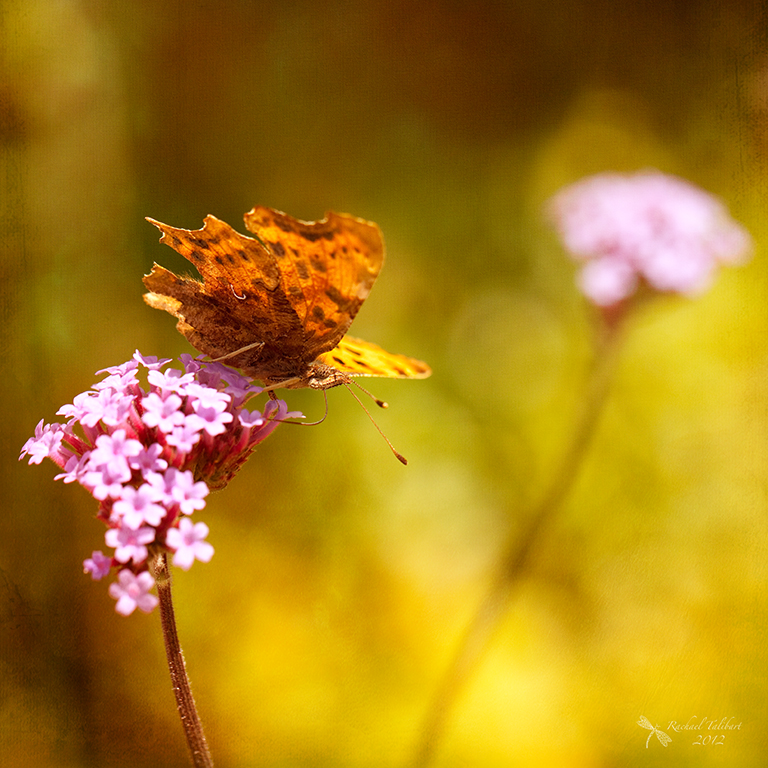
butterfly on verbena
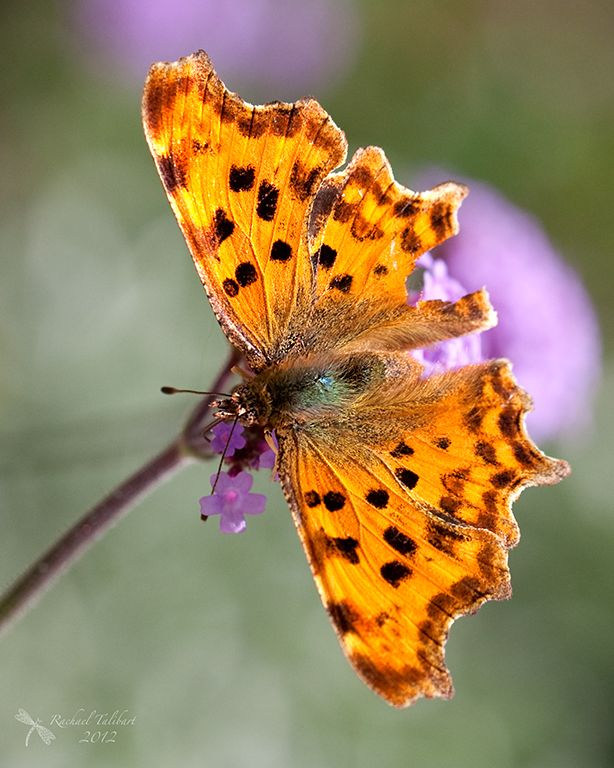
This weekend, summer finally arrived in our little corner of the British Isles. And with it came the butterflies. This Comma (polygonia c-album) just loved the verbena bonariensis in my garden.

butterfly on verbena
I played around with the image in Photoshop. Well, why not?

butterfly on verbena
It was a tatty fellow, even for a Comma, with a notch out of its rear right wing, but that didn’t seem too much of a handicap.


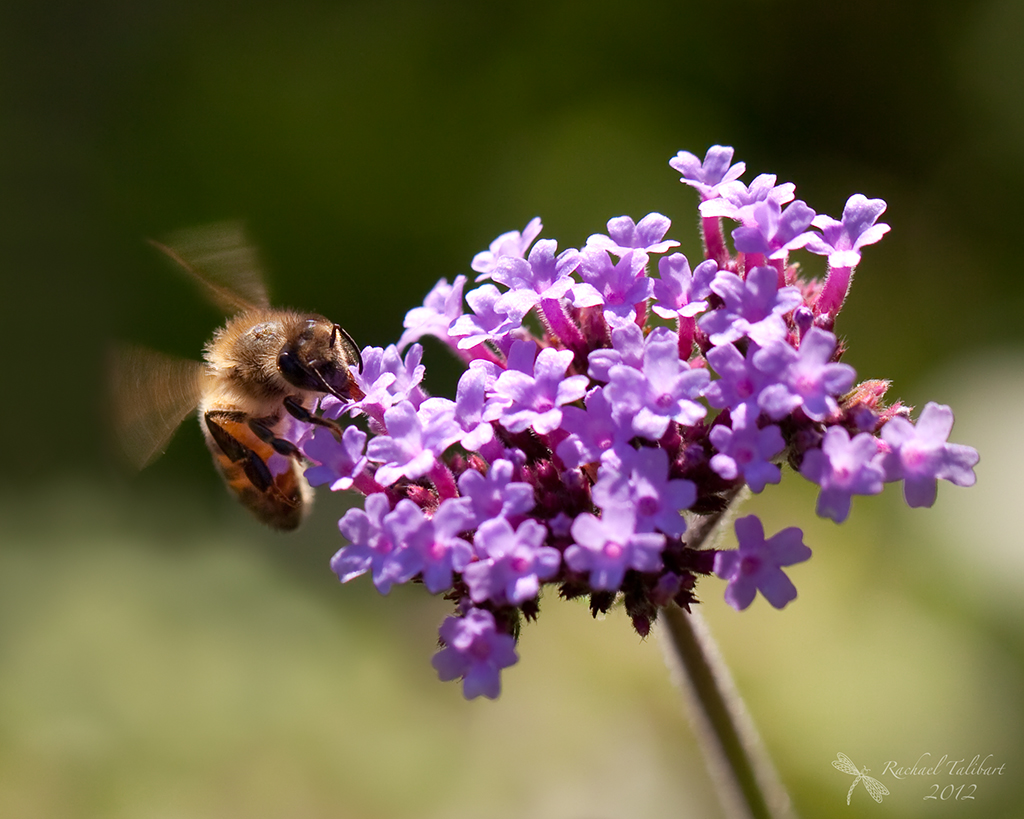
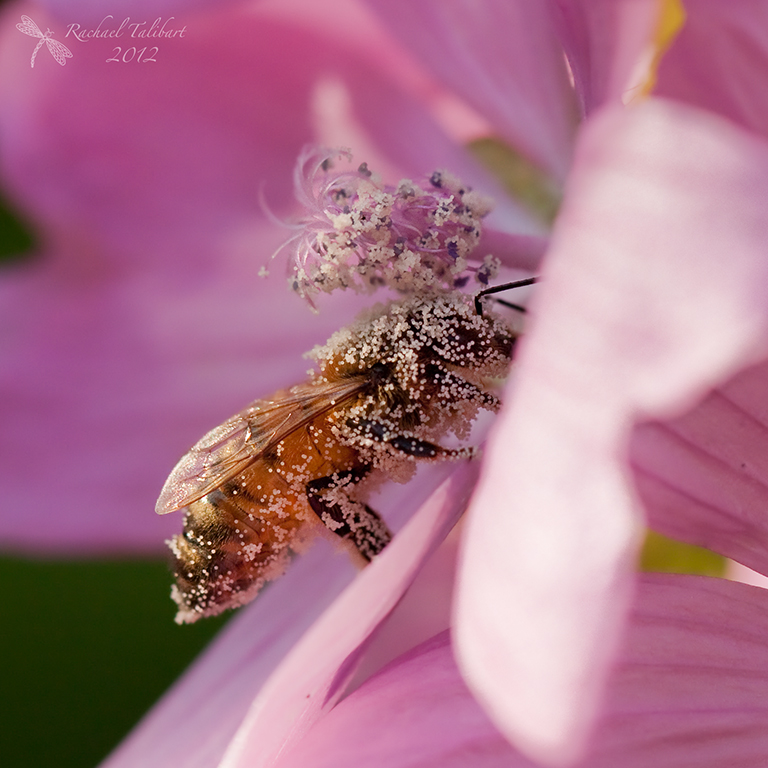
The honey bees were enjoying the verbena too. Nice to see some more about today. They have not enjoyed our very wet and cold weather.

How did you enjoy the weekend? I hope yours was as good as mine. 🙂

Candy-striped leafhopper

graphocephala fennahi

This curious little critter is a rhododendron leafhopper (graphocephala fennahi) nymph. I snapped several shots of it in my garden today. It has excellent eyesight and flipped to the underside of its leaf every time I approached. I liked the softness of this shallow depth of field capture.

Graphocephala fennahi

This is what it will look like later in the summer, when it is full-grown. The adults can fly short distances and make tricky subjects for the camera as they are very flighty and see me coming far too quickly. Although they do little damage to the rhododendron host themselves, outbreaks of a type of rhododendron mould have been connected with infestations of these pretty little critters. But I have to say, they have happily co-existed with my rhododendrons for the ten years we have been here and I consider them a colourful and welcome addition to my garden.

Them!

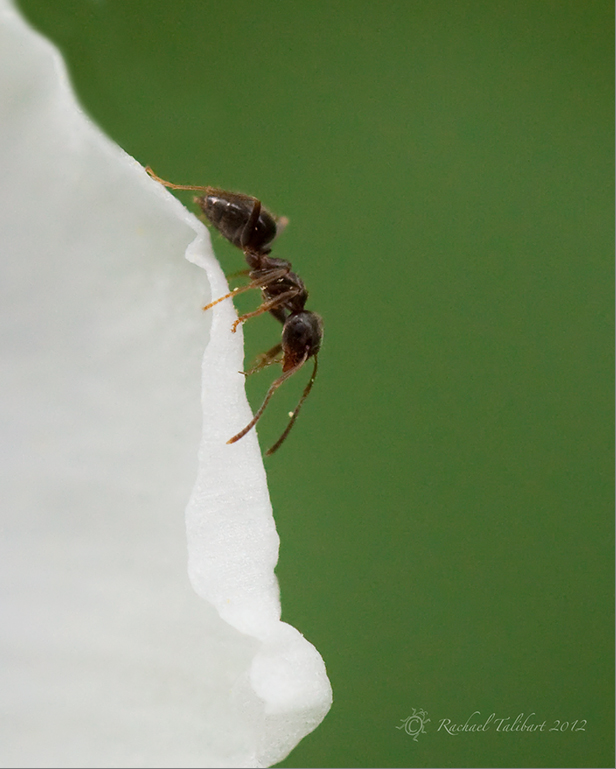
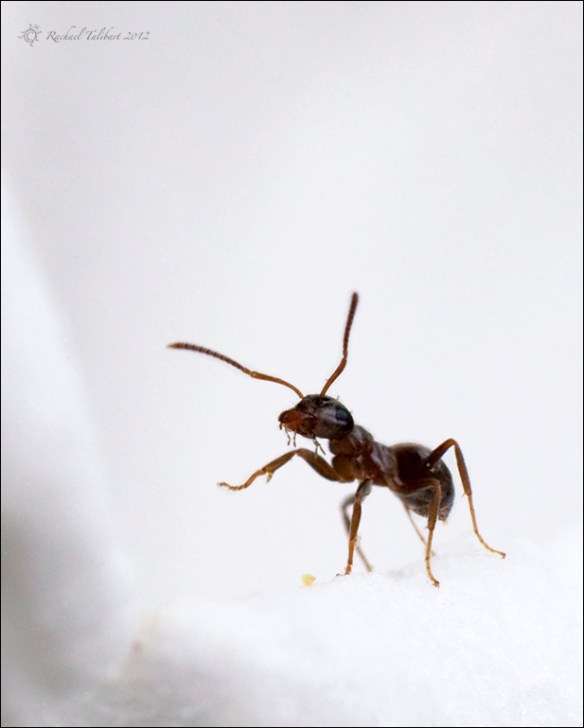
Ant appearing to wave

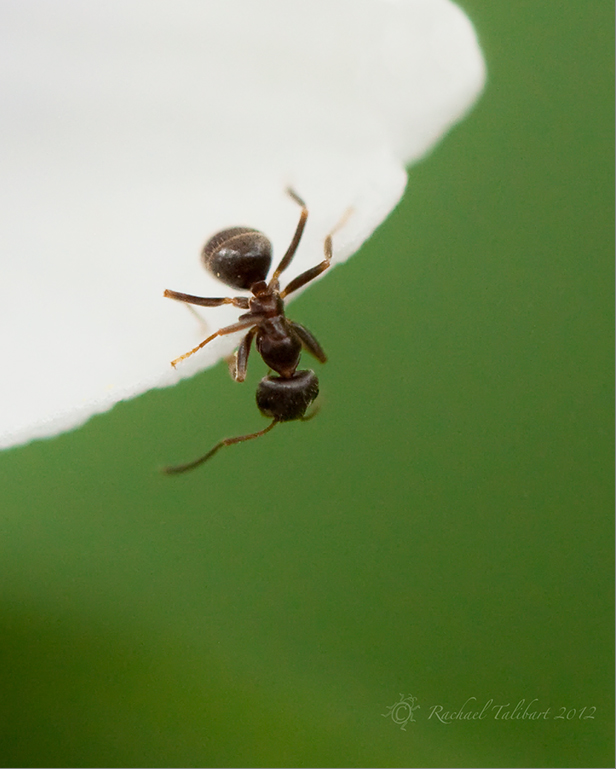
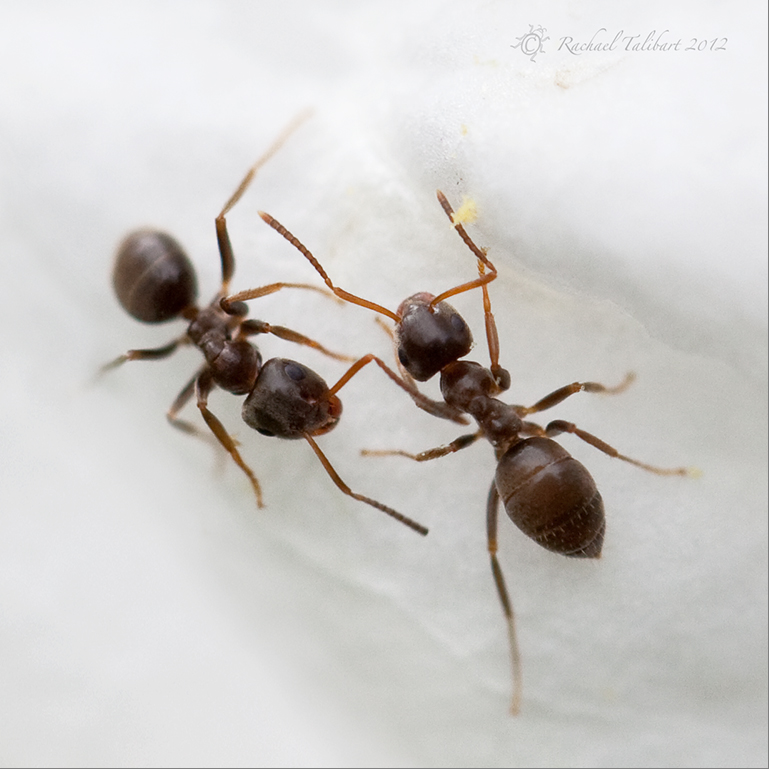
Ants are some of the trickiest subjects for my trusty lens. Apart from being very small, they are rarely still. They do however strike some appealing poses, however fleetingly.

an ant peering below

What’s down there?

In an earlier post, I mentioned my discovery that the study of ants is called myrmecology and that, according to Greek myth, Achilles’s Myrmidon warriors were said to have been created by Zeus out of an ants’ nest. The Myrmidons were known for their ferocity and loyalty. In this passage from Thoreau, a war between rival ants is described in appropriately epic terms:

One day when I went out to my wood-pile, or rather my pile of stumps, I observed two large ants, the one red, the other much larger, nearly half an inch long, and black, fiercely contending with one another. Having once got hold they never let go, but struggled and wrestled and rolled on the chips incessantly. Looking farther, I was surprised to find that the chips were covered with such combatants, that it was not a duellum, but a bellum, a war between two races of ants, the red always pitted against the black, and frequently two red ones to one black. The legions of these Myrmidons covered all the hills and vales in my wood-yard, and the ground was already strewn with the dead and dying, both red and black. It was the only battle which I have ever witnessed, the only battle-field I ever trod while the battle was raging…. On every side they were engaged in deadly combat, yet without any noise that I could hear, and human soldiers never fought so resolutely.

Henry David Thoreau

This is steep!

Perhaps it is not surprising that humans have tended to anthropomorphise ants, and also to view their apparent relentlessness, and hive mind, with some apprehension. Does anyone remember the 1954 sci-fi classic movie, Them! in which nuclear testing causes ants to mutate into giants? 1954 was a bad year for ant-PR: in The Naked Jungle, Charlton Heston has to defend a cocoa plantation against a 2-mile-wide, 20-mile-long column of army ants. Perhaps you may have seen Phase IV, the, now cult, 1974 movie in which ants evolve into the dominant life form on Earth? Other sci-fi villains, like Star Trek’s Borg, appear modelled, at least partly, on ants.

Ying yang ants

The more I photograph ants, the more fascinating I find them. But I am glad they are small.

The shadows now so long do grow,
The brambles like tall cedars show,
Molehills seem mountains, and the ant
Appears a monstrous elephant.

Charles Cotton, ‘Evening Quatrains’ (1689)

Tough love works

20120715-205421.jpg
I have had this agapanthus (African Lily) plant in the same pot for about fifteen years. I never feed it. I rarely water it. And every year it puts on a show, content with the neglect, giving me more flowers every time.

I like the way the flowers emerge, stretching out after being crammed in their papery buds.

20120715-205648.jpg

And then there they are, more buds! As if they are teasing, withholding their beauty for one more moment.

20120715-205705.jpg

Finally, one flower opens, china blue, like the sky on a sunny day (I dimly remember those!)

20120715-211238.jpg

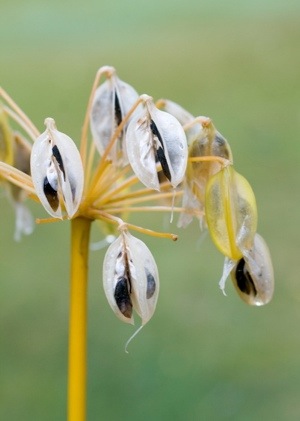
And, when the flowers are done, fat black seeds hang encased in silvery pods, happy to self seed without my having to lift a finger.

20120715-210159.jpg

But, I wonder if you can guess the biggest reason for liking my faithful pot of African Lilies:

20120715-210341.jpg

20120715-211345.jpg

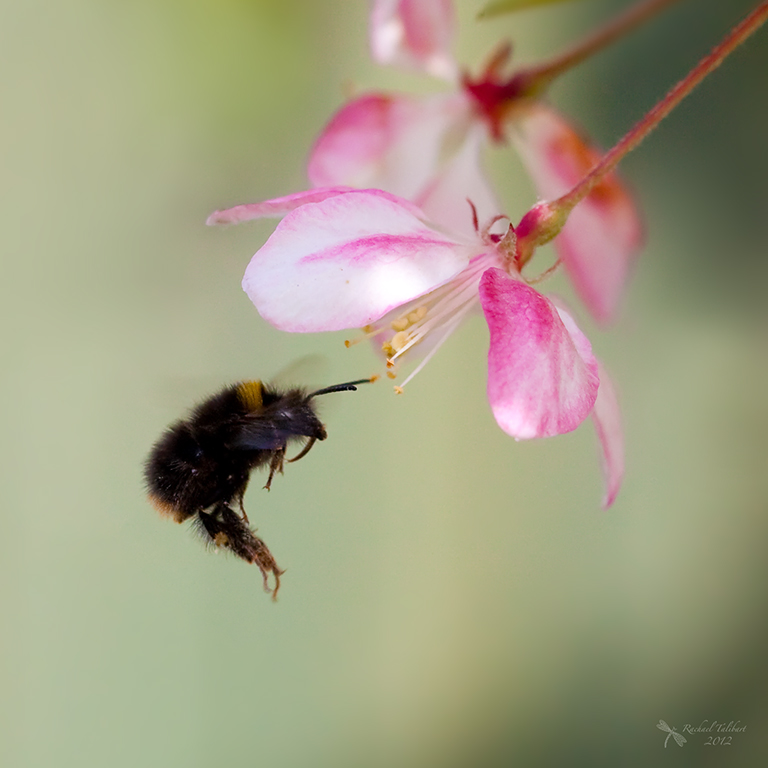
Serendipitous bumble bee

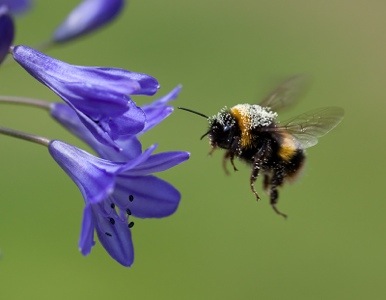
Bumble bee in flight.

One of my faults as a photographer is my workflow management.  I snap away, loving the moment, upload a host of shots, pick the best one of the day and leave the rest to languish, neglected on my hard drive.  But sometimes I happen across a rejected shot and find I like it.  Perhaps such happy accidents make the chaos worthwhile.  Anyway, this afternoon I happened across this forgotten shot from the Spring, and I was glad.

Do you live, like me, in a state of photographic disorder, or are your files neatly honed, indexed, and double backed up?

For so work the honey bees

Image

For so work the honey bees,
Creatures that by a rule in nature teach
The act of order to a peopled kingdom.
They have a king, and officers of sorts,
Where some like magistrates correct at home;
Others like merchants venture trade abroad;
Others like soldiers, armed in their stings,
Make boot upon the summer’s velvet buds,
Which pillage they with merry march bring home
To the tent-royal of their emperor;
Who, busied in his majesty, surveys
The singing masons building roofs of gold,
The civil citizens kneading up the honey,
The poor mechanic porters crowding in
Their heavy burdens at his narrow gate,
The sad-ey’d justice, with his surly hum,
Delivering o’er to executors pale
The lazy yawning drone.

William Shakespeare, Henry V, I.ii

Image

Image

Slow and steady

20120707-183654.jpg

With perseverance the snail reached the ark.

Charles Haddon Spurgeon

20120707-183842.jpg

The year’s at the spring
And day’s at the morn;
Morning’s at seven;
The hillside’s dew-pearled;
The lark’s on the wing;
The snail’s on the thorn;
God’s in his heaven –
All’s right with the world!

Robert Browning

20120707-184021.jpg

Continue reading

One image three ways

Image

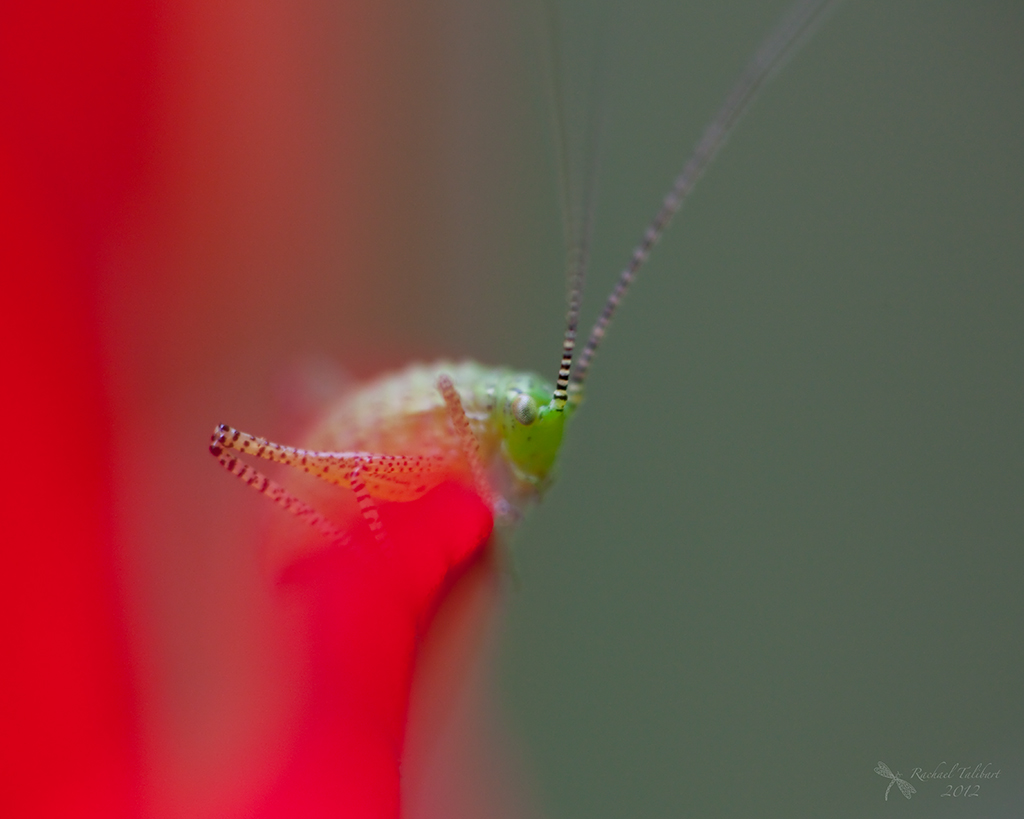
I like this slightly arty shot of a cricket in my garden.  I like the way the cricket barely emerges from its environment. But which version of the image do you like best?  The cool-colour version above. Or the warmer version below.

Image

Or the minimal black and white?

Image

Raynox newbie

Image

I have a new toy, a Raynox DCR-250 super macro conversion lens.  It is a cheap alternative to a macro lens but I am actually using it to get even closer than my macro lens.  It clips onto my 100mm macro to let me get super close.

Image

Depth of field at these sorts of magnifications is ridiculously thin and to get the most out of it you need a tripod and flash.  So I doubt it will be an oft-used piece of kit for my favourite genre, natural light bug macros outdoors.

Image

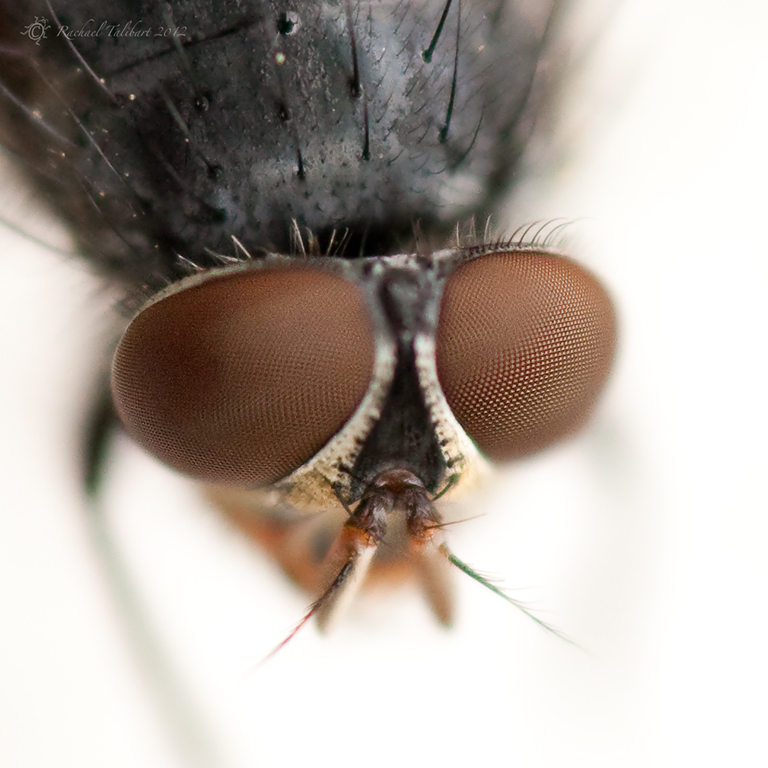
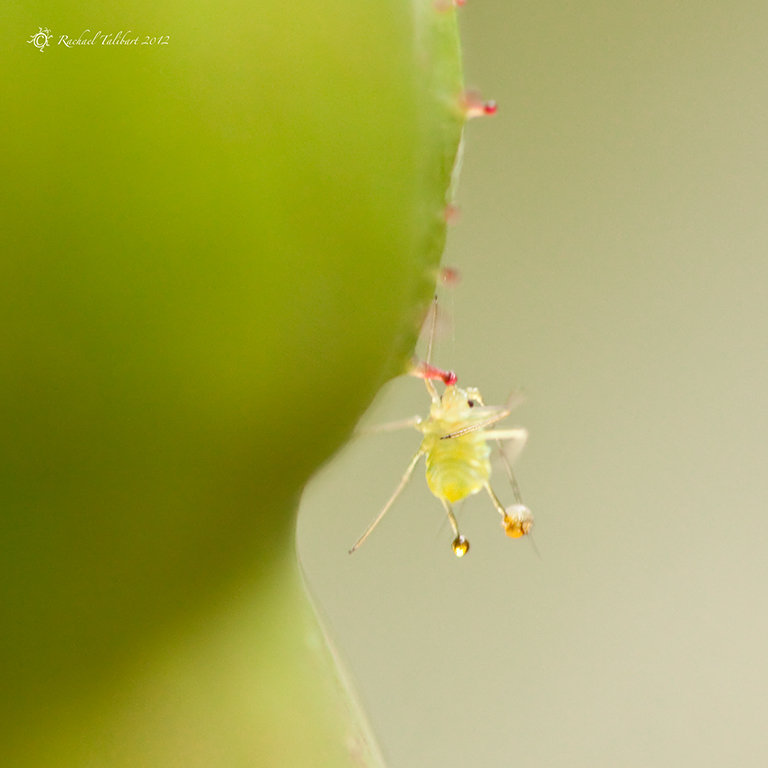
Still, it did give me a lot of fun yesterday afternoon putting it through its paces trying to capture something of the very smallest critters in my garden.  The red-eyed fly below is smaller than an aphid.

Image