A recycled habitat

Fragile

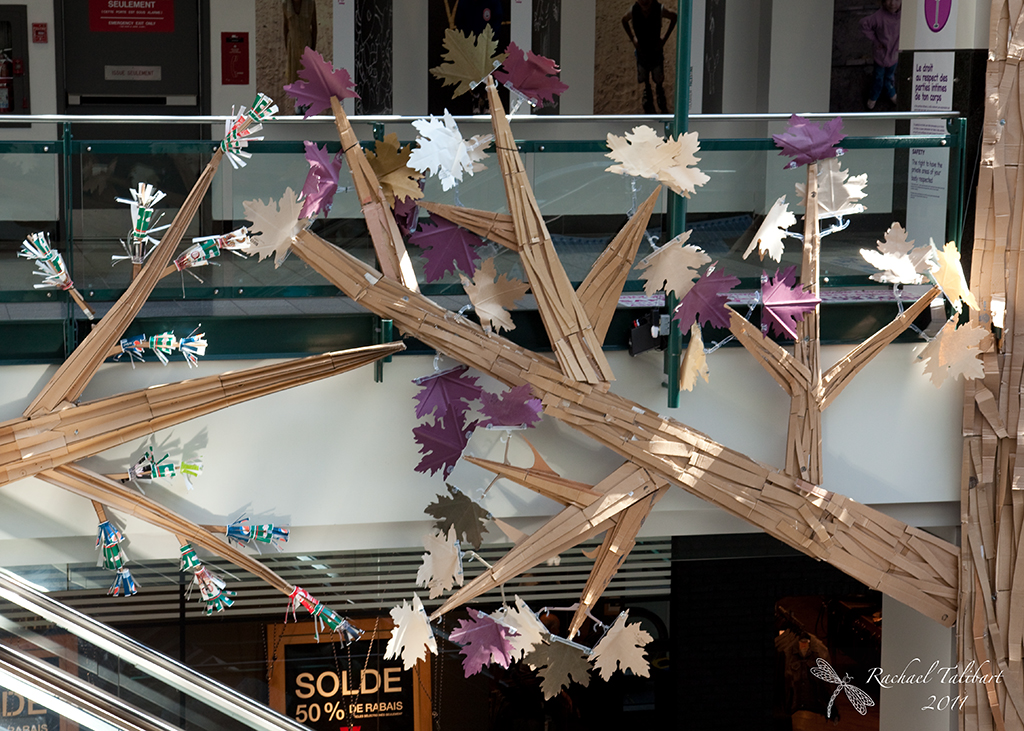
A recycled forest in the heart of Montreal’s Eaton Centre.

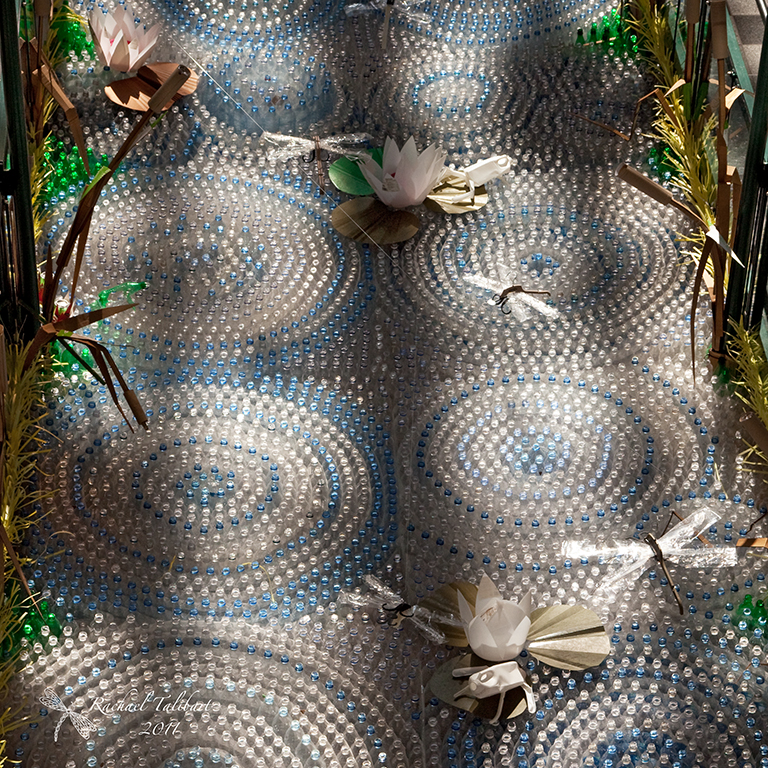
Last summer, while in Montreal on holiday, we visited the Eaton Centre and came across an art installation made from recycled waste materials from the shopping centre.  Called Fragile, it was the work of Roadsworth and Brian Armstrong.  Given access to the Centre’s recycling bins over eight months, the artists transformed the retail centre into an ecosystem.

Cardboard trees with soda can leaves.

Bubble wrap salmon leap up a plastic bottle stream.

Cardboard lily pad with plastic bottle and coat hanger frog.

Coat hanger dragonflies with cellophane wings.

Strolling through the recycled garden.

“When you present something playfully, or even satirically, you create a space where people can drop their defences. When you manage to do this, you can reach them at a level at which they’ll be receptive to what you have to say.”
— Peter Gibson (a.k.a. Roadsworth)

FRAGILE


Reigate

20120618-140446.jpg

We spent yesterday in Reigate, a quiet market town in North Surrey. The only camera I had with me was my iPhone so, in the true tradition (if there has been enough time for there to be a tradition) of iPhoneography, I have lightly edited the images on my iPad and uploaded directly from there.

20120618-140821.jpg

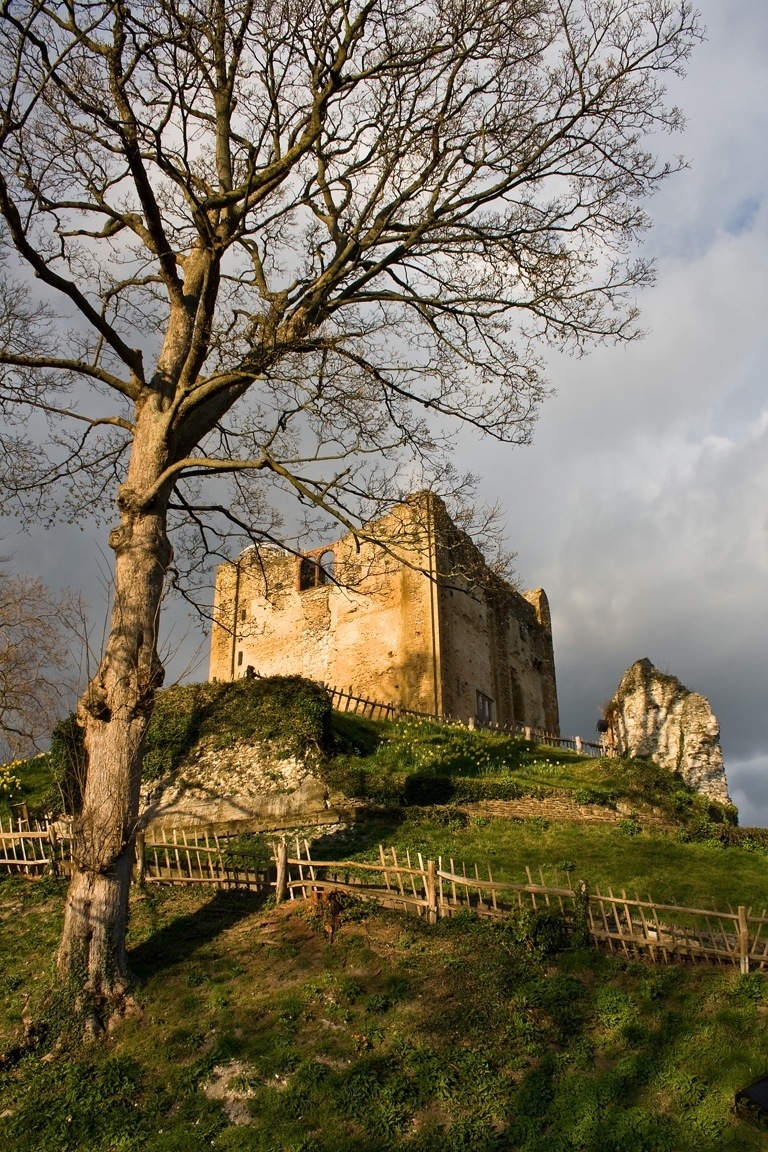
Reigate has the remains of a castle so I get to continue my series on castles. The castle was built in the eleventh century and fell into decay in the seventeenth. None of the stonework remains but the earthworks have been turned into a pretty, and peaceful garden.

20120618-142555.jpg

Underneath the castle gardens is a network of caves. The most well-known, The Barons’ Cave, is reputed to have been a meeting place for the barons who devised the Magna Carta. The stone pyramid in the top photographs guards an underground
sallyport.

20120618-142133.jpg

The few remains of the castle were removed in 1777 when the land was converted into a garden. The mock medieval gateway was built at that time.

We thoroughly enjoyed our day in Reigate. The town has a lot of interesting independent shops, a fine array of eateries and an Everyman cinema (in which we saw Prometheus). Best of all, the sun shone: a rare event here this summer!

20120618-142916.jpg

Guildford Castle

20120605-205447.jpg

Many eyes across the globe were turned towards our little island this weekend as we celebrated the Queen’s Diamond Jubilee. We may not be a very big nation geographically, or even in terms of power these days, but no one can deny we have a rich and long history. Among the signs of that history are the many castles that still stand right across the country. I do love a good castle so I thought I might do an occasional series about them.

20120605-223449.jpg

Guildford Castle is the closest castle to where I live. It was originally a Norman castle, built shortly after the conquest in 1066. Wooden defences were replaced with stone ones during the 12th century. As the only royal castle in Surrey, Guildford Castle became the centre for the county’s administration and justice and the keep, photographed here, housed the county gaol. However, after Henry III’s death in 1272, the castle fell into decline. In 1885, the ruins were bought by Guildford Borough Council. The keep has been renovated and now contains an interesting display about its history. The grounds are now a lovely park, full of beautiful flowers.

20120605-223539.jpg

Insanity

20120530-201254.jpg

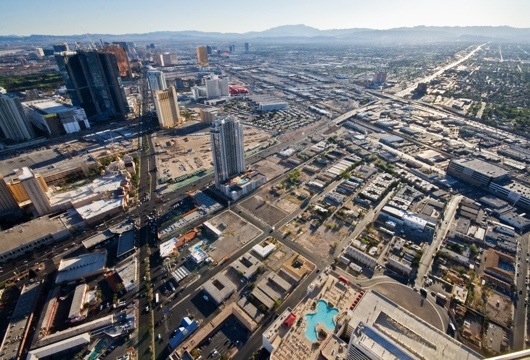
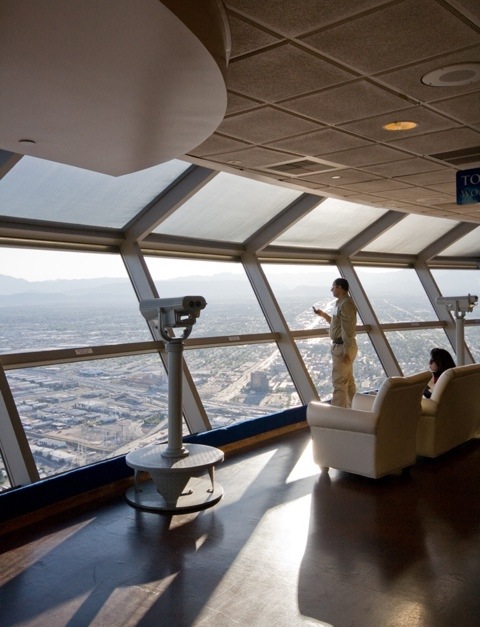
This is one of the rides on top of the Stratosphere tower in Las Vegas. Well-named.

20120530-201626.jpg

Frankly, I can think of nothing I would like to do less. Imagine hanging out over this:

20120530-201750.jpg

The next shot shows where I dug in my heels and refused to budge. A wimp? Or just sane?

20120530-201828.jpg

In fact (and I know I risk offending some here), I heartily dislike Las Vegas. It’s a shame I have had to go there twice now, in order to visit the Grand Canyon and other beautiful natural wonders of the American Southwest. But my family enjoyed the rides. The city is just one big theme park to them. 🙂

Window on the Canyon

Image

This is a view of the Grand Canyon from the Watchtower at Desert View.
The Watchtower, impressively perched on the edge of the mighty canyon, was completed in 1932.  It is one of several buildings in the Grand Canyon area designed by American architect Mary Elizabeth Jane Colter.

Image

Inside, the tower is decorated with murals by Fred Kabotie, a Hopi from second Mesa.

Image

Vien dietro a me, e lascia dir le genti:

Sta come torre ferma, che non crolla

Gia mai la cima per soffiar di’ venti.

Follow me and leave the world to chatter:

Be steady as a tower that never bows its head,

However hard the winds may blow.

Dante Alighieri, Divina Commedia (1307), ‘Purgatorio’, Canto 5

Walk this Wey: Thames Lock

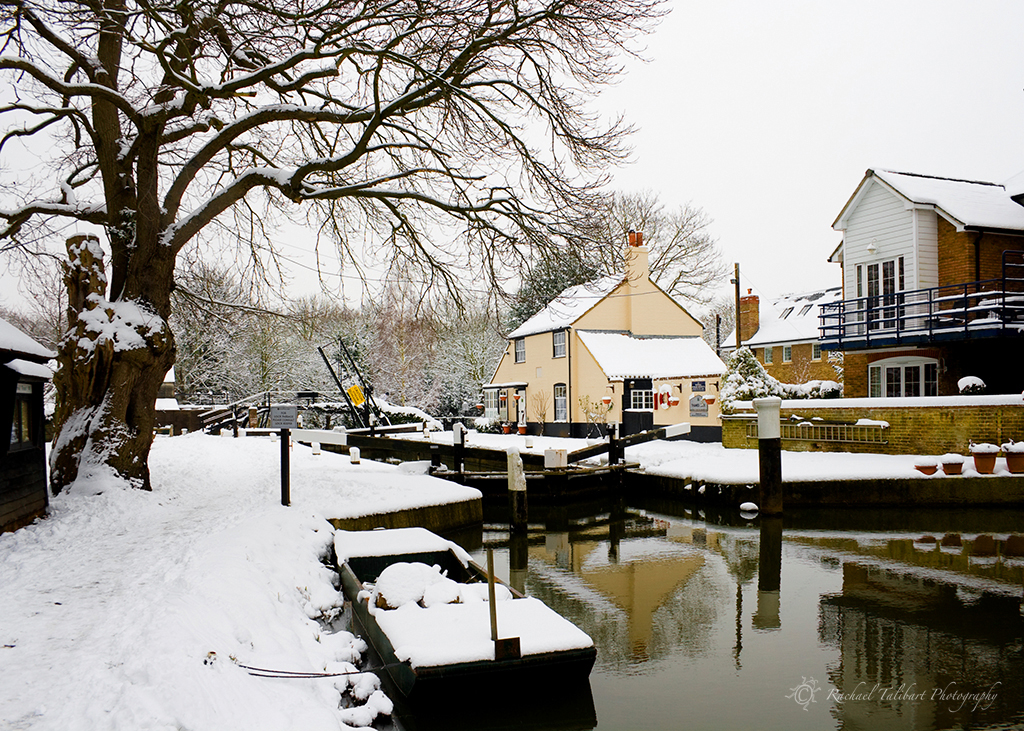
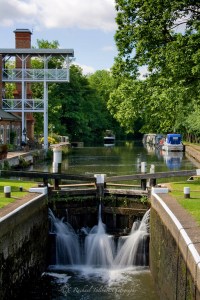
Today’s post is about one of my favourite local places, Thames Lock in Weybridge, Surrey. Thames Lock is the first lock of the Wey and Godalming Navigations.  One of Britain’s earliest man-made navigable waterways, the Navigations, which run for just under 20 miles from the Thames at Weybridge to Godalming, preceded the canal age by a century.  Now owned and managed by the National Trust, the Navigations and their towpath provide a tranquil green corridor through some of Surrey’s most built up areas and a pleasant, easy route through some of its loveliest countryside.
The Navigations were the brainchild of Sir Richard Weston of Sutton Place.  The first ten miles from the Thames were opened in 1653 and extended to Godalming by 1764.  The principal cargo was timber from Surrey’s forests destined for the shipbuilding yards on the banks of the Thames. But the Navigations were also an important route for the transport of wheat, flour and numerous other cargoes, including, in the early 1920s, a number of aircraft from Brooklands.  Today, the Navigations are plied by pleasure boats rather than commercial barges and the towpath is frequented by walkers and cyclists rather than the horses that used to pull the barges.

The entrance to the Navigations from the Thames at Weybridge is misleadingly insignificant in appearance, barely noticeable but for the sign on a post in the river.  Yet it is the location for an exciting passage in local writer, H G Wells’s classic, The War of the Worlds, which concludes as follows:

‘I staggered through the leaping, hissing water towards the shore.  Had my foot stumbled, it would have been the end.  I fell helplessly, in full sight of the Martians, upon the broad, bare, gravelly spit that runs down to mark the angle of the Wey and Thames.  I expected nothing but death.’  (1898)
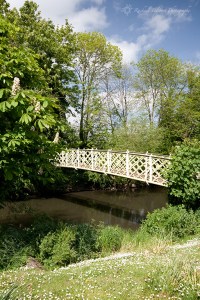
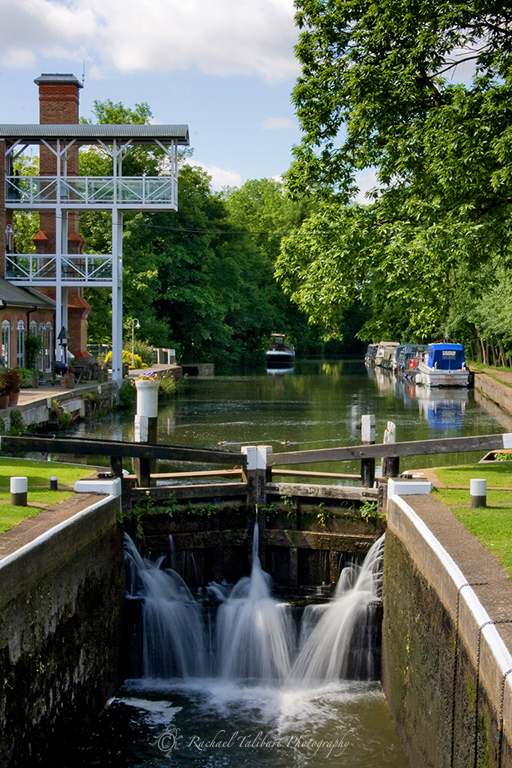
While not as challenging as evading Martian invaders, finding Thames Lock, where the towpath begins, can be difficult on foot.  A path, known as Church Walk, runs from the side of the Old Crown, a 17th century Grade II listed pub on Thames Street to Radnor Road.  The lock can be reached either via Jessamy Road, which bisects Church Walk or, further along Church Walk, via a small path to the right that leads over a pretty white and green footbridge.
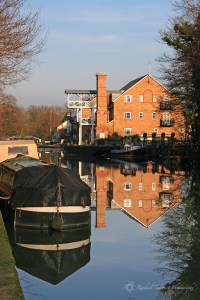
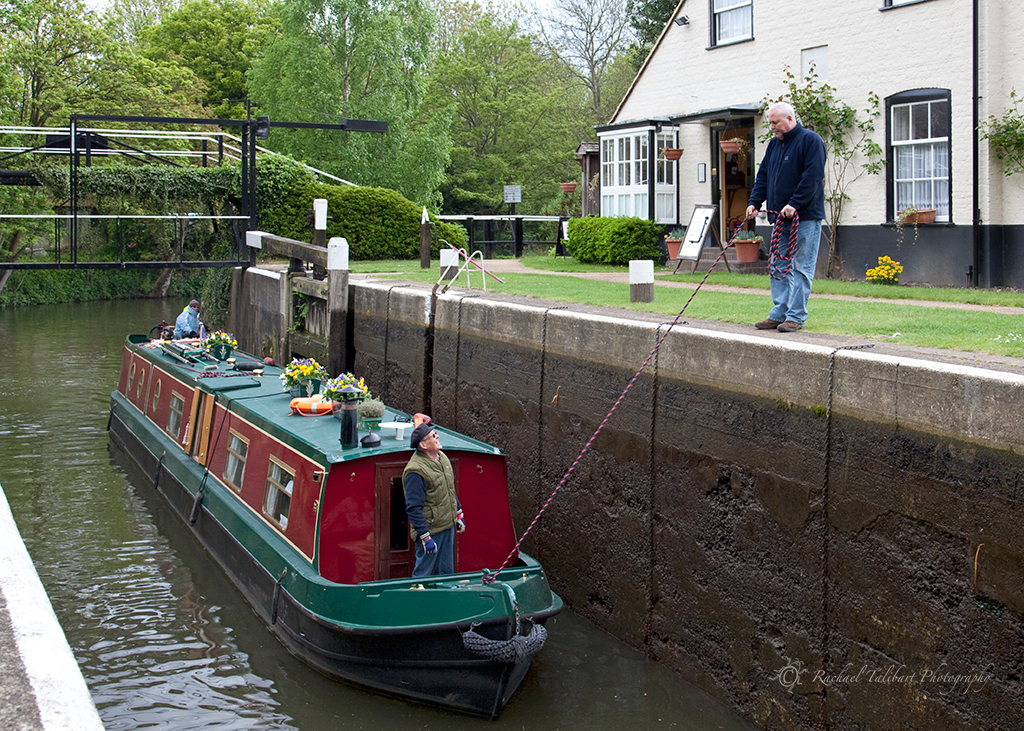
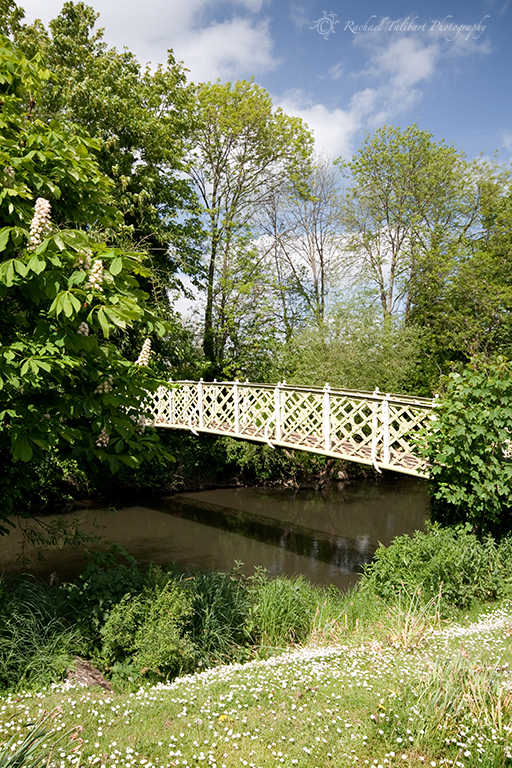
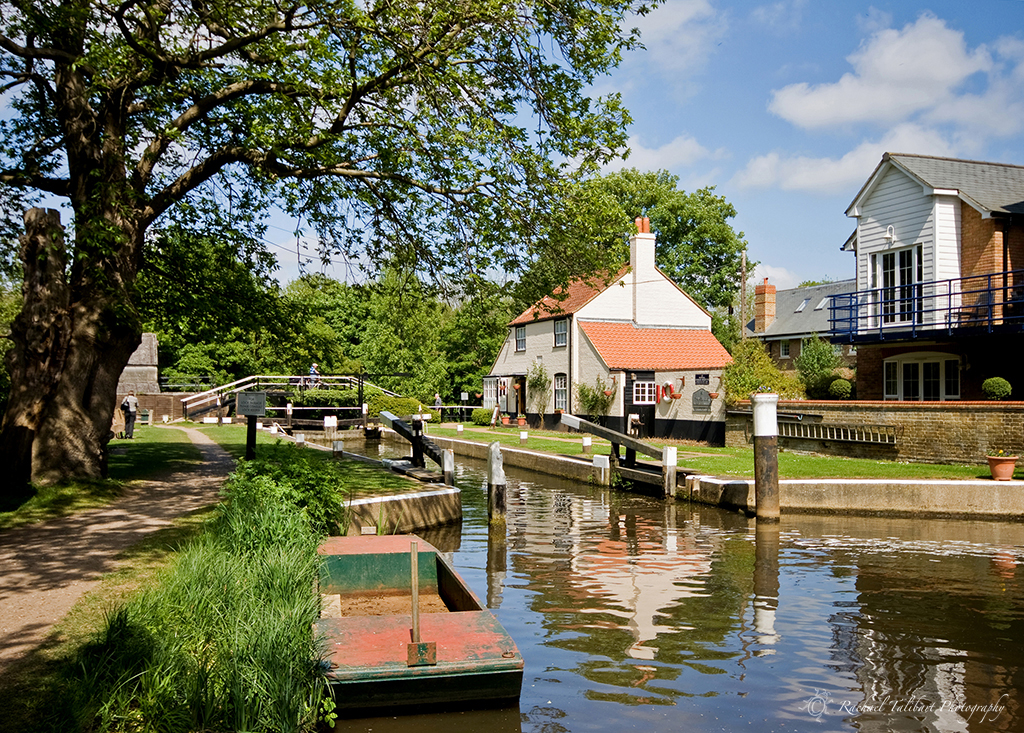
Both routes lead to Whittet’s Ait, an island between the River Wey and the Navigations.  If you follow the gravel footpath beside the public park there, you will come to the lock.  It is a delightful spot, with benches on which you can while away a few minutes or hours watching narrow boats negotiate the lock.   In spring and summer, planters outside the lock keeper’s cottage froth with flowers and it is not unusual to find a local artist at work capturing the idyllic scene.
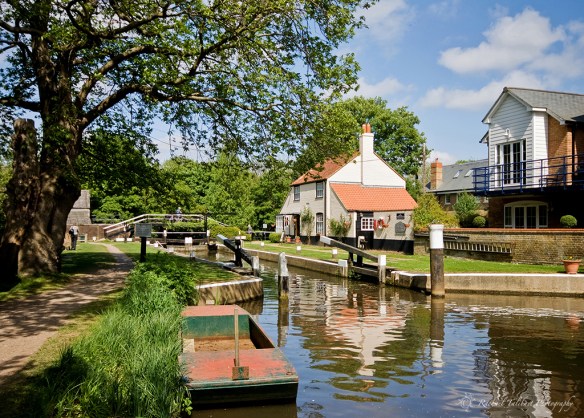
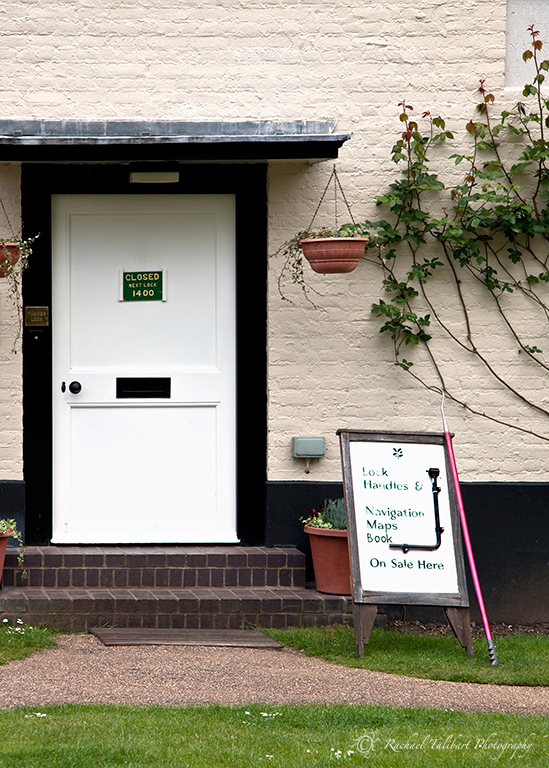
The towpath begins on the other side, accessed via an iron bridge over the lock. Before crossing, however, it is worth stopping at the lock keeper’s cottage where a free map can be obtained and you can buy a booklet of circular walks along the Navigations.

The present cottage was built by the National Trust in 1975 as a replica of its eighteenth century predecessor.   On the other side of the lock, beside the towpath, stand the stables that used to shelter the horses as they waited for the next barges to arrive.  Now they contain a small display on the history and wildlife of the Navigations.

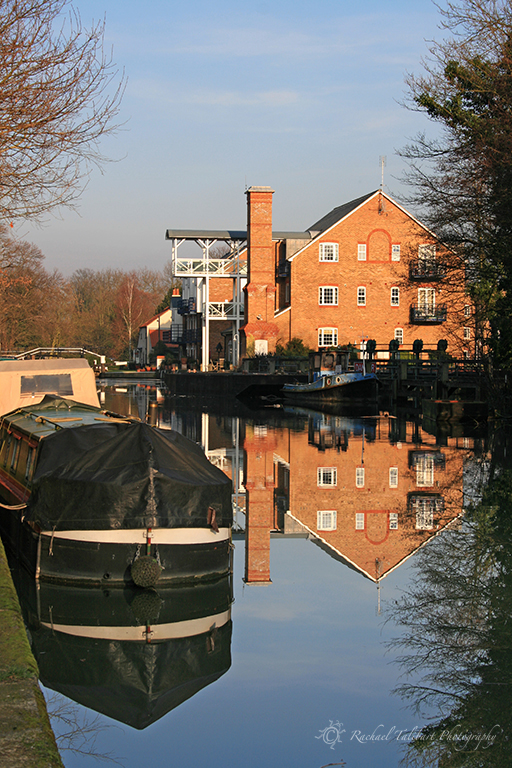
Next to the Lock stands a development of waterside apartments on what was the site of paper, iron and oil seed mills from 1791 to 1963 when the last of many fires on the site finally put paid to further milling.  One account of the fire describes how the water was alight with the highly flammable oil.
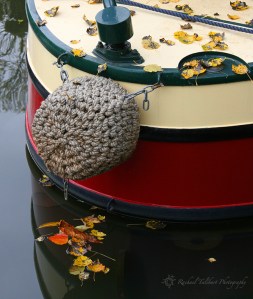
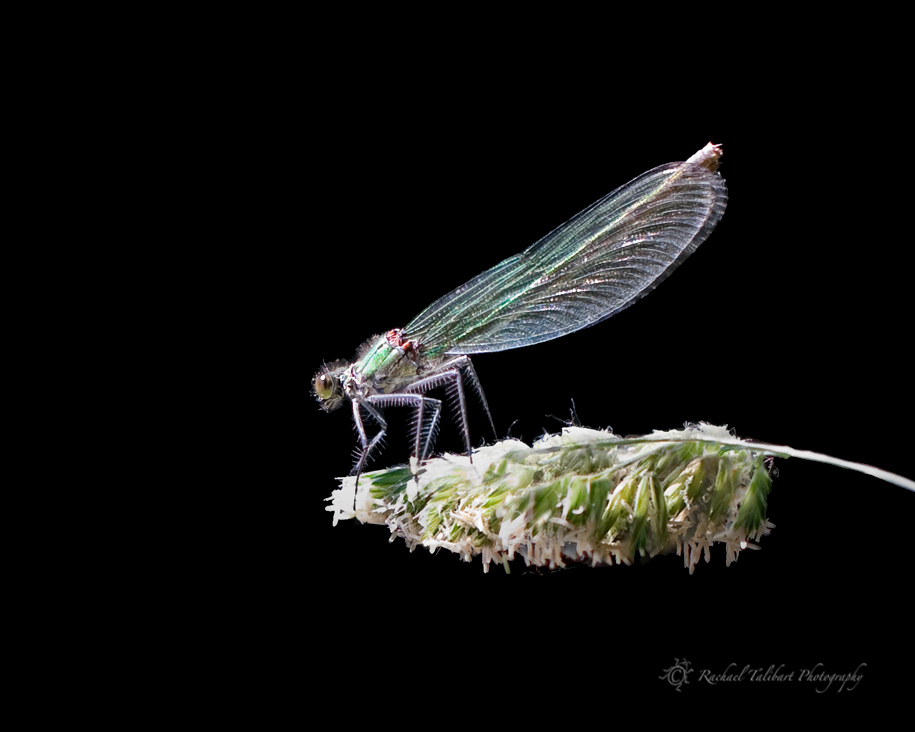
The Navigations are an important habitat for wildlife, from beautiful damselflies …
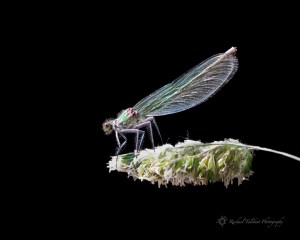
… to slightly more weird and wonderful critters.

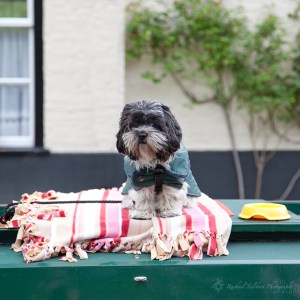
You may even meet an occasional ship’s dog.

Little things

20120519-121056.jpg

Little drops of water,
Little grains of sand,
Make the mighty ocean
And the beauteous land.

And the little moments,
Humble though they be,
Make the mighty ages
Of eternity …

Julia Carney, ‘Little Things’ (1845)

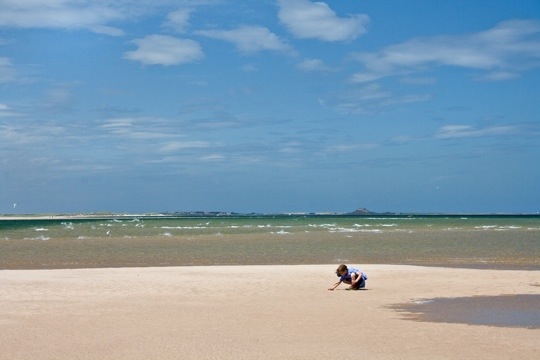
Photo taken on the beautiful coast of Northumberland, England, with Lindisfarne Castle in the distance.

La Belle et la Bête

20120505-145951.jpg

I thought that this tree tunnel at Pagham Harbour in West Sussex had a slightly fairy tale feel. When I edited the shot I was inspired by Jean Cocteau’s iconic film, La Belle et la Bête (1946). I wanted to create a black and white that captured something of the aesthetic of the film. It was just an experiment but fun to do.

Have you ever taken or edited a photo inspired by a favourite movie?