Damselfly embrace

20120604-161653.jpg

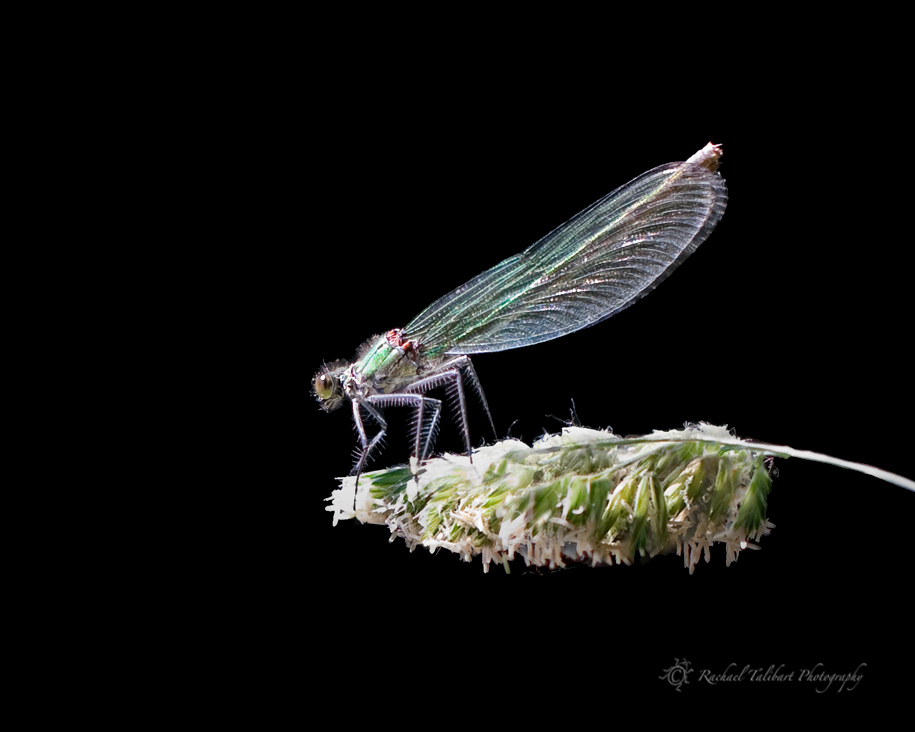
A male damselfly holds onto the female after mating to prevent other males from inseminating her. Taken in my garden this week.

Dimply damsel, sweetly smiling,
All caressing, none beguiling,
Bud of beauty, fairly blowing,
Every charm to nature owing.

Ambrose Philips, ‘To Miss Margaret Pultenay’ (1727)

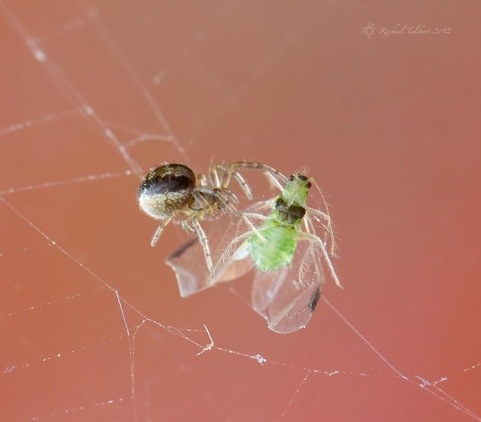
The Spider and the Fly

20120603-101636.jpg

“Will you walk into my parlour?” said the Spider to the Fly,
“‘Tis the prettiest little parlour that ever you did spy;
The way into my parlour is up a winding stair,
And I’ve a many curious things to shew when you are there.”
“Oh no, no,” said the little Fly, “to ask me is in vain,
For who goes up your winding stair can ne’er come down again.”

“I’m sure you must be weary, dear, with soaring up so high;
Will you rest upon my little bed?” said the Spider to the Fly.
“There are pretty curtains drawn around; the sheets are fine and thin,
And if you like to rest awhile, I’ll snugly tuck you in!”
“Oh no, no,” said the little Fly, “for I’ve often heard it said,
They never, never wake again, who sleep upon your bed!”

Said the cunning Spider to the Fly, ” Dear friend what can I do,
To prove the warm affection I’ve always felt for you?
I have within my pantry, good store of all that’s nice;
I’m sure you’re very welcome — will you please to take a slice?”
“Oh no, no,” said the little Fly, “kind Sir, that cannot be,
I’ve heard what’s in your pantry, and I do not wish to see!”

“Sweet creature!” said the Spider, “you’re witty and you’re wise,
How handsome are your gauzy wings, how brilliant are your eyes!
I’ve a little looking-glass upon my parlour shelf,
If you’ll step in one moment, dear, you shall behold yourself.”
“I thank you, gentle sir,” she said, “for what you’re pleased to say,
And bidding you good morning now, I’ll call another day.”

The Spider turned him round about, and went into his den,
For well he knew the silly Fly would soon come back again:
So he wove a subtle web, in a little corner sly,
And set his table ready, to dine upon the Fly.
Then he came out to his door again, and merrily did sing,
“Come hither, hither, pretty Fly, with the pearl and silver wing;
Your robes are green and purple — there’s a crest upon your head;
Your eyes are like the diamond bright, but mine are dull as lead!”

Alas, alas! how very soon this silly little Fly,
Hearing his wily, flattering words, came slowly flitting by;
With buzzing wings she hung aloft, then near and nearer drew,
Thinking only of her brilliant eyes, and green and purple hue –
Thinking only of her crested head – poor foolish thing! At last,
Up jumped the cunning Spider, and fiercely held her fast.
He dragged her up his winding stair, into his dismal den,
Within his little parlour – but she ne’er came out again!

And now dear little children, who may this story read,
To idle, silly flattering words, I pray you ne’er give heed:
Unto an evil counsellor, close heart and ear and eye,
And take a lesson from this tale, of the Spider and the Fly.

Mary Howitt, ‘The Spider and the Fly’ (1829)

Walk this Wey: Thames Lock

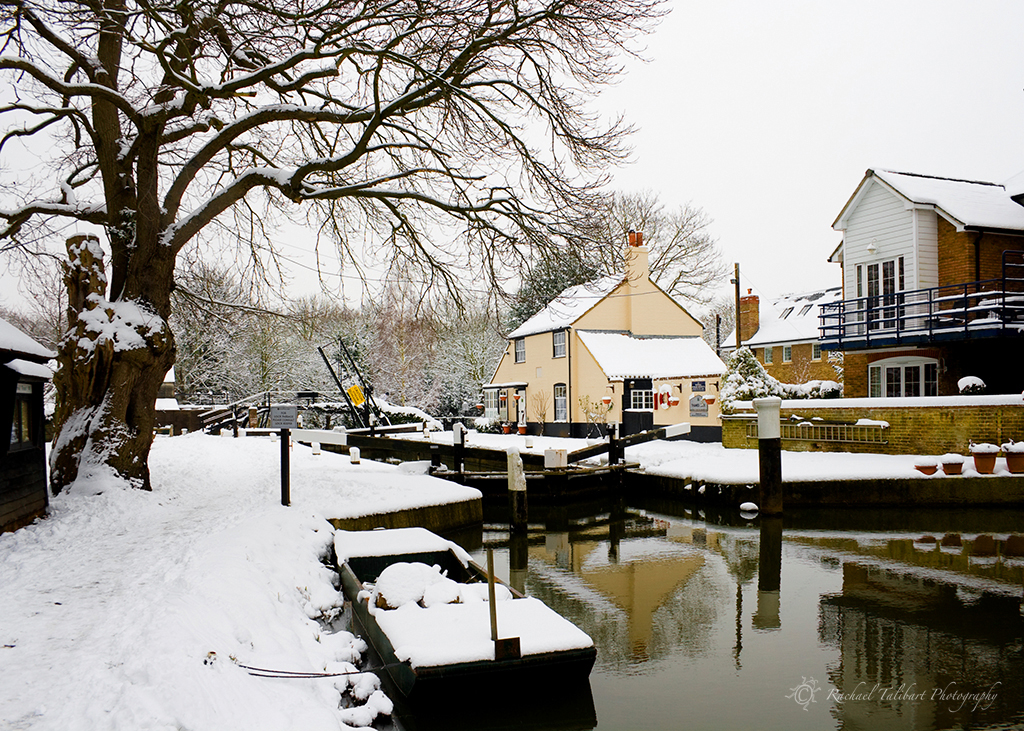
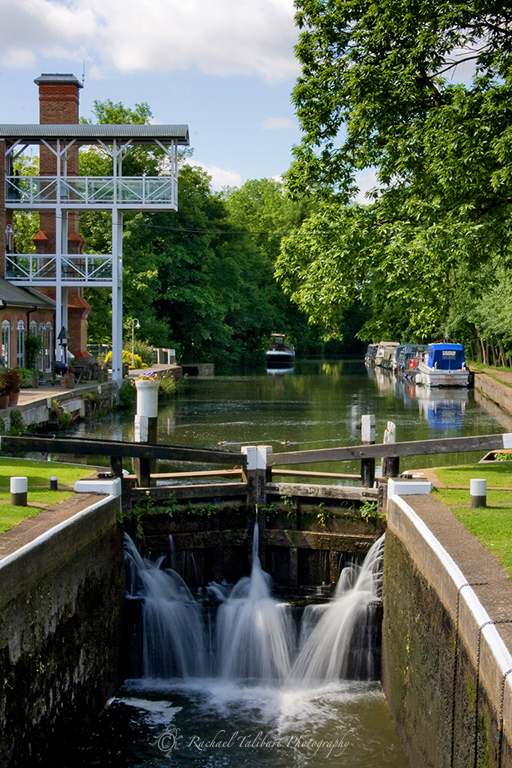
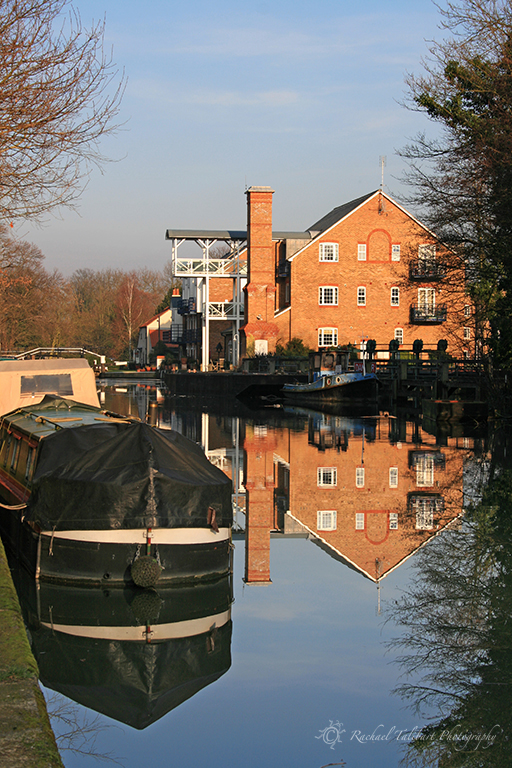
Today’s post is about one of my favourite local places, Thames Lock in Weybridge, Surrey. Thames Lock is the first lock of the Wey and Godalming Navigations.  One of Britain’s earliest man-made navigable waterways, the Navigations, which run for just under 20 miles from the Thames at Weybridge to Godalming, preceded the canal age by a century.  Now owned and managed by the National Trust, the Navigations and their towpath provide a tranquil green corridor through some of Surrey’s most built up areas and a pleasant, easy route through some of its loveliest countryside.

The Navigations were the brainchild of Sir Richard Weston of Sutton Place.  The first ten miles from the Thames were opened in 1653 and extended to Godalming by 1764.  The principal cargo was timber from Surrey’s forests destined for the shipbuilding yards on the banks of the Thames. But the Navigations were also an important route for the transport of wheat, flour and numerous other cargoes, including, in the early 1920s, a number of aircraft from Brooklands.  Today, the Navigations are plied by pleasure boats rather than commercial barges and the towpath is frequented by walkers and cyclists rather than the horses that used to pull the barges.

The entrance to the Navigations from the Thames at Weybridge is misleadingly insignificant in appearance, barely noticeable but for the sign on a post in the river.  Yet it is the location for an exciting passage in local writer, H G Wells’s classic, The War of the Worlds, which concludes as follows:

‘I staggered through the leaping, hissing water towards the shore.  Had my foot stumbled, it would have been the end.  I fell helplessly, in full sight of the Martians, upon the broad, bare, gravelly spit that runs down to mark the angle of the Wey and Thames.  I expected nothing but death.’  (1898)

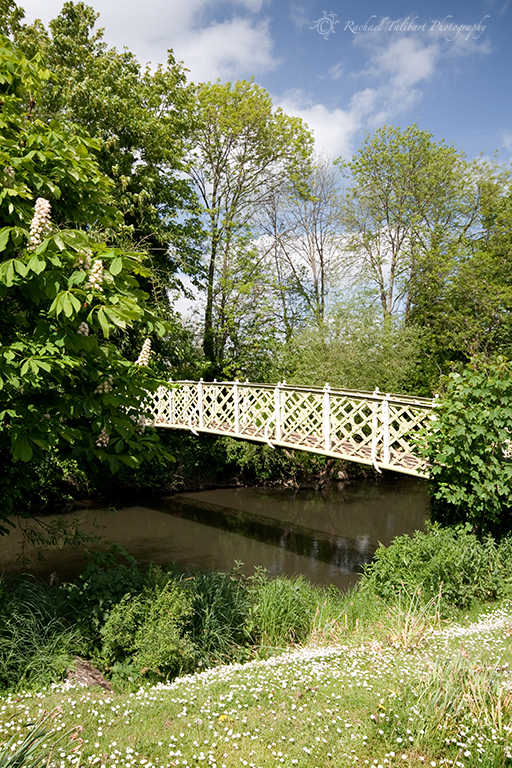
While not as challenging as evading Martian invaders, finding Thames Lock, where the towpath begins, can be difficult on foot.  A path, known as Church Walk, runs from the side of the Old Crown, a 17th century Grade II listed pub on Thames Street to Radnor Road.  The lock can be reached either via Jessamy Road, which bisects Church Walk or, further along Church Walk, via a small path to the right that leads over a pretty white and green footbridge.

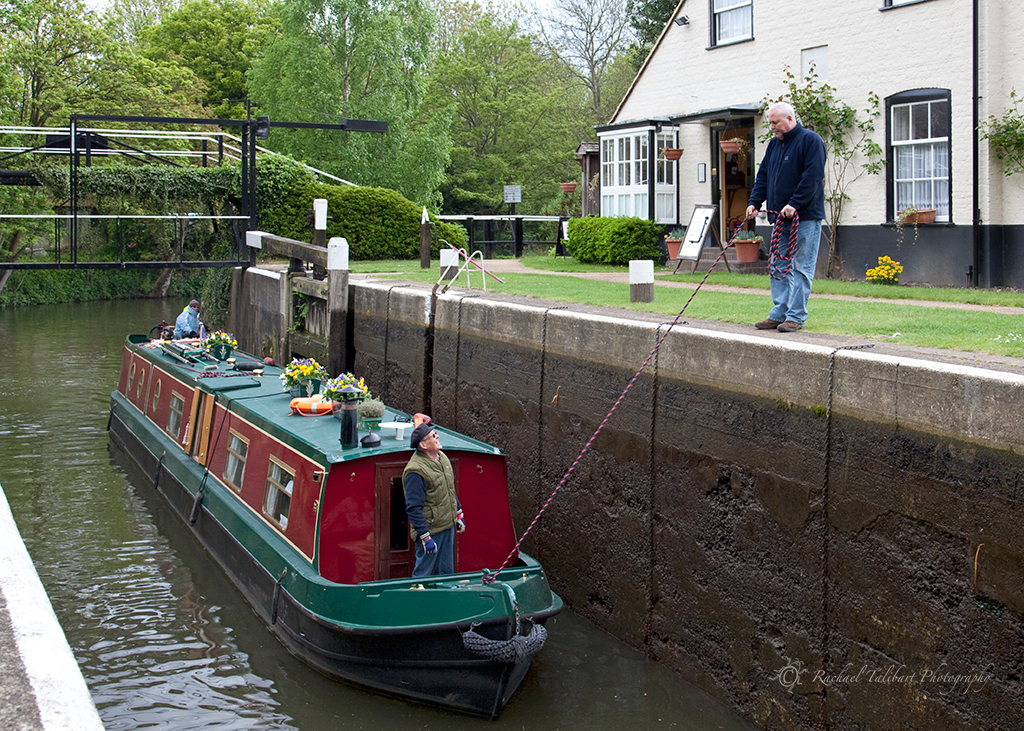
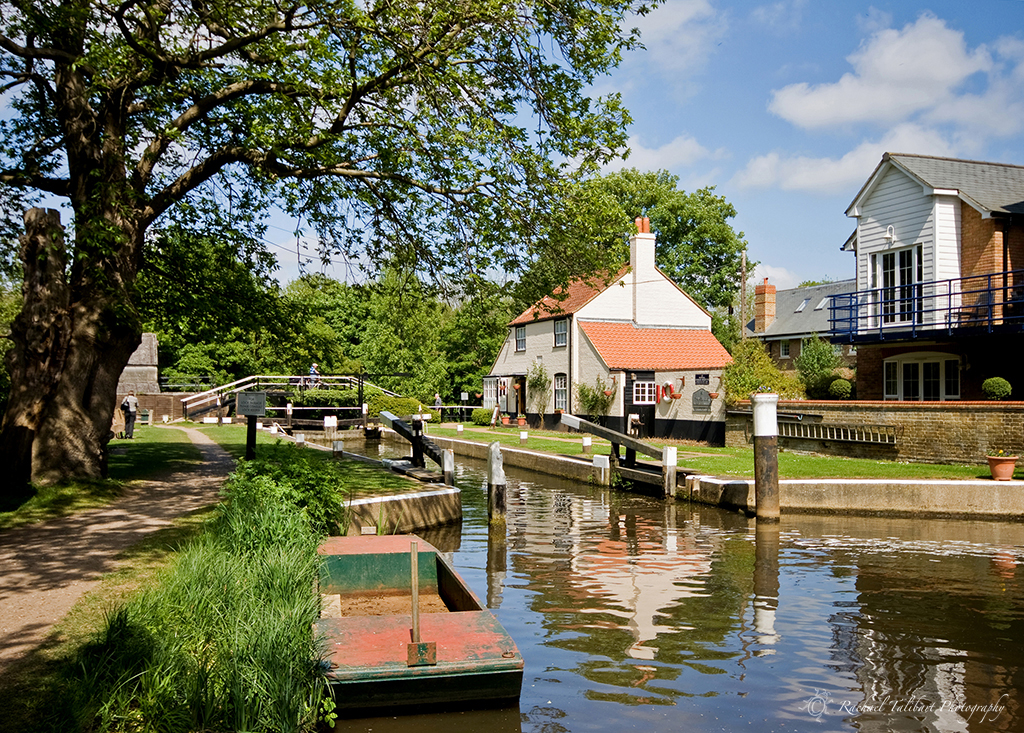
Both routes lead to Whittet’s Ait, an island between the River Wey and the Navigations.  If you follow the gravel footpath beside the public park there, you will come to the lock.  It is a delightful spot, with benches on which you can while away a few minutes or hours watching narrow boats negotiate the lock.   In spring and summer, planters outside the lock keeper’s cottage froth with flowers and it is not unusual to find a local artist at work capturing the idyllic scene.

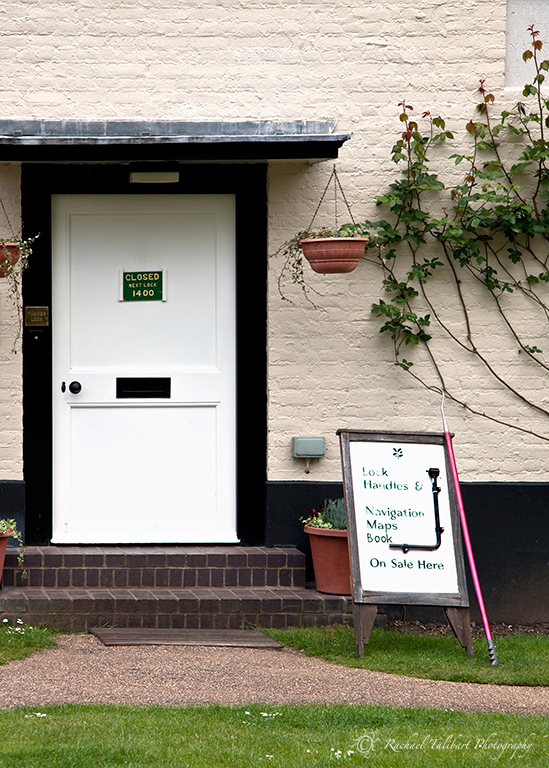
The towpath begins on the other side, accessed via an iron bridge over the lock. Before crossing, however, it is worth stopping at the lock keeper’s cottage where a free map can be obtained and you can buy a booklet of circular walks along the Navigations.

The present cottage was built by the National Trust in 1975 as a replica of its eighteenth century predecessor.   On the other side of the lock, beside the towpath, stand the stables that used to shelter the horses as they waited for the next barges to arrive.  Now they contain a small display on the history and wildlife of the Navigations.

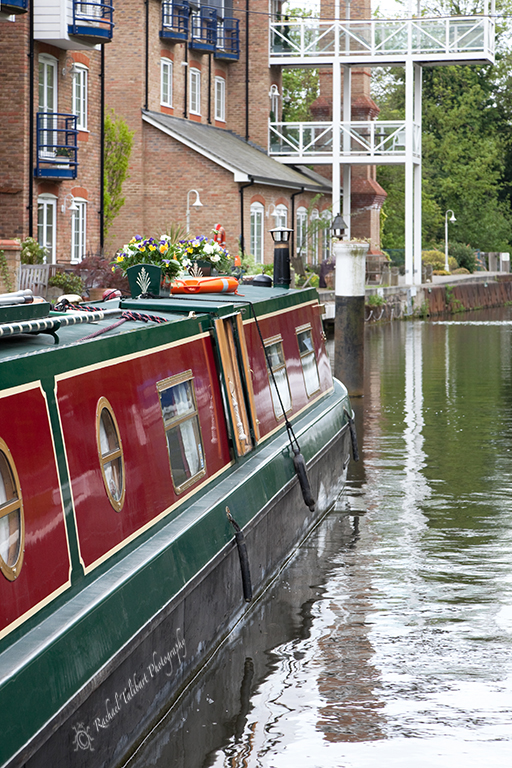
Next to the Lock stands a development of waterside apartments on what was the site of paper, iron and oil seed mills from 1791 to 1963 when the last of many fires on the site finally put paid to further milling.  One account of the fire describes how the water was alight with the highly flammable oil.

The Navigations are an important habitat for wildlife, from beautiful damselflies …

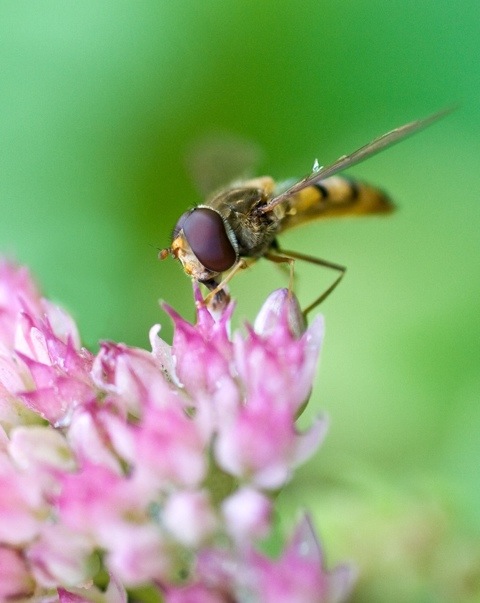
… to slightly more weird and wonderful critters.

You may even meet an occasional ship’s dog.

Orcas, sailboats and houses on stilts

20120527-185201.jpg

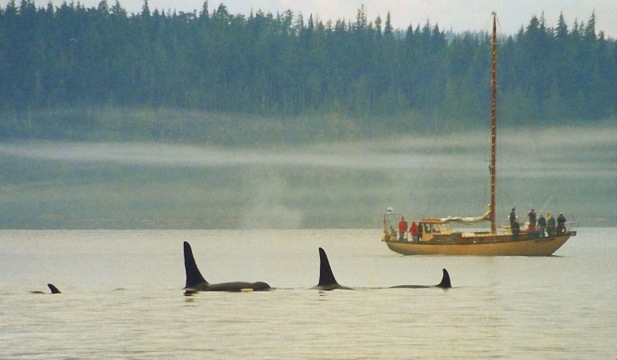
I promised a post about the Wey Navigation this weekend but ran out of time. So, a shortish post today and the Wey will have to wait until later in the week. I took this shot, scanned from a 6×4 print, in 1994. We were watching killer whales in the waters of Robson’s Bight, off the Eastern coast of Vancouver Island. We set off from Telegraph Cove, an atmospheric little settlement that has managed to retain much of its early 20th century character. The picture below, taken on the same trip appears inside and on the back cover of The Encyclopedia of Raincoast Place Names published by Harbour Publishing. Being something of a bookworm, I particularly like it when people buy my images for this purpose. I must confess to a few vanity moments when we were travelling in BC again in 2010 and kept finding the book in shops.

20120527-190118.jpg

A new world beckons

20120522-151652.jpg
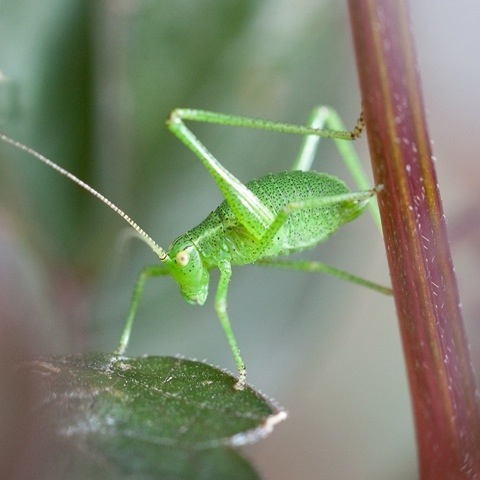
A freshly hatched nymph looks out on a new world.

I was pottering around the herb garden looking for some buggy subjects for my ever-hungry macro lens when I thought I saw a greenfly. Closer observation revealed this pretty little speckled bush cricket nymph. Speckled bush cricket (leptophyes punctatissima) nymphs shed their skins six times. Each version is called an instar. I think this tiny nymph is a newly emerged first instar.

The full adult version, as pictured below, can be found in the garden from about late July onwards. I have found the little nymph in the same place every day since I took its picture. I will follow its progress and try to get some more shots as it grows.

For more information on speckled bush crickets and some super shots see this blog.

20120522-152707.jpg

Macro economics

20120520-120158.jpg

I have found that people often assume that they will not be able to do macro photography without expensive kit. Certainly, I now enjoy using Canon’s 100mm L IS macro lens on the full-frame 5Dii, hardly inexpensive equipment. However, looking back through my macro shots I was surprised how many, fairly decent, images I had achieved before I bought my current kit.

20120520-120639.jpg

Most of the shots in today’s post were taken using my 400D, a fairly old, entry-level DSLR with only 10mpx at its disposal. All of them, except the last one, were taken using the Sigma 50mm f2.8 EX DG Macro, a nice little lens that you can pick up for £250 or less.

20120520-120910.jpg

True macro lenses have a fixed focal length. They are prime lenses and, therefore, usually produce higher image quality than a zoom.

20120520-121051.jpg

A 50mm prime has many uses beyond macro. 50mm is a nice length for portraits, for example. So your macro lens is a good and versatile purchase.

20120520-121234.jpg

I recently read in a photography magazine that anything less than 100mm was too short for shooting insects. Hopefully, this post proves otherwise.

20120520-121440.jpg

Another item often touted as essential for macro work is an expensive flash, usually a ring flash for insects. Not so. All of my macro work is done in natural light.

20120520-121615.jpg

If you are not yet ready to buy a macro lens, there are other options. Extension rings, dioptres, or reverse mounting a regular lens, all achieve good image magnification although handling them well takes some practice.

20120520-121913.jpg

Finally, do not assume that without dedicated macro equipment, close-up work is out of reach. This final shot was taken using a 24-105mm zoom lens.

20120520-122159.jpg

Outdoor macro photography is my favourite genre. You can do it at almost any time of day and it is best when the sun is not shining. Perfect for those of us who live in a country the sun has forgotten and whose other commitments prevent them spending hours waiting for the light at sunset and sunrise.
Are you already a macro fan, or are you thinking of taking it up?

A lover of the meadows

Therefore am I still
A lover of the meadows and the woods,
And mountains; and of all that we behold
From this green earth; of all the mighty world
Of eye, and ear, – both what they half create,
And what perceive; well pleased to recognise
In nature and the language of the sense,
The anchor of my purest thoughts, the nurse,
The guide, the guardian of my heart, and soul
Of all my mortal being …

William Wordsworth, ‘Lines composed a few miles above Tintern Abbey’ (1798)

Such heavenly grace

20120517-104506.jpg

My soul is an enchanted boat,
Which, like a sleeping swan, doth float
Upon the silver waves of thy sweet singing.


Shelley, Prometheus Unbound (1820), II.v, l.39

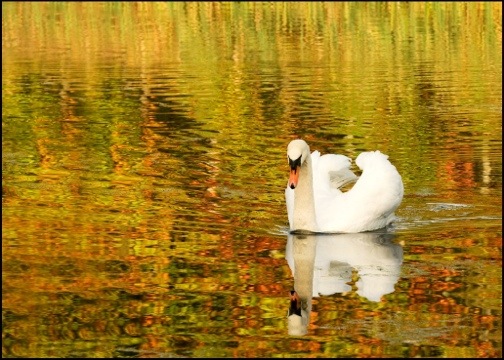
The mute swan, although ubiquitous in Britain, is always a graceful sight and provides an elegant focal point for the lake-side photographer. According to legend, the mute swan is mute through life until the moment before its death when it emits a beautiful song. This is the origin of the expression, “swan song”.

20120517-105643.jpg

The silver Swan, who living had no note,
When Death approached, unlocked her silent throat.
Leaning her breast against the reedy shore,
Thus sang her first and last, and sang no more:
“Farewell, all joys! O Death, come close mine eyes!
“More Geese than Swans now live, more Fools than Wise.


Orlando Gibbons, “The Silver Swan”, The First Set of Madrigals and Motets of Five Parts (1612)

Ladybird, ladybug

20120516-131525.jpg

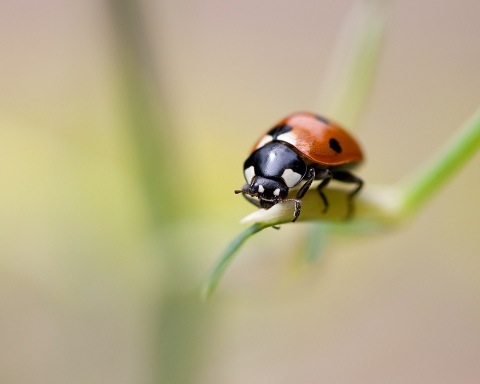
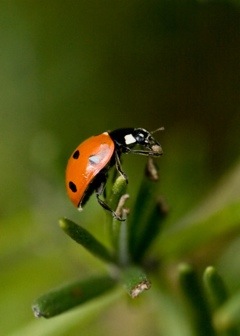
The last in my mini-series about the aphid, ant, ladybird relationship, is the top predator, the ladybird, or ladybug if you are American. Ladybirds are beetles of the family coccinellidae. They are probably the most easily recognisable beetle thanks to their characteristic bright colouring.

20120516-131909.jpg

Of the world’s 3500 species of ladybird, 46 live in Britain. Probably the most common is the seven-spot ladybird, coccinella 7-punctata.

20120516-133130.jpg

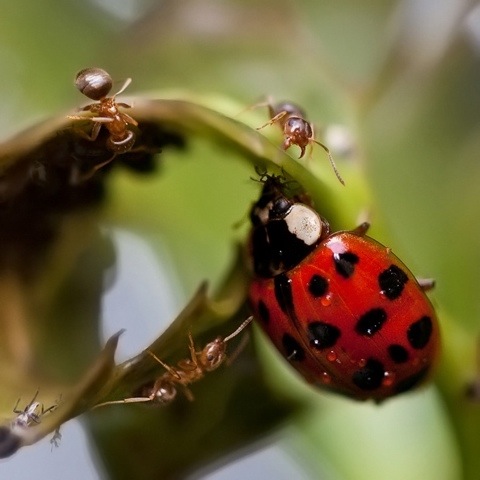
Although many types of ladybird will eat other insects, their favourite meal is aphids, which they will hoover-up without being in the least deterred by ant-shepherds.

20120516-132219.jpg

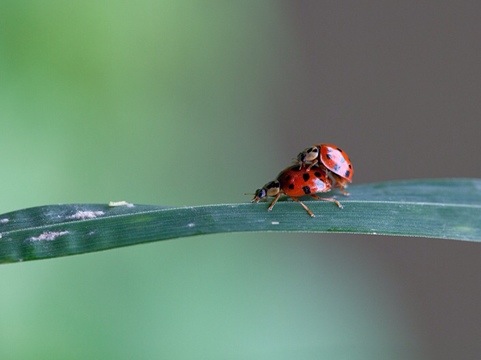
May is the main month for ladybirds to mate.

20120516-132252.jpg

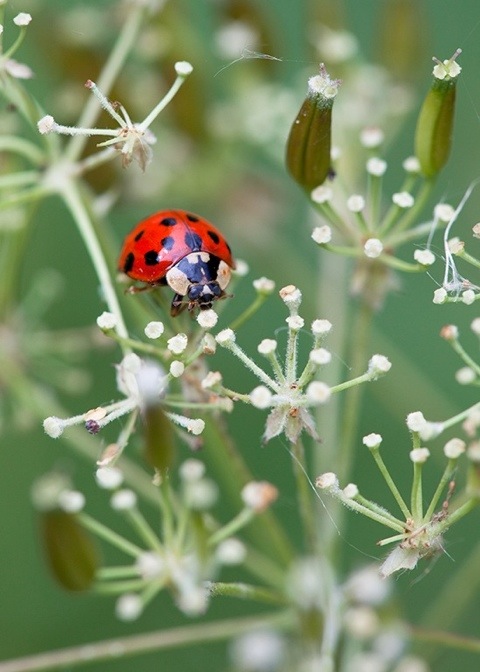
In recent years, Britain has seen an influx of the Harlequin ladybird, harmonia axyridis. This large ladybird is considered to be a potential threat to indigenous species. It is a voracious hunter and its larvae will eat the larvae and pupae of other ladybirds. It may also mate with indigenous species.

20120516-132533.jpg

The Harlequin is difficult to identify accurately because its colours vary so much. I think, however, that in the picture above, both ladybirds are harlequins, despite their very different appearances. One clue is that Harlequins usually have brown rather than black legs.

20120516-132733.jpg

Ladybirds hibernate through the winter. Here a group of harlequins sleep huddled together.

20120516-132836.jpg

Somewhere on my hard drive are images of ladybird larvae and pupae. When I find them, I will add them here. In the meantime, I leave you with the well-known nursery rhyme:

“Ladybird, ladybird, fly away home
Your house is on fire,
And your children are gone”.

20120516-132904.jpg

No bugs tomorrow, I promise!