La Belle et la Bête

20120505-145951.jpg

I thought that this tree tunnel at Pagham Harbour in West Sussex had a slightly fairy tale feel. When I edited the shot I was inspired by Jean Cocteau’s iconic film, La Belle et la Bête (1946). I wanted to create a black and white that captured something of the aesthetic of the film. It was just an experiment but fun to do.

Have you ever taken or edited a photo inspired by a favourite movie?

Feeling waspish

20120503-095102.jpg

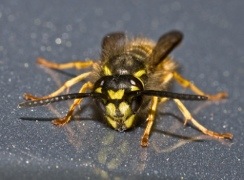
There are many different types of wasp in the UK. The one we all know is the common wasp (above), the ruin of many a barbecue in summer and autumn. I call this shot, “Mirror, mirror on the wall”.

20120503-102153.jpg

Common wasps are social wasps, living in colonies. There are also many different types of solitary wasp, that dig burrows and, very often, have a parasitic life-cycle, such as the wasp in the next picture.

20120503-095412.jpg

Your eyes are not deceiving you; this wasp is indeed pulling the legs off a spider! It is a type of spider wasp of the family pompilidae. (Identification for an amateur is not straightforward but I think this is probably pompilus cinereus.) They find a spider, paralyse it with their sting, and drag it back to their burrow. Then they lay an egg inside the spider. Once the egg hatches, the larva eats the spider alive, from the inside out. Sometimes, if the spider is too big for the burrow, the wasp will pull its legs off. The expression, “feeling waspish”, takes on new significance!

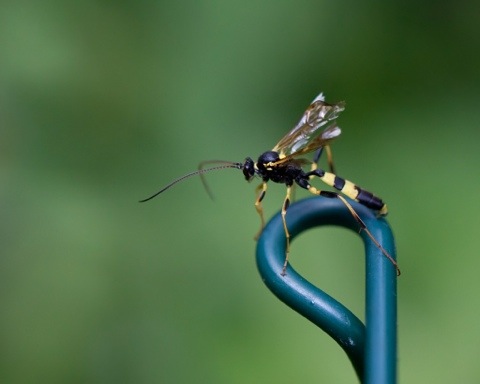
Some wasps have an elegance about them, like the slim-waisted society belle below. Hence the expression, “waspish figure”.

20120503-100628.jpg

I think this is probably a type of digger wasp. This one has a damaged wing, which is why it stuck around long enough for me to get a shot off. Do not be fooled, however, by its stylish gown and slender grace. If my identification is correct, this beguiling debutante is parasitic too; the female lays its eggs in flies. Waspish in appearance and intent.

Chill out, it’s only a photo

20120501-181346.jpg

This week involves a lot of train travel and, as the reason for the travel isn’t very nice, I have treated myself to some photography magazines. I only read these intermittently. I often find ideas are repeated and sometimes advice is quite frankly wrong (more on that in a later post). But sometimes there’s something new, a nugget of helpful advice, or a source of creative inspiration, and it is good to put the brain on hold every now and then and just soak in the visual goodness that you get from lovely, large images in a glossy magazine. However, I was a little taken aback by a vein running through all three magazines, namely the tendency to rant along the following line: “why I am a proper photographer and you are not”.
In one magazine, in particular, the bete noir was people who buy expensive pro-level cameras, open a Facebook page and then call themselves photographers.

20120501-181527.jpg

This same article included the frankly nonsensical and now rather overworked expression: ‘If you have to use Photoshop to make your photos look better, then you should think about whether you’re worthy of the title photographer’. This is actually a bit like saying, in pre-digital days, if you have to dodge and burn in the darkroom to make your photos look better, then you are not a proper photographer. Does this make sense to you?

20120501-181703.jpg

But all these moaning minnies (or michaels, in fact) got me thinking about what is a photographer? Is it someone who makes their living from taking photos or anyone who has ever taken a photo? Or something in between? And does it matter if an amateur has a Facebook page called Joe Bloggs Photography on which he shares his images, enjoying his hobby and perhaps giving pleasure to some viewers? Are viewers, as one writer suggested, no longer capable of discerning the good from the bad because we are saturated in images or are we perhaps not quite the Philistines he suggests?

20120501-181809.jpg

I have some sympathy for pro-photographers who find their income eroded by amateurs who are willing to license their images for low fees or even just a credit. But none of the columnists mentioned that. In the end, when I had stopped imagining epistolary remonstrances to the editors, I decided that I had just two words to say to these writers: chill out! Photography is fun, and I think it’s good that more people now enjoy taking and sharing photos. You don’t have to look at their Facebook pages if you don’t want to. But if you do, you might just find that one or two of them have taken some pretty good pictures. And, if they haven’t, the virtual exit is only one mouse click away.

20120501-181933.jpg

What does the word “photographer” mean to you?

Grizzlies

20120430-204455.jpg

In Summer 2010, we spent three weeks in British Columbia, Canada. The standout highlight of the trip was the three days we spent at Knight Inlet Lodge in Glendale Cove.

20120430-204557.jpg

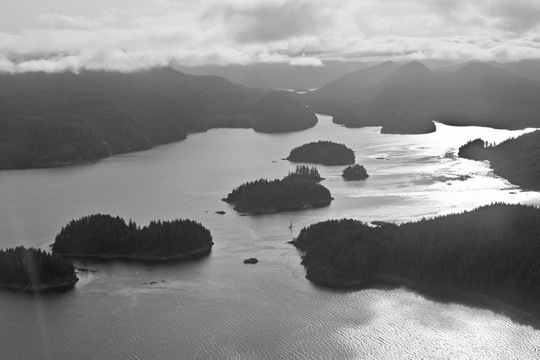
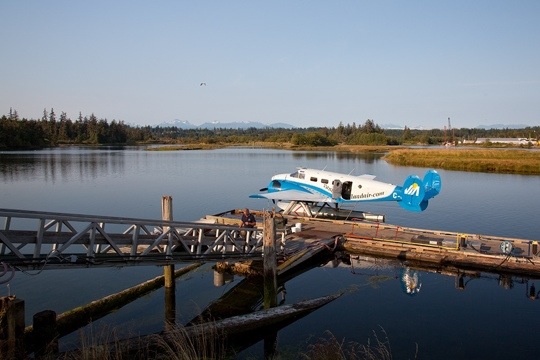
The floating lodge is deep within Knight Inlet, one of the many huge inlets that serrate the coast of this beautiful province. It can only be reached by float plane or boat.
20120430-204651.jpg

Like most visitors to the Lodge, we travelled by float plane from Campbell River on Vancouver Island. Living just outside London, England, we don’t get to travel this way very often so our stay was off to an exciting start before we’d even arrived!

20120430-204747.jpg

The views were superb despite the weather; it rains a lot here.

20120430-204858.jpg

On arrival, after a short introduction to the guides and resident dogs, we were soon in a boat out in the Cove scouring the banks for signs of bears. Although we were too early for the salmon run when bears gather in numbers to fish and can be watched from hides, there was a good chance of finding some foraging on the shoreline.
20120430-205020.jpg

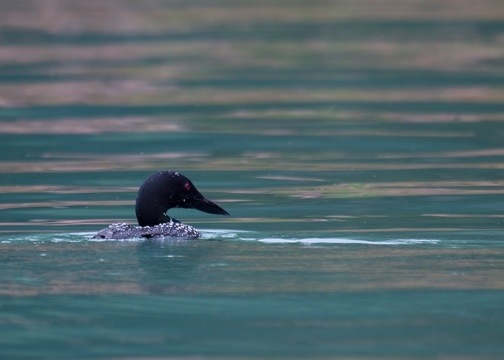
We saw some mergansers, a kingfisher, several curious seals and a loon before a call came over the radio to return to base immediately; bears had been spotted near the lodge!

20120430-205129.jpg

I wasn’t prepared for how breathtaking it was to see these wonderful creatures in the wild.

20120430-205226.jpg

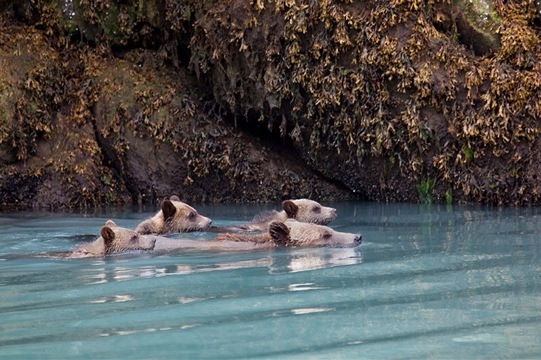
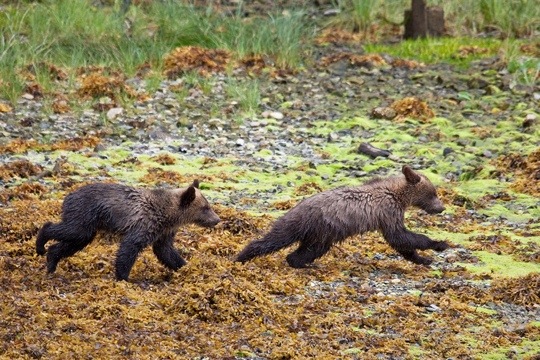
We watched this female, ‘christened’ Bella by the guides, and her three cubs as they foraged along the shoreline. Although we were separated by several feet of water, I felt very aware of my proximity to this powerful mother, who would not hesitate to defend her cubs.

20120430-205401.jpg

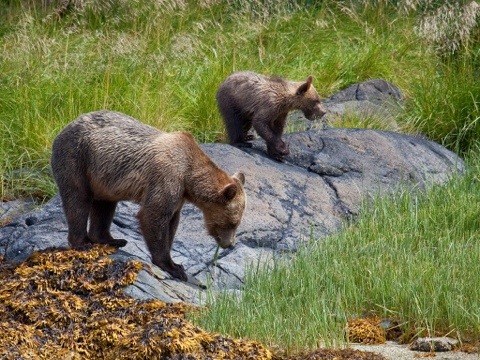
We would be lucky enough to watch Bella and her cubs several more times during our stay as well as two other grizzly families. Wildlife abounds in Glendale Cove; we also saw a black bear and some black-tailed deer.

20120430-205528.jpg

20120430-205611.jpg

20120430-205444.jpg

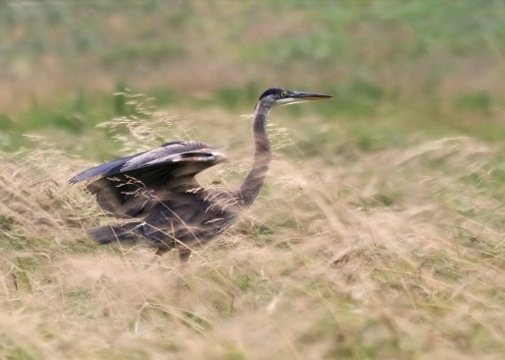
There were many bald eagles and herons as well as numerous smaller species of bird, including swallows who nested in the eaves of the lodge.

20120430-205658.jpg

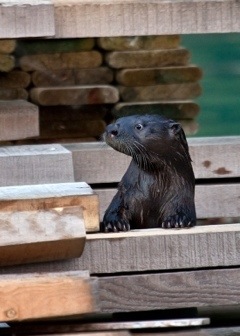
Not to be outdone, some smaller mammals shared the limelight. We saw mink on the shore and the lodge was frequently visited by a cheeky band of river otters.
20120430-205753.jpg

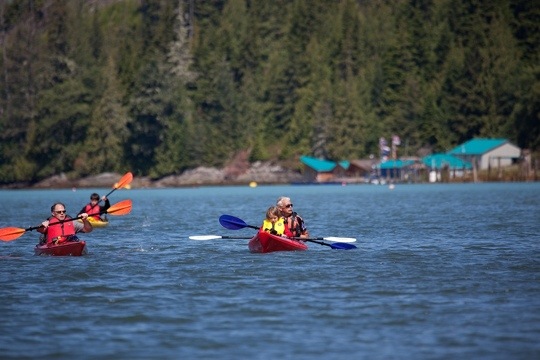
For a change of pace, we could bear-watch from kayaks.
20120430-205839.jpg

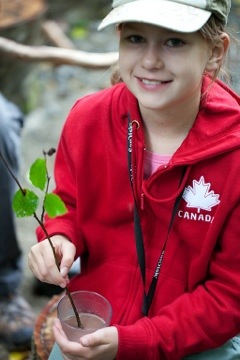
Or go on a guided forest hike. Here, my town-bred daughter can’t quite believe I am letting her stir her hot chocolate with a twig!

20120430-205959.jpg

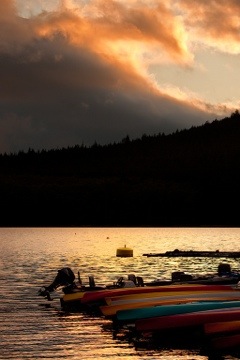
The evenings were spent socialising in the bar or enjoying entertaining and interesting talks by the friendly and knowledgeable guides. We had read on Tripadvisor that the food was great but it was even better than we expected.
20120430-210017.jpg

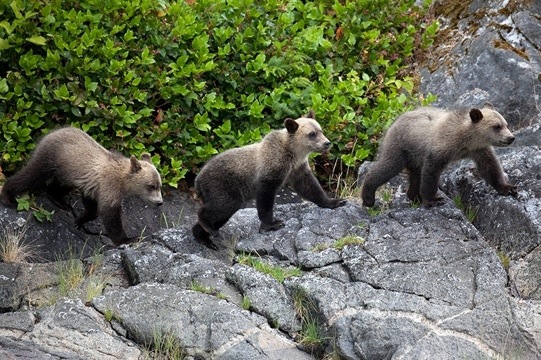
Knight Inlet Lodge is a founding member of the Commercial Bear Viewing Association of British Columbia (CBVA). The CBVA campaigns to ban the currently legal trophy hunting of grizzly bears in British Columbia. Watching these magnificent creatures in the wild, I could not imagine ever being able to shoot one with anything other than a camera.
20120430-210138.jpg

It was a privilege seeing these animals in their natural habitat. To be able to share an experience like this with my children, and to hear them talk about it still, is even better.

20120430-210159.jpg

Lightbox fun

20120429-105926.jpg

Today the weather is truly dreadful. Cold, relentless rain and high winds. While, for photographers, there is no such thing as bad weather, some delicate souls (me!) might be tempted to stay firmly indoors. But that doesn’t mean the photography has to stop. The top image was taken in my kitchen using a lightbox. My A4 lightbox set me back £50 but has been worth every penny. It works best for semi-transparent subjects where the backlighting of the lightbox reveals internal details that might otherwise go unnoticed.

20120429-110530.jpg

Some tips:
– lightboxes can take a while to warm up and reach maximum brightness. You can use that time to make your arrangement.
– the bright light may fool the camera into underexposing so dial in some exposure compensation.
– if your subject is wet, use a sheet of clear acetate to protect the lightbox. This also makes it easier for you to move the arrangement round to find the best composition.
– for an arrangement like the one at the top here, try to select as small an aperture as you can to get maximum sharpness from corner to corner. Using a tripod will help. As will making sure your lens is parallel to the arrangement.
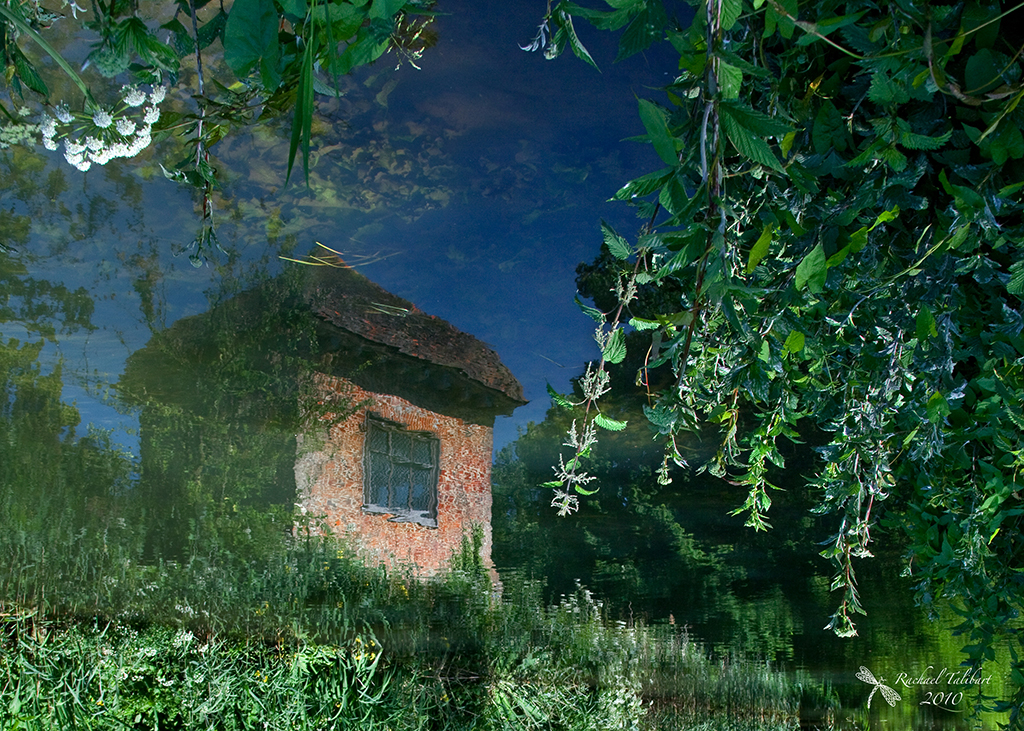
– don’t be afraid to experiment with your processing. Inverting the image can produce some weird and eye-catching results. In the shots below, a physalis fruit became an alien pod and a sea thistle exploded!

20120429-111359.jpg

20120429-111414.jpg

Romantic runaways

Image

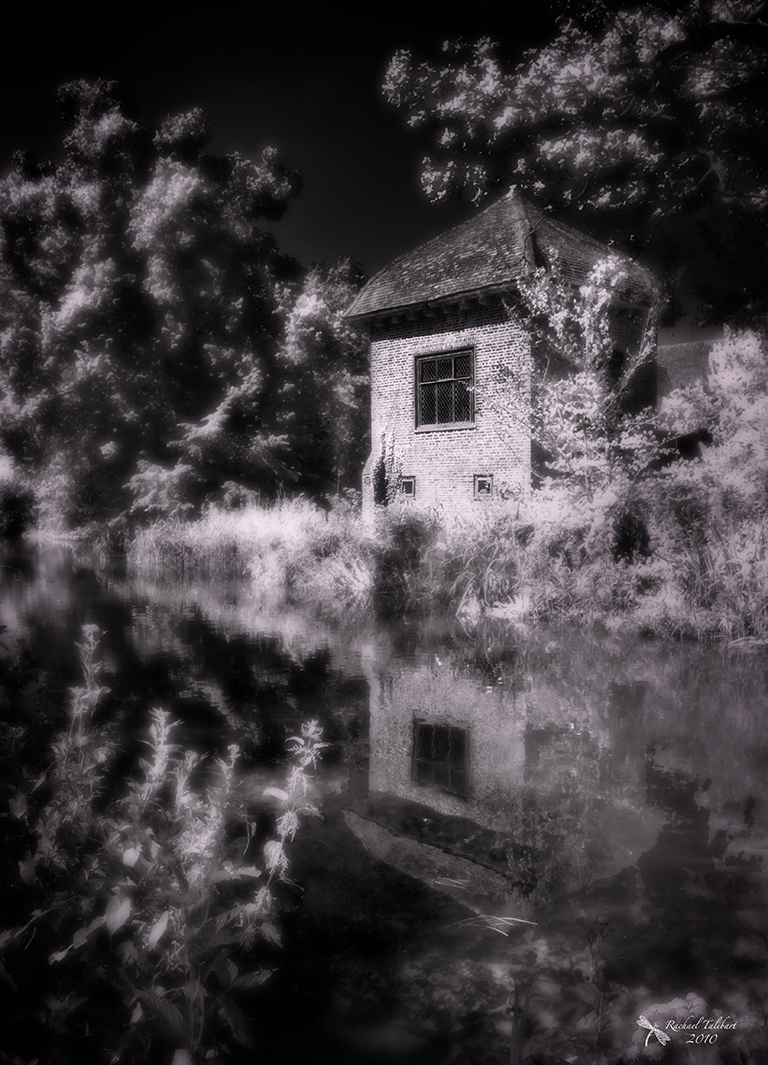
Last year I published a series of articles in some local magazines about the Wey Navigation, a historic waterway that runs for 20 miles from the Thames at Weybridge to Godalming, in Surrey, England. I thought I might occasionally feature excerpts from the series in this blog. Today’s excerpt is about one of the many interesting historical landmarks that can be seen from the towpath. This small brick tower can be found on the stretch between Pyrford Lock and Walsham Gates near the village of Ripley. It is an attractive and unusual structure, fourteen feet square, two storeys high with a first floor entrance and a distinctive ogee-pitched roof. Known as the ‘Summer House’, it bears a blue plaque declaring that: ‘John Donne, Poet and Dean of St.Pauls, lived here 1600-1604’. The story of the romantic runaways is about Donne and his passion for Ann More.

Image

Donne had fallen in love with Ann, the daughter of Sir George More of Loseley Park near Guildford. Ann’s family was too important for her to be permitted to marry Donne so the lovers eloped, when Ann was only 17. This caused a scandal and Sir George organised a search for the runaways. Once they were found, Sir George had Donne thrown into London’s Fleet Prison. On his release, he and Ann were given shelter at Pyrford Place, the home of Sir Francis Wolley, a friend of Donne’s. Sir Francis eventually managed to engineer a reconciliation with Sir George. John and Ann Donne lived at Pyrford Place for a further two years and had the first of their twelve children there. Ann and children lived there for another year while Donne travelled, before the whole family moved to their own home in 1606. It is said that, such was his love for Ann, Donne never got over his grief when she died (having 12 children took its toll!).

It seems unlikely that Donne ever actually lived in the Summer House, which some historians think may not even have been built until later in the century, but the Summer House is in the grounds of Pyrford Place and it is certainly picturesque enough to stand in the imagination as the retreat of a lovelorn poet!

All other things, to their destruction draw,
Only our love hath no decay;
This, no tomorrow hath, nor yesterday,
Running it never runs from us away,
But truly keeps his first, last, everlasting day.

Songs and Sonnets (1611) ‘The Anniversary’

The full text of my article and some more of the images can be viewed here.

Hopeful green

20120427-153640.jpg

‘A child said What is the grass? fetching it to one with full hands,
How could I answer the child? I do not know what it is any more than he.
I guess it must be the flag of my disposition, out of the hopeful green stuff woven.
Or I guess it is the handkerchief of the Lord,
A scented gift and remembrancer designedly dropt,
Bearing the owner’s name someway in the corners, that we may see and remark,
and say Whose?
And now it seems to me the beautiful uncut hair of graves.’

Walt Whitman, ‘Song of Myself’ (1855), 6

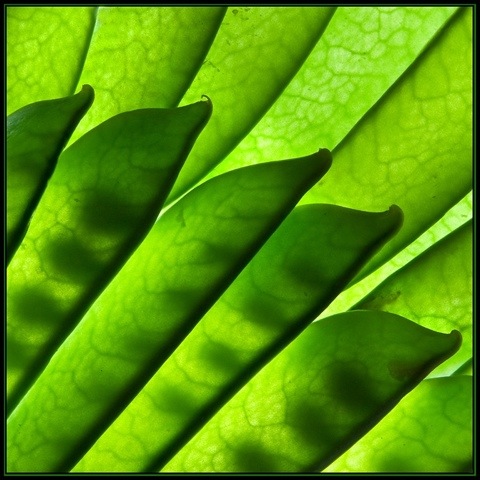
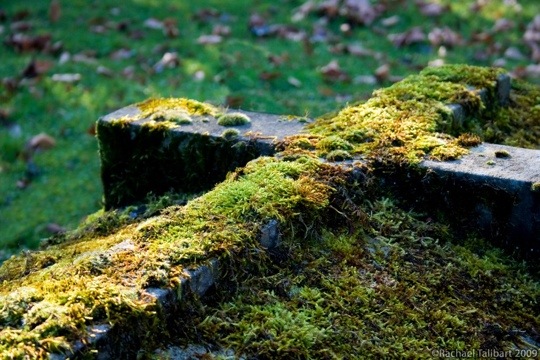
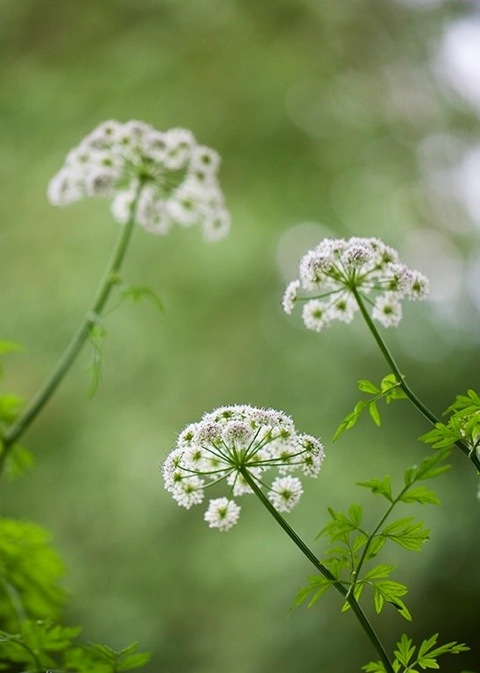
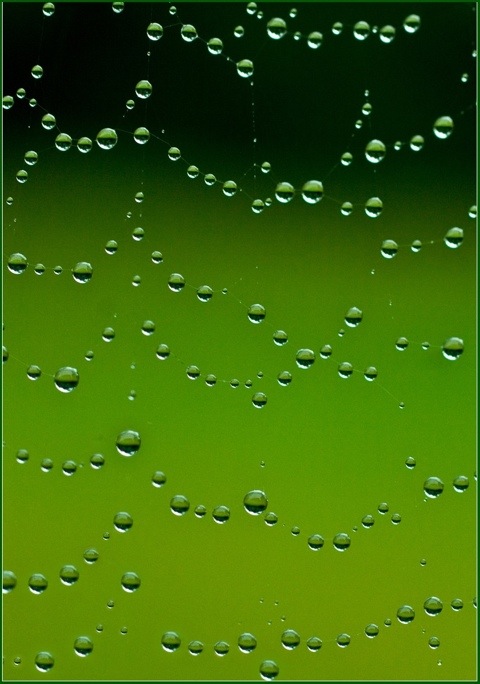
April has been a month of rain for us here in England. As I travelled in a taxi through Hyde Park this morning I noticed how gloriously green everything was, drenched in refreshing spring showers. So today’s post is simply a celebration of green.
The top image was taken in the churchyard of St. James’s, Weybridge.

20120427-154608.jpg

20120427-154701.jpg

20120427-154731.jpg

20120427-154754.jpg

A landscape of black and white

20120426-170140.jpg

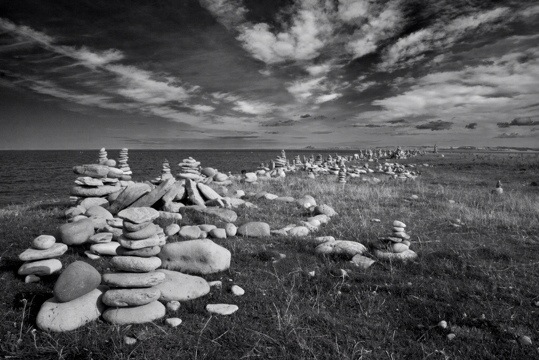
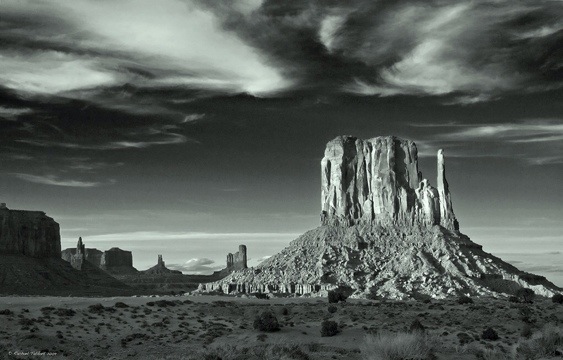
On the whole, I tend to favour colour photography but sometimes a scene suggests itself to me in black and white. When colour is gone, the outlines or structure of a landscape come to the fore.

20120426-170533.jpg

Black and white landscapes work best if contrast is strong, with at least some true blacks and whites, not just shades of grey.

20120426-170835.jpg

Converting an image taken on a bright summer’s day to black and white can add drama, if the subject seems to demand it.

20120426-171013.jpg

You can add a tint if you want a particular mood…

20120426-171141.jpg

or a different slant on a familiar scene.

20120426-171454.jpg

Do you ever shoot landscapes in black and white?

The images:
Storm approaching Birling Gap, East Sussex, England
Beach art, Lindisfarne, Northumberland, England
Wheat field, Surrey, England
Dunstanburgh Castle, Northumberland, England
The boathouse, Wey Navigation, England
Monument Valley, Utah, USA