I had never seen these striking images before. Not my genre at all but I really appreciate the creativity. Also, further to a discussion in one of my recent posts, these are a good example of photo manipulation before the digital age.
4

I had never seen these striking images before. Not my genre at all but I really appreciate the creativity. Also, further to a discussion in one of my recent posts, these are a good example of photo manipulation before the digital age.

The ladies arrive
Yesterday we enjoyed the men’s Olympic road race as it came through our village, Oatlands, near Weybridge in Surrey. Today it was the ladies’ turn.
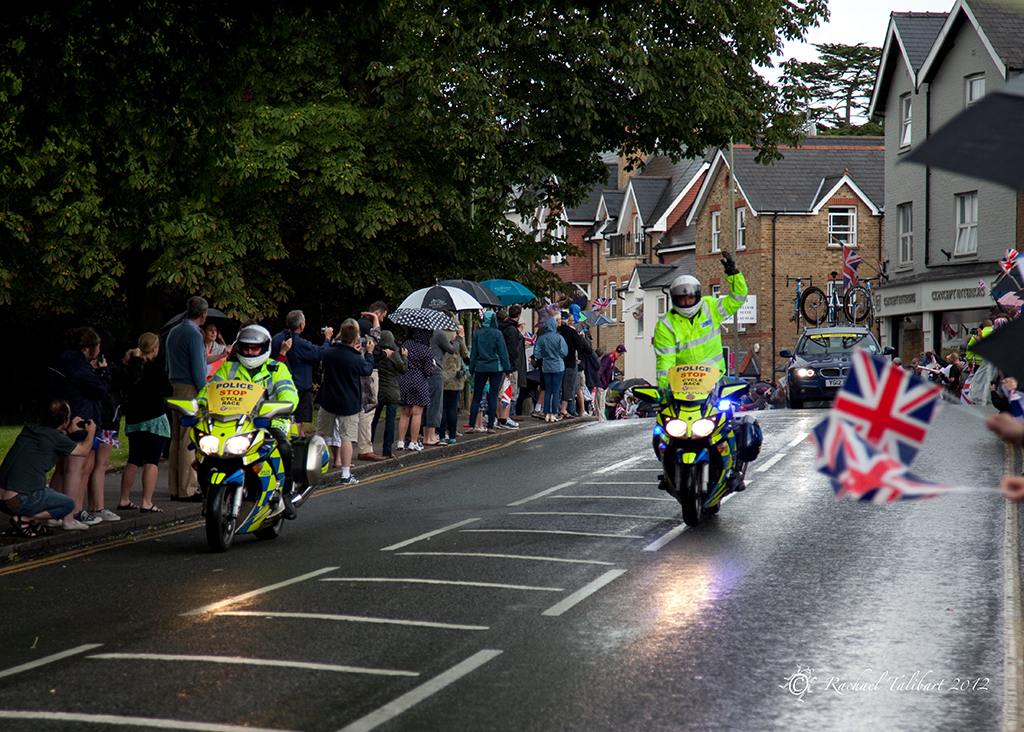
A rainy day for cycling
What a difference from yesterday’s sunny weather. Intermittent heavy rain and thunder greeted the women. But even the capricious English weather couldn’t spoil the fun for the hardy onlookers and the Police motorcyclists.
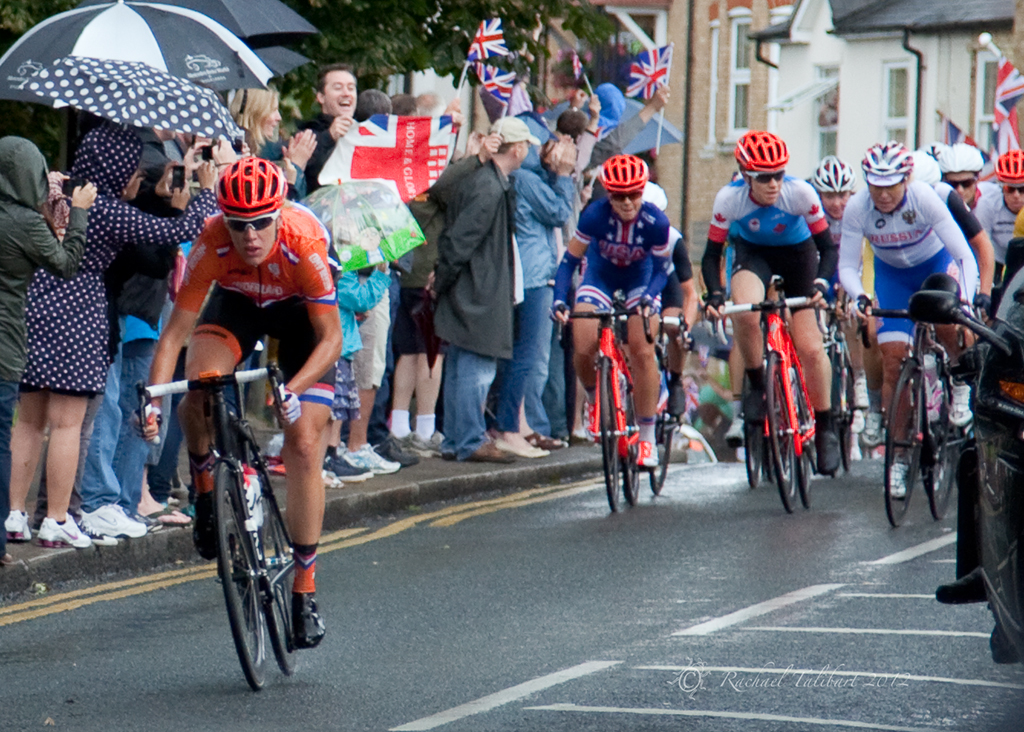
Netherlands lead
As it came through Oatlands, the pack was still together. Although the Dutch rider was out in front, it was still anyone’s race.

It’s still anyone’s race
As my other half is Canadian, we cheered two countries on. I hope the Canadian riders saw our huge maple leaf flag!

Determination
The race has just finished. Congratulations to Vos who won gold for the Netherlands but also to our own Lizzie Armitstead for bringing home a silver! Well done to all the hardy cyclists in a very wet race.
Next Olympic fun for us: the time trials on Wednesday!

A popular monthly photography magazine recently ran a brief article with the header: ‘What does ‘bokeh’ actually mean?’ The magazine’s answer was: ‘Bokeh is the effect that’s created by blurred lights in out-of-focus areas’. This is not strictly correct, although a common misconception. So I thought I might spend today’s post on the subject of boke(h).
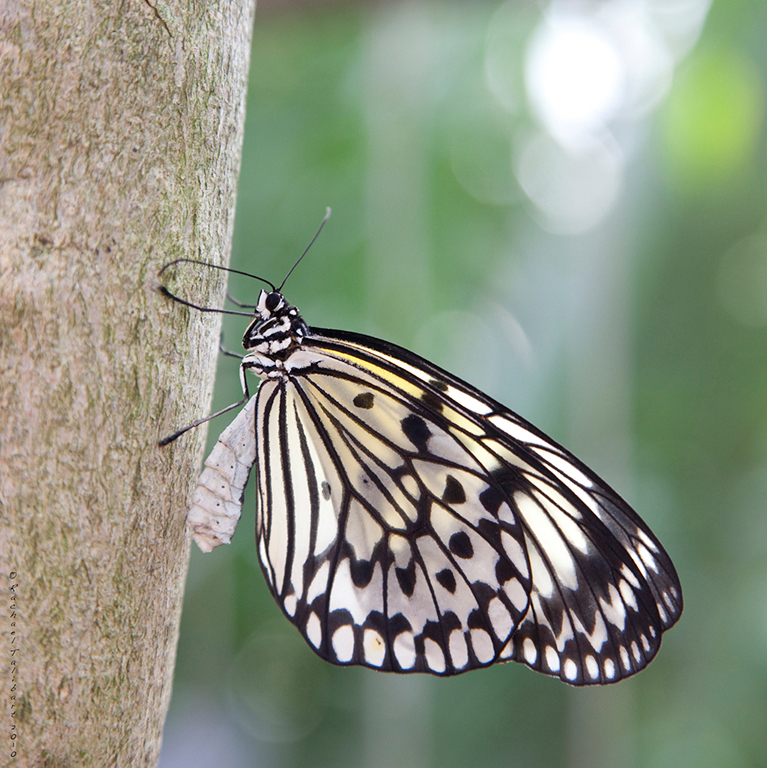
The reason for the bracket is that the word, in the original Japanese, has no ‘h’: the ‘h’ is there so that non-Japanese speakers do not pronounce it like broke but without the ‘r’. Here’s how OxfordDictionaries.com defines bokeh: ‘the visual quality of the out-of-focus areas of a photographic image, especially as rendered by a particular lens’. So, bokeh is not just discs of light like those in the images above. It is also the smooth background in the picture below.

If you are trying to create bokeh, your results are going to depend on a number of things including your lens. On the whole, good quality prime lenses produce smoother, better quality bokeh. In the picture below, the nine-sided (really, I counted them!) highlights behind the kittiwake are the result of the lens picking up the sparkles in the sea beyond the cliff.
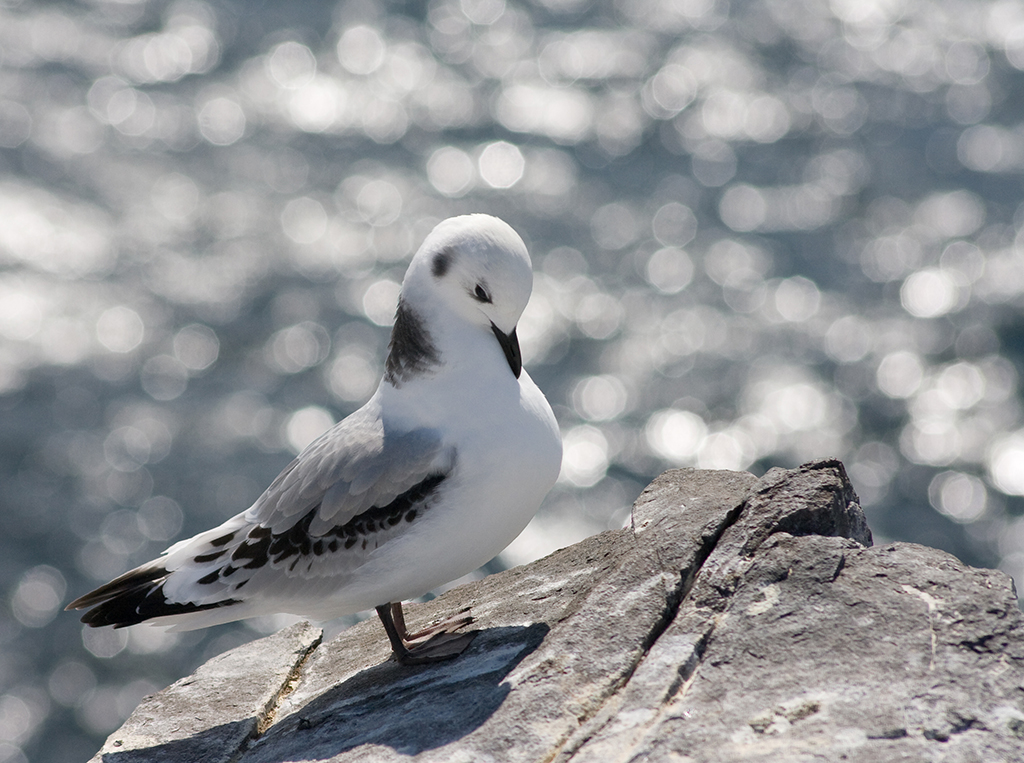
At first sight the bokeh lights make a pretty background. But let’s take a closer look at those nonagons.
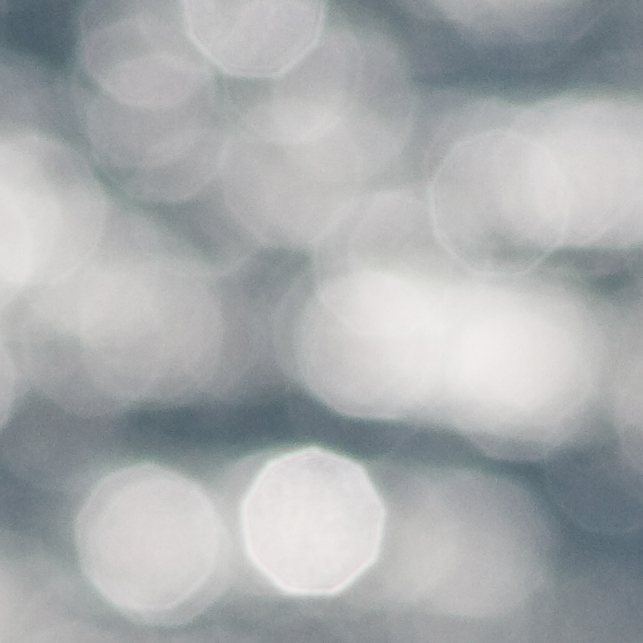
Not so nice! That would not make a very pretty print. My 70-300mm zoom lens does not make great bokeh.
On the other hand, my 100mm macro lens, a beautiful little prime, does rather nice, creamy bokeh.
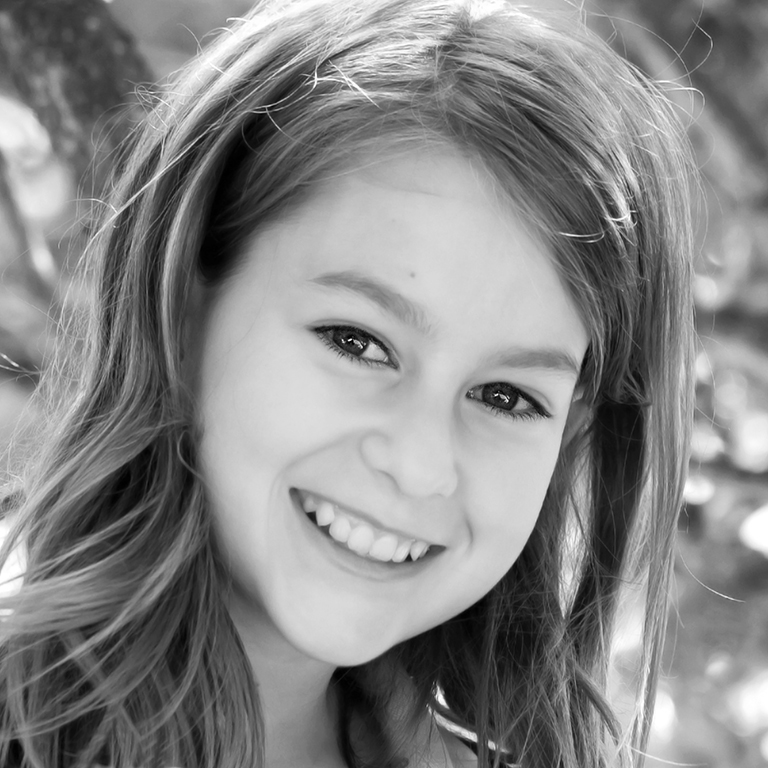
Ah, that’s better.
Also, your choice of aperture will affect bokeh lights. In the shots below, the one on the left is at f2.8 and the one on the right at f5.6.

Equally, the distance from your focal point will change the bokeh. Below, the aperture is f2.8 in both shots but look at the difference in the bokeh lights when I move closer to the flower in the second shot.

If you want the science, there is a website that explains it all. Good luck. In the meantime, here are some random thoughts about bokeh. Bokeh is good if you want a nice uncluttered background that does not distract from your subject. Let’s compare two shots of damselflies mating.
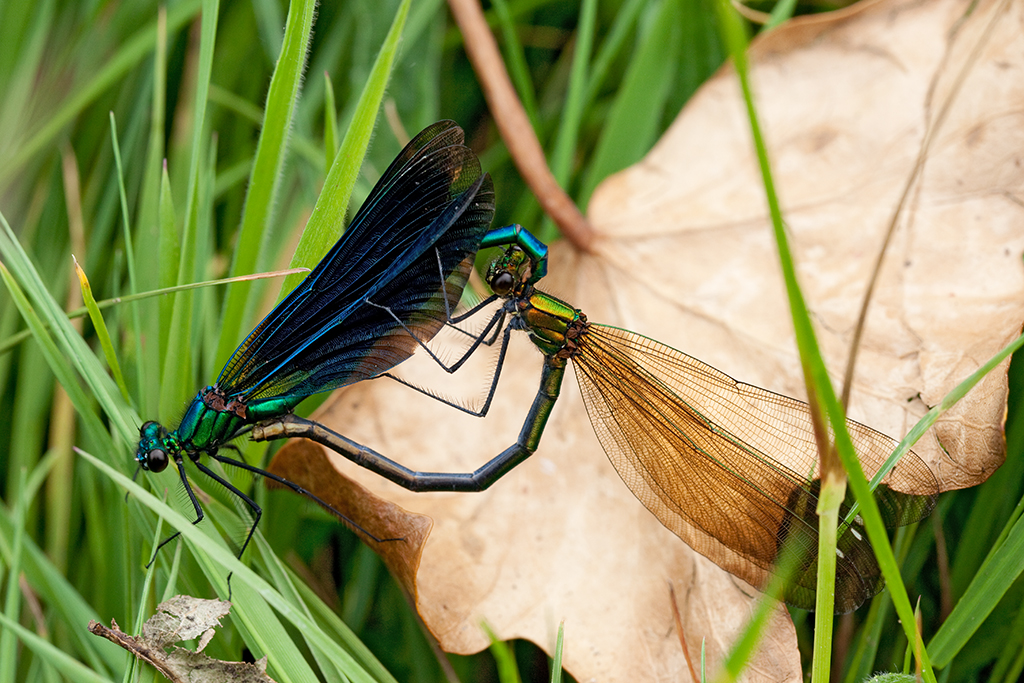
Wow. I got them in full mating pose here, making a ring. But that background is fussy. It detracts.
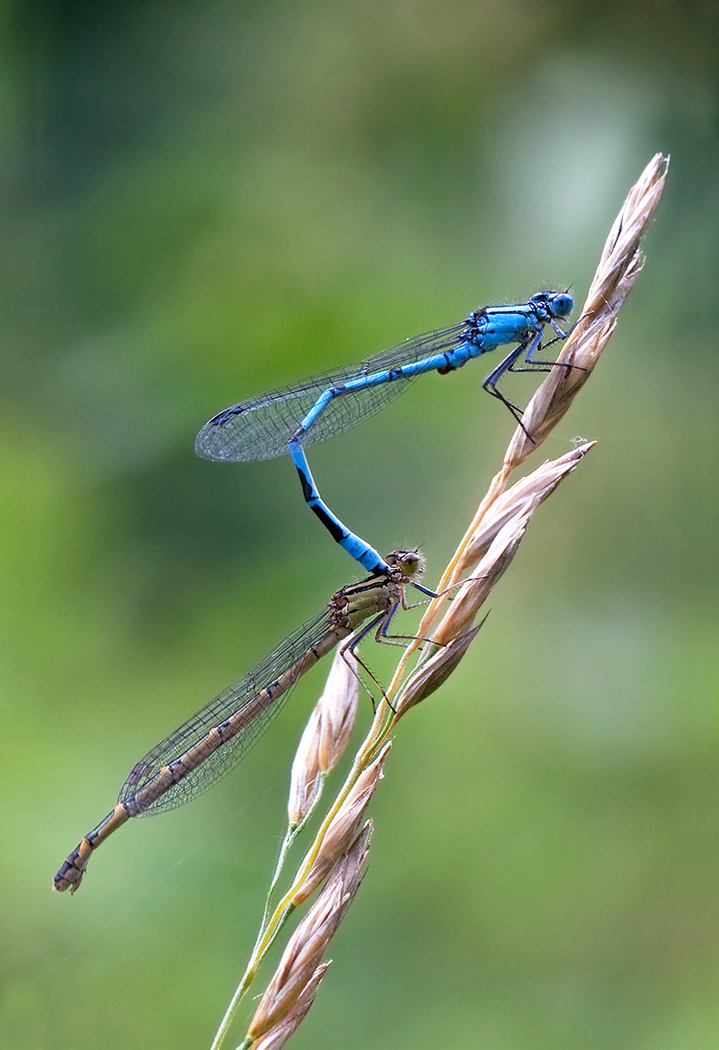
Here, the amorous couple is only in half-hold position, but the background is less distracting. It is a better image because I am communicating to the viewer rather than simply making a record. (Mind you, the camera club judge still complained about the light bit of bokeh top right – you can’t please everyone all of the time!) Of course, you have to balance using an aperture wide enough to throw the background out of focus but not so wide that only part of the subject is sharp. But then no-one said it was going to be easy and that’s all part of the fun.
As for those ubiquitous bokeh lights, I prefer them when they are not distracting, or if they are made to be part of the image, as in the first shot in this post and the not-hugely-brilliant-but-suitably-illustrative shot below.
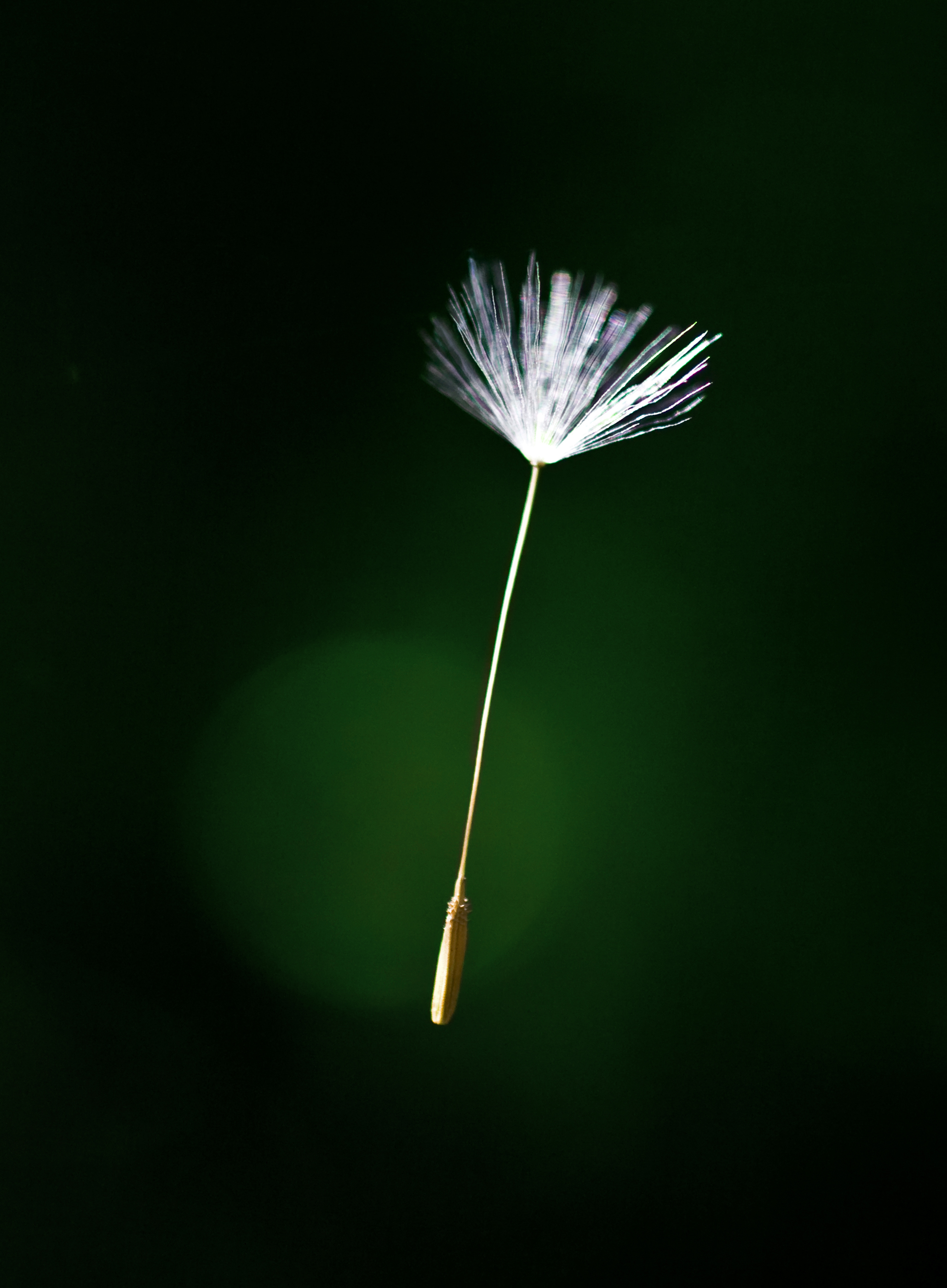
One final thought. Bokeh is not limited to backgrounds. The shot below exploits the impact of out-of-focus areas in front of the focal point.

It can be effective deliberately to focus past objects to add a soft, dreamy look,

or the feeling of having just happened upon the subject, by peeping through the undergrowth.
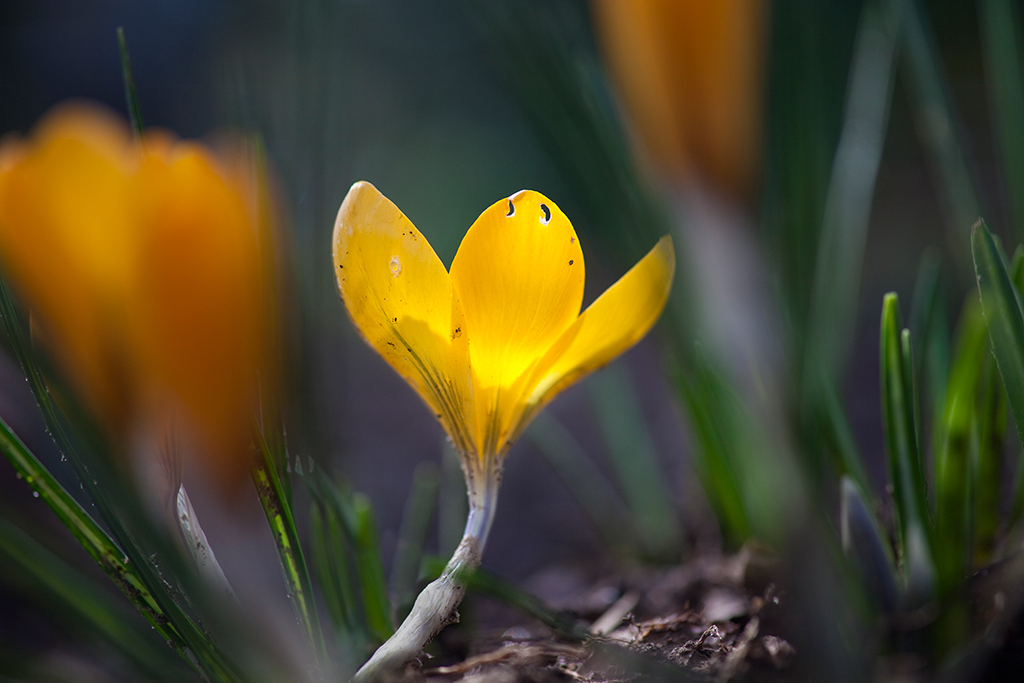
That’s enough bokeh from me. Do you have a favourite bokeh shot or tip? Perhaps you find the term slightly irritating, or is that just me? Feel free to share in the comments.
I won’t reblog very often but wanted to share this lovely post from one of my favourites. Enjoy. Normal service resumes soon.

After I finished college, I gave away everything that wouldn’t fit in my Volkswagon and hit the road West, determined to see the Mississippi, the Grand Canyon and the Pacific. Thus began my love affair with the lost art of the Road Trip. Back then, gas prices were just starting to flirt with the two dollar mark and almost everybody who heard about my cross country road trip plans tried to talk me out of it.
When I left home I wasn’t sure where the road would lead me, if I would return or where I might end up if I didn’t. I never would have guessed the end of the summer would find me on an Oregon seed farm, toiling through a grueling harvest season and absolutely captivated by organic agriculture. I found the combination of ecology and genetics that lies at the heart of natural farming inspiring…
View original post 589 more words
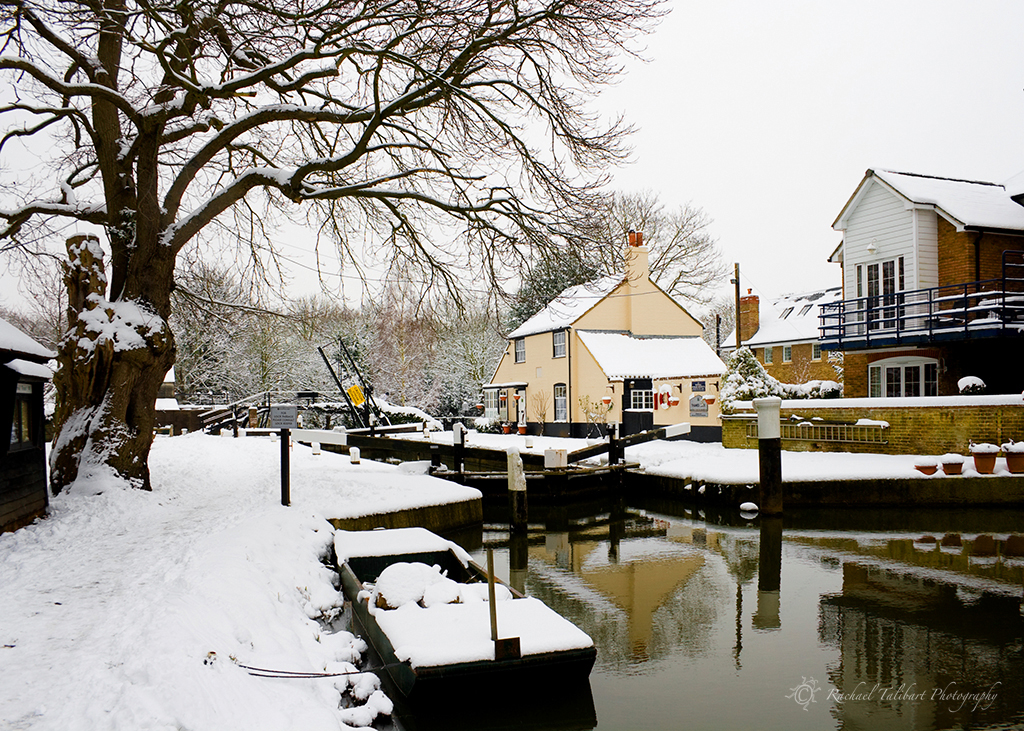
Today’s post is about one of my favourite local places, Thames Lock in Weybridge, Surrey. Thames Lock is the first lock of the Wey and Godalming Navigations. One of Britain’s earliest man-made navigable waterways, the Navigations, which run for just under 20 miles from the Thames at Weybridge to Godalming, preceded the canal age by a century. Now owned and managed by the National Trust, the Navigations and their towpath provide a tranquil green corridor through some of Surrey’s most built up areas and a pleasant, easy route through some of its loveliest countryside.
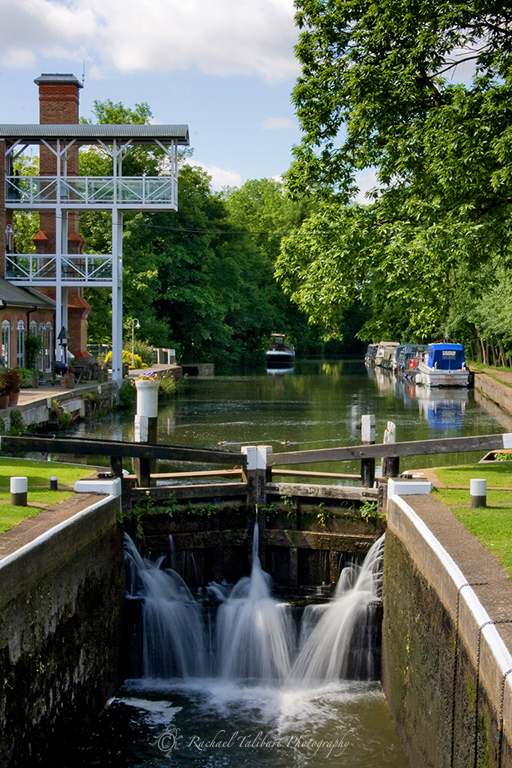
The Navigations were the brainchild of Sir Richard Weston of Sutton Place. The first ten miles from the Thames were opened in 1653 and extended to Godalming by 1764. The principal cargo was timber from Surrey’s forests destined for the shipbuilding yards on the banks of the Thames. But the Navigations were also an important route for the transport of wheat, flour and numerous other cargoes, including, in the early 1920s, a number of aircraft from Brooklands. Today, the Navigations are plied by pleasure boats rather than commercial barges and the towpath is frequented by walkers and cyclists rather than the horses that used to pull the barges.
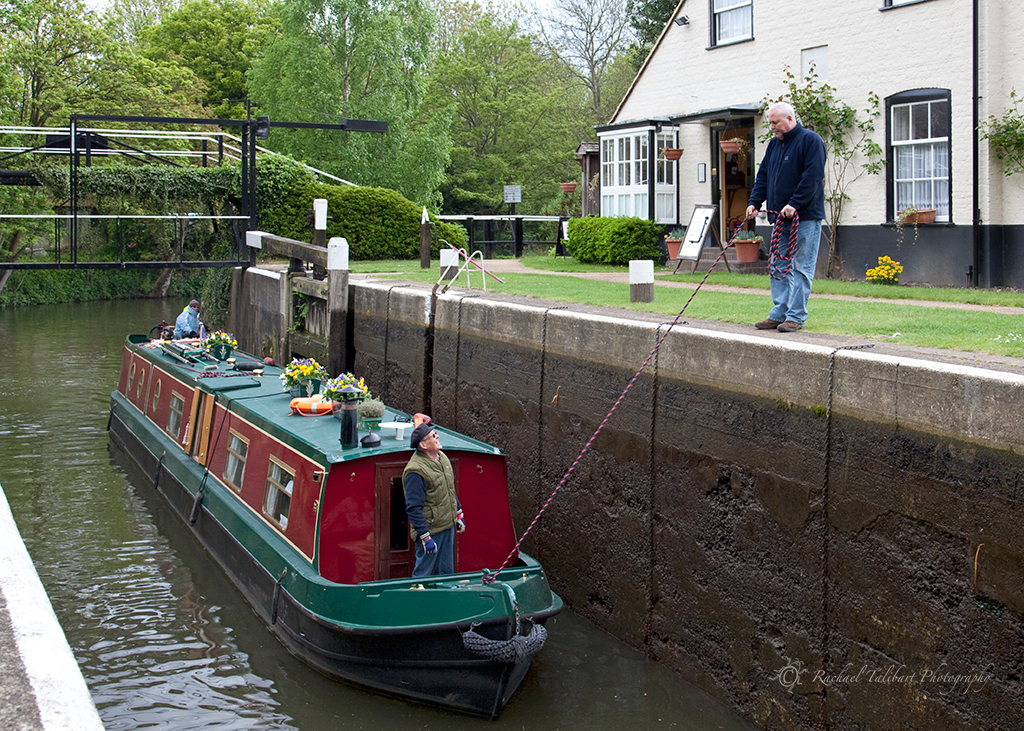
The entrance to the Navigations from the Thames at Weybridge is misleadingly insignificant in appearance, barely noticeable but for the sign on a post in the river. Yet it is the location for an exciting passage in local writer, H G Wells’s classic, The War of the Worlds, which concludes as follows:
‘I staggered through the leaping, hissing water towards the shore. Had my foot stumbled, it would have been the end. I fell helplessly, in full sight of the Martians, upon the broad, bare, gravelly spit that runs down to mark the angle of the Wey and Thames. I expected nothing but death.’ (1898)
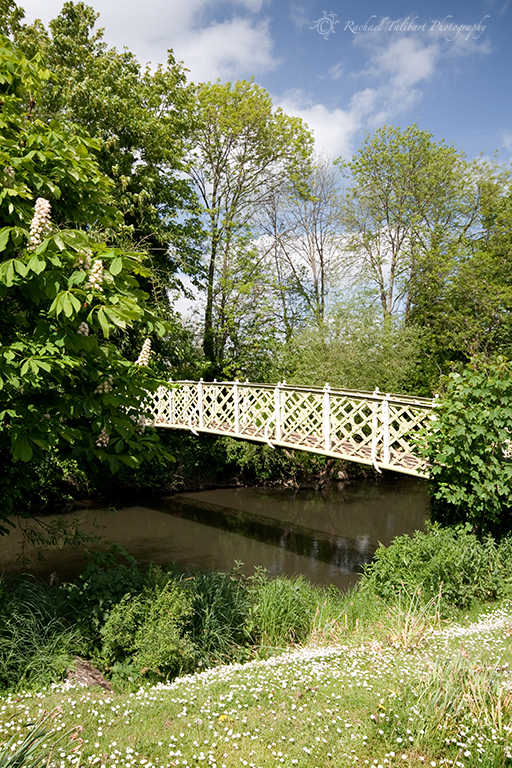
While not as challenging as evading Martian invaders, finding Thames Lock, where the towpath begins, can be difficult on foot. A path, known as Church Walk, runs from the side of the Old Crown, a 17th century Grade II listed pub on Thames Street to Radnor Road. The lock can be reached either via Jessamy Road, which bisects Church Walk or, further along Church Walk, via a small path to the right that leads over a pretty white and green footbridge.
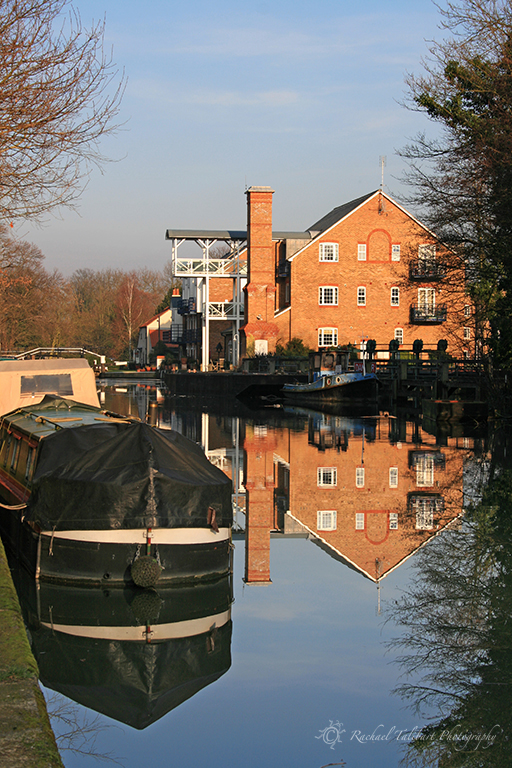
Both routes lead to Whittet’s Ait, an island between the River Wey and the Navigations. If you follow the gravel footpath beside the public park there, you will come to the lock. It is a delightful spot, with benches on which you can while away a few minutes or hours watching narrow boats negotiate the lock. In spring and summer, planters outside the lock keeper’s cottage froth with flowers and it is not unusual to find a local artist at work capturing the idyllic scene.
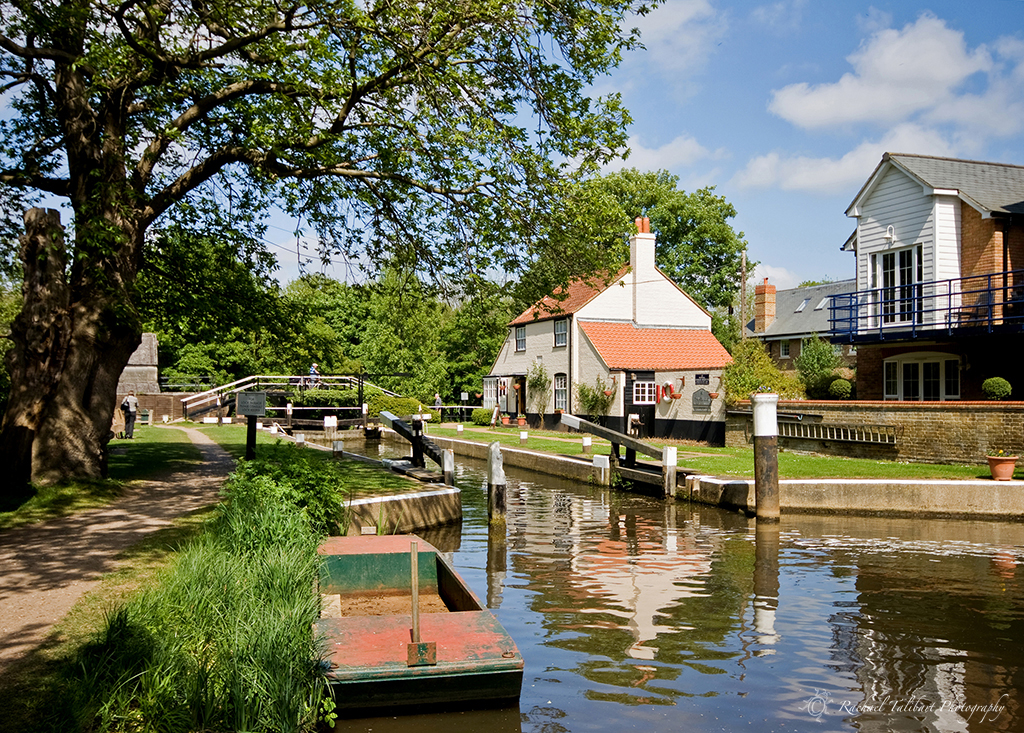
The towpath begins on the other side, accessed via an iron bridge over the lock. Before crossing, however, it is worth stopping at the lock keeper’s cottage where a free map can be obtained and you can buy a booklet of circular walks along the Navigations.
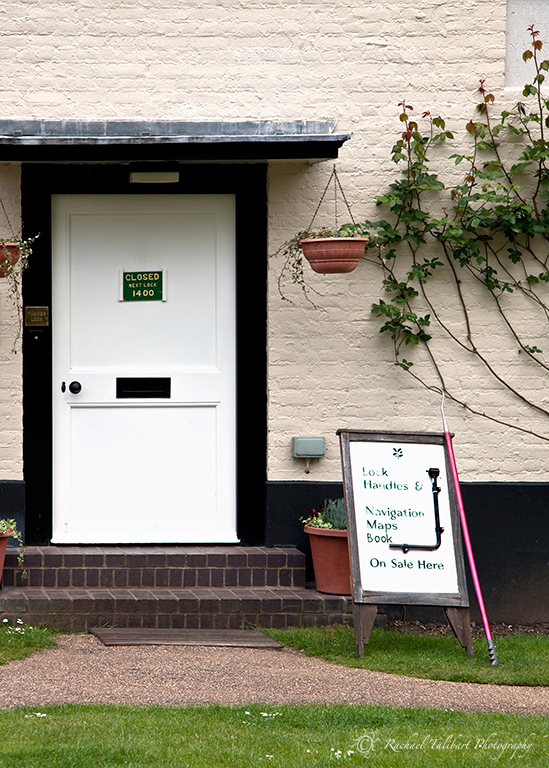
The present cottage was built by the National Trust in 1975 as a replica of its eighteenth century predecessor. On the other side of the lock, beside the towpath, stand the stables that used to shelter the horses as they waited for the next barges to arrive. Now they contain a small display on the history and wildlife of the Navigations.
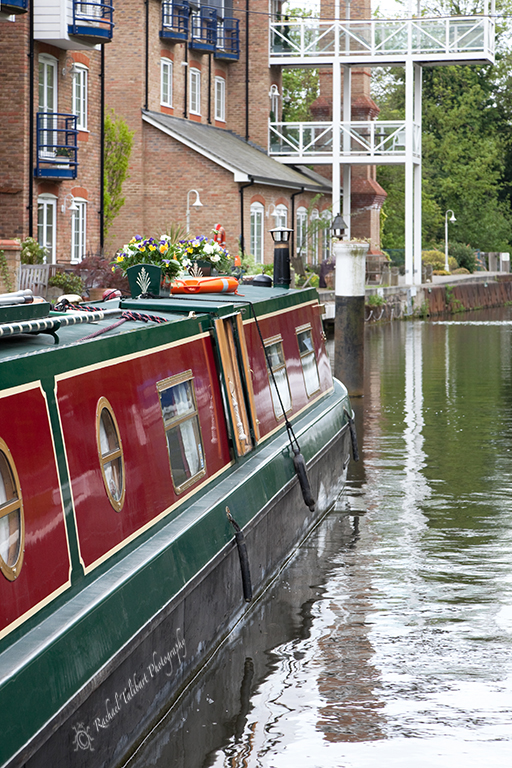
Next to the Lock stands a development of waterside apartments on what was the site of paper, iron and oil seed mills from 1791 to 1963 when the last of many fires on the site finally put paid to further milling. One account of the fire describes how the water was alight with the highly flammable oil.

The Navigations are an important habitat for wildlife, from beautiful damselflies …
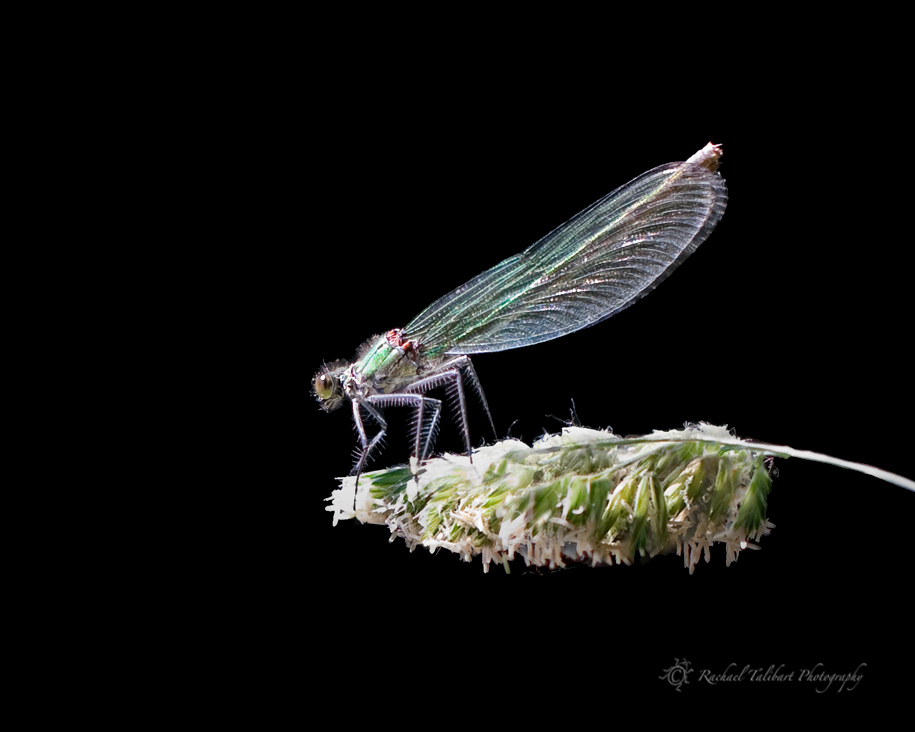
… to slightly more weird and wonderful critters.

You may even meet an occasional ship’s dog.

Finally, I have succumbed to the lure of the photoblog. Temporarily (I hope) unable to wield my trusty Canon 5Dii due to a back injury, I have to find another way to satisfy my compulsion for all things photographic. Perhaps this is it. For those who don’t already know, I love photography. My favourite subjects are to be found outside: landscapes, either local or discovered while travelling, gardens, flowers and insects. But I will turn my lens towards anything that captures my imagination. I am not trying to make a living out of photography. I am in this game for the love of it, and part of that fun is in sharing my images. I hope you enjoy looking at them almost as much as I enjoyed making them. 
 Focused Moments