The tenth day of Christmas; oh, to heck with it!

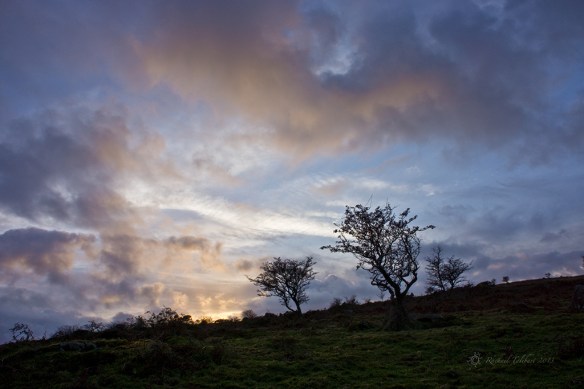
hawthorns

Dartmoor on New Year’s Day

Well, I suppose I could come up with some tenuous link between today’s post and Christmas, if I tried really hard.  But, instead, I thought I’d share this shot taken in Dartmoor National Park on New Year’s Day.  This is for you, Gunta. 😉

While we were away, I rented a new camera, the Sony NEX-7 from the good folk at hireacamera.com.  I need a lightweight alternative to my big brick for hiking but I want to try before I buy.  Over the next few days I will be sharing some of the images I took and my impressions of this high-end compact system camera.

The seventh day of Christmas: New Year’s Eve

20121231-175932.jpg
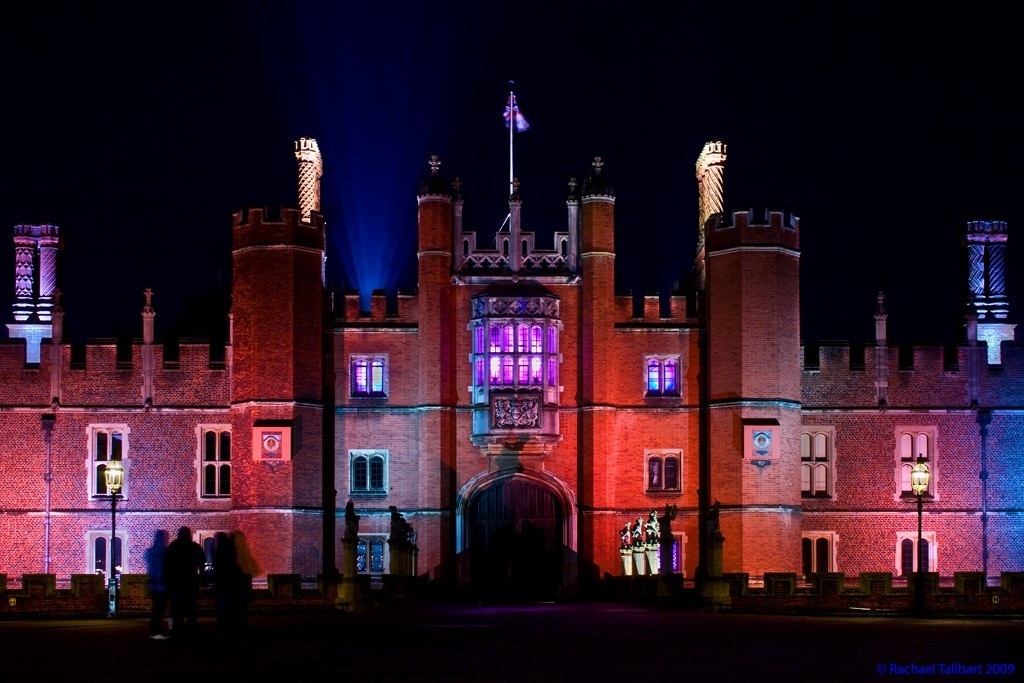
I thought my photograph of Hampton Court on New Year’s Day 2009 might be suitable for today’s blog, as 2012 draws to a close. It has been a difficult year for me personally but a tremendous year to be British. Tonight I am celebrating in another place rich in British history, Dartmouth in Devon (of which, more another day).
A very brief potted history of New Year’s celebrations: Julius Caesar instituted January 1 as the first day of the year. January is named after Janus, the Roman god with two faces that looked into the past and into the future. Romans celebrated New Year by making sacrifices to Janus, exchanging gifts, decorating their homes and throwing parties. In medieval Europe, Pope Gregory XIII established January 1 as New Year’s Day in 1582. But the celebrations today retain much of their more pagan origins. One ancient tradition that still continues, particularly in Scotland, is ‘first footing’. At midnight, the Old Year is let out through the back door and the New Year let in through the front door. The first person at the New Year to pass over the threshold should bring coal or, more likely(!), whiskey for luck in the year ahead.

Wishing all my blogging friends a very happy New Year.

On Bournemouth Beach

Dorset

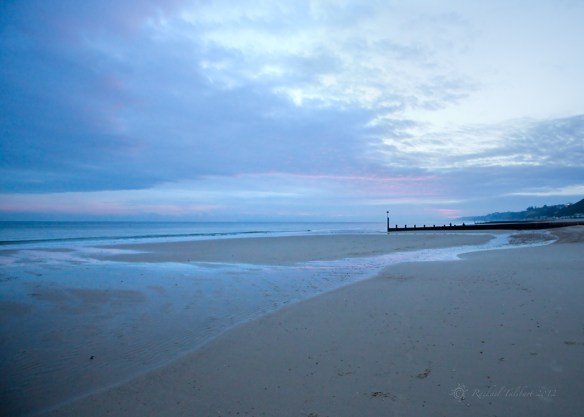
What a wonderful afternoon I spent on Bournemouth Beach on Friday. You have to love the British seaside out of season; gorgeous expanses of pristine sand (Bournemouth is a Blue Flag beach) and hardly a soul about. I set myself a challenge and went equipped with only my wide angled lens (16-35mm on full frame).

Dorset

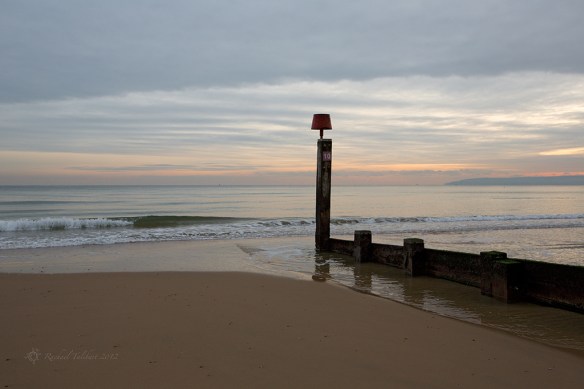
It wasn’t the most spectacular of sunsets but gentle, beguiling, like the lapping waves. When I came to process these images, they seemed to demand a naturalistic approach.

Dorset

With the horizons more or less in the centre of the frame, these images break the rules. I think that composing with the horizon on a third often works well as the photographer thereby communicates clearly what he or she is most interested in, the foreground or the sky. However, here I found myself wanting to efface the photographer from the landscape. And, truth be told, I just couldn’t bring myself to crop out any of that view. Half is the new third?

St.Helier in black and white

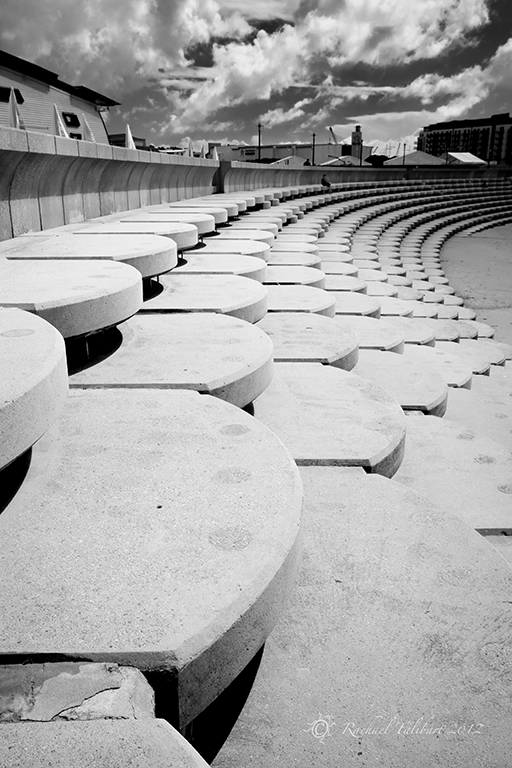
While we were on Jersey in the summer, I took the opportunity to try out some high contrast black and white photography along St.Helier’s seafront.

St.Helier is Jersey’s capital.  According to Wikipedia, it has a population of 33,000.

The city is named after Saint Helier, an eremetic monk who believed that living as simply as possible brought one closer to God.

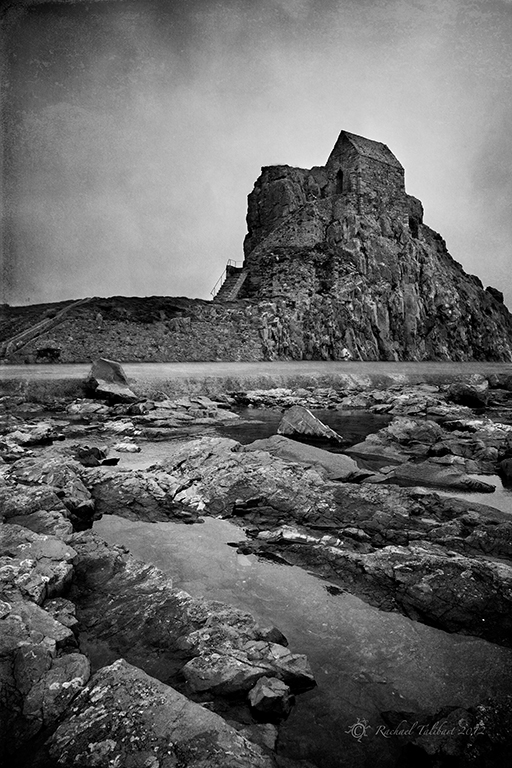
The Hermitage of Saint Helier perches on an inhospitable crag of rock out to sea.  It is now joined to Elizabeth Castle but, during St.Helier’s day would have been a place of austere isolation.

Poor St.Helier’s reward for all his privations was to be murdered by pirates.

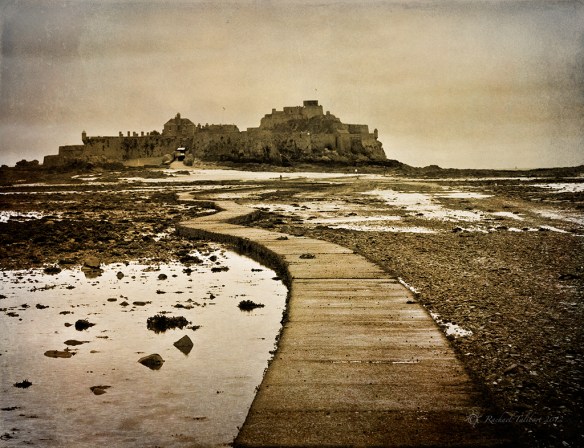
His hermitage can be reached at low tide by a causeway or at high tide by Elizabeth Castle’s amphibious ferries.

Over on The Shed blog today I write about five more of my favourite images from the Gallery.

Dunstanburgh Castle

Northumberland

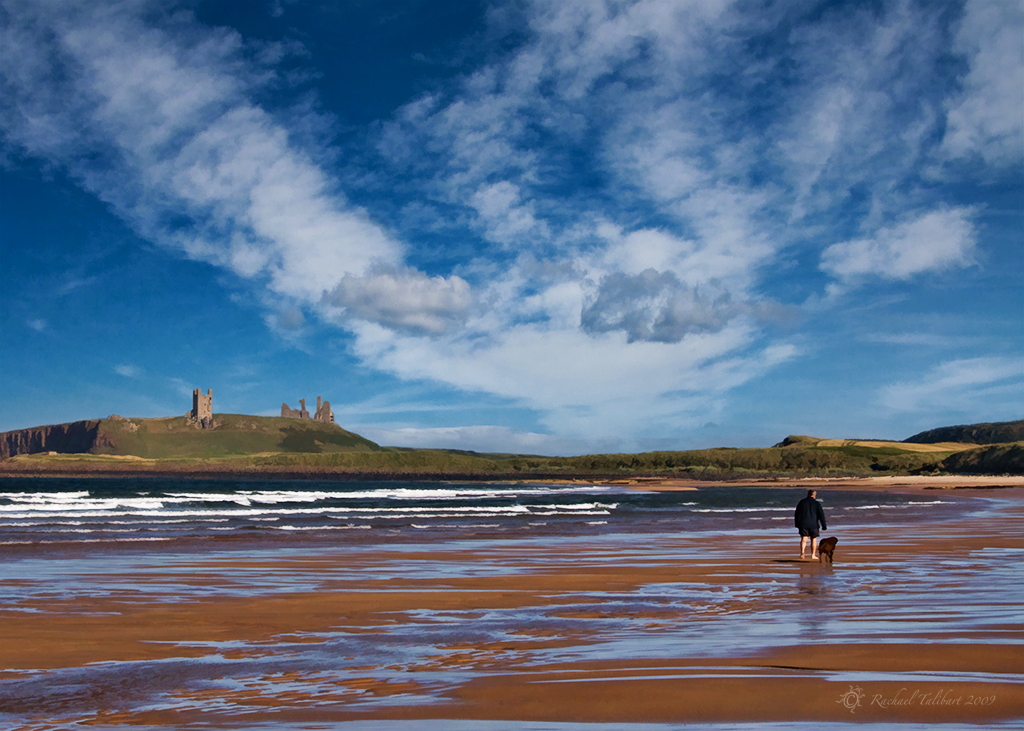
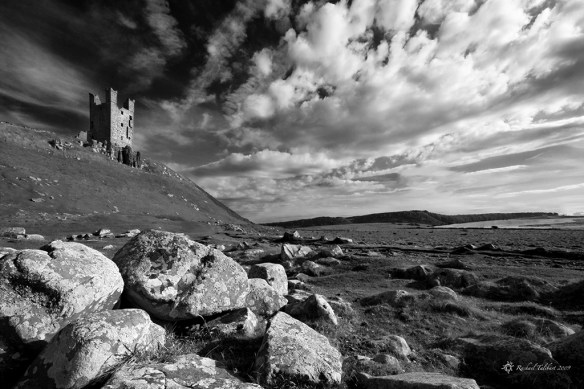
Today I thought I’d share some images taken at Dunstanburgh Castle on Northumberland’s beautiful Heritage Coast. The castle is the largest in Northumberland. In 1313, Earl Thomas of Lancaster, cousin of Edward II of England began construction and John of Gaunt added to it later in the century.
Northumberland

During the Wars of the Roses, the castle was badly damaged and it slowly fell into decay. The castle is now owned by the National Trust and in the care of English Heritage. It is a Scheduled Ancient Monument and a Grade I listed building.
en.wikipedia.org/wiki/Dunstanburgh_Castle

Dunstanburgh Castle

This beautiful and evocative ruin can hardly fail to inspire, perched on a rocky outcrop above the coast and the plain below.  Some great painters have immortalised it, including Turner and, one of my favourite contemporary artists, Michael Morgan.
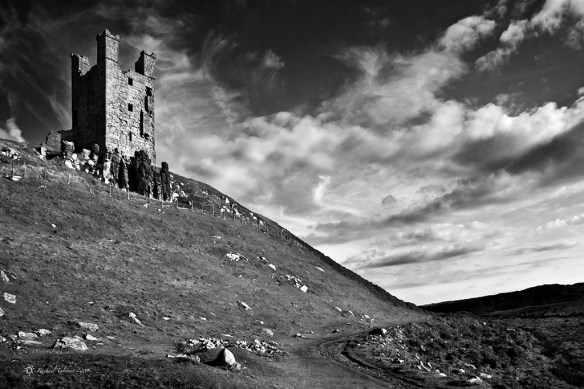
Northumberland

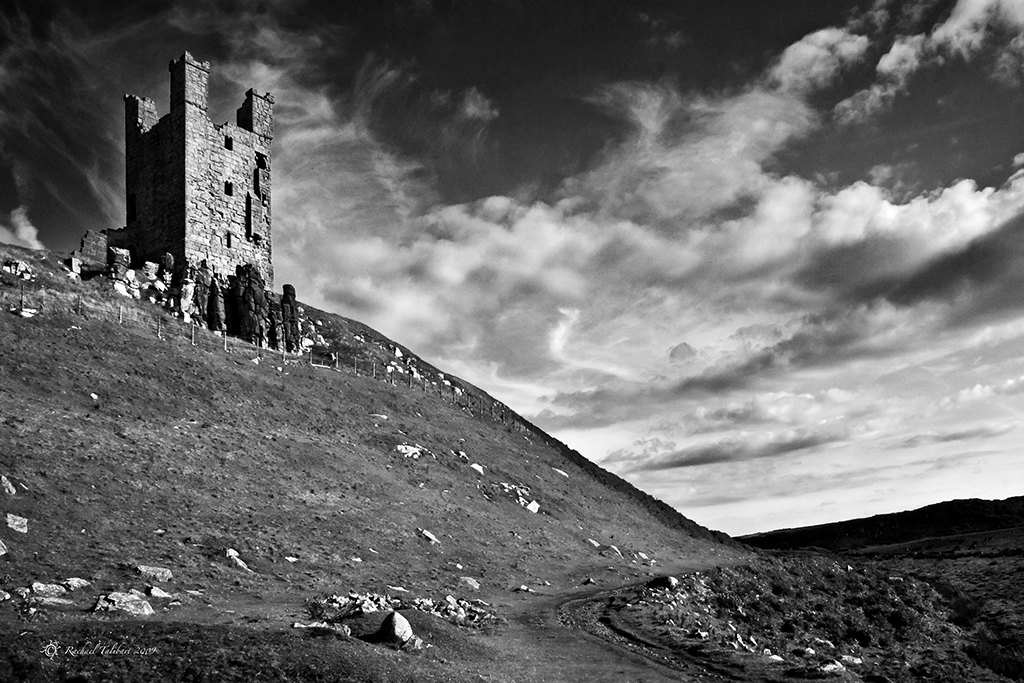
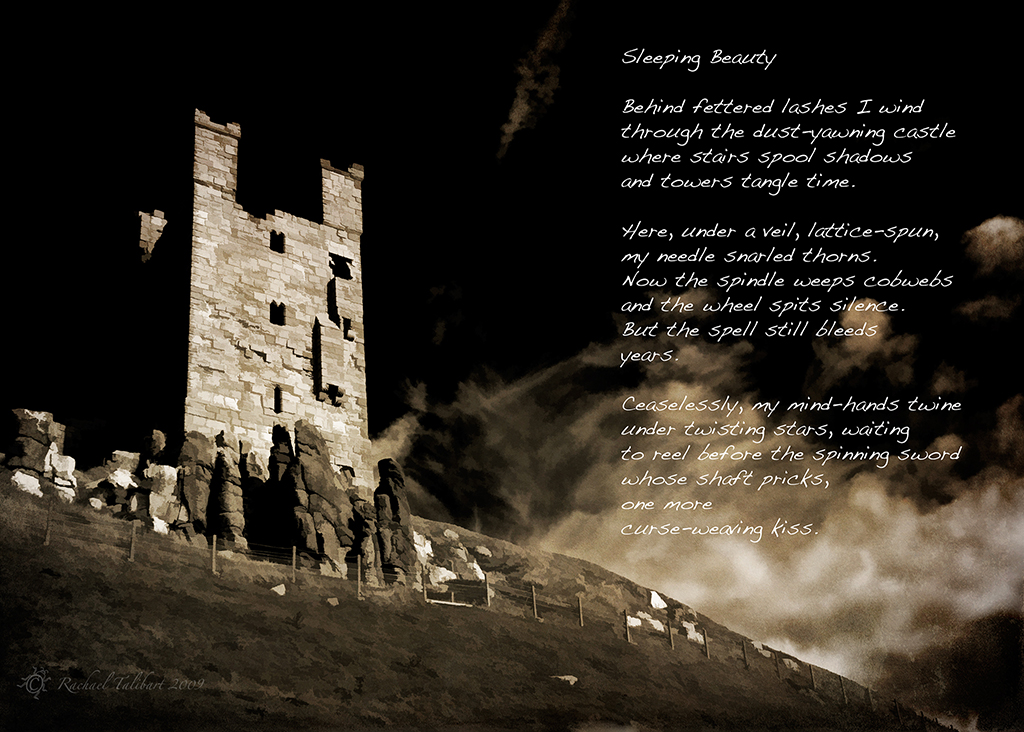
Lilburn Tower, the most intact of the castle buildings, seems to demand a moody black and white treatment. Can you imagine a knight riding along that path, perhaps to rescue a princess from the tower?  I kept thinking instead of Macbeth, riding to meet the three weird sisters, perhaps because Roman Polanski’s film, Macbeth was shot in the area.

Northumberland

Dunstanburgh Castle is reached via a footpath from Craster, a sleepy fishing village to the South.  Or via the beautiful sands of Embleton Bay to the North.
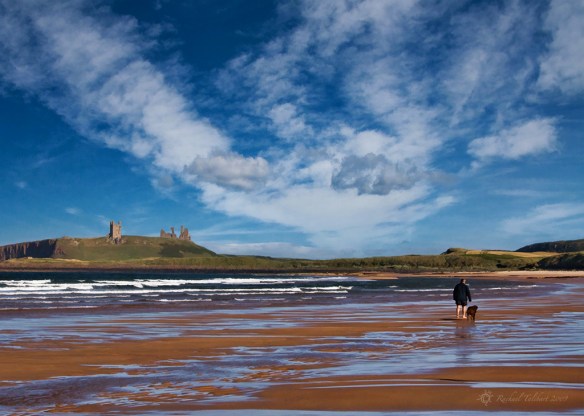
Northumberland

I chased down a rainbow there on our visit, only just managing one hasty exposure before the colours faded, from which I made this, rather more painterly than usual, image with a little help from Topaz Simplify:
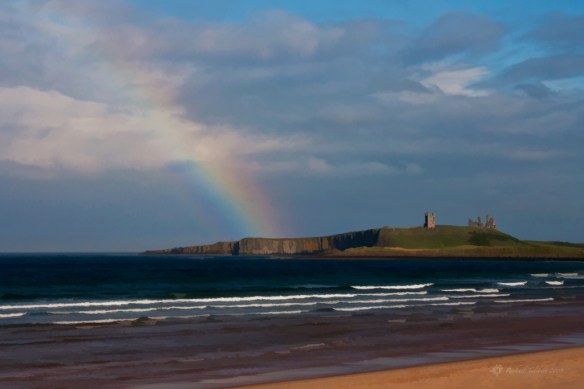
Northumberland

For all that I enjoyed the, admittedly rather over the top, colours of the last two images, it remains, for me, the black and white images that suit this location more.  If you get the chance to visit this atmospheric ruin, I thoroughly recommend it.

Lilburn Tower

Air Forces Memorial

poppies

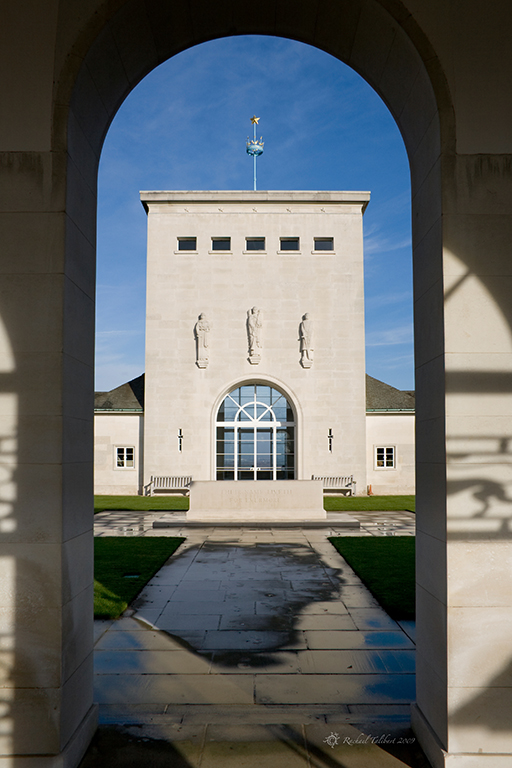
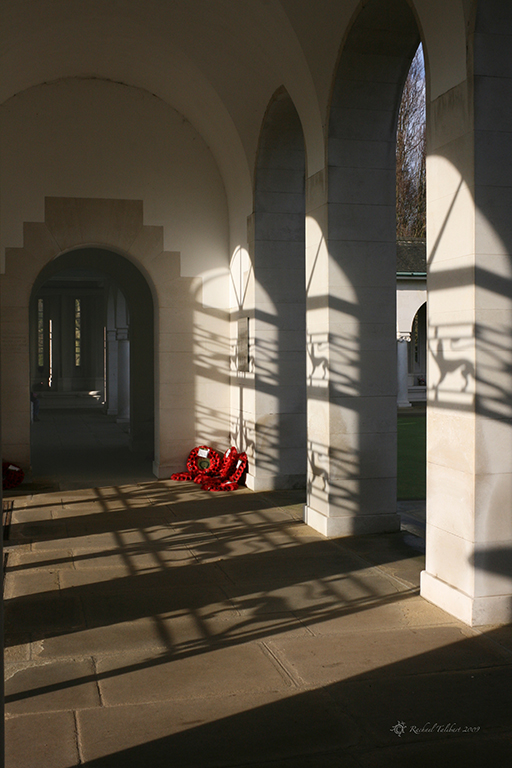
No matter what you think about the politics of conflict, today is a day to remember those who have died in war.  I want to share some images of one of my local war memorials, the Air Forces Memorial at Runnymede.

Runnymede

Perched high on a hill above the water meadows of Runnymede, the memorial is a peaceful building of cool stone, echo and shadow.  

Runnymede

Inside are commemorated over 20,000 airmen lost during World War Two but for whom there is no known grave. The names of those killed seem to run on as endlessly as the memorial’s labyrinthine corridors.

Runnymede

Flags in the roof remind us that the war dead came from all nationalities.

Runnymede

So many young men were lost, literally.  With no body found, often the name carved on the wall is all that family have to mark their loved one.  Countless small tokens left in nooks around the walls show that even all these years later, individuals are still remembered and mourned.

Runnymede

The Air Forces Memorial at Runnymede is a beautiful place, yes, but also a sobering one.  It was somewhere I was pleased to take my teenage son whose idea of conflict is influenced by computer games and adventure movies.  As we walked the corridors and porticoes, he became quiet and thoughtful.  As did we all.

That lighthouse again

lighthouse

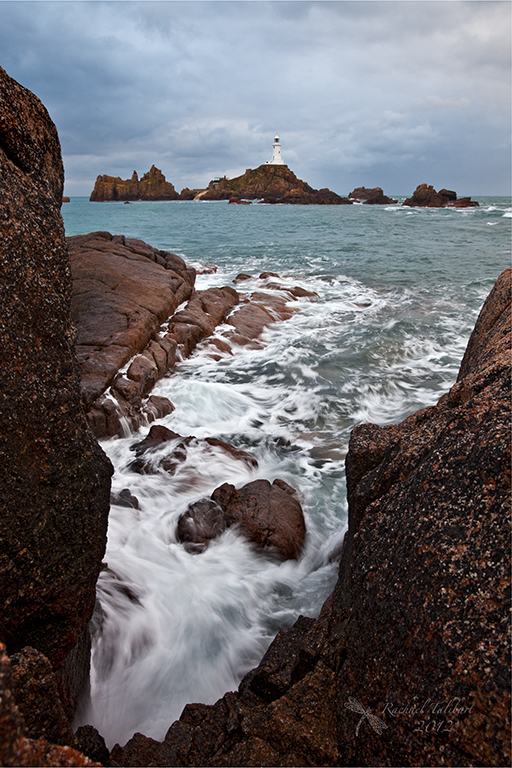
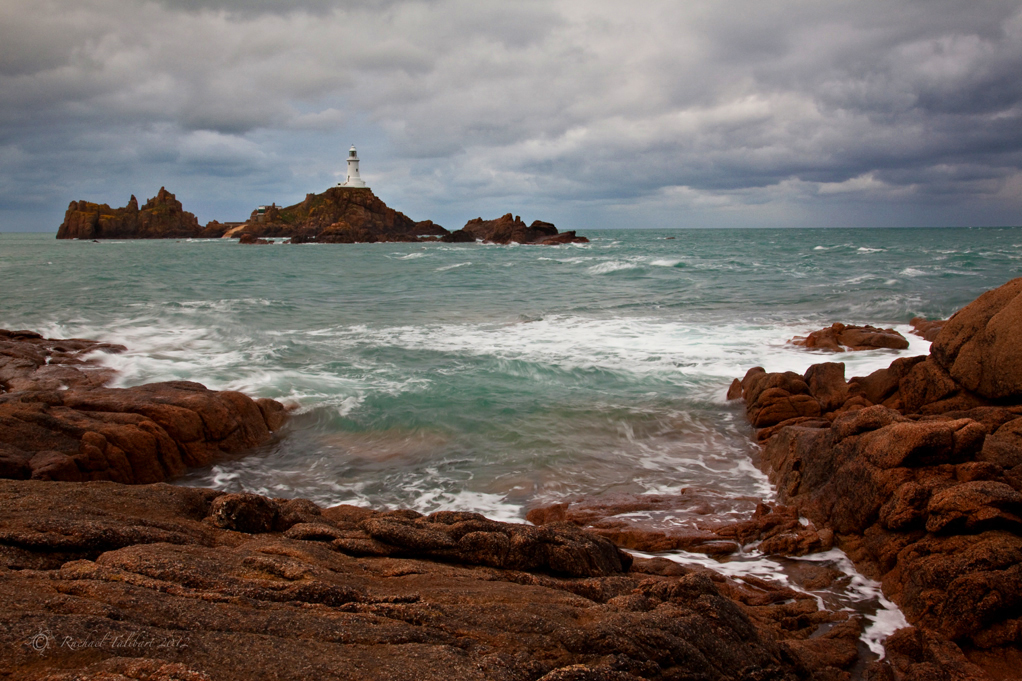
At the risk of boring everyone, I thought I’d post some more pictures of La Corbiere, Jersey’s iconic lighthouse. Reached by a causeway at low tide (a claxon sounds to warn  visitors foolish enough to ignore a rising tide), the lighthouse is attractively perched atop a granite outcrop, high above the Southwestern tip of Jersey’s coast.

lighthouse

It’s an attractive spot for watching sunset but, even if the sun does not put in an appearance, the view is stunning and the rocky foreshore provides plenty of nooks and crannies as foreground interest for the intrepid photographer.

lighthouse

One day I hope to be there in a storm to catch waves crashing over the lighthouse.  In the meantime, however, here are some more shots taken at this lovely, windswept place.

lighthouse

lighthouse


lighthouse


lighthouse


La Rocco

20121103-194330.jpg
Last post I showed some of the World War 2 fortifications on Jersey. Jersey, one of the Channel Islands, sits close to the French Coast but has for centuries been loyal to the English crown. It is not surprising then that the coast has plenty of other, older defences.

20121103-194854.jpg
The North coast is craggy and rugged but the bays of the South, East and West coasts were very accessible to invaders. During the Napoleonic wars, a series of towers was built around the island.

20121103-195218.jpg
General Conway, Governor of the Island, planned for thirty towers to protect the coast from the threat of French invasions. La Rocco on St. Ouen’s Beach was the twenty third to be built, in 1795-6.

20121103-195526.jpg
It makes an attractive landmark, standing sentinel over the five miles of sand that make St. Ouen’s Bay.

20121103-195737.jpg

What a wonderful setting for a spot of sunset kite surfing!

20121103-195916.jpg

But you have to admit that as a silhouette it looks a little like a submarine.

20121103-195958.jpg
More from Jersey next post.