Little things

20120519-121056.jpg

Little drops of water,
Little grains of sand,
Make the mighty ocean
And the beauteous land.

And the little moments,
Humble though they be,
Make the mighty ages
Of eternity …

Julia Carney, ‘Little Things’ (1845)

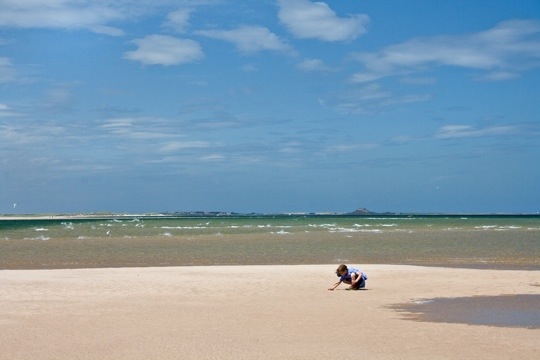
Photo taken on the beautiful coast of Northumberland, England, with Lindisfarne Castle in the distance.

Rescues done

20120506-153029.jpg

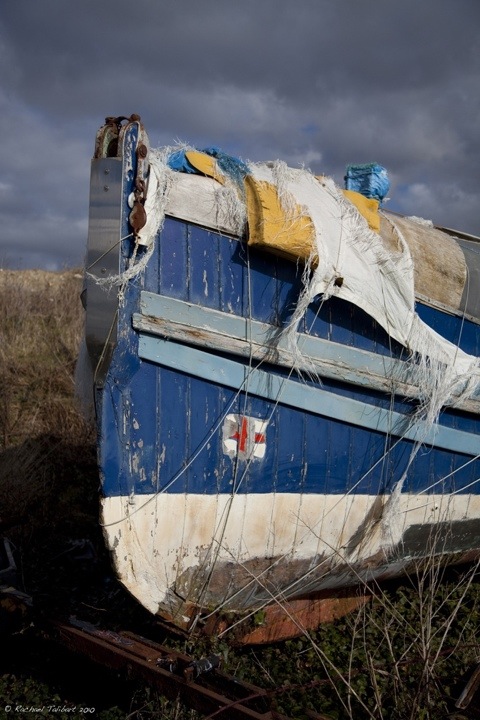
A couple of years ago we spent the weekend at Climping, near Littlehampton in West Sussex. On the west bank of the Arun at Littlehampton we found this old RNLI (Royal National Lifeboat Institution) lifeboat, gently rotting on the shore. I have always been interested in the story of the lifeboats and their crew. If you’re not from the UK, you may not know about this organisation staffed entirely by volunteers who freely give their time and risk their lives to save those in peril on the sea. The bravery of these men and women over the centuries is remarkable. I can’t believe no-one has made a blockbuster movie about them yet. I wonder what stories this boat could tell if it could speak.

La Belle et la Bête

20120505-145951.jpg

I thought that this tree tunnel at Pagham Harbour in West Sussex had a slightly fairy tale feel. When I edited the shot I was inspired by Jean Cocteau’s iconic film, La Belle et la Bête (1946). I wanted to create a black and white that captured something of the aesthetic of the film. It was just an experiment but fun to do.

Have you ever taken or edited a photo inspired by a favourite movie?

Grizzlies

20120430-204455.jpg

In Summer 2010, we spent three weeks in British Columbia, Canada. The standout highlight of the trip was the three days we spent at Knight Inlet Lodge in Glendale Cove.

20120430-204557.jpg

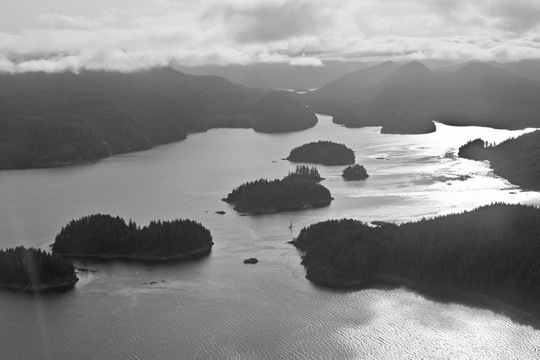
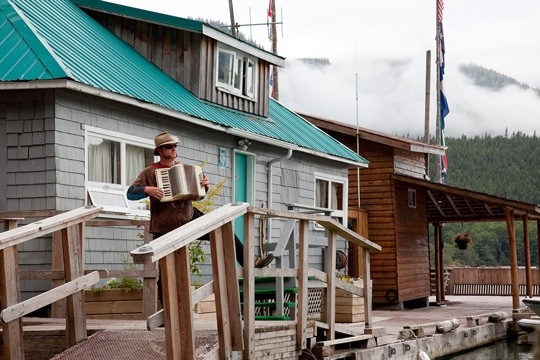
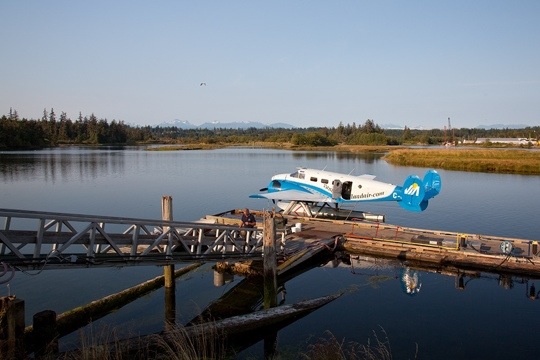
The floating lodge is deep within Knight Inlet, one of the many huge inlets that serrate the coast of this beautiful province. It can only be reached by float plane or boat.
20120430-204651.jpg

Like most visitors to the Lodge, we travelled by float plane from Campbell River on Vancouver Island. Living just outside London, England, we don’t get to travel this way very often so our stay was off to an exciting start before we’d even arrived!

20120430-204747.jpg

The views were superb despite the weather; it rains a lot here.

20120430-204858.jpg

On arrival, after a short introduction to the guides and resident dogs, we were soon in a boat out in the Cove scouring the banks for signs of bears. Although we were too early for the salmon run when bears gather in numbers to fish and can be watched from hides, there was a good chance of finding some foraging on the shoreline.
20120430-205020.jpg

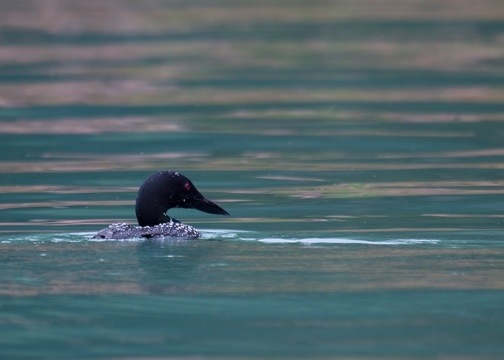
We saw some mergansers, a kingfisher, several curious seals and a loon before a call came over the radio to return to base immediately; bears had been spotted near the lodge!

20120430-205129.jpg

I wasn’t prepared for how breathtaking it was to see these wonderful creatures in the wild.

20120430-205226.jpg

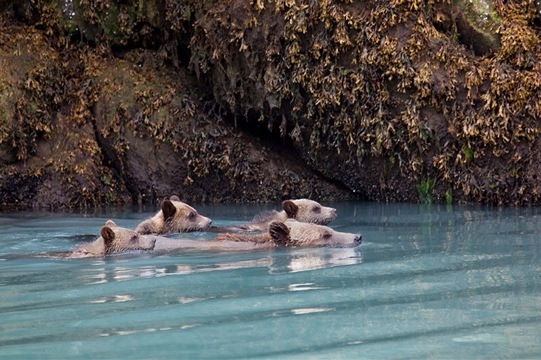
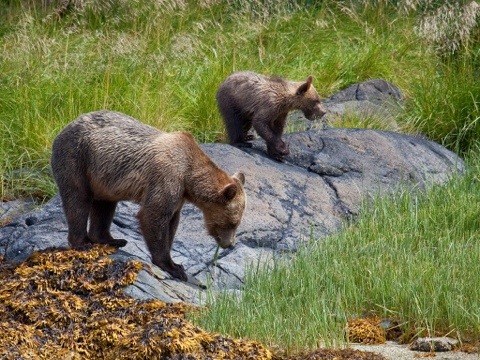
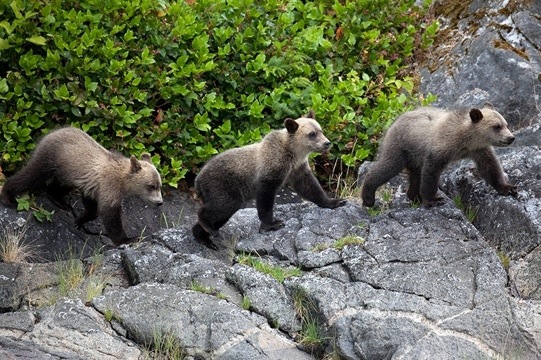
We watched this female, ‘christened’ Bella by the guides, and her three cubs as they foraged along the shoreline. Although we were separated by several feet of water, I felt very aware of my proximity to this powerful mother, who would not hesitate to defend her cubs.

20120430-205401.jpg

We would be lucky enough to watch Bella and her cubs several more times during our stay as well as two other grizzly families. Wildlife abounds in Glendale Cove; we also saw a black bear and some black-tailed deer.

20120430-205528.jpg

20120430-205611.jpg

20120430-205444.jpg

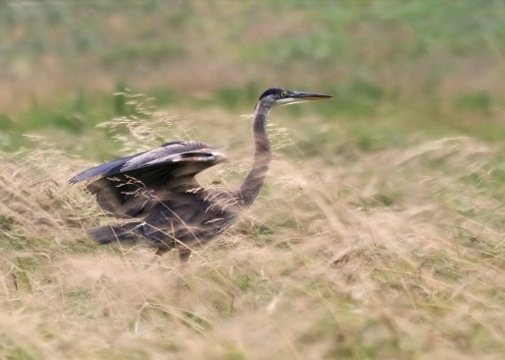
There were many bald eagles and herons as well as numerous smaller species of bird, including swallows who nested in the eaves of the lodge.

20120430-205658.jpg

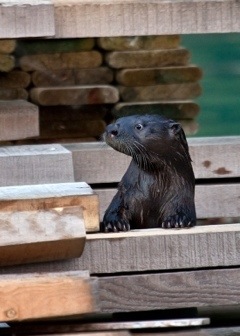
Not to be outdone, some smaller mammals shared the limelight. We saw mink on the shore and the lodge was frequently visited by a cheeky band of river otters.
20120430-205753.jpg

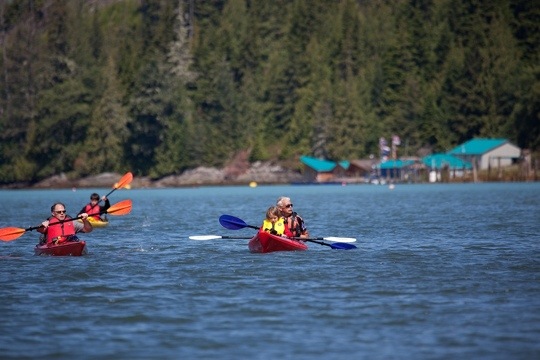
For a change of pace, we could bear-watch from kayaks.
20120430-205839.jpg

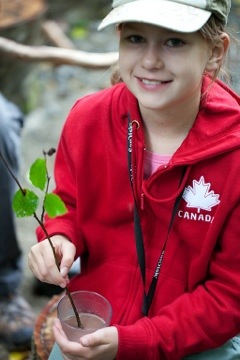
Or go on a guided forest hike. Here, my town-bred daughter can’t quite believe I am letting her stir her hot chocolate with a twig!

20120430-205959.jpg

The evenings were spent socialising in the bar or enjoying entertaining and interesting talks by the friendly and knowledgeable guides. We had read on Tripadvisor that the food was great but it was even better than we expected.
20120430-210017.jpg

Knight Inlet Lodge is a founding member of the Commercial Bear Viewing Association of British Columbia (CBVA). The CBVA campaigns to ban the currently legal trophy hunting of grizzly bears in British Columbia. Watching these magnificent creatures in the wild, I could not imagine ever being able to shoot one with anything other than a camera.
20120430-210138.jpg

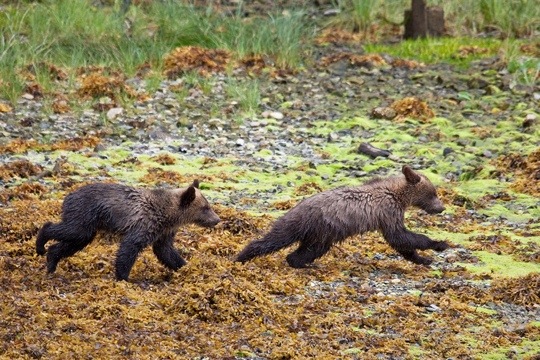
It was a privilege seeing these animals in their natural habitat. To be able to share an experience like this with my children, and to hear them talk about it still, is even better.

20120430-210159.jpg

Romantic runaways

Image

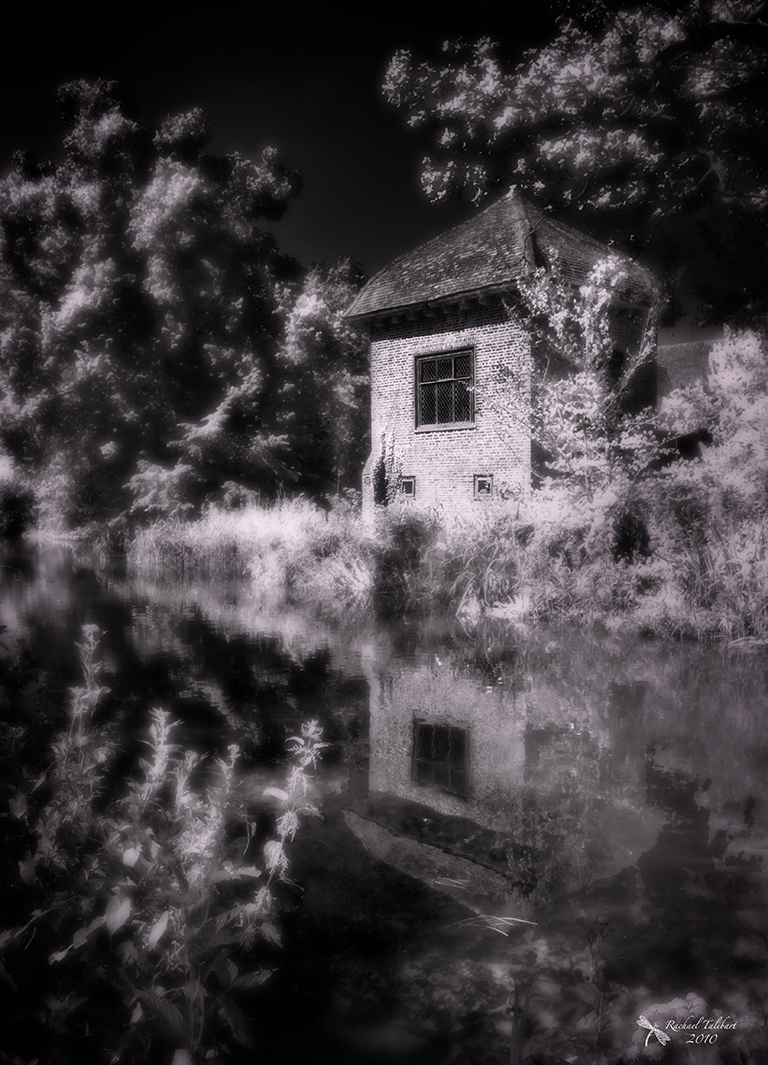
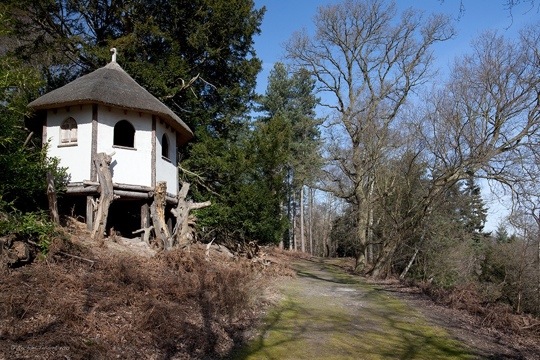
Last year I published a series of articles in some local magazines about the Wey Navigation, a historic waterway that runs for 20 miles from the Thames at Weybridge to Godalming, in Surrey, England. I thought I might occasionally feature excerpts from the series in this blog. Today’s excerpt is about one of the many interesting historical landmarks that can be seen from the towpath. This small brick tower can be found on the stretch between Pyrford Lock and Walsham Gates near the village of Ripley. It is an attractive and unusual structure, fourteen feet square, two storeys high with a first floor entrance and a distinctive ogee-pitched roof. Known as the ‘Summer House’, it bears a blue plaque declaring that: ‘John Donne, Poet and Dean of St.Pauls, lived here 1600-1604’. The story of the romantic runaways is about Donne and his passion for Ann More.

Image

Donne had fallen in love with Ann, the daughter of Sir George More of Loseley Park near Guildford. Ann’s family was too important for her to be permitted to marry Donne so the lovers eloped, when Ann was only 17. This caused a scandal and Sir George organised a search for the runaways. Once they were found, Sir George had Donne thrown into London’s Fleet Prison. On his release, he and Ann were given shelter at Pyrford Place, the home of Sir Francis Wolley, a friend of Donne’s. Sir Francis eventually managed to engineer a reconciliation with Sir George. John and Ann Donne lived at Pyrford Place for a further two years and had the first of their twelve children there. Ann and children lived there for another year while Donne travelled, before the whole family moved to their own home in 1606. It is said that, such was his love for Ann, Donne never got over his grief when she died (having 12 children took its toll!).

It seems unlikely that Donne ever actually lived in the Summer House, which some historians think may not even have been built until later in the century, but the Summer House is in the grounds of Pyrford Place and it is certainly picturesque enough to stand in the imagination as the retreat of a lovelorn poet!

All other things, to their destruction draw,
Only our love hath no decay;
This, no tomorrow hath, nor yesterday,
Running it never runs from us away,
But truly keeps his first, last, everlasting day.

Songs and Sonnets (1611) ‘The Anniversary’

The full text of my article and some more of the images can be viewed here.

A landscape of black and white

20120426-170140.jpg

On the whole, I tend to favour colour photography but sometimes a scene suggests itself to me in black and white. When colour is gone, the outlines or structure of a landscape come to the fore.

20120426-170533.jpg

Black and white landscapes work best if contrast is strong, with at least some true blacks and whites, not just shades of grey.

20120426-170835.jpg

Converting an image taken on a bright summer’s day to black and white can add drama, if the subject seems to demand it.

20120426-171013.jpg

You can add a tint if you want a particular mood…

20120426-171141.jpg

or a different slant on a familiar scene.

20120426-171454.jpg

Do you ever shoot landscapes in black and white?

The images:
Storm approaching Birling Gap, East Sussex, England
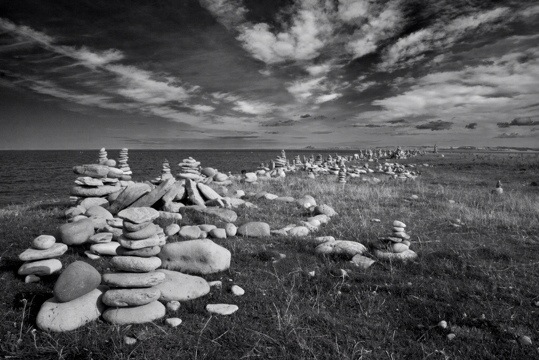
Beach art, Lindisfarne, Northumberland, England
Wheat field, Surrey, England
Dunstanburgh Castle, Northumberland, England
The boathouse, Wey Navigation, England
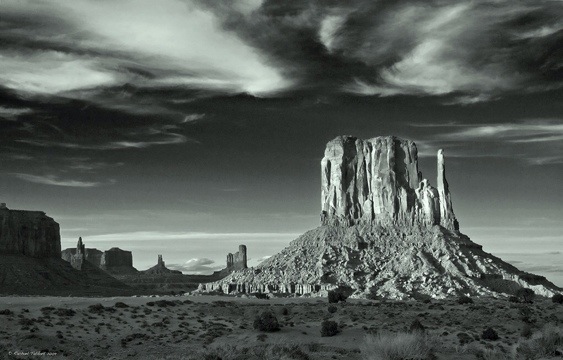
Monument Valley, Utah, USA

Painshill

20120424-094538.jpg

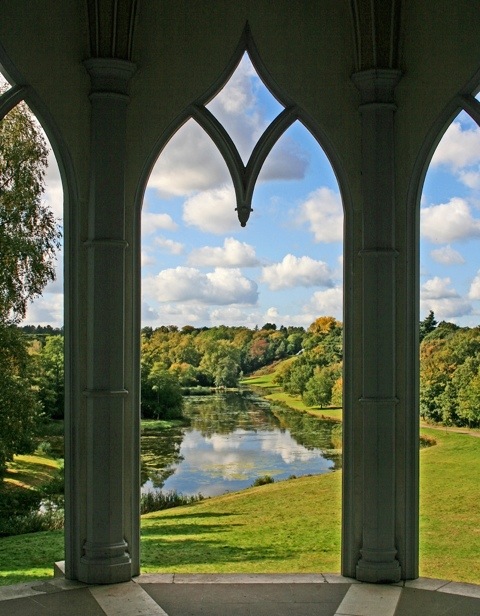
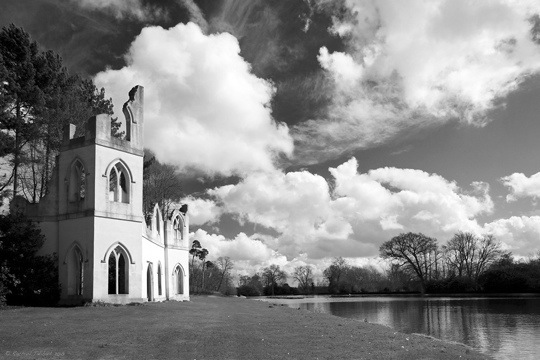
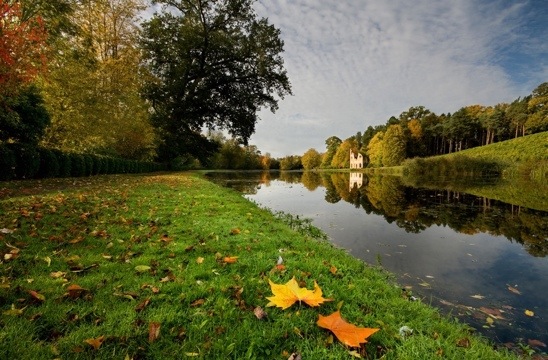
Painshill Park, in Cobham, Surrey, is one of my very favourite local photography locations. An eighteenth century landscape garden, with several ‘follies’ ideally positioned to be ‘picturesque’ in the true sense of the term, it pleases the camera in any season. The top image is a view of the Lake from the Gothic Temple.

20120424-094907.jpg

‘Painshill was created between 1738 and 1773 by the Hon Charles Hamilton, 9th son and 14th child of 6th Earl of Abercorn. A painter, plantsman and brilliantly gifted and imaginative designer, he dedicated his creative genius to the layout and composition of a landscape garden which was unique in Europe and still remains so.’

20120424-095439.jpg

‘Painshill was created as a romantic landscape to stimulate the senses and emotions of the visitor…The gardens were among the earliest to reflect the changing fashion from geometric formality to the naturalistic style.’

20120424-095147.jpg
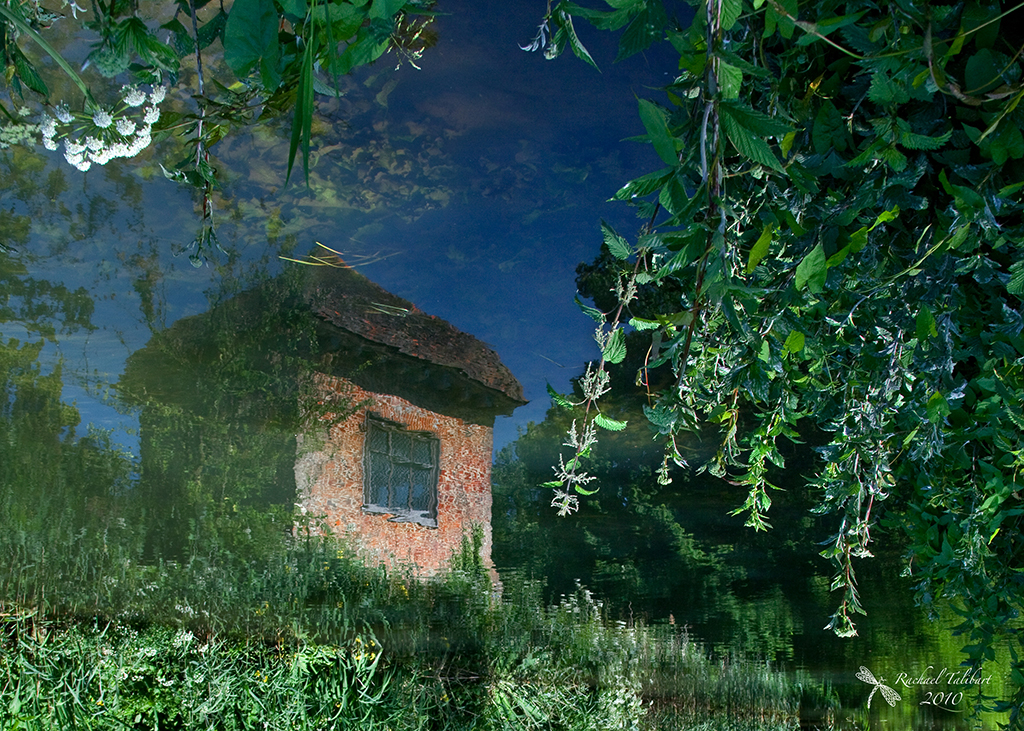
The ruined abbey catches the morning sun. The use of still water to create reflections was one of the typical elements in landscape gardens of the period.

‘Rescuing and restoring this exceptional Grade I landscape has been very challenging and difficult but ultimately exceedingly rewarding, capped with the award of the rare Europa Nostra Medal in 1998 “for the exemplary restoration from a state of extreme neglect, of a most important 18th century landscape park and its extraordinary buildings”. Painshill Park is of international importance and therefore The Painshill Park Trust now has a long-term aim to become a world heritage site.’
The-Story-of-Painshill

20120424-101927.jpg

The Park is big enough that it never feels crowded. Largely maintained and staffed by volunteers, it is a fascinating and beautiful place to visit.

20120424-102421.jpg

The grotto is another of the follies, and it looks very spooky in fog. Father Christmas holds court inside every year.
20120424-102553.jpg

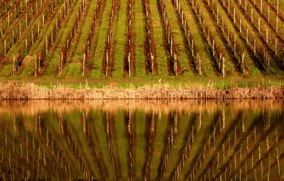
There is even a working vineyard.

20120424-102649.jpg

Wildlife abounds…

20120424-102716.jpg

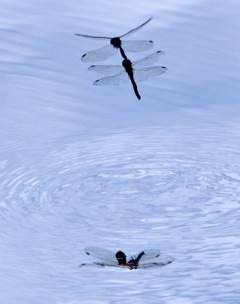
… from the small…

20120424-102749.jpg

…to the not so small.

If you are ever in the area, Painshill Park is a must see!

20120424-102919.jpg

There are more images in my Flickr set.

Storytelling (again)

20120418-155511.jpg

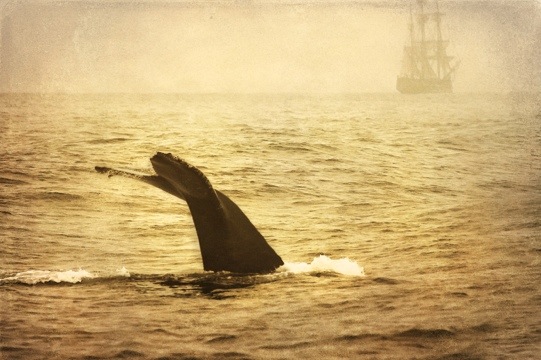
Yesterday’s post was about storytelling in a sequence of images. Today’s is about a one-image story. I call this picture ‘Escape’. To the viewer, it tells of a whale that escapes the whaler’s harpoon. It suggests a backstory, the hunt that has failed, and a future story: where is the whaler going, will it be back, and will the whale escape next time?
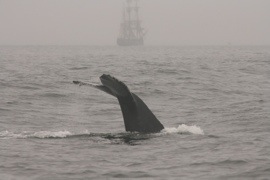
The original exposure is below. It tells its own tale to me, of a whale watching trip out of Monterey in summer 2008. It was hardy whale watching. By the time the whales appeared, I was one of only a few left on deck. The heavy grey mist never lifted but, when a tall ship ghosted past in the distance, I had my shot. However, it needed some work back at home to ‘age’ the shot in keeping with the historical fiction I wanted to tell. First, I moved the ship further along the horizon to make a more balanced composition and to make it clearer that the ship was disappearing into the distance. I converted the image to black and white and added a sepia tint. Then I added a texture and, finally, did some selective dodging and burning. The original was an unremarkable shot but a little editing turned it into an storytelling image worth keeping.

20120418-155448.jpg

Editing in Photoshop CS4. Texture courtesy of skeletalmess.