The tiny, corrugated iron, ‘mission’ church of St. George is in the hamlet of West End, near Esher in Surrey. It was built in 1879 on land given by Queen Victoria so that the poor labourers of the village might be able to worship without the steep, muddy climb into Esher. Despite its temporary nature, the church, which overlooks the cricket green, is currently 134 not out!
Many thanks to my friend, Tony Antoniou, who kindly popped round yesterday to re-calibrate my monitor and at the same time showed me how to get better results from the HDR facility in Photoshop CC. This photo is my first effort using the tool properly. Tony is a talented photographer with a flair for environmental portraits and image manipulation. Do pop over and have a look at his website.
Category Archives: history
Hundatora
Hundatora is a ruined medieval village near Hound Tor on Dartmoor. It is likely it was abandoned either because of deteriorating climate conditions or the Black Death (bubonic plague). Somehow it seemed to me to suit a slightly brooding, black and white treatment.
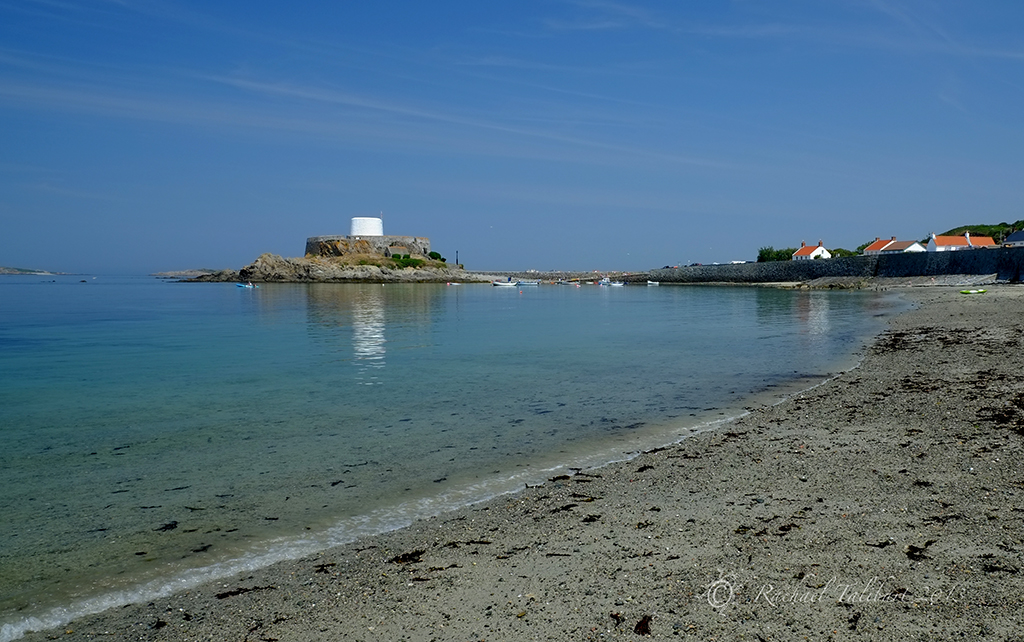
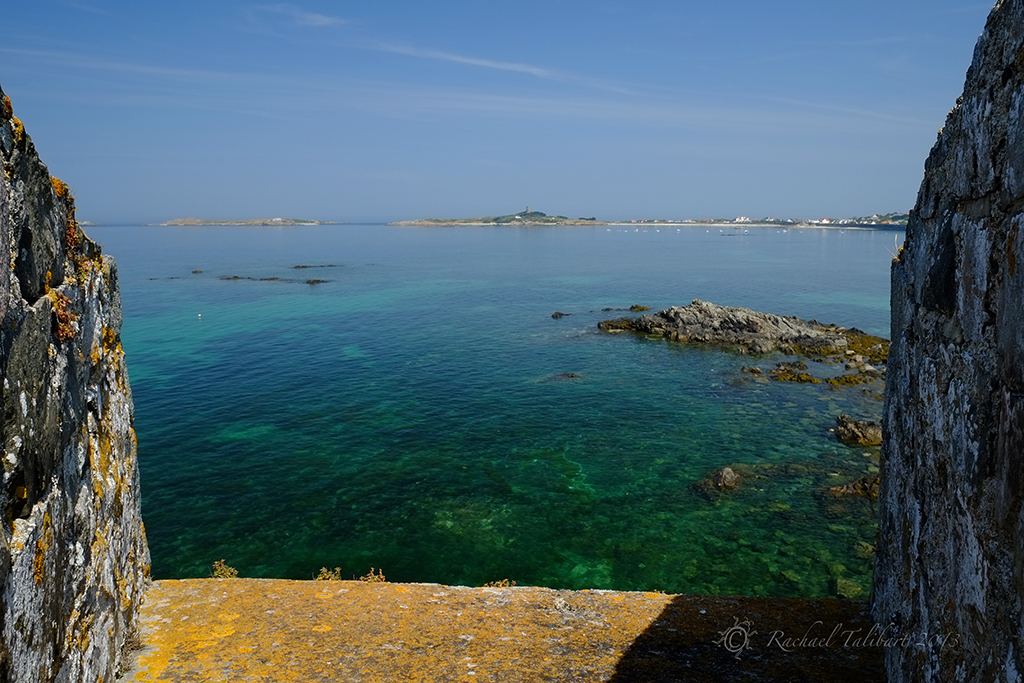
Fort Grey

Fort Grey, in Roquaine Bay on Guernsey’s West coast, is one of the Channel Islands’ many ‘Martello’ towers.

It was built in 1804, during the Napoleonic Wars, for defence against the French.

During WW2, the occupying German forces used it as an anti-aircraft battery. The tower was restored in the 1970s and opened as a shipwreck museum in 1976.
The area has seen plenty of shipwrecks over the centuries, as it is fringed with extensive reefs.
A canon on the roof of the fort points towards the Hanois reef, nemesis for many a vessel. According to the Guernsey Museums website, between 1734 and 1978 over 100 ships were wrecked in the Hanois area. The earliest known wreck dates back to 1309.
The museum, well worth a visit, displays relics, paintings and photographs of many of the local wrecks, together with their often tragic stories.

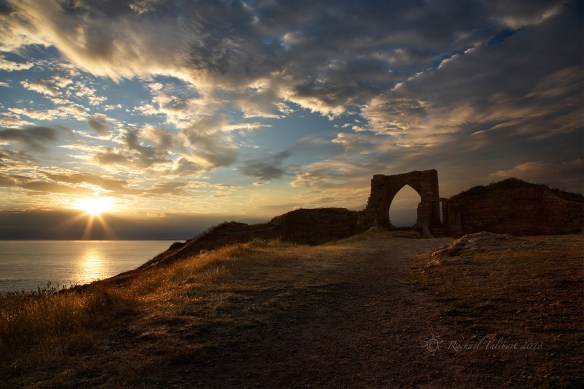
Sunset at Grosnez

Sun sets behind the evocative ruins of Grosnez Castle on the Northwestern tip of Jersey, one of the British Channel Islands.
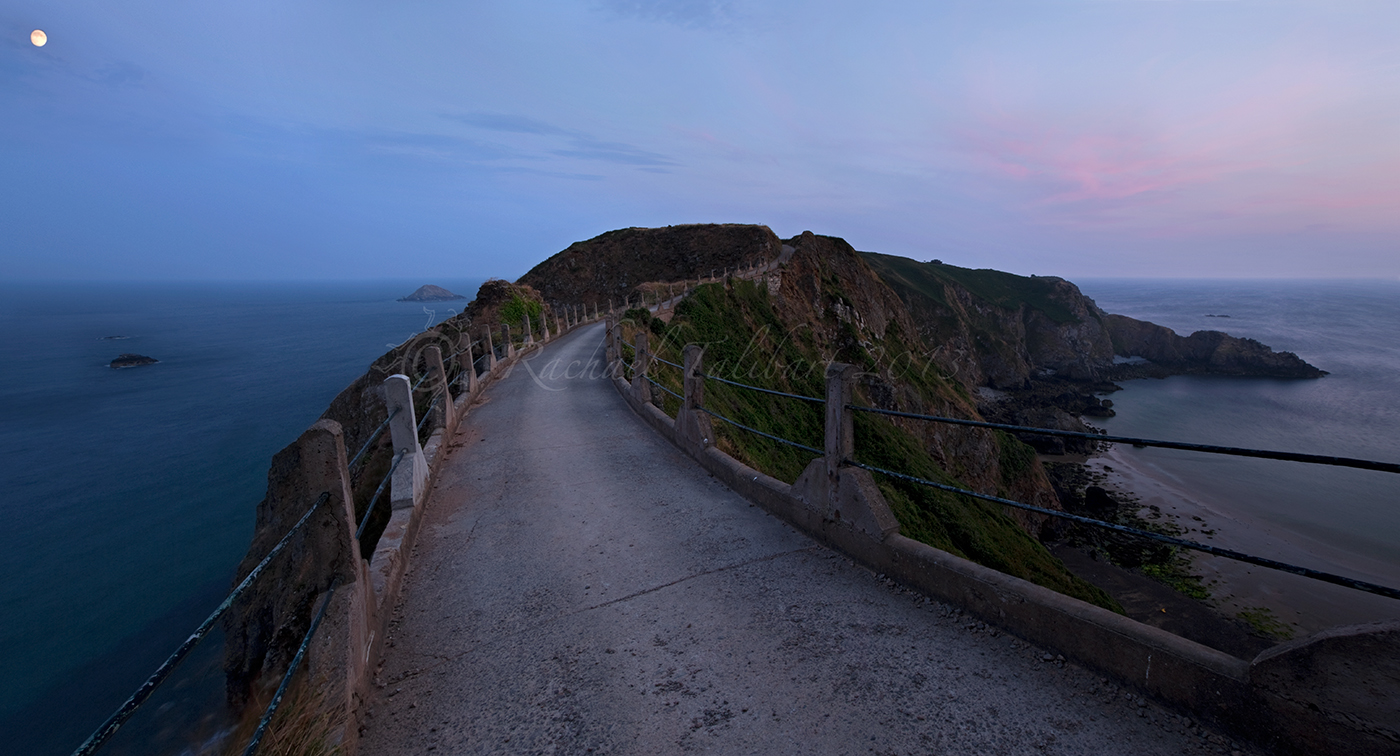
La Coupée

Our trip to the Channel Islands this summer included a stay on Sark.

Under the effects of wind and water, Sark is becoming two islands, Great and Little Sark. They are joined by a narrow isthmus called La Coupée.

It’s a spectacular spot, the cliffs shearing off steeply from both sides of the narrow path. My photos don’t really do it justice.

La Coupée used to be so dangerous that people would crawl over it on their hands and knees. During the nineteenth century, the path eroded until it was only three feet wide. The present road dates from 1945 and was constructed by German prisoners of war. It can still be an eventful crossing even today; on busy days tourists pushing bikes, the principal means of transport on this car-free island, mingle with carts pulled by horses. The latter have right of way, but there’s not a lot of room when they pass! Sadly, I didn’t get a shot of a cart on La Coupée; I always seemed to be there at the wrong time.

I did, however, manage to take some photos of La Coupée at dusk. As the light dims, and the people leave, it becomes a spooky place and, not surprisingly, has had a reputation for being haunted. One story tells of a black dog, called the Tchico, who roams the cliffs around La Coupée at night. I didn’t see Tchico, which is probably just as well.

More about Sark next week.
Royal Holloway

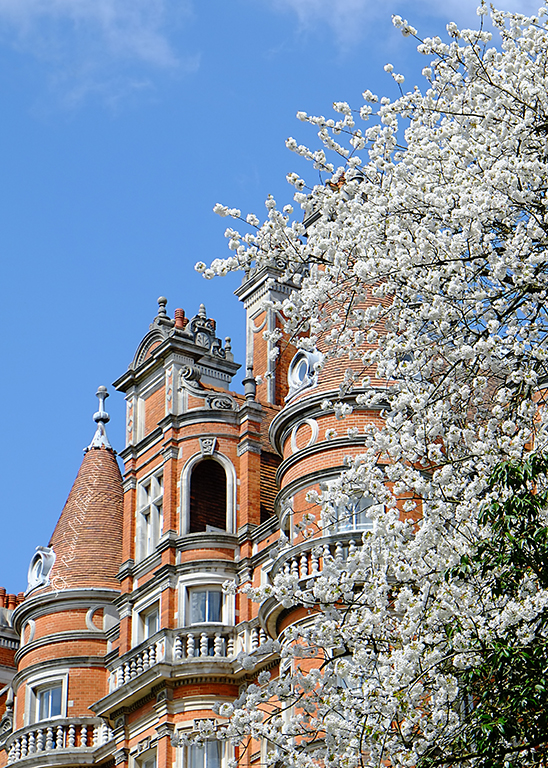
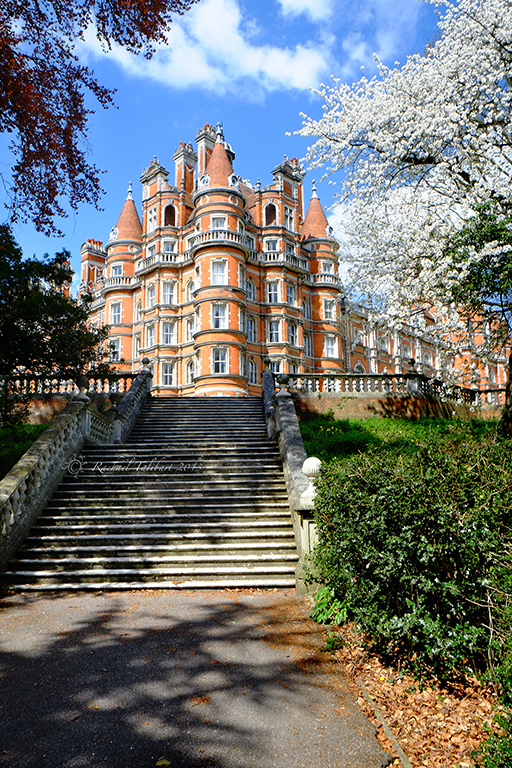
I thought I’d share some images of the college where I am currently studying. The Royal Holloway is a college of the University of London, but based a little outside London itself, in leafy Egham.
The main building, known as ‘Founders’, was designed by William Henry Crossland for Victorian entrepreneur and philanthropist Thomas Holloway as a women’s college. It became part of the University of London in 1900 and accepted its first male students in 1945.

The magnificent Victorian building seems a very fitting background for my particular degree, a Masters in Victorian Literature and Art. I am in the final stages now, with just my dissertation to go.

I have for some time now been promising a review of my latest acquisition, the Fuji X-E1, to follow up on my review in January of the Sony NEX-7. I hope to write it this weekend so if you are thinking of investing in a mirror-less camera, watch this space.
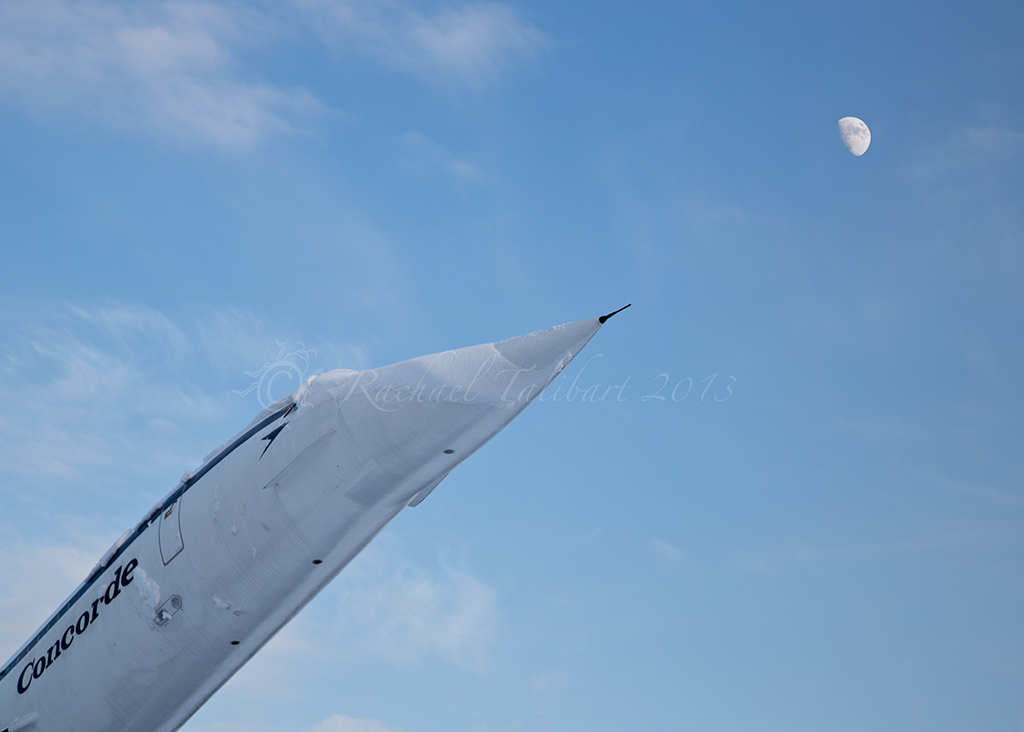
Moongazing Concorde
Instead of a moongazing hare, a moongazing concorde. Except that its windows/eyes are covered in snow.
This 40% model of the famous aircraft used to be at the entrance to Heathrow Airport but, with the demise of its full sized brethren, the model was decommissioned. It now stands sentinel at the entrance to Brooklands Museum and Mercedes Benz World in Weybridge, Surrey.
Jacob’s Ladder
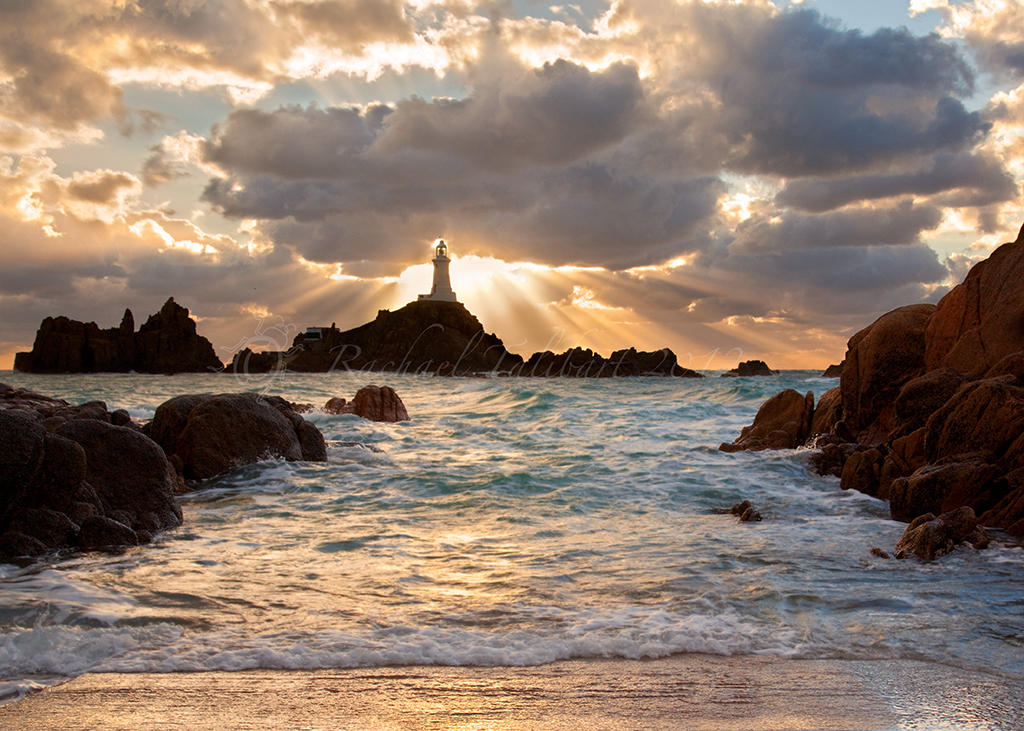
“Crepuscular rays are rays of sunlight that appear to radiate from a single point in the sky, specifically, where the sun is. These rays, which stream through gaps in clouds (particularly stratocumulus) or between other objects, are columns of sunlit air separated by darker cloud-shadowed regions. The name comes from their frequent occurrences during crepuscular hours (those around dawn and dusk), when the contrasts between light and dark are the most obvious. Crepuscular comes from the Latin word “crepusculum”, meaning twilight.” – Wikipedia
Not surprisingly, perhaps, this spectacular meteorological phenomenon has often been connected with spiritual beliefs. It is known colloquially as ‘Jacob’s Ladder’, referring to Jacob’s dream of seeing a ladder to heaven in Genesis. The ‘ladder’ also has significance in Islam which revers Jacob as a prophet. It has inspired spiritual leaders of all faiths.
“God is the Sun and when His rays fall upon your heart, not impeded by the clouds of egoism, the lotus blooms and the petals unfold.” – Sri Sathya Sai Baba
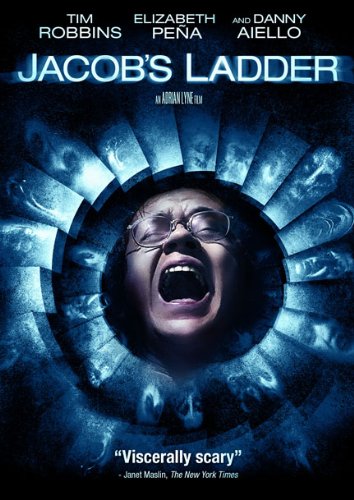
The movie Jacob’s Ladder (1990) starring Tim Robbins tells the story of a vietnam veteran haunted by visions. The story deals with questions about life and death, heaven and hell, and the film’s promotional poster shows a staircase spiralling out from Robbins’s face, like rays of sunlight.
Jacob’s Ladder is also a song written by Bruce and John Hornsby first recorded by Huey Lewis and the News. In the song, a fan dancer rejects evangelism in favour of a step by step, one day at a time, progression through life:
All I want from tomorrow is to get it better than today
Step by step, one by one, higher and higher
Step by step, one by one, climbing Jacob’s ladder
The seventh day of Christmas: New Year’s Eve

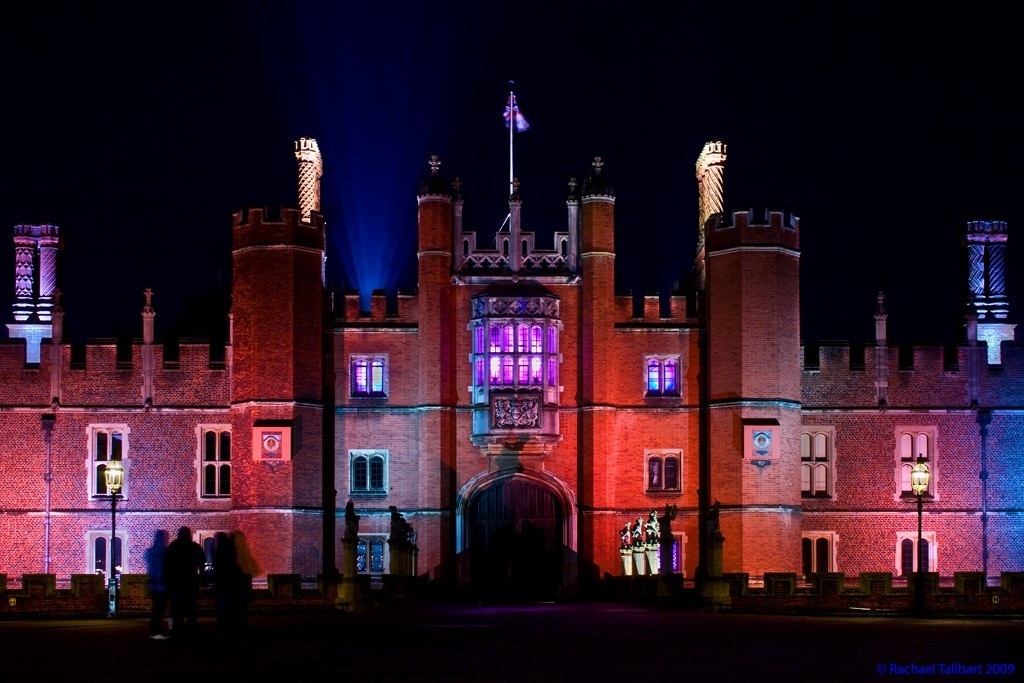
I thought my photograph of Hampton Court on New Year’s Day 2009 might be suitable for today’s blog, as 2012 draws to a close. It has been a difficult year for me personally but a tremendous year to be British. Tonight I am celebrating in another place rich in British history, Dartmouth in Devon (of which, more another day).
A very brief potted history of New Year’s celebrations: Julius Caesar instituted January 1 as the first day of the year. January is named after Janus, the Roman god with two faces that looked into the past and into the future. Romans celebrated New Year by making sacrifices to Janus, exchanging gifts, decorating their homes and throwing parties. In medieval Europe, Pope Gregory XIII established January 1 as New Year’s Day in 1582. But the celebrations today retain much of their more pagan origins. One ancient tradition that still continues, particularly in Scotland, is ‘first footing’. At midnight, the Old Year is let out through the back door and the New Year let in through the front door. The first person at the New Year to pass over the threshold should bring coal or, more likely(!), whiskey for luck in the year ahead.
Wishing all my blogging friends a very happy New Year.
The sixth day of Christmas: poinsettia

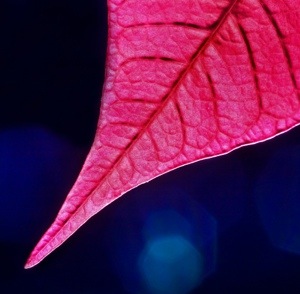
The three working days between Christmas and New Year can often seem rather anticlimactic. I thought this image of a discarded poinsettia ‘bloom’ in Painshill Lake captured something of that feeling.
More positively, poinsettias are of course a very popular plant at this time of year. They hail from Central America, particularly Southern Mexico and belong to the euphorbia family. The colourful ‘blooms’ are in fact leaves, not flowers.
Surfing the net today, I came across this sweet story about the origin of their connection with Christmas:
“There is an old Mexican legend about how Poinsettias and Christmas come together, it goes like this:
There was once a poor Mexican girl called Pepita who had no present to give the baby Jesus at the Christmas Eve Services. As Pepita walked to the chapel, sadly, her cousin Pedro tried to cheer her up.
‘Pepita’, he said “I’m sure that even the smallest gift, given by someone who loves him will make Jesus Happy.”
Pepita didn’t know what she could give, so she picked a small handful of weeds from the roadside and made them into a small bouquet. She felt embarrassed because she could only give this small present to Jesus. As she walked through the chapel to the altar, she remembered what Pedro had said. She began to feel better, knelt down and put the bouquet at the bottom of the nativity scene. Suddenly, the bouquet of weeds burst into bright red flowers, and everyone who saw them were sure they had seen a miracle. From that day on, the bright red flowers were known as the ‘Flores de Noche Buena’, or ‘Flowers of the Holy Night’.” http://www.whychristmas.com/customs/poinsettia.shtml
I rather enjoyed another piece of trivia I picked up on the same website: apparently, the plants are named after Joel Robert Poinsett, the USA’s first ambassador to Mexico, who introduced the plant into the USA. Mr Poinsett is also famous for having founded the Smithsonian Institute.