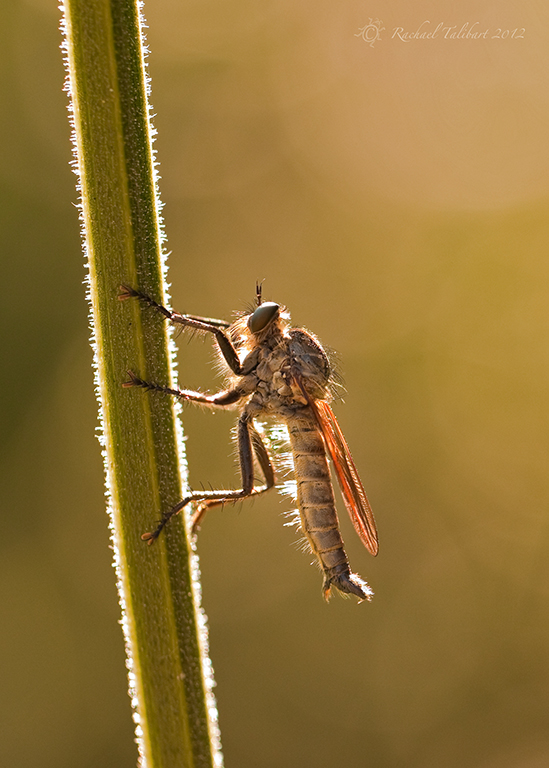
This fine fellow is machimus atricapillus, the Robber Fly. He perches waiting for a hapless and punier insect to fly by and then darts out – game over. He is not fussy in his choice of perch, even making use of handy humans, but he does not bite people. Here, he is enjoying a spot of evening sun in my garden.
Tag Archives: photography
Golden
Gasteruption jaculator

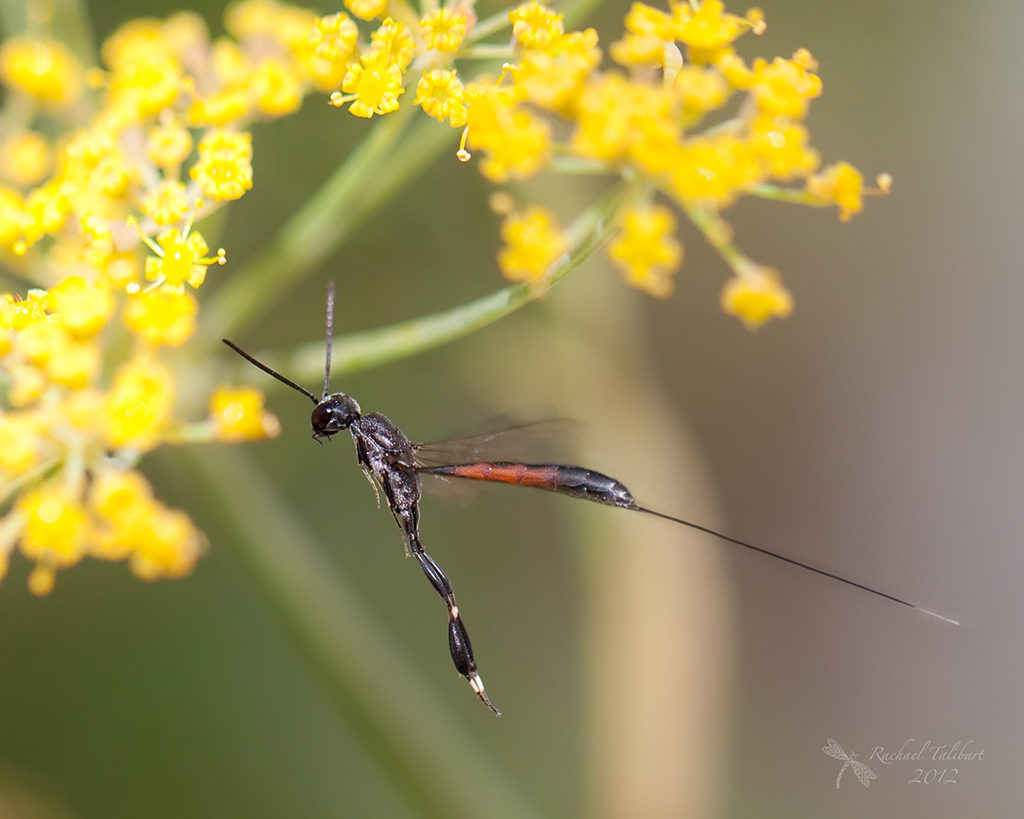
This bizarre creature is gasteruption jaculator. Whoever named it should be banned forthwith from all future namings. I am grateful to afrenchgarden for the I.D. I was wrongly was calling it a sand digger wasp. I have never seen one in my garden before this year. Yesterday I noticed one feeding on fennel pollen but was unable to get a decent shot before it flew away. So, today, I returned to the fennel plant at the same time of day and, low and behold, there it was. And I was delighted to be able to capture it in flight!
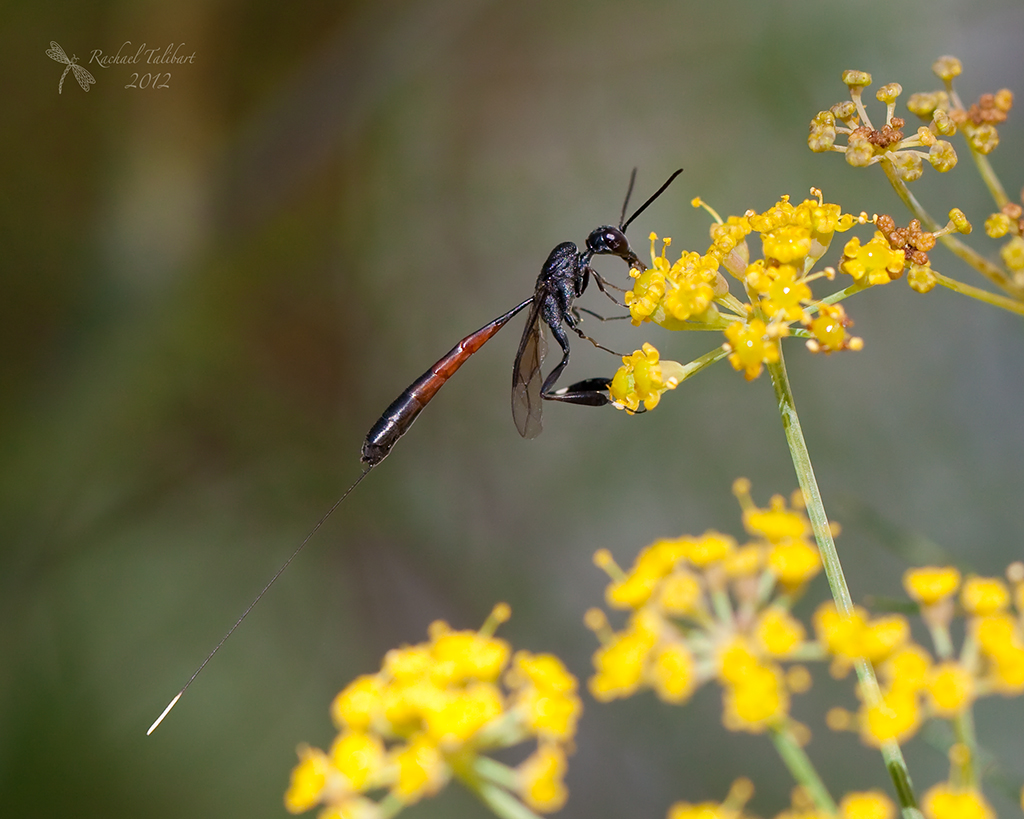
It is an elegant creature with its long spike looking not unlike a cigarette holder from the 1920s (or is that just me?). I am assuming this is the female. Her consort, a much smaller beast without cigarette holder, is below. (It’s a lousy shot, I know, but illustrative.)
For an earlier post on other wasps found in my garden, see here.
The weekend summer arrived

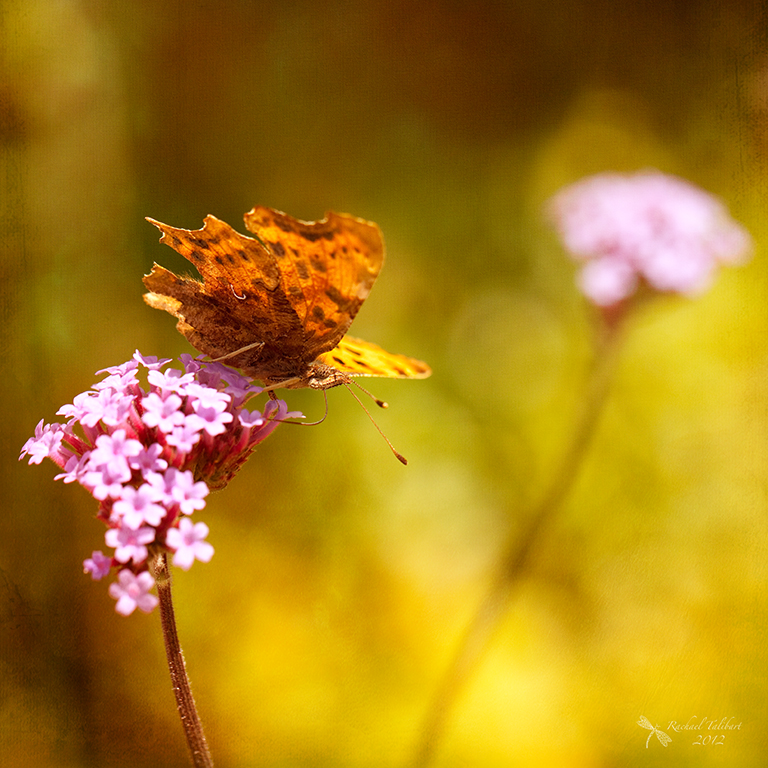
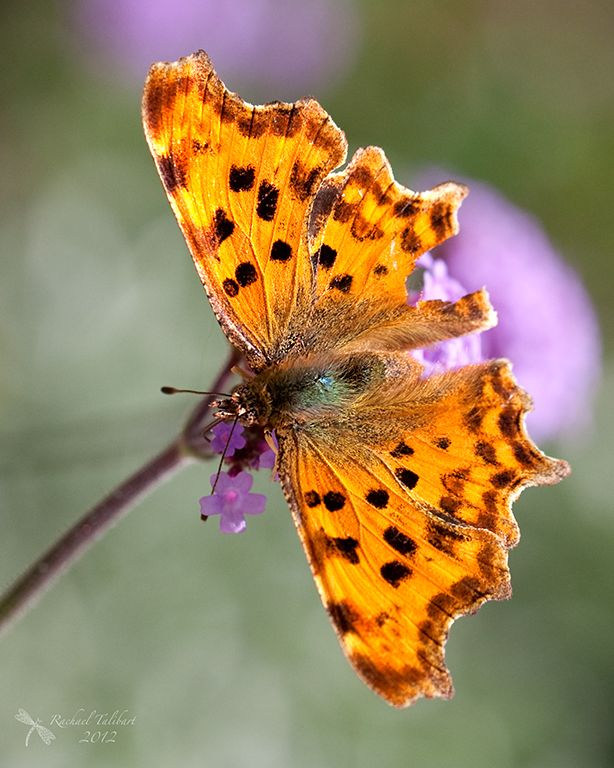
This weekend, summer finally arrived in our little corner of the British Isles. And with it came the butterflies. This Comma (polygonia c-album) just loved the verbena bonariensis in my garden.

I played around with the image in Photoshop. Well, why not?

It was a tatty fellow, even for a Comma, with a notch out of its rear right wing, but that didn’t seem too much of a handicap.

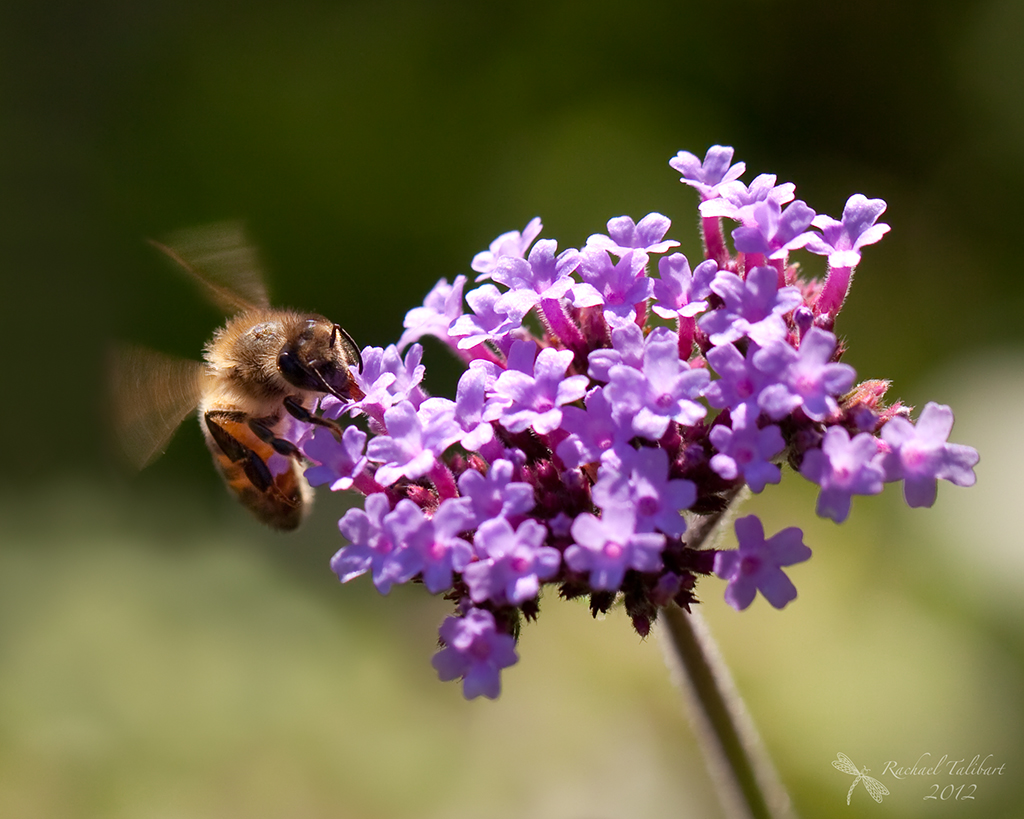
The honey bees were enjoying the verbena too. Nice to see some more about today. They have not enjoyed our very wet and cold weather.
How did you enjoy the weekend? I hope yours was as good as mine. 🙂
Victoria by night
The golden lair
The Cobb

Our summer holiday this year will be spent at Lyme Regis, a lovely little town on the coast of Dorset. It is steeped in history and features in Jane Austen’s Persuasion:
the principal street almost hurrying into the water, the Walk to the Cobb, skirting round the pleasant little bay, which, in the season, is animated with bathing machines and company…are what the stranger’s eye will seek
The Cobb is Lyme Regis’s famous harbour wall. In Persuasion, one of the characters takes a tumble off the Cobb. In a later novel, The French Lieutenant’s Woman, John Fowles immortalised “quite simply the most beautiful sea rampart on the south coast of England”.
Lyme Regis is on The Jurassic Coast, a World Heritage Site for its wealth of fossils from the Jurassic period. It was here that Mary Anning (1799-1847) discovered, at the tender age of twelve, the first complete ichthyosaur. She went on to become a renowned palaeontologist when the science was in its infancy. Lyme Regis Museum, a fascinating place to visit in its own right, is built on the site of Mary’s home.
Candy-striped leafhopper
This curious little critter is a rhododendron leafhopper (graphocephala fennahi) nymph. I snapped several shots of it in my garden today. It has excellent eyesight and flipped to the underside of its leaf every time I approached. I liked the softness of this shallow depth of field capture.
This is what it will look like later in the summer, when it is full-grown. The adults can fly short distances and make tricky subjects for the camera as they are very flighty and see me coming far too quickly. Although they do little damage to the rhododendron host themselves, outbreaks of a type of rhododendron mould have been connected with infestations of these pretty little critters. But I have to say, they have happily co-existed with my rhododendrons for the ten years we have been here and I consider them a colourful and welcome addition to my garden.
Utah panorama
Them!
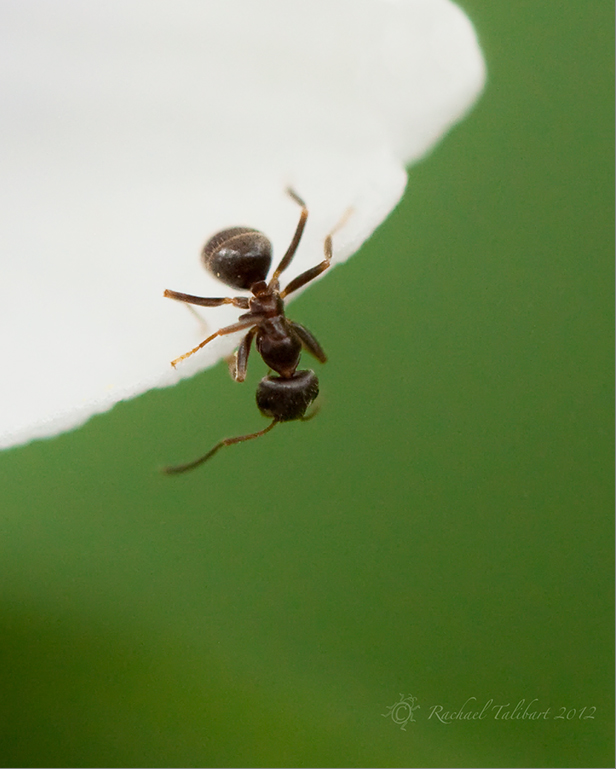
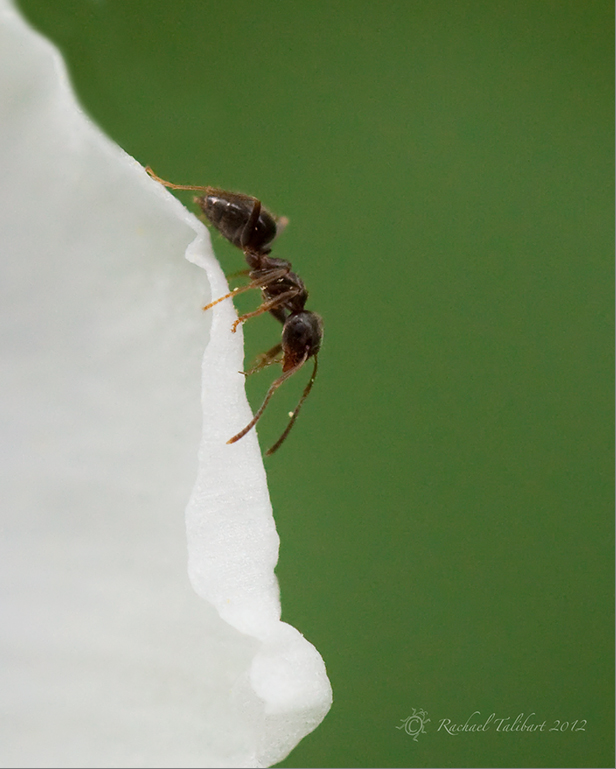
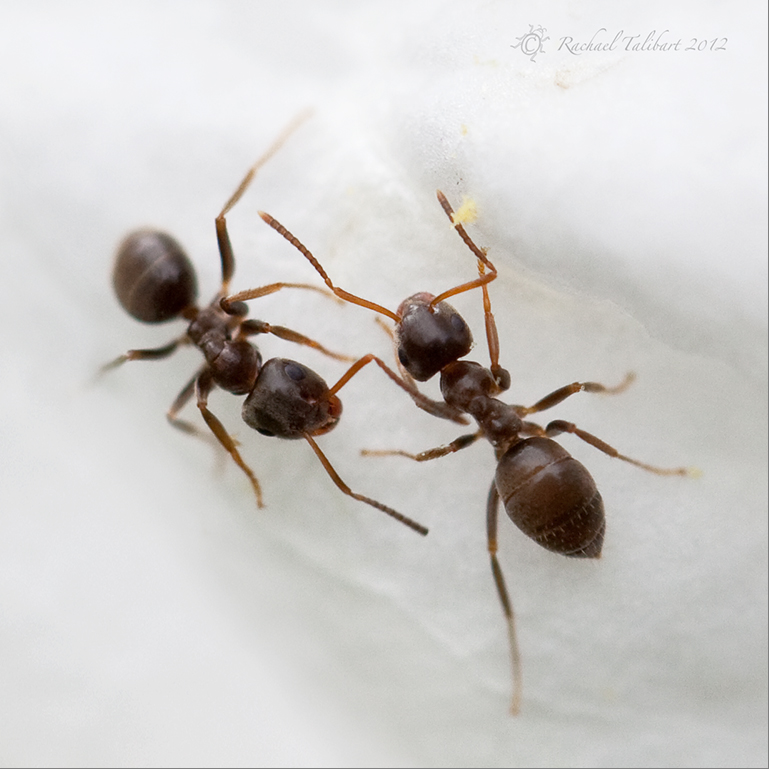
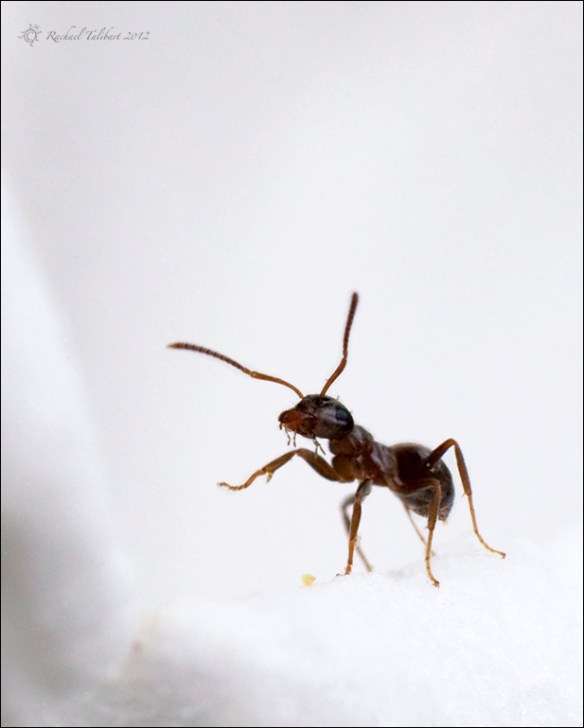
Ants are some of the trickiest subjects for my trusty lens. Apart from being very small, they are rarely still. They do however strike some appealing poses, however fleetingly.
In an earlier post, I mentioned my discovery that the study of ants is called myrmecology and that, according to Greek myth, Achilles’s Myrmidon warriors were said to have been created by Zeus out of an ants’ nest. The Myrmidons were known for their ferocity and loyalty. In this passage from Thoreau, a war between rival ants is described in appropriately epic terms:
One day when I went out to my wood-pile, or rather my pile of stumps, I observed two large ants, the one red, the other much larger, nearly half an inch long, and black, fiercely contending with one another. Having once got hold they never let go, but struggled and wrestled and rolled on the chips incessantly. Looking farther, I was surprised to find that the chips were covered with such combatants, that it was not a duellum, but a bellum, a war between two races of ants, the red always pitted against the black, and frequently two red ones to one black. The legions of these Myrmidons covered all the hills and vales in my wood-yard, and the ground was already strewn with the dead and dying, both red and black. It was the only battle which I have ever witnessed, the only battle-field I ever trod while the battle was raging…. On every side they were engaged in deadly combat, yet without any noise that I could hear, and human soldiers never fought so resolutely.
Henry David Thoreau
Perhaps it is not surprising that humans have tended to anthropomorphise ants, and also to view their apparent relentlessness, and hive mind, with some apprehension. Does anyone remember the 1954 sci-fi classic movie, Them! in which nuclear testing causes ants to mutate into giants? 1954 was a bad year for ant-PR: in The Naked Jungle, Charlton Heston has to defend a cocoa plantation against a 2-mile-wide, 20-mile-long column of army ants. Perhaps you may have seen Phase IV, the, now cult, 1974 movie in which ants evolve into the dominant life form on Earth? Other sci-fi villains, like Star Trek’s Borg, appear modelled, at least partly, on ants.
The more I photograph ants, the more fascinating I find them. But I am glad they are small.
The shadows now so long do grow,
The brambles like tall cedars show,
Molehills seem mountains, and the ant
Appears a monstrous elephant.
Charles Cotton, ‘Evening Quatrains’ (1689)