f11 Workshops

I can finally explain why Focused Moments has been so quiet lately.  It’s been a long time in the planning but this week my business partner, Tony Antoniou, and I launched our new venture, f11 Workshops.

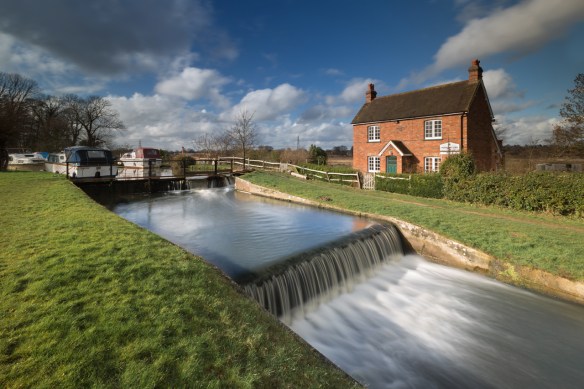
Papercourt Lock

We are going to be leading photography workshops and tours in Surrey and West Sussex. The photographer is spoilt for choice when it comes to workshops in some of the UK’s more famous beauty spots, like the Jurassic Coast in Dorset, the Lake District, or the Scottish Highlands, but there are few tours elsewhere.  Yet there are rewarding locations everywhere if you know where to look.  I am really looking forward to introducing other photographers to some of my favourite local places.

Dell Quay

Taking small groups of 6-8 maximum, we aim to tread lightly in our chosen locations, leaving nothing behind and taking nothing away but our photographs and some great memories.

Moonrise over Weybridge

I’ll be blogging about our tours as they happen.  Plus, now that the business is up and running, I should be able to get back to regular posting, and reading.  In the meantime, if you have time, please visit our website.  I’d love to know what you think.  We are also on Facebook and Twitter.


Fields of scarlet

wild flowers

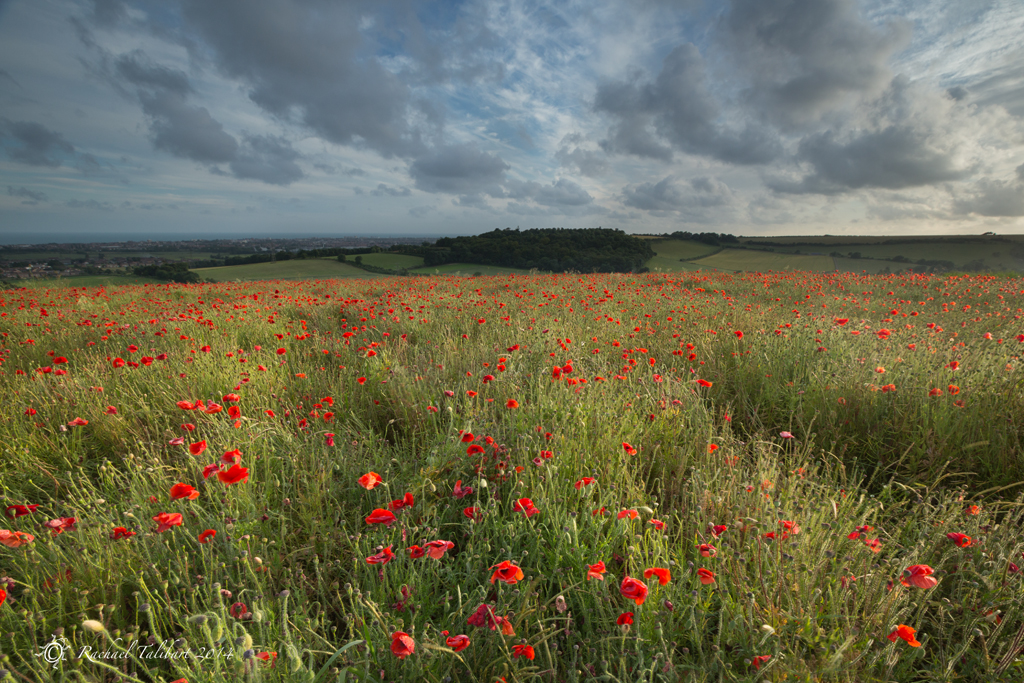
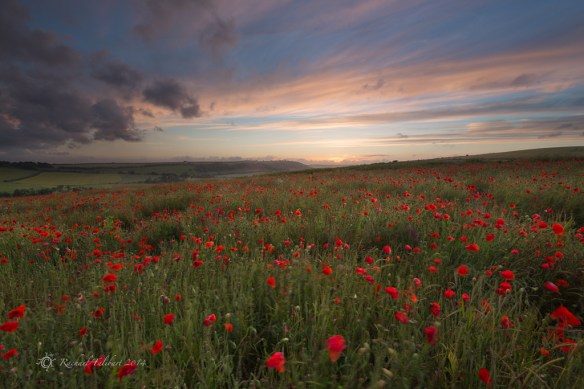
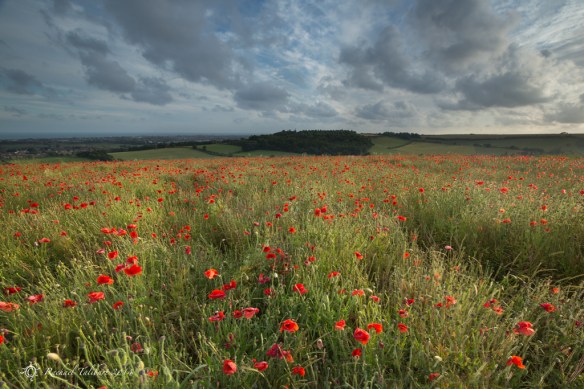
A week ago, I heard via my shooting buddy, Jen that there was a field of wild poppies on the South Downs, about an hour and a half away from here.  The trip was more than rewarded. Perched high up on the South Downs overlooking the Solent, the poppies basked in the evening sun. We stood in that field for more than three hours and it felt like minutes.

West Sussex

We have a few varieties of field poppies in this country.  Poppy fields that spring up on fallow ground tend mostly to comprise the common poppy, papaver rheas.  The prickly poppy, papaver argemone, has smaller flowers and prefers lighter, sandy soils.  The rough poppy, papaver hybridum, is rarer, but its habitat is the chalky soils of the South Downs.  I must confess that I didn’t inspect the individual flowers very closely but looking at my pictures, the poppies we stood among were mostly common poppies.

poppy field

An individual poppy flower lasts only one day but a single plant can produce as many as 400 flowers.  That’s a lot of poppies.  I would guess ‘our’ field was only about half way through its flowering life – there were plenty of seed heads but also plenty of buds yet to open.

Poppy field 3

Another name for the common poppy is the corn rose. Ceres, the Roman goddess of corn was depicted wearing a wreath of common poppies. Poppies used to be a common sight in cornfields but selective herbicides and other modern farming practices have made this rarer. They do still pop up on land left fallow, but not in the same place two years running, which keeps landscape photographers on their toes!

West Sussex

Of course, this year the poppy is very topical, with the WW1 centenary.  These tough little plants, whose seeds needs rough handling to germinate, became the emblem of remembrance because they grew in such abundance on the disturbed soil of the battlefields.  I must confess, however, that standing surrounded by the flowers as they nodded gently in the evening breeze, war and death couldn’t have been further from my mind.
Poppy field 2

Mad Patsy said, he said to me,
That every morning he could see
An angel walking on the sky;
Across the sunny skies of morn
He threw great handfuls far and nigh
Of poppy seed among the corn;
And then, he said, the angels run
To see the poppies in the sun.


A poppy is a devil weed,
I said to him – he disagreed;
He said the devil had no hand
In spreading flowers tall and fair
Through corn and rye and meadow land,
by garth and barrow everywhere:
The devil has not any flower,
But only money in his power.


And then he stretched out in the sun
And rolled upon his back for fun:
He kicked his legs and roared for joy
Because the sun was shining down:
He said he was a little boy
And would not work for any clown:
He ran and laughed behind a bee,
And danced for very ecstasy.


– James Stephens In the poppy field 

 

Poppies at dusk

Sussex

Some may remember that last June I found a wild poppy field nearby and went a bit mad photographing it.  As is the nature of natural poppy fields, it is not there this year, the land having been rotated back to crops.   However, thanks to the photographers’ network, I have found another, rather further afield but, as last night’s visit confirmed, completely worth the trip. More to follow!

An adventure with rainbows

Wales

f/11, 16mm, ISO 100, .5″

We’re just back from a short trip to Wales.  I have a lot of images to upload but thought I’d start with the most recent, from last night. We found a super sunset spot for Lilly, our camper van, looking over Freshwater West beach, Pembrokeshire.  I was so busy looking West that I almost didn’t notice a rainbow appearing behind us.

Wales

f/11, 16mm, ISO 100, .8″

It just got better and better as the setting sun turned the clouds pink.  By the end, I’d had a good soaking (well, you can’t have rainbows without rain) and I was very glad of my camera’s weather seals.  We loved what we saw of Glamorgan and Pembrokeshire and have already agreed to go back as soon as we can.

Wales

f/11, 16mm, ISO 100, 1.6″

By the way, the small triangular structure in the first shot is a seaweed drying hut.  More on that anon.

Precious landscape on the brink

Surrey landscape
On Friday, I enjoyed a trip out to Three Farms Meadows with my friend, Tony Antoniou.   The landscape here is special because Surrey is a heavily populated county.  Open spaces like this are rare and ever more under threat.   Three Farms Meadows in Surrey
I cannot hope to convey the joy of stepping through the gate onto this vast, open, empty landscape.  We spent an hour up there, in the company of skylarks, bees and a pair of red kites soaring overhead.Surrey landscapeSadly, Three Farms Meadows is under very real threat.   2,500 new homes are planned for this site.  I understand how desperate the housing situation is in this crowded little country of mine.  But still, I cannot help but dread the loss of this precious place.  The price seems too high.

A louse by any other name

insect on grass

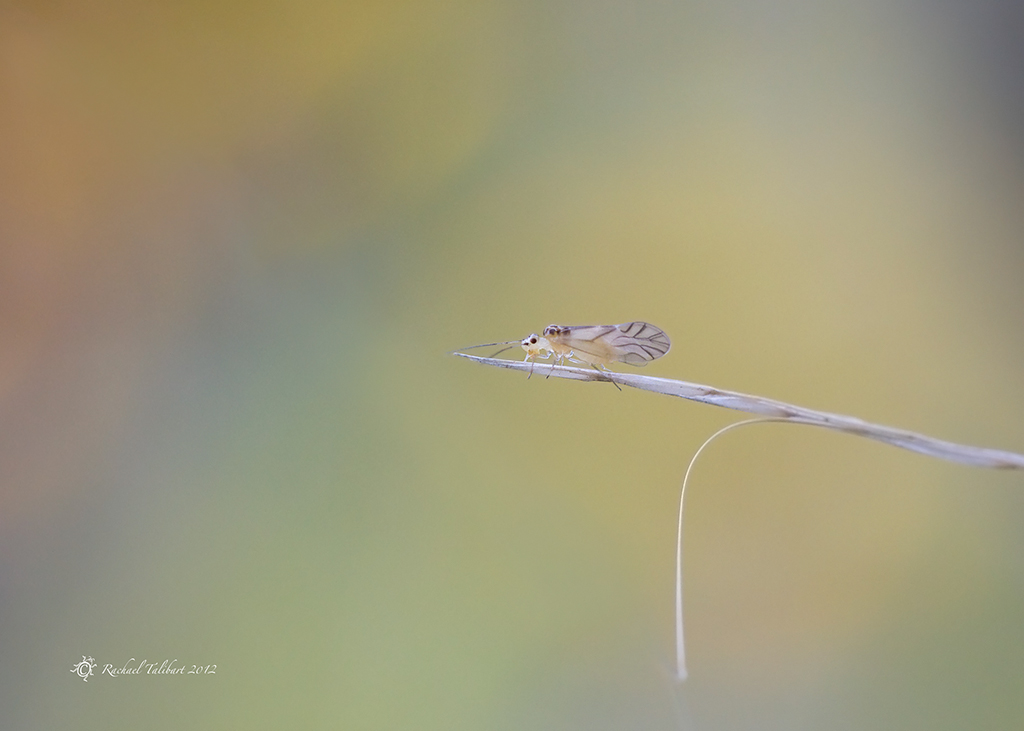
Continuing my campaign to convince certain people that bugs can be pretty, here are two images of a psocid, commonly known as a bark louse.  Psocids are very small, and easily overlooked.  This little louse was the star of a post way back in Autumn 2012, but for some reason I omitted these pictures that time.  As ever with my insect photography, the images are as much about the background as the bug itself.

insect

Study in yellow

chrysoperla carnea

f/4, 1/250, ISO 1000, 100mm


A shot from October that I had overlooked. Lacewings appear delicate but are formidable predators of aphids. According to my Collins Complete Guide to British Insects, ‘the larvae of some species camouflage themselves with the dead skins of their prey’ (p.106). I thought it was pretty, toning with the autumn colour of my dogwood tree. Lacewings look amazing in flight; a photographic challenge for this year perhaps…

chrysoperla carnea

Cropped for those who like their bugs up close and personal

Collembola and friends

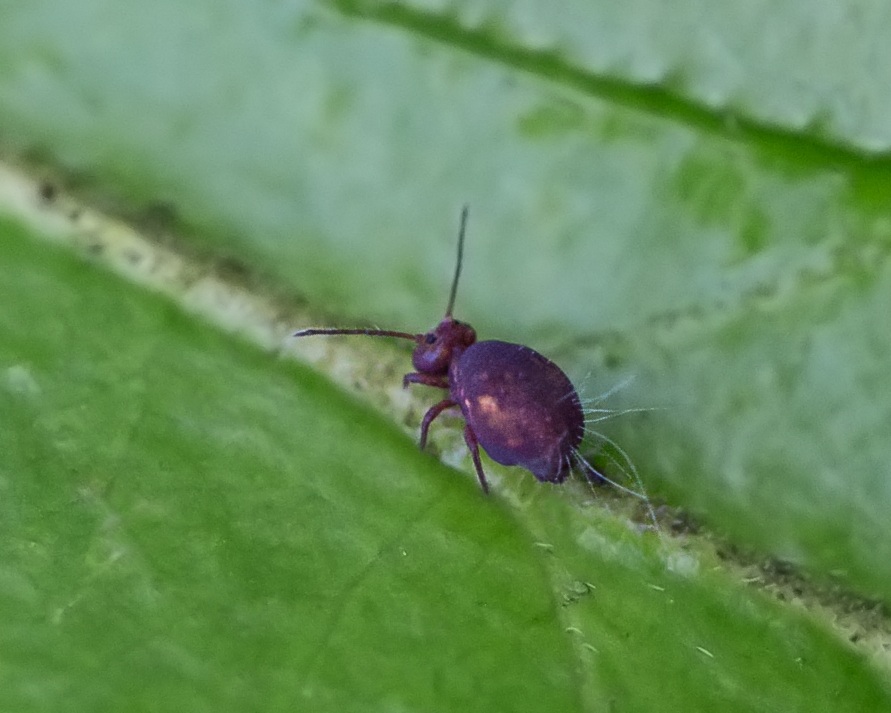
Dicyrtomina saundersi
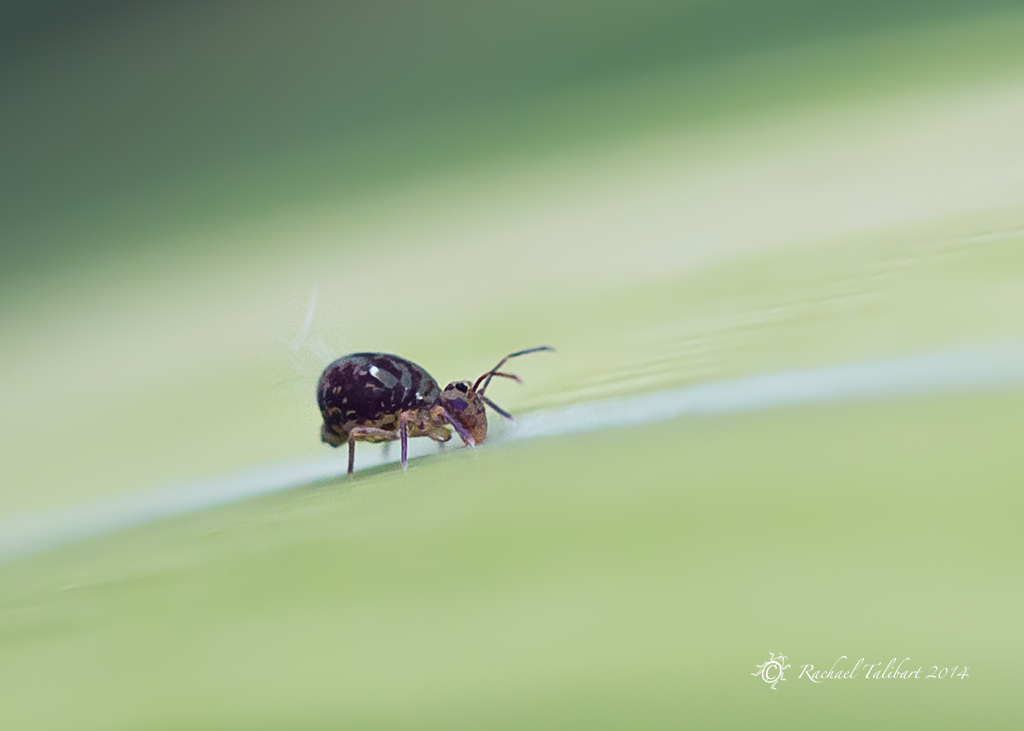
This little critter is a globular springtail (Dicyrtomina saundersi). At about 2mm long, it’s a tiny member of the garden wildlife fraternity. You can’t see it clearly in this image but it has a hairy behind, illustrated in the otherwise terrible shot below.

collembola

Before macro photography took its hold on me, I didn’t know these little beasts existed. They aren’t even insects. And there are loads of them, everywhere. The shot below is of a raft of assorted springtails that I found floating in a pink bucket outside the back door. I think there are 32 individuals here. Thanks to the springtail experts on Flickr, I can identify many of them:
Sminthurinus niger
Sminthurinus aureus
Dicyrtomina saundersi
Dicyrtomina ornata
Dicyrtoma fusca
Tomocerus minor
assorted Isotomidae.
There are also a couple of psocids (bark flies), which I have photographed before.
collembola
I discovered that buckets of water are often fatal because springtails, so named because of the way they leap, are unable to choose the direction of their spring. If they end up in deep water they can become trapped by meniscus effect and die. Of course, I rescued my models (how could I not after they posed so nicely) and released them onto some leaf litter.
Now that my eye is learning to spot ever smaller garden beasts, I also found this little alien, a plant hopper nymph. Odd little thing, again no more than 2mm.
insect macro
But if you google planthopper nymph, and select images, you will quickly see that this little fella doesn’t even merit an honourable mention in the roll call of strangeness.

For these images I have used my macro lens and cropped in but to get decent detail with something this small, I really need to get closer than 1:1.  Canon do a nifty lens that gets you as much as 5x magnification, although I gather it is a tricky thing to use.  I don’t have one but I do have my trusty, and inexpensive Raynox, so for the next garden safari, I will bring it along.


Back to Australia tomorrow.