The fifth day of Christmas: yummy money

20121229-172252.jpg
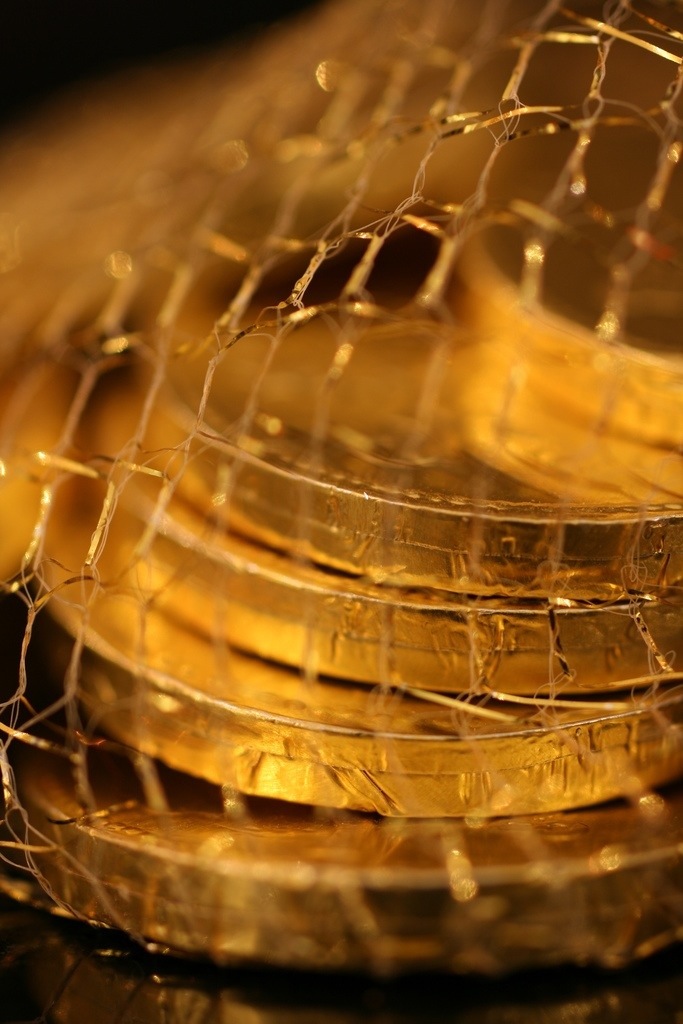
In Britain, chocolate coins are a traditional Christmas gift, most often in the stockings of children. The origin of this tradition may lie in old stories about Saint Nicholas, bishop of Myra in Lycia (Turkey). According to one story, he wanted to give money to the poor children of Myra without them knowing so he climbed on a roof and threw money down a chimney, which landed in a child’s stockings hung up to dry. The giving of chocolate coins, or gelt, is also a tradition of Hanukah.

The Fourth Day of Christmas; lighting up time!

Christmas

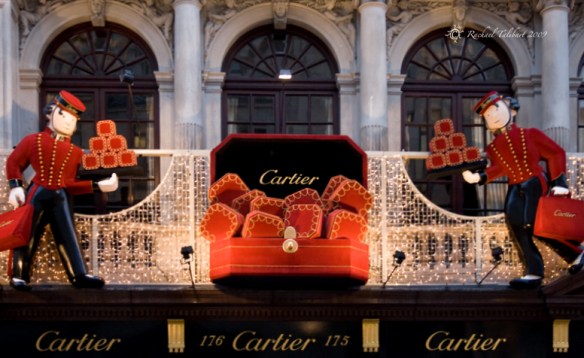
Cartier store decoration, 2009

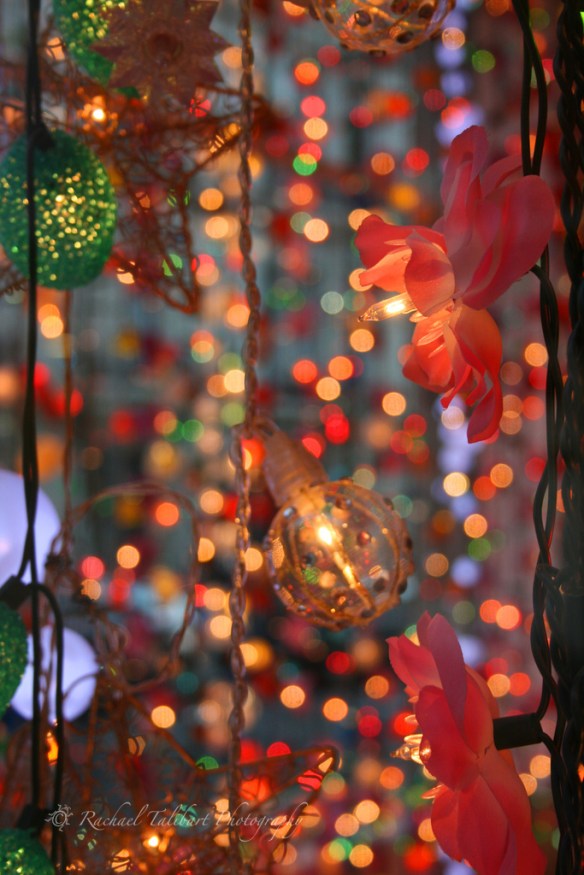
This post is a brief history of Christmas lights, chronology taken from Christmas: A Very Peculiar History by Fiona MacDonald.  Photos, as always, by me.

Christmas

Window display at Richard James, Saville Row, London 2008

Macy’s department store in New York, USA, pioneered special Christmas window displays in the 1870s.

Christmas

Display at Richard James, Saville Row, London, 2008

Edward H. Johnson, of Edison Electric Light Company, USA, was the first to decorate his tree with electric light bulbs, in 1882.

Christmas

Shopping Arcade, London

In 1904, Christmas lights were first used to decorate outdoor trees, but they were not yet electric.

Christmas

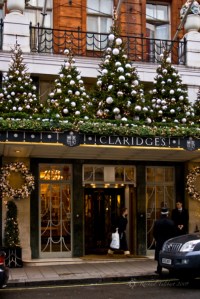
Claridges hotel, London, Christmas 2009

In 1927, the first organised outdoor Christmas light displays were held in the USA, called ‘Festivals of Lights’.

Christmas

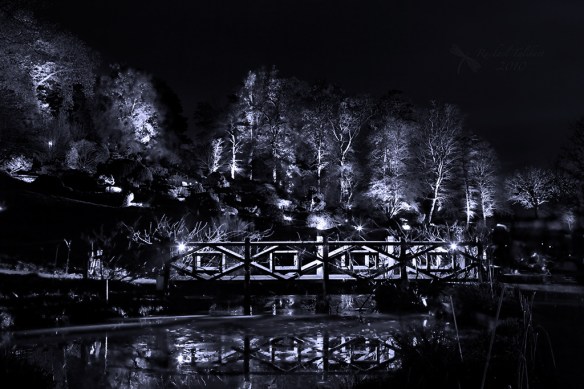
Christmas floodlighting at RHS Wisley, Surrey

In 1956, electric lights were first used to decorate outdoor Christmas trees.

Christmas

Millennium glasshouse at Wisley

Despite the relative safety of electric lights over their predecessors, the US Fire Prevention Authority reported that between 2003-7 fire-fighters were called out to around 250 Christmas tree fires every year.

Christmas

Millennium glasshouse, Christmas 2010

Christmas light displays have become ever more spectacular over the decades but, with concerns about global energy supplies growing, perhaps their days will soon be numbered?

Christmas

Spooky Christmas lights at Wisley

The First Day of Christmas

Merry Christmas

Christmas Day is the first of the Twelve Days of Christmas celebrated in the well-known song.  This song probably originates in France but the first English version dates from about AD 1250.  The song was a festive memory game with players taking turns to sing a verse and forfeits if words were forgotten.  

Wishing all my blogging friends a very merry Christmas.

Dunstanburgh Castle

Northumberland

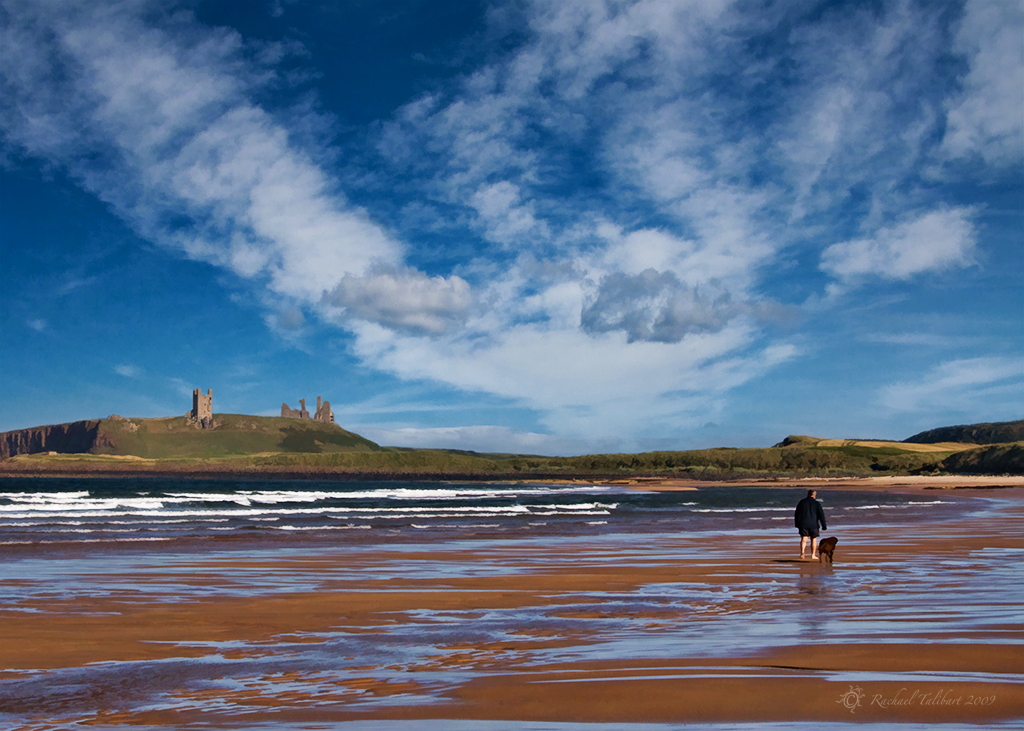
Today I thought I’d share some images taken at Dunstanburgh Castle on Northumberland’s beautiful Heritage Coast. The castle is the largest in Northumberland. In 1313, Earl Thomas of Lancaster, cousin of Edward II of England began construction and John of Gaunt added to it later in the century.

Northumberland

During the Wars of the Roses, the castle was badly damaged and it slowly fell into decay. The castle is now owned by the National Trust and in the care of English Heritage. It is a Scheduled Ancient Monument and a Grade I listed building.
en.wikipedia.org/wiki/Dunstanburgh_Castle

Dunstanburgh Castle

This beautiful and evocative ruin can hardly fail to inspire, perched on a rocky outcrop above the coast and the plain below.  Some great painters have immortalised it, including Turner and, one of my favourite contemporary artists, Michael Morgan.

Northumberland

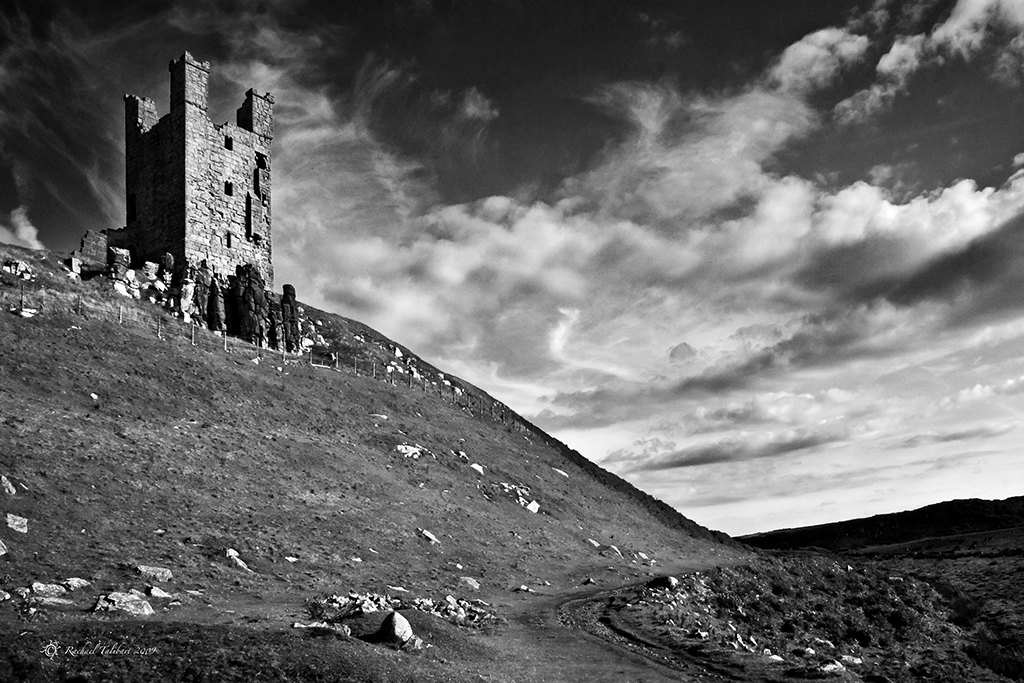
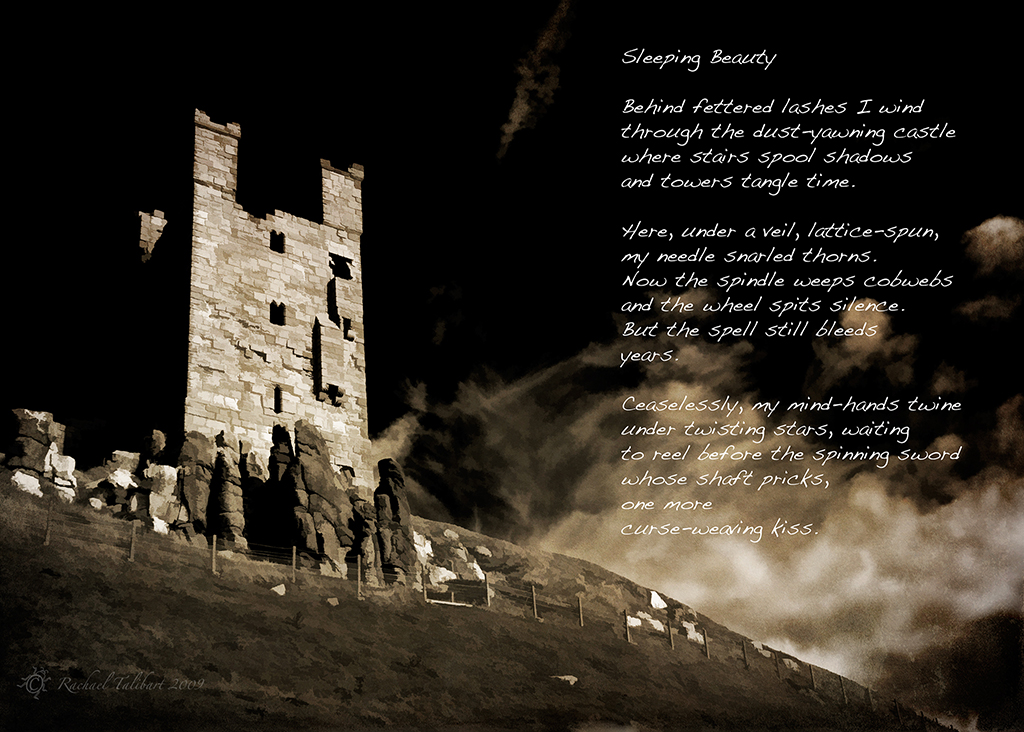
Lilburn Tower, the most intact of the castle buildings, seems to demand a moody black and white treatment. Can you imagine a knight riding along that path, perhaps to rescue a princess from the tower?  I kept thinking instead of Macbeth, riding to meet the three weird sisters, perhaps because Roman Polanski’s film, Macbeth was shot in the area.

Northumberland

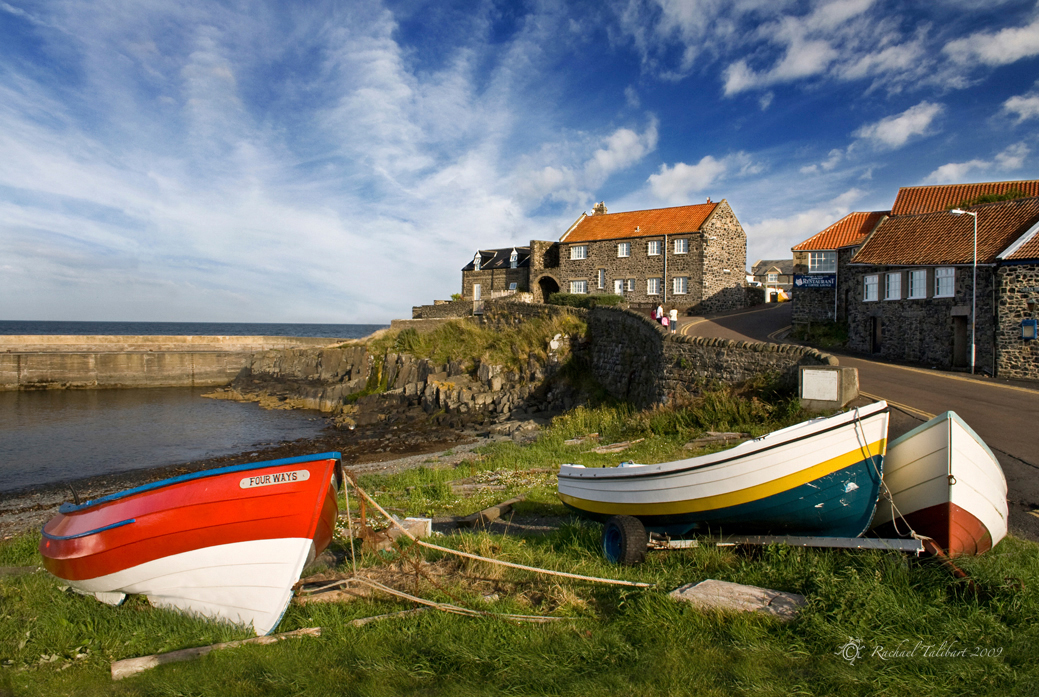
Dunstanburgh Castle is reached via a footpath from Craster, a sleepy fishing village to the South.  Or via the beautiful sands of Embleton Bay to the North.

Northumberland

I chased down a rainbow there on our visit, only just managing one hasty exposure before the colours faded, from which I made this, rather more painterly than usual, image with a little help from Topaz Simplify:

Northumberland

For all that I enjoyed the, admittedly rather over the top, colours of the last two images, it remains, for me, the black and white images that suit this location more.  If you get the chance to visit this atmospheric ruin, I thoroughly recommend it.

Lilburn Tower

La Rocco

20121103-194330.jpg
Last post I showed some of the World War 2 fortifications on Jersey. Jersey, one of the Channel Islands, sits close to the French Coast but has for centuries been loyal to the English crown. It is not surprising then that the coast has plenty of other, older defences.

20121103-194854.jpg
The North coast is craggy and rugged but the bays of the South, East and West coasts were very accessible to invaders. During the Napoleonic wars, a series of towers was built around the island.

20121103-195218.jpg
General Conway, Governor of the Island, planned for thirty towers to protect the coast from the threat of French invasions. La Rocco on St. Ouen’s Beach was the twenty third to be built, in 1795-6.

20121103-195526.jpg
It makes an attractive landmark, standing sentinel over the five miles of sand that make St. Ouen’s Bay.

20121103-195737.jpg

What a wonderful setting for a spot of sunset kite surfing!

20121103-195916.jpg

But you have to admit that as a silhouette it looks a little like a submarine.

20121103-195958.jpg
More from Jersey next post.

Jersey’s Occupation Relics

Jersey WW2

Jersey’s history is written across the island, from a Neolithic passage grave (of which, more another day) to magnificent Medieval and Tudor castles. A more recent episode in Jersey’s history is also etched on the landscape; during World War 2, the Channel Islands were occupied by the German army.
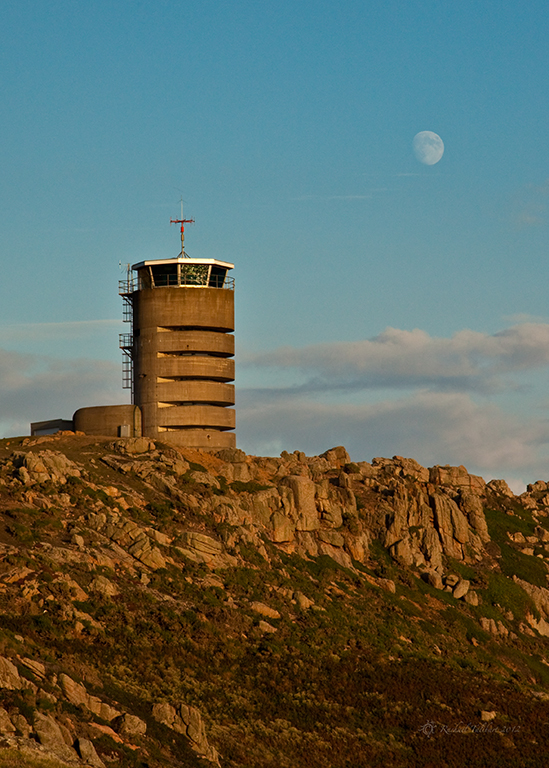
Jersey

This one’s now a holiday rental

The islands were occupied on 1st July 1940 and were liberated more than five years later, on 9th July 1945. During the occupation, extensive defences were built all over Jersey, even on top of the Tudor Elizabeth Castle.

German pillbox on top of tudor castle

An incongruous site

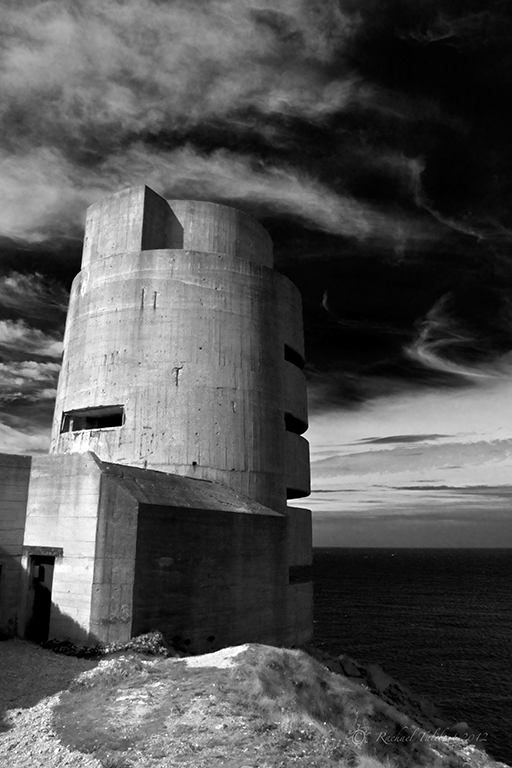
Numerous pillboxes, batteries and other defences were constructed, using slave labour from the defeated peoples of Europe. At La Hougue Bie, a moving display tells their story. The defences included three enormous observation towers.

WW2 tower Jersey

Does this remind you of the cylons in original Battlestar Galactica, or is that just me?

Although, in the immediate aftermath of the conflict, the impulse of the islanders was to bury the signs of occupation, more recently this part of the island’s history is being explored and preserved. Some sites are open, manned by volunteers, on certain days and the Jersey War Tunnels museum is always open and offers an informative, moving yet balanced account of the war years.
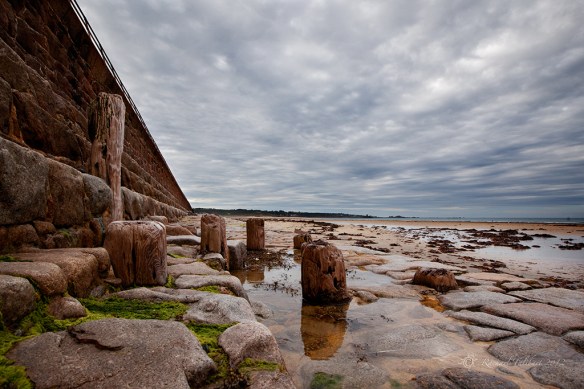
St.Ouen's Beach, Jersey

Remains of WW2 beach defences

Most of the pillboxes and batteries remain derelict, however, stark reminders of this difficult and tragic time.
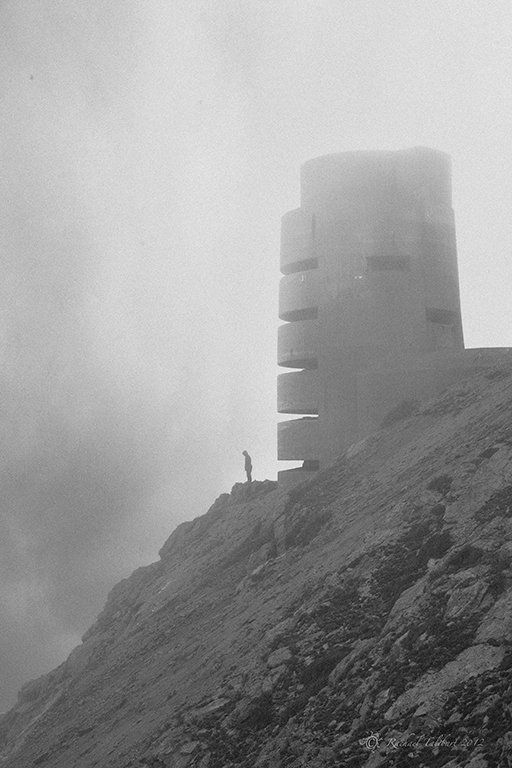
WW2 tower, Jersey

Creepily atmospheric in fog

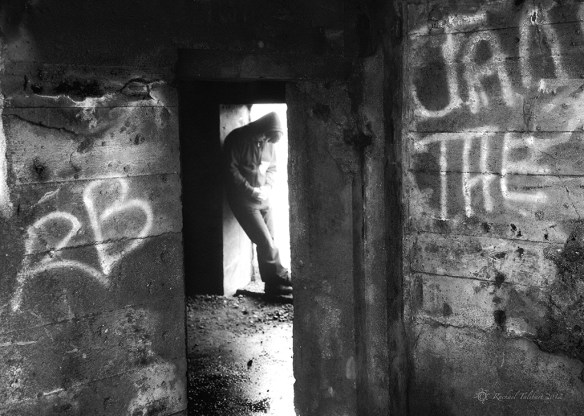
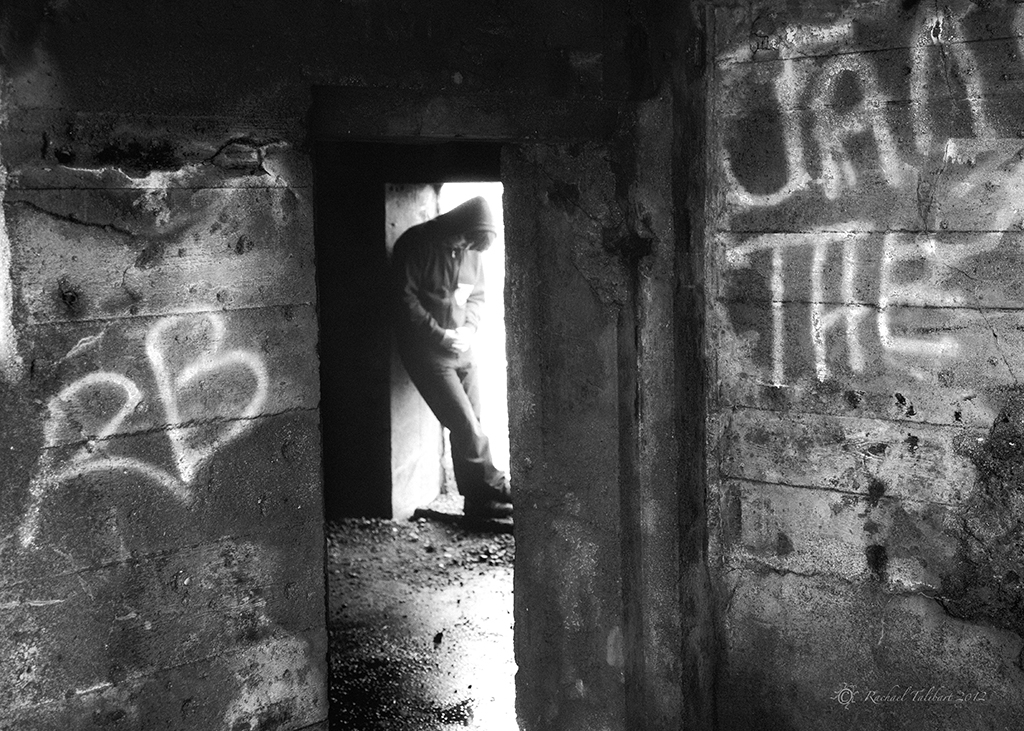
Needless to say, they also provide an opportunity to try some moody, grainy photography, with the assistance of willing teenage son in black hoody.

Derelict war tunnel, Jersey

Someone has been decorating

Some of the derelict structures have been used, although all signs of habitation seemed pretty old.

graffiti in war tunnel

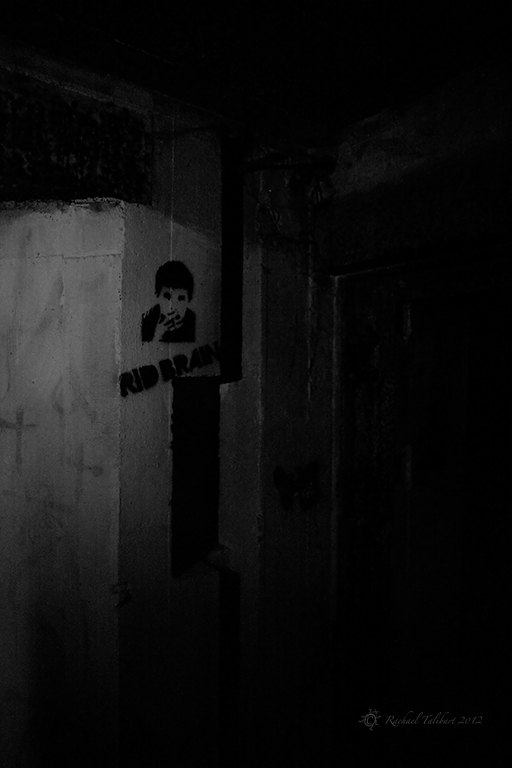
What does this mean?

Teenager in derelict war tunnel

Moodiness comes with the territory

More about Jersey tomorrow.

Westminster Autumn

20121015-135040.jpg
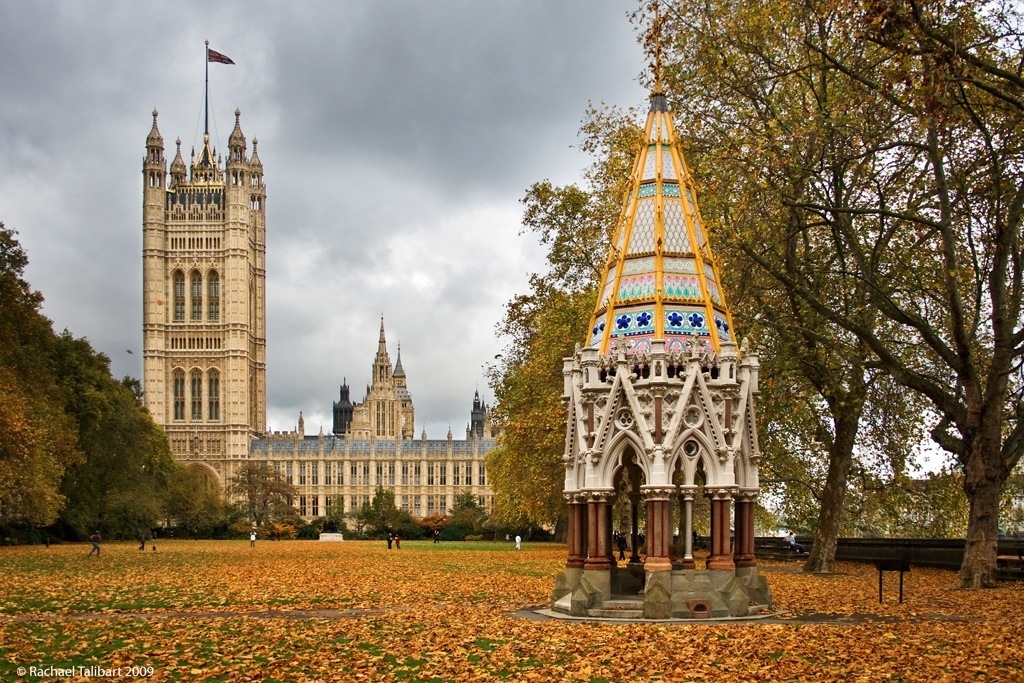
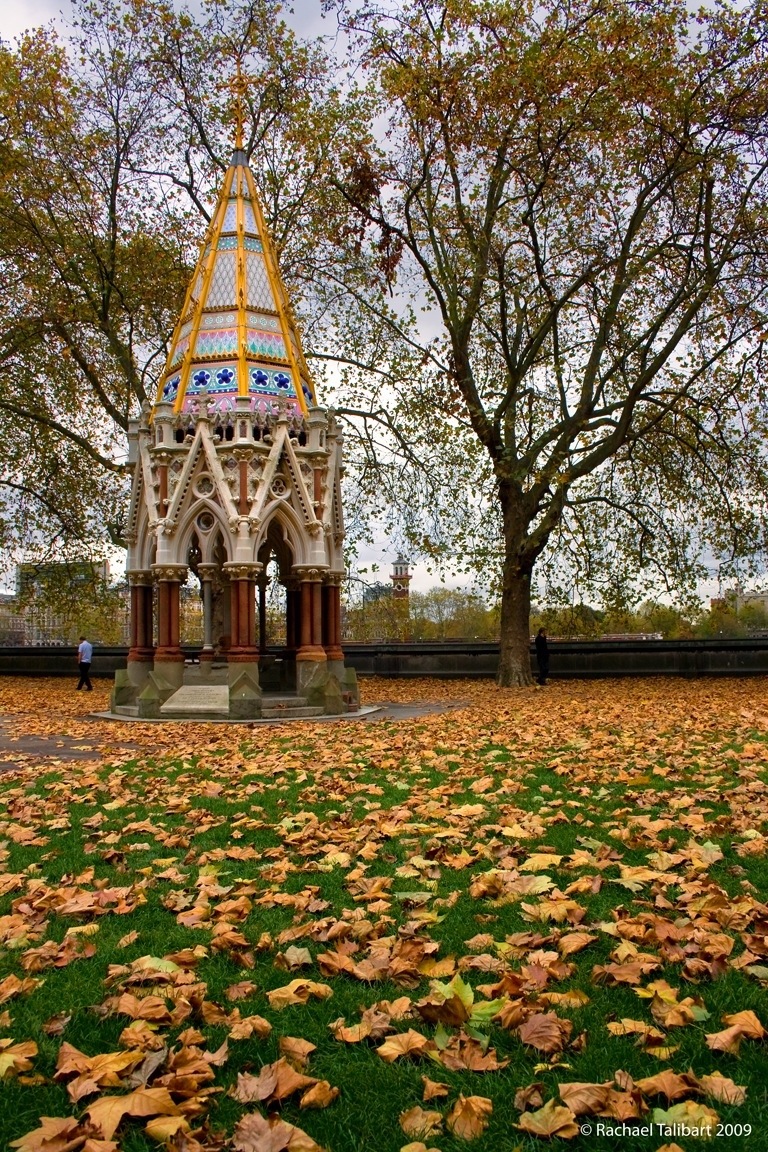
Autumn in the Victoria Tower Gardens, Westminster. In the foreground (and below) is the Buxton Memorial Fountain, commissioned by Charles Buxton MP to commemorate the emancipation of slaves in 1834, dedicated to his father Thomas Fowell Buxton, and designed by Gothic architect Samuel Sanders Teulon (1812–1873) in 1865.
In the background, of course, is the Palace of Westminster aka the Houses of Parliament, designed by Sir Charles Barry with advice from the great Augustus Pugin.

20121015-135141.jpg

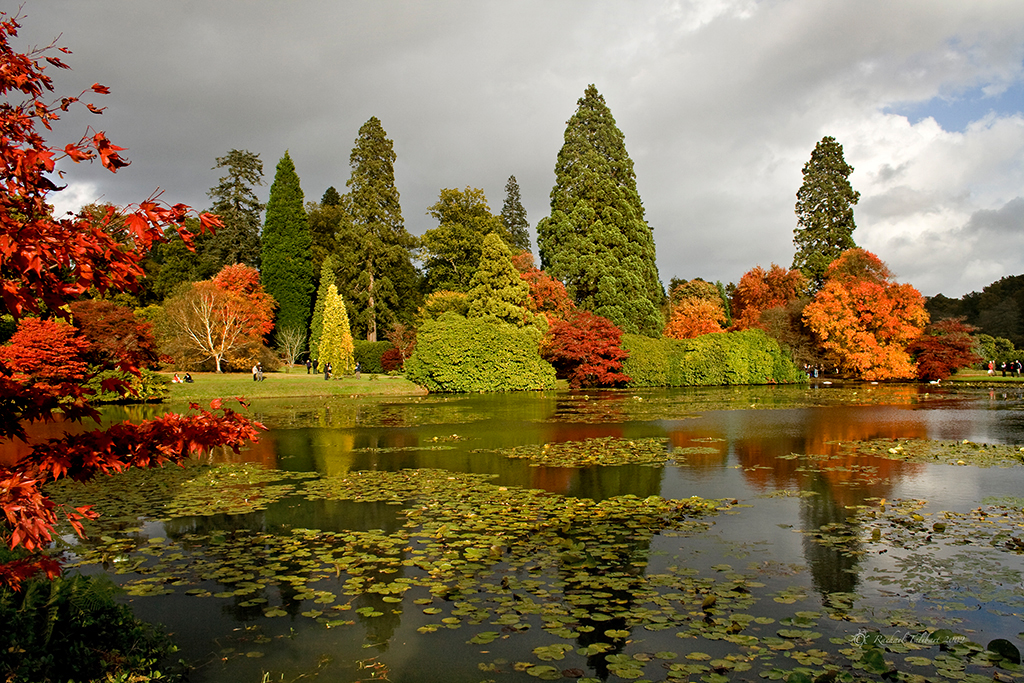
An Autumn garden

landscape garden
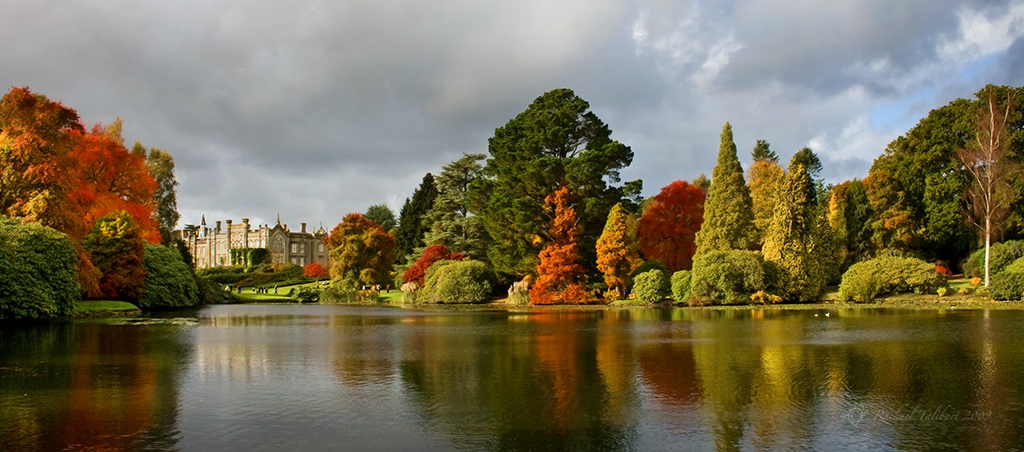
Sheffield Park is an eighteenth century landscape garden in East Sussex owned by the National Trust.
landscape garden
Sheffield (meaning sheep clearing) Park is mentioned in the Doomsday Book. The garden was landscaped first by Lancelot ‘Capability’ Brown and then Humphrey Repton.
landscape garden
In the nineteenth century planting for an arboretum was begun. Arthur Soames purchased the estate in 1910 and continued the massive planting programme, much of which still exists today, and is particularly regarded for its Autumn colour.
Sheffield Park landscape garden
We were a little early for the best leaves but there was still plenty of colour. If you live anywhere within striking distance of this beautiful garden, I recommend a visit. Just don’t forget your camera!

More Autumn colour tomorrow.
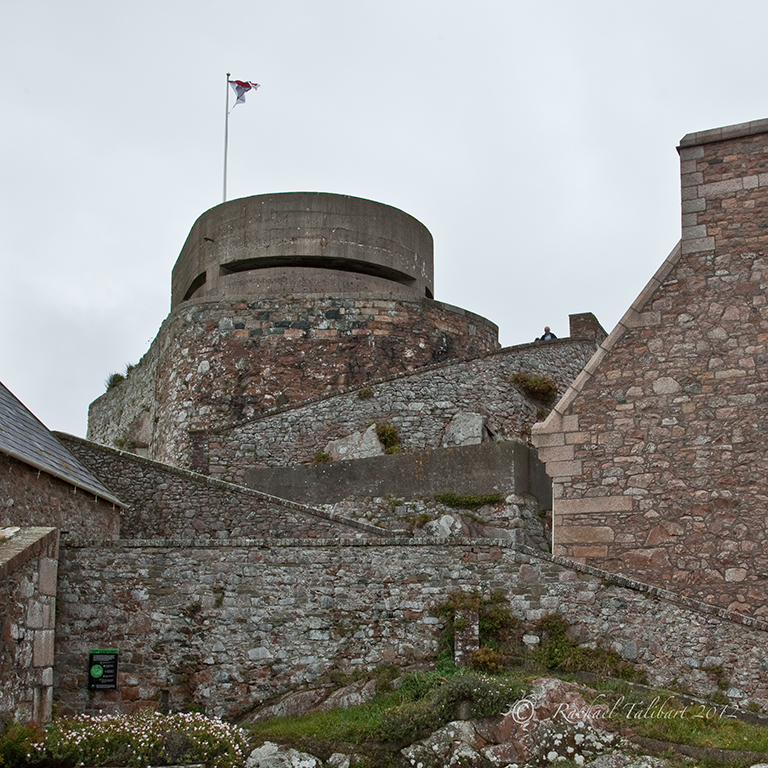
Grosnez castle

castle ruins, Jersey

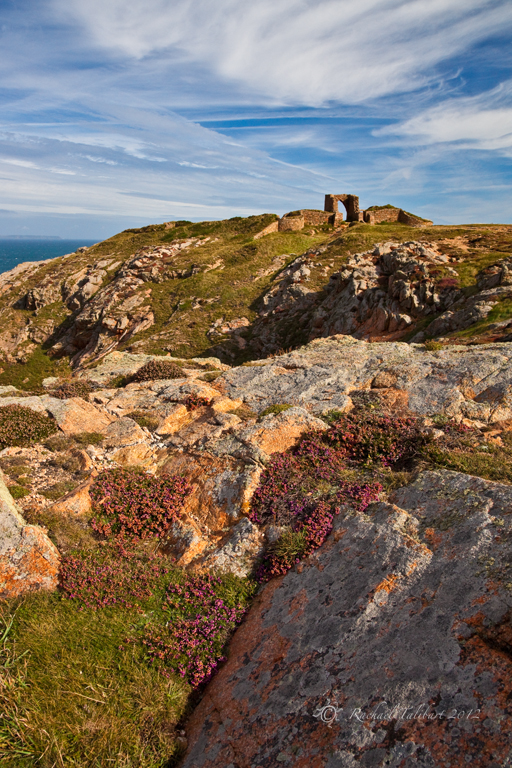
Our visit to Jersey gave me an opportunity to add to my castle series.  Grosnez Castle was built in the 14th century.  Little remains of the castle but it makes a very atmospheric ruin, perched atop the headland at the Northwest corner of the island.
Ruined arch of Grosnez Castle

‘Grosnez’ comes from the old Norse, grar nes, meaning ‘grey headland’, rather than the French for ‘big nose’.  According to an interpretation board at the site, the castle was probably built in around 1330.  It was taken by the French in 1373 and 1381 and was likely demolished during or shortly after the French occupation of 1461-8.

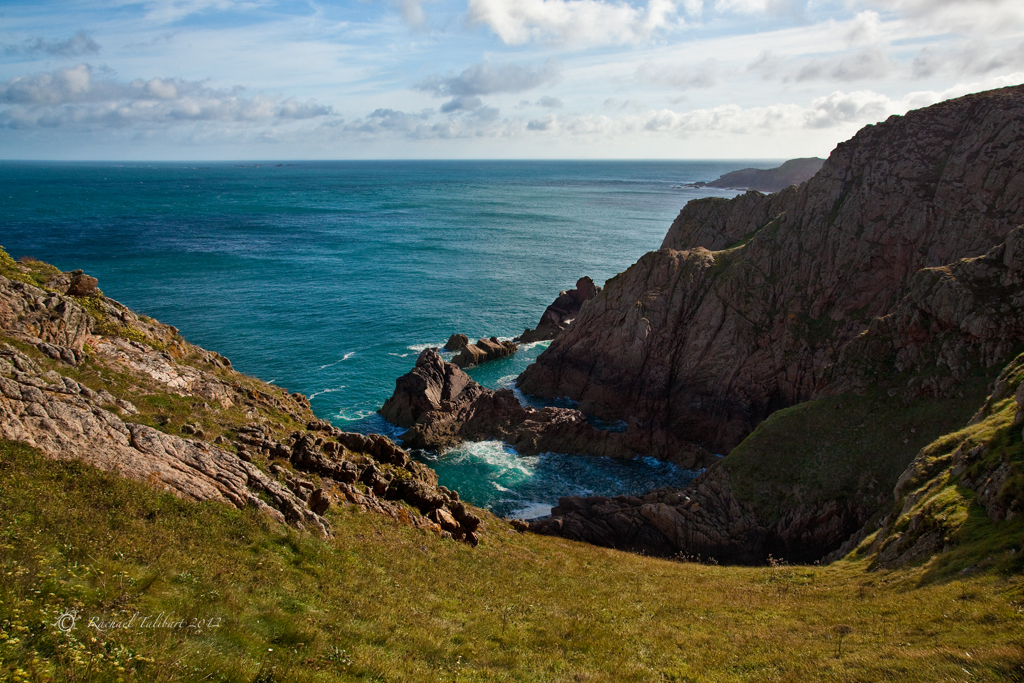
Jersey coastline

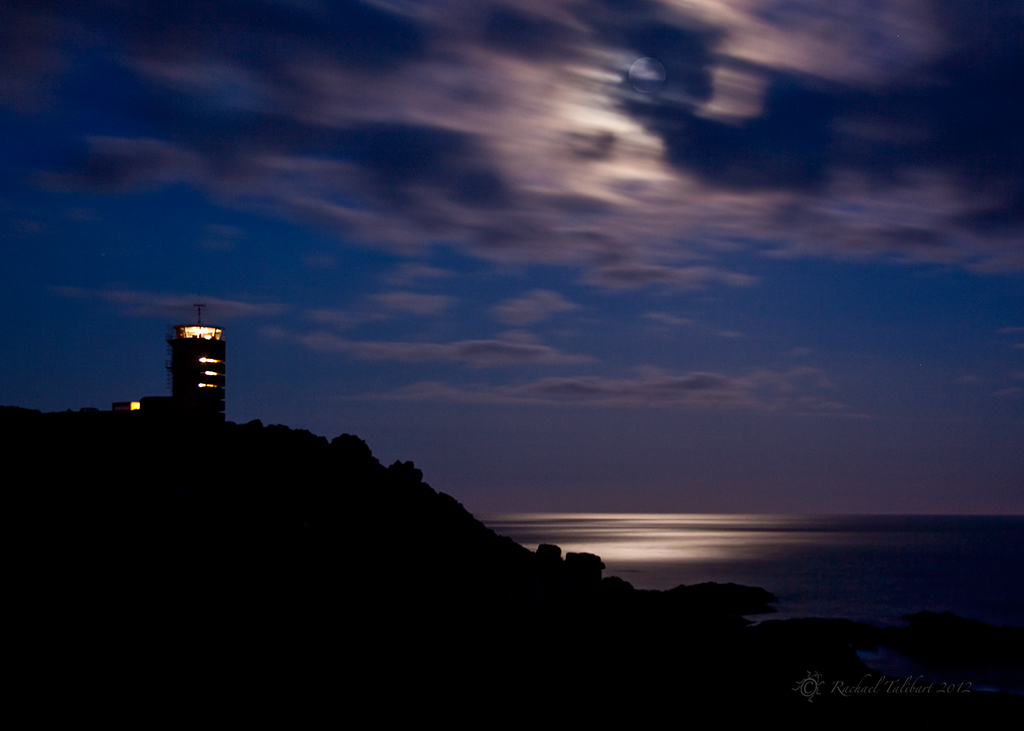
The castle certainly has a commanding view of the Jersey coast.  Just along the headland stands another martial construction taking advantage of those views, a German WW2 range-finder tower, part of Hitler’s ‘Atlantic Wall’.

Tower among heather on cliff, Jersey

It is a strangely forbidding construction, a stark contrast to the tapestry of heather and wildflowers at its base. The two structures together are a reminder of Jersey’s history of occupation, straddling some of her most beautiful landscape.

WW2 observation tower seen from Grosnez Castle, Jersey.


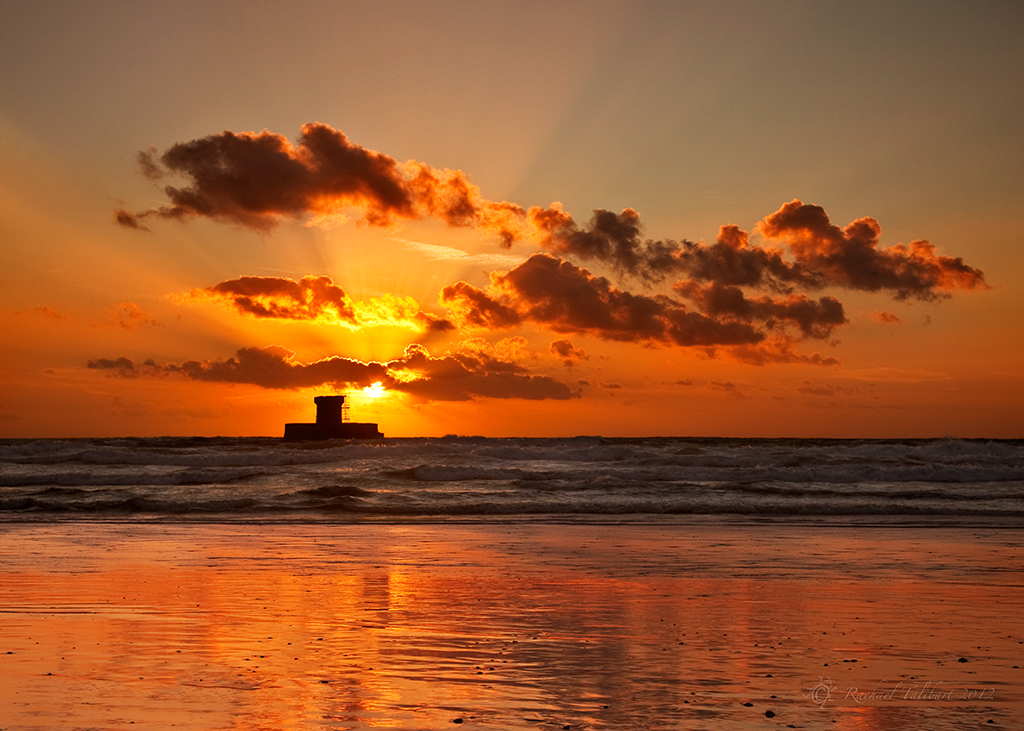
Sunset, St.Ouen’s Beach

La Rocco, Jersey
I could live by St.Ouen’s beach and have something new to photograph every day for the rest of my life. St.Ouen’s beach is on the West of the Island. The tower silhouetted here is La Rocco, one of the many Martello Towers in Jersey, built as defensive fortifications during the Napoleonic war.

Now we are back from our travels, I am looking forward to catching up with my favourite blogs.