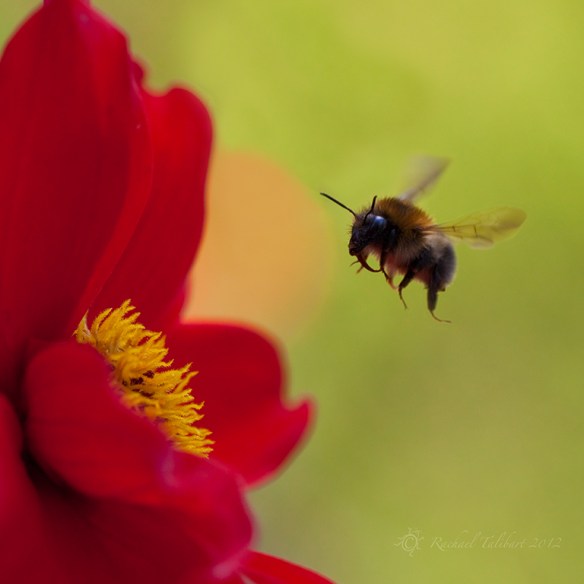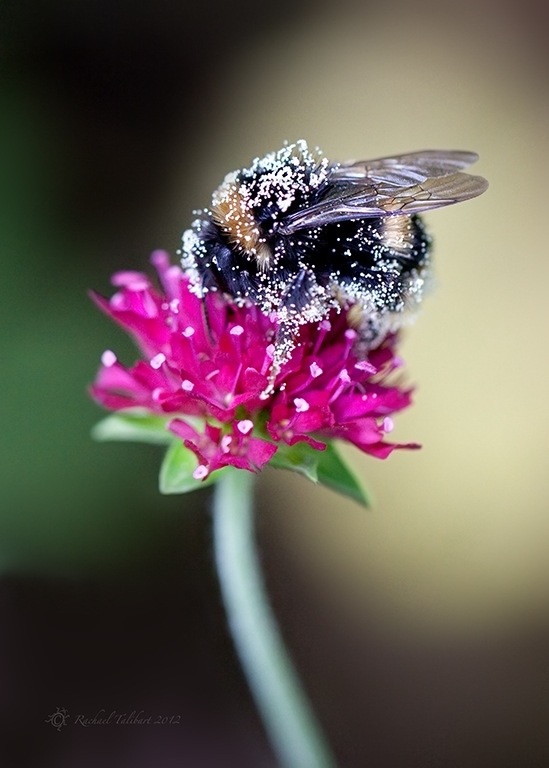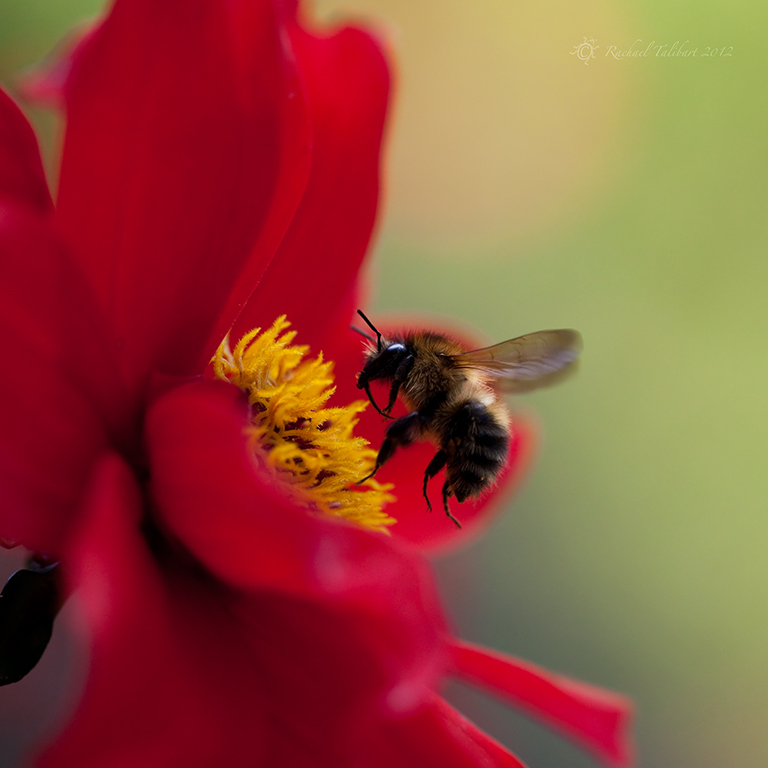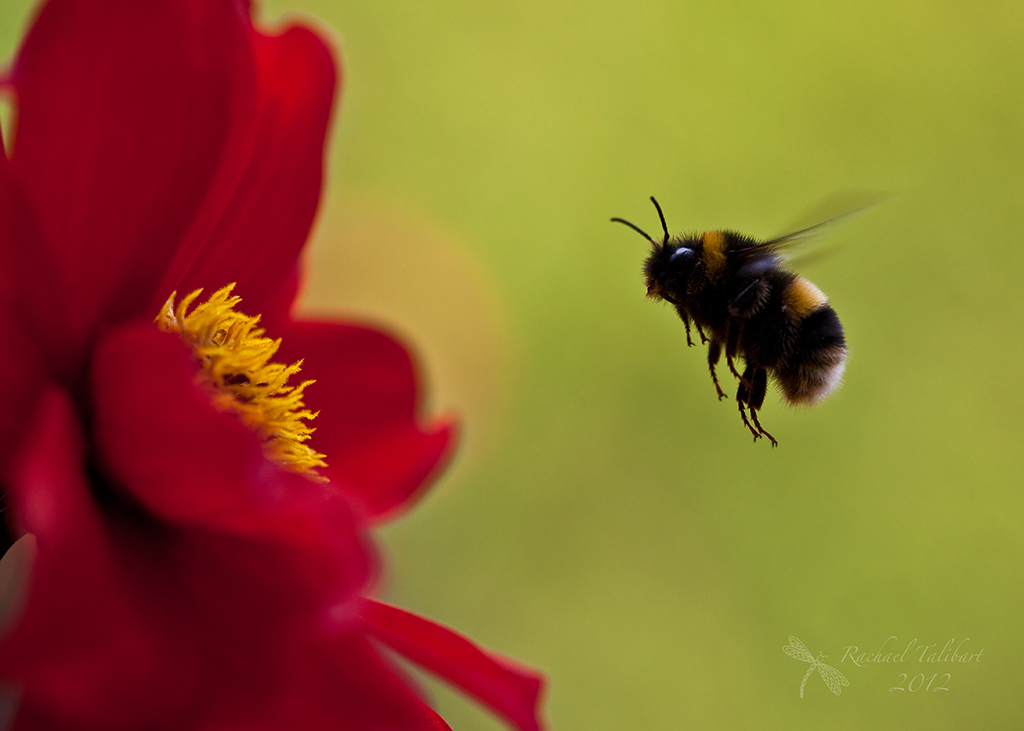
I love shooting macro into the light. You never know quite what you’re going to get, which is a huge part of the fun. In this image, I enjoy the rim lighting on the bumble bee as it visits verbena bonariensis in my garden. Incidentally, if you are looking to plant for wildlife, this verbena is a must.
Tag Archives: macro
Tiny solitary bee

This little bee is only slightly larger than a garden ant. There are more than 200 species of solitary bee in the UK and I have to declare I am stumped when it comes to identifying this little beauty. Any experts out there? Whatever its name, I think it is a very fetching little critter with its metallic green livery and pollen breeches.
It was all yellow

Look at the stars
Look how they shine for you
And everything you do
Yeah, they were all yellow

I came along
I wrote a song for you
And all the things you do
And it was called ‘Yellow’

So then I took my time
Oh what a thing to’ve done
And it was all yellow

Your skin, oh yeah, your skin and bones
Turn into something beautiful
D’you know? You know I love you so
You know I love you so

I swam across
I jumped across for you
Oh what a thing to do
‘Cause you were all yellow

I drew a line
I drew a line for you
Oh what a thing to do
And it was all yellow

Your skin, oh yeah, your skin and bones
Turn into something beautiful
D’you know? For you I bleed myself dry
For you I bleed myself dry

It’s true
Look how they shine for you
Look how they shine…

Look at the stars
Look how they shine for you
And all the things that you do.
(Coldplay, ‘Yellow’)
Angels with dirty faces

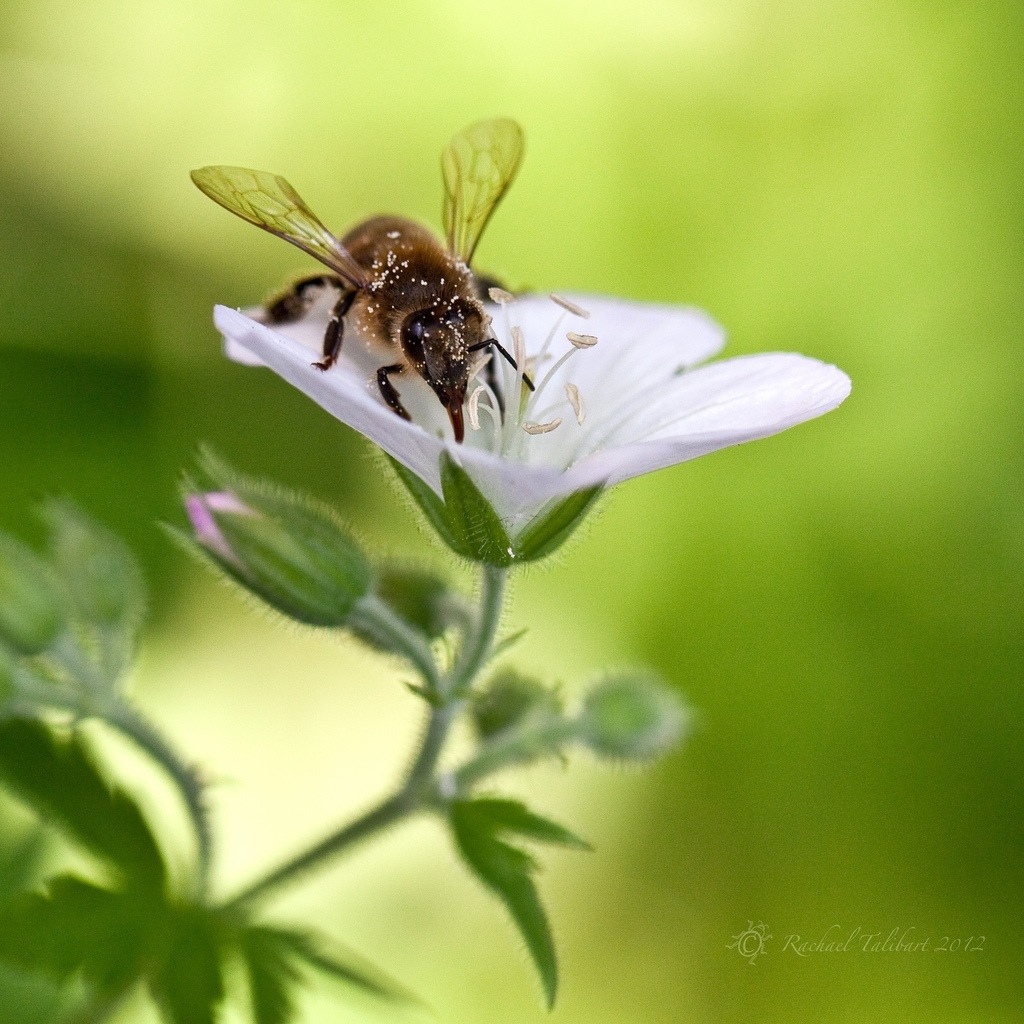
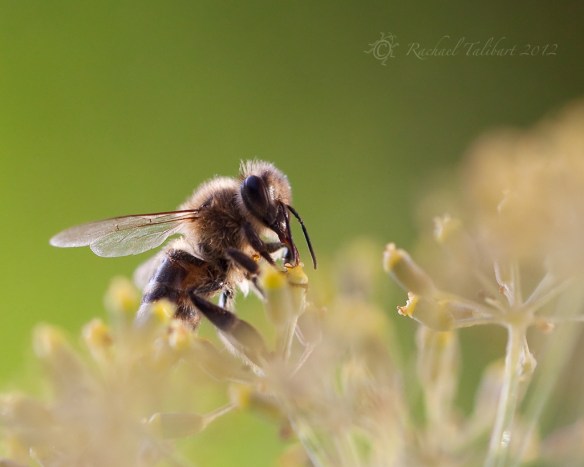
Bees are super pollinators. We all know that. But sometimes the evidence is as plain as the nose on your face or, to be a little more literal, the pollen on their face.

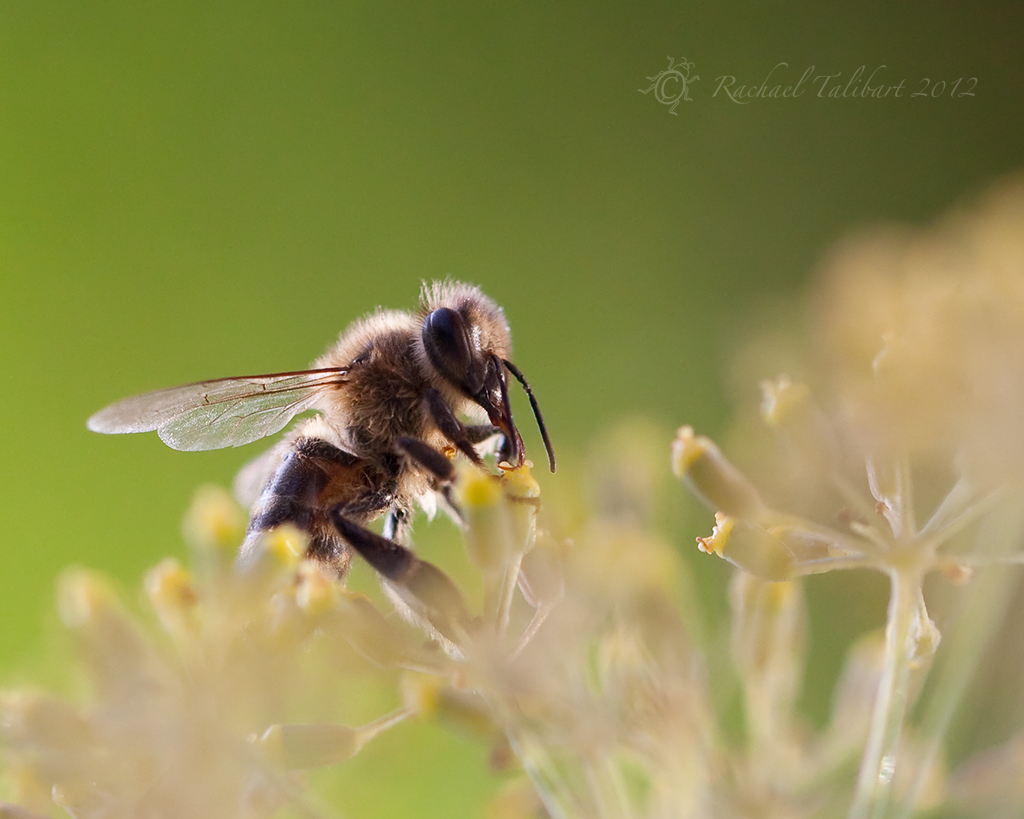
Just a little on this busy honey bee, but what about the bumble bee in the next image?

Sometimes I wonder how they can even see where they are going.

I couldn’t resist using the title of the classic Cagney, Bogart, O’Brien movie for these images. Classic movie, classic critters.
Fastidious

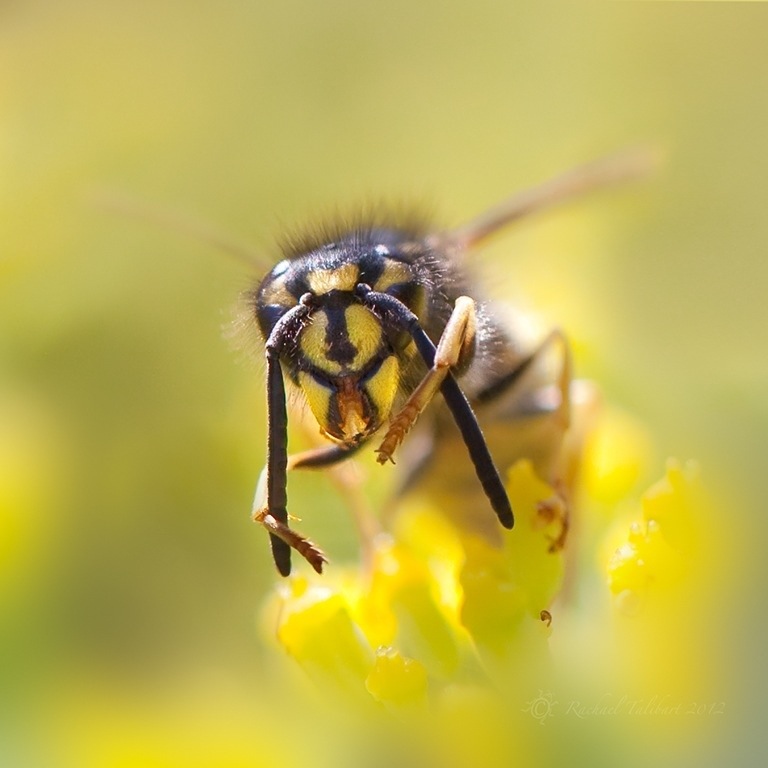
A fastidious wasp cleans its antennae. Close up, wasps are quite beautiful creatures, at least I see them that way. However, I must confess that I am not sorry their numbers are down this year. It is so pleasant being able to eat outside without the constant attentions of the usual pesky band of vespula vulgaris. This shot is from last year.
Hover
The infinite sphere
Blaise Pascal (1623-1662) wrote: “Nature is an infinite sphere of which the centre is everywhere and the circumference nowhere”. We encounter nature daily; we can hardly avoid it, even if it is only in the form of a humble fly who crawls through our open window or the scent of distant park flowers on the breeze.
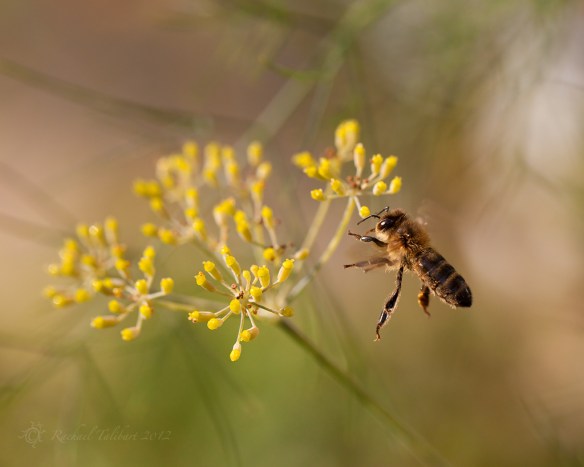
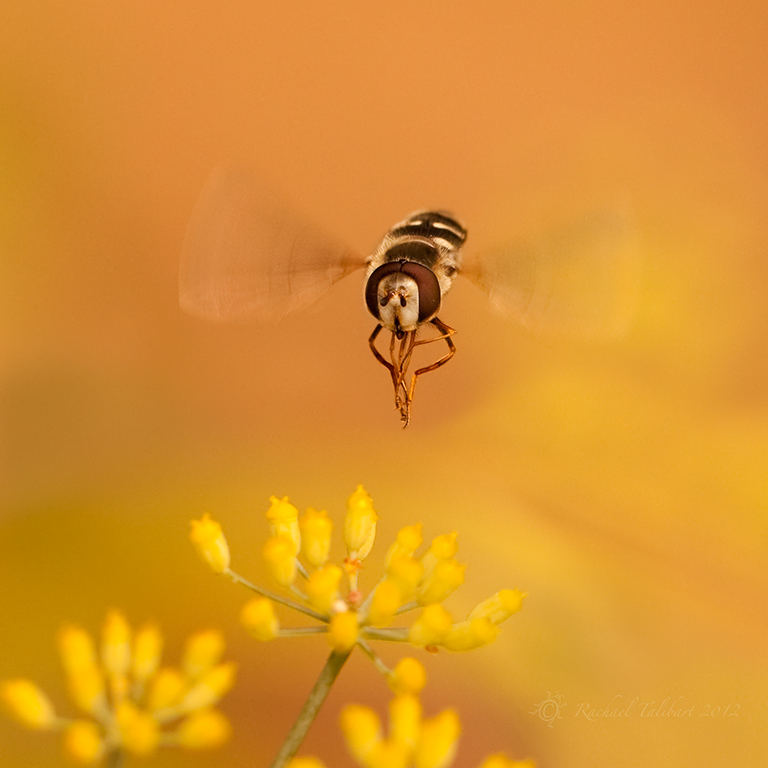
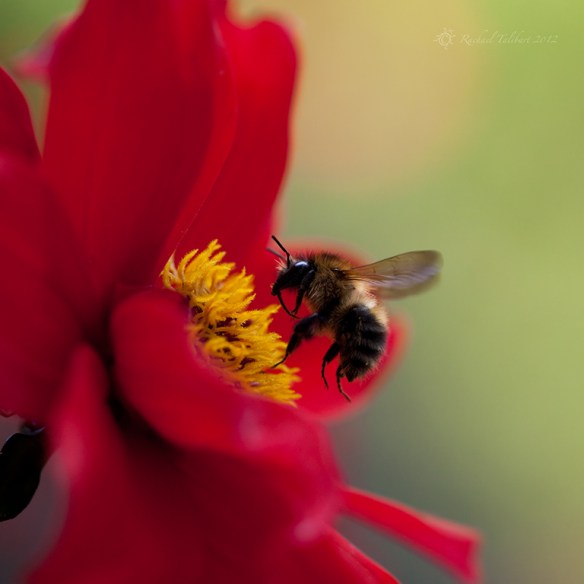
Taking time to notice nature enriches my day beyond measure. The more I look, the more I see. Have you ever taken the time to watch a honey bee? I mean for several minutes or more. Watch how the light glistens in its wings as it hovers before its chosen blossom, forelegs outstretched for a gentle landing.
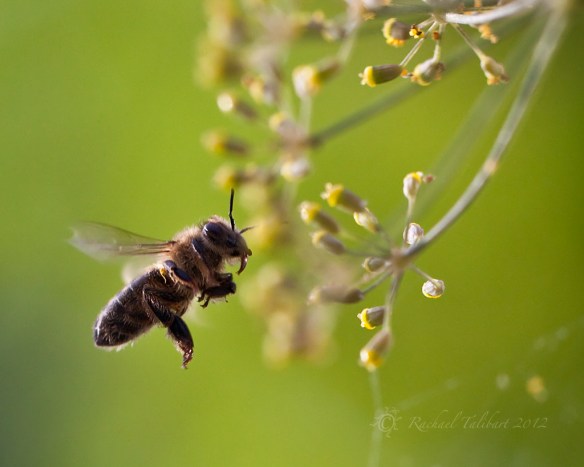
Notice how the evening light catches the soft hairs on its back, and its eager tongue, already prepared as if it cannot wait to savour the sweet nectar.
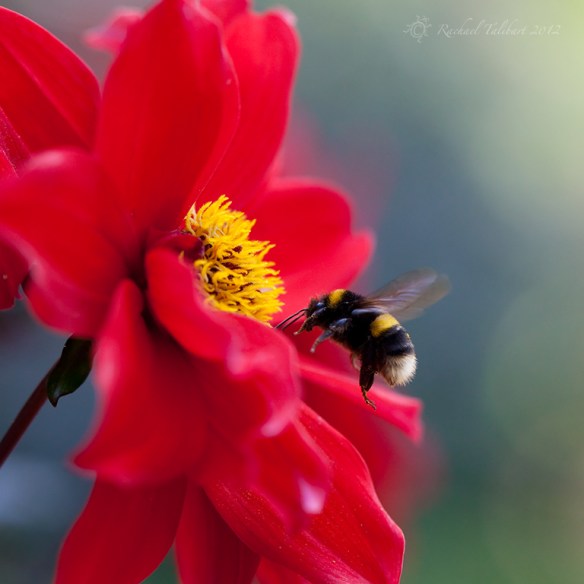
Or how about the bustling bumble bee? It announces its approach with an bombastic buzz before blundering onto its pollen-heavy landing pad.
It has become a cliche to speak of mindfulness, or living in the moment. I don’t know if our lives are busier now than they were a generation ago, or a century ago but, for me, a full life must still contain moments when all its demands are put to one side. Photography has opened my eyes to daily treasures. And the digital age has added the joy of sharing them.
Sometimes, however, it is also good to put the camera down and simply look, listen, smell, taste, touch. That’s all; I am going outside now.
“If we take care of the moments, the years will take care of themselves.” Maria Edgeworth (1767-1849)

Gasteruption jaculator
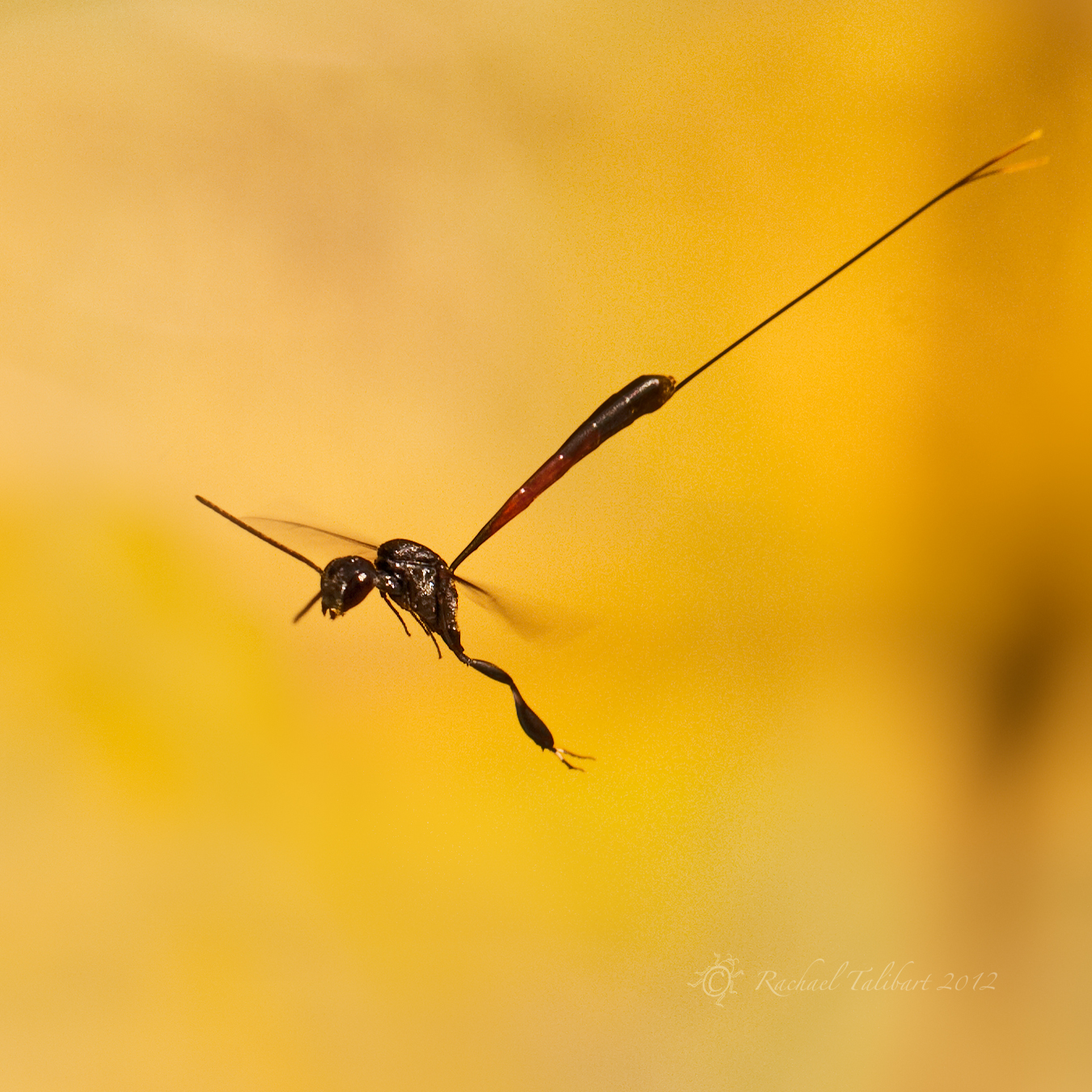
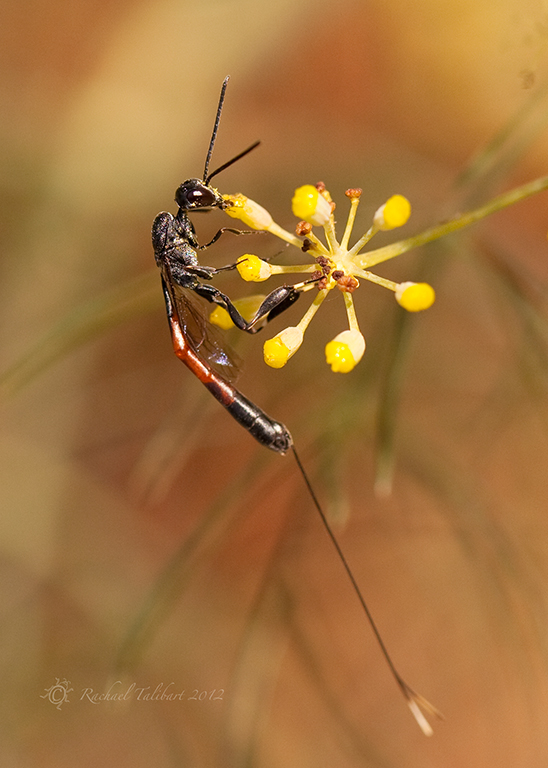
This bizarre creature is called Gasteruption Jaculator. I kid you not! I posted some shots of this strange wasp last month, wrongly identifying it at the time as a type of sand digger wasp. I am grateful to afrenchgarden for the correct i.d.
They do look strange in flight. Well, I admit it, they look strange all the time! Strange, but harmless, to us. Not so, however, for solitary bees, on whom these wasps are parasitic. That long spike is an ovipositor, with which the female deposits eggs on the larvae of solitary bees. You can guess the rest.
For my earlier post on these weird critters, see here.
The Bishop and the Bumble Bee
Holly Blue
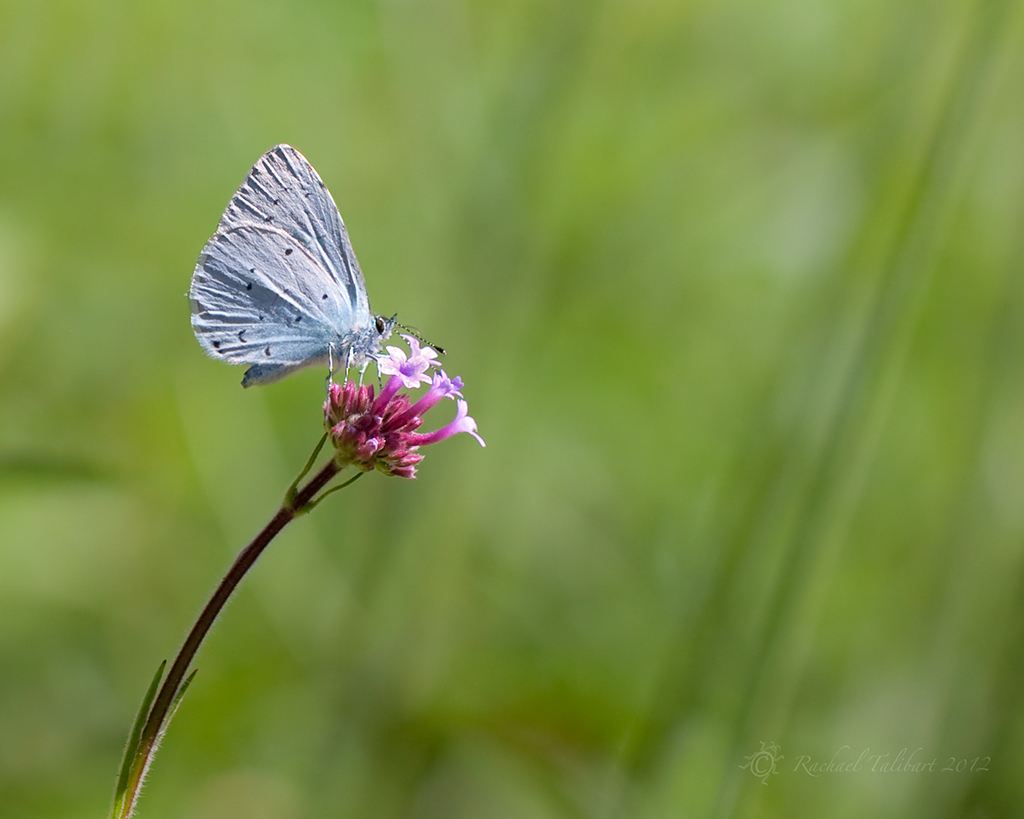
I was pleased to bag a shot of a tiny Holly Blue butterfly in my garden this morning, having chased a Brimstone around without success. The butterflies and bees love verbena bonariensis – such a reliable self-seeder here and conveniently at head height for photographers with dodgy backs!
A non-buggy post tomorrow, I promise!