Not-so-solitary bees

20120423-102749.jpg

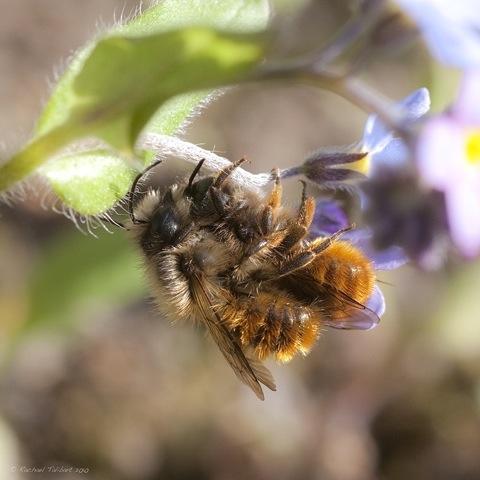
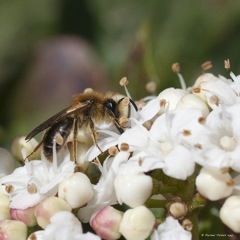
At this time of year there are already many bees busy in the garden but not yet many honey bees. The bumble bees are around, fat, noisy and fairly recognisable. But there are also a lot of solitary bees. In Britain we have more than 250 types of solitary bee, bees that have single nest cells rather than communal hives.
With so many types, I am not going to try to identify the subjects of today’s photographs. To know more, try here. Suffice it to say that solitary bees do have to get together occasionally to obey one particular biological imperative!

20120423-104029.jpg

And, just to prove that they do appear in ones:

20120423-104128.jpg

Earth Day


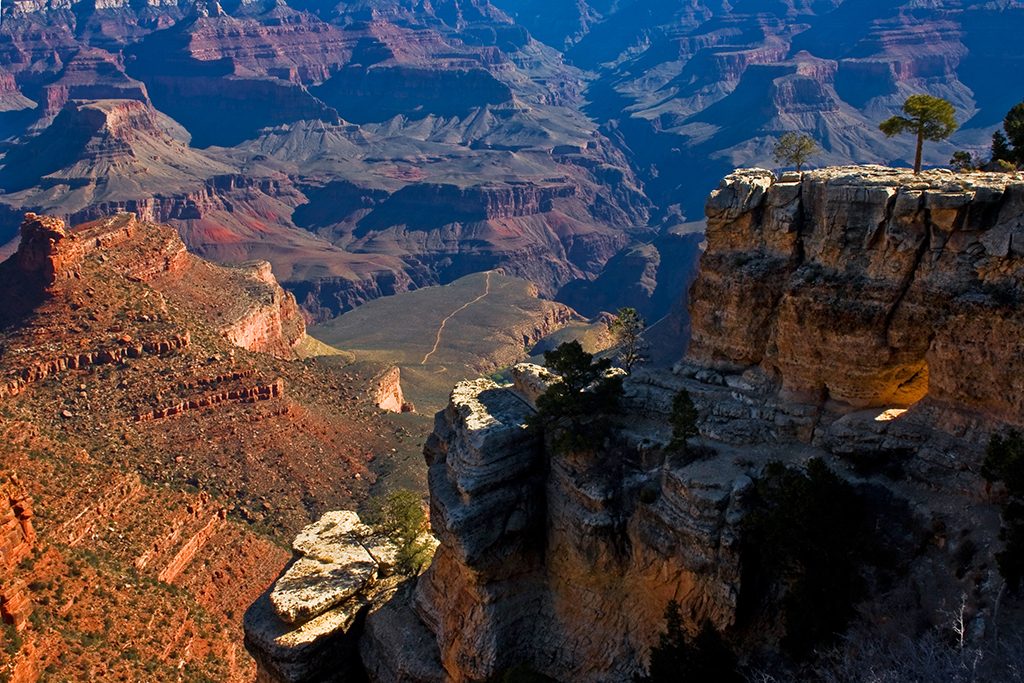
To celebrate Earth Day, here are some images I have taken over the years of our beautiful planet.  The top one is, of course, the Grand Canyon.

20120422-103316.jpg
Painted Desert, Arizona

20120422-103425.jpg
Haleakala Crater, Maui

20120422-103529.jpg
Monument Valley, Arizona and Utah

20120422-103623.jpg
New earth forming, Volcanoes National Park, Hawaii

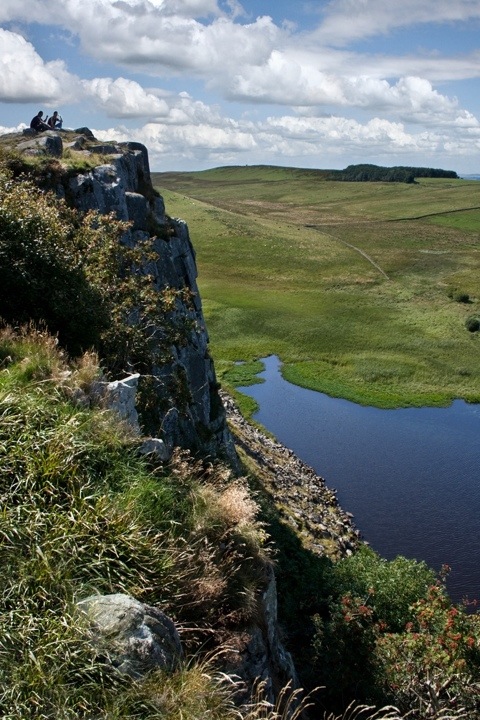
Northumberland National Park, England

20120422-103724.jpg
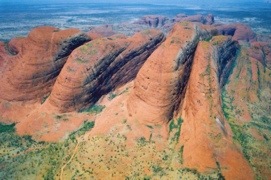
The Olgas, Australia

20120422-103802.jpg
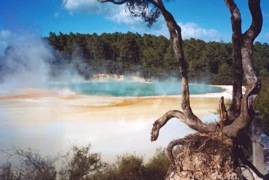
Champagne Pools, Rotorua, New Zealand

20120422-103846.jpg
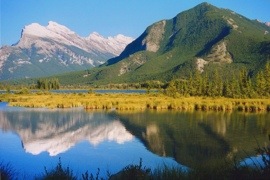
Vermilion Lakes, Alberta


Coffee break

20120421-110012.jpg

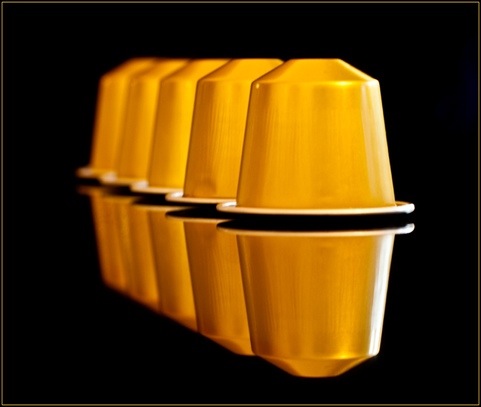
Nespresso doesn’t really need any advertising help from me. After all, they have George Clooney. But much as I like (lust after) the Cloonster, I was already a fan of those little capsules. And not for the coffee. Don’t get me wrong, I love to drink it. Indeed, my day hasn’t started right until I’ve had a cosy lungo, and my status as homemaker-in-chief is seriously threatened if we run out before I remember to order more. But the real reason I like Nespresso is because the capsules are so darned photogenic. They are colourful, and have a nice shape. And they go well with the espresso cups we bought on holiday in Portugal. The only downside is the coffee tends to get cold while I am photographing it. But I can hardly blame Nespresso for that. Until they invent a never-gets-cold coffee, I will just have to put up with it.

20120421-111231.jpg

20120421-115934.jpg

The best camera

20120420-153818.jpg

“The best camera is the one that’s with you.” It’s such a well-known phrase that I couldn’t find anyone to attribute it to, although I did discover that Chase Jarvis has used it as the title of a book (and an app!) about iPhone photography. I didn’t know about that before I conceived the idea for today’s post! Undaunted by the discovery that I am following an already well-trodden path, I will carry on regardless (and then I will go and read Jarvis’s book!).
So, I was thinking yesterday about the first camera I ever owned, a little 110-cartridge film camera. Those of you of my age may remember the little cameras where the case folded back to become a handle? Several years later I moved on to a Minolta compact 35mm camera. I remember still how luxurious it felt by comparison. That little camera saw me through my backpacking years, surviving Egyptian sand, Chinese rain (boy did it rain!) and then every other tricky condition nature could throw at it during my round-the-world tramp. Then I got a proper job, ironically finally earning enough to be able to buy my first SLR just as my travels became limited to four weeks a year. I was seduced to the dark side, aka Canon, by the advert at Balham tube station for their new EOS 1000. A fairly nasty bit of plastic but what did I know? Luckily, the chap in the camera shop, a family-owned local store (remember them?), did know and he persuaded me to get the 600D. I still have it. It’s a great camera and did sterling work for many years. It is still in perfect working order, with a half-exposed film inside (must finish that!).
I was not convinced by digital. Didn’t want to try it. Not proper photography, I thought. Then my husband bought me a 400D for Christmas 2007 and I was hooked! I now use a 5Dii with assorted very nice lenses. But a recent injury has meant I can’t handle a heavy camera very much or often. Luckily, the iPhone 4 has a nifty little camera and it is always with me. So, at the moment, it is my best camera. I do firmly believe that photography is, or should be, composition, composition, composition. Having 21 megapixels at my disposal had made me lazy, able to rely on cropping to improve average composition. Now I will have to think a little more before I shoot and that can only be a good thing.
All of the pictures in today’s post were taken with my iPhone.

20120420-153921.jpg

20120420-153948.jpg

20120420-154558.jpg

A challenge of distinction

20120419-092145.jpg

One year ago today, my heart was pounding and I was gripping the hand of my ever-supportive husband rather too hard for his comfort! What momentous event could have prompted this anguish, I hear you cry? Merely the awarding of a Royal Photographic Society (RPS) distinction! I know, perhaps a bit of an overreaction, but it was the culmination of nearly a year’s planning and I didn’t want anything to go wrong. Besides, watching a panel of ten of your favourite images being assessed by five distinguished photographers in front of a roomful of other photographers would be nerve-wracking for anyone!
The Royal Photographic Society offers three levels of distinction. I was being assessed for the entry level, success at which would make me a Licentiate of the RPS, known for short as LRPS. This is my panel. Each image and the panel as a whole have to satisfy a list of technical and visual criteria. First the five judges look at the whole panel as hung and then approach more closely to examine the images individually. Fortunately, they were quite quick in their deliberations on my panel so I wasn’t kept on the rack too long! It’s a great feeling when they announce your name and everyone claps. My husband commented on what a supportive bunch he found the other photographers to be.
Afterwards, many people asked me if I was going to move on to the next level, or Associateship. But I was happy with my LRPS and just wanted to bask in that feeling for a while. A year on and I am starting to think about the next step. I have some ideas brewing at the back of my mind…
If you fancy a new challenge, then a RPS distinction might be for you. If you want to know more, the RPS website has lots of information. Also, if you put them in a comment to this post, I will happily answer any questions.

Storytelling (again)

20120418-155511.jpg

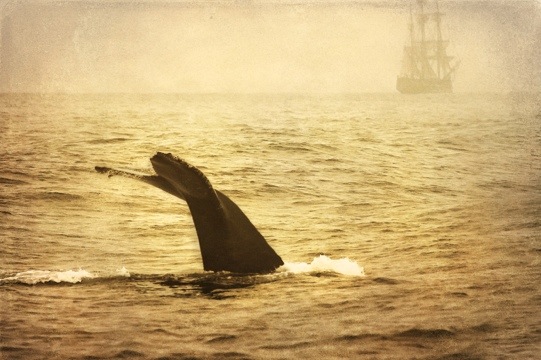
Yesterday’s post was about storytelling in a sequence of images. Today’s is about a one-image story. I call this picture ‘Escape’. To the viewer, it tells of a whale that escapes the whaler’s harpoon. It suggests a backstory, the hunt that has failed, and a future story: where is the whaler going, will it be back, and will the whale escape next time?
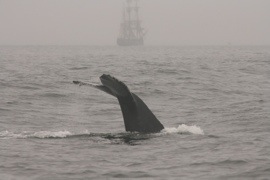
The original exposure is below. It tells its own tale to me, of a whale watching trip out of Monterey in summer 2008. It was hardy whale watching. By the time the whales appeared, I was one of only a few left on deck. The heavy grey mist never lifted but, when a tall ship ghosted past in the distance, I had my shot. However, it needed some work back at home to ‘age’ the shot in keeping with the historical fiction I wanted to tell. First, I moved the ship further along the horizon to make a more balanced composition and to make it clearer that the ship was disappearing into the distance. I converted the image to black and white and added a sepia tint. Then I added a texture and, finally, did some selective dodging and burning. The original was an unremarkable shot but a little editing turned it into an storytelling image worth keeping.

20120418-155448.jpg

Editing in Photoshop CS4. Texture courtesy of skeletalmess.

The shepherds and the wolf

A story in photographs.
(If you don’t like bugs you may want to look away now!)
20120417-122242.jpg

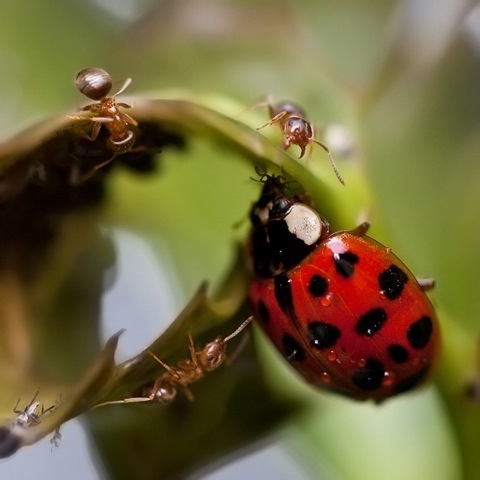
I took this image in my garden last summer. It is part of a story I told with my camera on Flickr over a few days. Here’s the whole thing:
20120417-122426.jpg
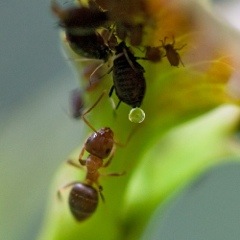
Some species of ant ‘milk’ aphids by stroking them with their antennae. This encourages the aphids to secrete a sticky substance known as honeydew which the ants eat. Here an ant is caught in the act of doing just that. The ants tend their aphid herds like shepherds, protecting them from predators.
20120417-123255.jpg
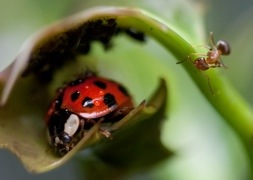
The next day a visitor has appeared. A hungry ladybird (ladybug to my American friends) can think of nothing better than this ready-prepared banquet of its favourite food, aphids. An angry ant-shepherd glares at this wolf in the fold.
20120417-123511.jpg
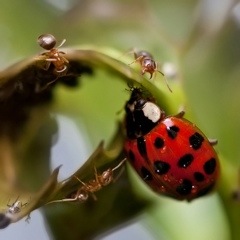
A day later and the voracious ladybird is still laying siege to aphid city. The ant shepherd has brought in reinforcements but to no avail. The ladybird is like a Sherman tank and angry looks just aren’t going to work. If you look closely you can see an aphid’s legs sticking out of the ladybird’s mouth.

20120417-123709.jpg
Another day later and the shepherds appear to have given up and left their flock to their fate. However, that is not the end of the story. The next day, there was no sign of the ladybird and the ants were back tending their flock as if nothing had ever happened.

Of course, really one should not anthropomorphise animals, but sometimes it is just too tempting.

The art of kindly vacancies

20120416-105232.jpg

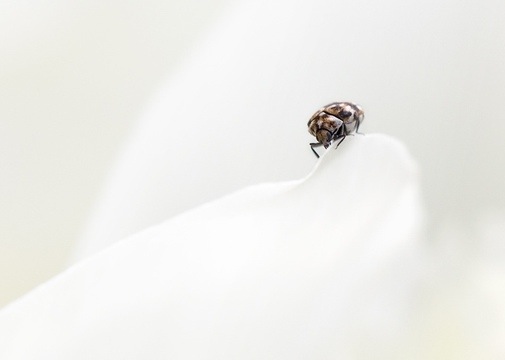
This photograph, taken in my garden, demonstrates a style of composition that I often adopt. Particularly when shooting insects, I strive to create simple images, with a bold use of negative space, to show that the subject is small but its world is big. As a viewer of images, I enjoy compositions that are pared down to the minimal, devoid of distracting elements. They are such a direct communication between the photographer and the viewer. At the same tme, they give space for the imagination to become involved.
Once again I find myself calling on John Ruskin as authority:
“It is a great advantage to the picture that it need not present too much at once, and that what it does present may be so chosen and ordered as not only to be more easily seized, but to give the imagination rest, and, as it were, places to lie down and stretch its limbs in; kindly vacancies, beguiling it back into action, with pleasant and cautious sequence of incident; all jarring thoughts being excluded, all vain redundance denied, and all just and sweet transition permitted.” (Modern Painters, Vol III, Part IV, Ch. X)

I have put together a small gallery of images by other photographers, in many different genres, that all display this approach to composition, masters of the art of kindly vacancies. Click here if you’d like to see.

The pleasure in making do

20120415-122139.jpg

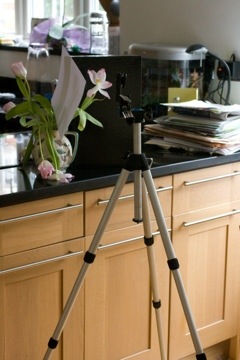
Photographers can spend a great deal of money on equipment, especially if they want to shoot indoors, studio-style. This image is one of my most successful. It has won me several awards and has been accepted into juried exhibitions. Recently it was one of only seven images from Surrey accepted into the Photographic Alliance of Great Britain’s annual projected digital image exhibition. Judges often comment favourably on the fine control of lighting in this photograph. Yet this shot was taken in natural daylight in front of a black lever arch file with a piece of white paper as a reflector. I used my canon 400D and its kit lens, now considered by most to be outdated and barely adequate equipment. The tripod is more than fifty years old and was passed on to me by my father. A picture of my totally Heath Robinson setup (and very messy kitchen) is below. Who needs a posh studio? There is pleasure in making do.

20120415-122800.jpg

Holt’s Orchard

20120414-102943.jpg

On this day in 2009 we were travelling through Utah, on our way from Moab to Bryce Canyon. On the way, we drove through Capitol Reef National Park. We only had time for one stop, but as we drove through the stunning scenery of burnt orange canyon walls and rippling yellow grasses, we resolved to return. We stopped in the rather prosaically named Fruita, where the principal industry used to be the growing of, you guessed it, fruit. The top picture is Holt’s Orchard, in Fruita. In 1878, a small group of Mormons settled this land by the Fremont River. They found the climate suitable for growing fruit and, now run by the National Parks Service, the orchards continue to flourish today, the Spring blossom making a striking contrast with the imposing red walls of the canyon. Life was hard for those early settlers. This orchard was planted by the Holt family and a little plaque tells their moving story, from the death of their daughter at 3 months from a scorpion sting to the loss of their farm a few years later in one of the many devastating flash floods to which the area was prone.
The Mormons were not, however, the first settlers of this area. Ancestral Puebloans farmed this land from 700 to 1300AD and, just over the road from the Holt Orchard, a boardwalk now runs along the canyon walls to make viewing possible of the many intriguing and beautiful petroglyphs that remain as evidence of their presence (see picture below).

If you are interested in this area of the United States or you are looking for an really rewarding new blog to read, can I recommend Travels with the Blonde Coyote

If the link doesn’t work for you (no idea what I’ve done wrong!), try copying and pasting this into your browser: http://theblondecoyote.com

20120414-103613.jpg

20120414-103646.jpg