In flight entertainment

20120425-094552.jpg

One of my photographic obsessions in the last couple of years has been capturing insects in flight. Particularly bees and hover flies. I have by no means mastered this art yet. But I have bagged a few shots that I like and I have learned a few things along the way.

20120425-094844.jpg

I suspect that the best way to get really superb shots is to find a flower that the insects frequent, set up the tripod, lock focus on the flower and use a remote shutter release to fire off a load of shots every time a bug comes near. I can see the attraction of this laid back approach. I imagine a deck chair, comfy cushions, a cool glass of Pimms… But you would need that kind of still summer’s day that only happens in this country in Evelyn Waugh novels. Even the slightest breeze can move a flower. So, ditch the tripod.

20120425-095550.jpg

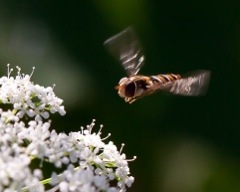
I prefer to shoot flying bugs in shutter priority, set to 1/640 or 1/800, with the camera set to AI servo and continuous shooting. Any faster than 800 and you risk freezing the wings. I prefer blurry wings. They’re moving, and I want my picture to show that. Compare the two shots below:

20120425-095804.jpg

20120425-095840.jpg

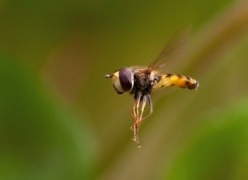
The first shot is probably better quality but I prefer the shimmering wings in the second.

While blurry wings are good, blurry bodies are not, especially eyes. I use centre spot focus; my manual focus skills just aren’t up to the job. If yours are, go for it. For those of us who rely on auto, you should aim to get the centre point over the eye. Yes, it’s tricky. But put in some practice and you will be able to do it. Softness in the rest of the insect matters less if the eyes are clear.
20120425-100310.jpg

I won’t use flash; I don’t want to ‘bug’ the bugs. So having such a fast shutter speed reduces my depth of field somewhat, or a lot! Therefore, I always use ISO 400 for these shots. That gets me more depth. Really bright direct sunlight that would allow a lower ISO is usually fairly ugly light anyway. On the upside, a wider aperture means nicer backgrounds, smooth and undistracting.

Background is half the battle. Compare the next two shots. In the first the bee is nice and sharp but the background is ugly. In the second, the bee is frankly too soft but you just have to love that fresh green background. Which do you think is the more pleasing image?

20120425-100904.jpg

20120425-100924.jpg

Oh, and I mustn’t forget to mention metering. I use spot metering. I want to expose for the bug and it is too small in the frame for the camera to expose for it in the default, evaluative metering mode.
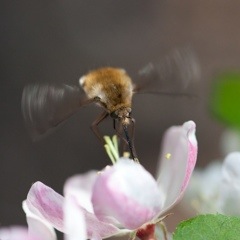
20120425-101756.jpg

Finally, it helps to learn a bit about the habits of your models. After a while of crouching in the bushes with ants crawling up your trousers you will start to notice that, while honey bees tend to approach flowers in a business-like straight line, bumble bees live up to their name and bumble all over the place. Certain hover flies, particularly the marmalade fly, hover beautifully, while others zoom around oblivious to the fact that they are supposed to be hover flies and are frankly not worth your trouble until they settle.
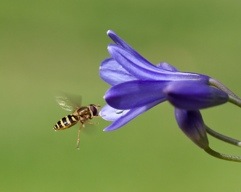
20120425-102338.jpg

Finally, be prepared to get very funny looks from a lot of people if attempting any of this in public. Good luck!

20120425-102513.jpg

Many thanks to The Goat that Wrote for the idea for today’s post.

PS Before someone asks, I use a 100mm macro lens on a full frame camera. But you could do this just as well with a cropped sensor and another lens.
And, no, I have never been stung.

PPS I have shown some of the images in small size because of problems with downloading really long blog entries.  All of the images stand up to scrutiny at a larger size.  You’re just going  to have to trust me on that 😉
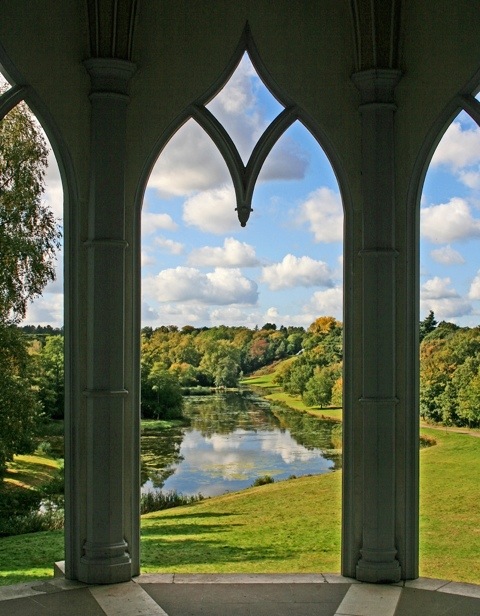
Painshill

20120424-094538.jpg

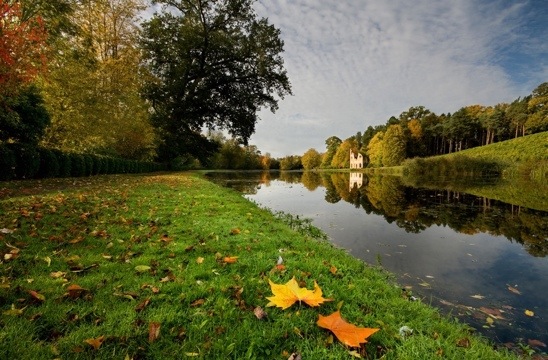
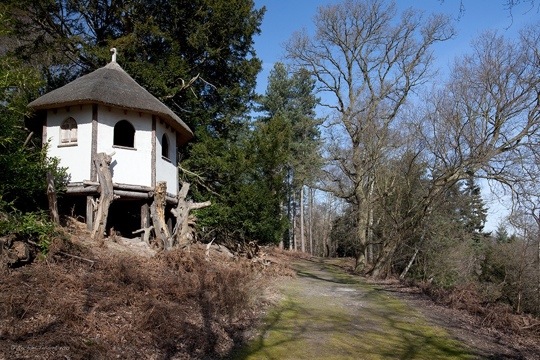
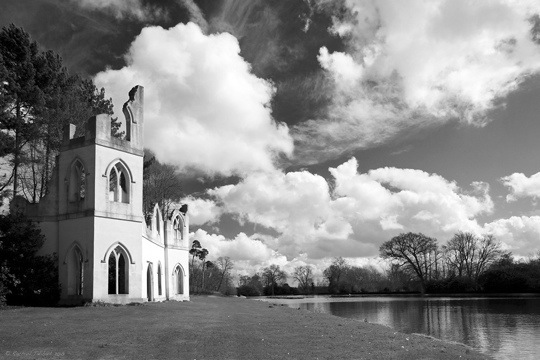
Painshill Park, in Cobham, Surrey, is one of my very favourite local photography locations. An eighteenth century landscape garden, with several ‘follies’ ideally positioned to be ‘picturesque’ in the true sense of the term, it pleases the camera in any season. The top image is a view of the Lake from the Gothic Temple.

20120424-094907.jpg

‘Painshill was created between 1738 and 1773 by the Hon Charles Hamilton, 9th son and 14th child of 6th Earl of Abercorn. A painter, plantsman and brilliantly gifted and imaginative designer, he dedicated his creative genius to the layout and composition of a landscape garden which was unique in Europe and still remains so.’

20120424-095439.jpg

‘Painshill was created as a romantic landscape to stimulate the senses and emotions of the visitor…The gardens were among the earliest to reflect the changing fashion from geometric formality to the naturalistic style.’

20120424-095147.jpg
The ruined abbey catches the morning sun. The use of still water to create reflections was one of the typical elements in landscape gardens of the period.

‘Rescuing and restoring this exceptional Grade I landscape has been very challenging and difficult but ultimately exceedingly rewarding, capped with the award of the rare Europa Nostra Medal in 1998 “for the exemplary restoration from a state of extreme neglect, of a most important 18th century landscape park and its extraordinary buildings”. Painshill Park is of international importance and therefore The Painshill Park Trust now has a long-term aim to become a world heritage site.’
The-Story-of-Painshill

20120424-101927.jpg

The Park is big enough that it never feels crowded. Largely maintained and staffed by volunteers, it is a fascinating and beautiful place to visit.

20120424-102421.jpg

The grotto is another of the follies, and it looks very spooky in fog. Father Christmas holds court inside every year.

20120424-102553.jpg

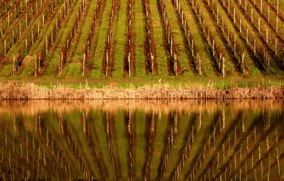
There is even a working vineyard.

20120424-102649.jpg

Wildlife abounds…

20120424-102716.jpg

… from the small…

20120424-102749.jpg

…to the not so small.

If you are ever in the area, Painshill Park is a must see!

20120424-102919.jpg

There are more images in my Flickr set.

Not-so-solitary bees

20120423-102749.jpg

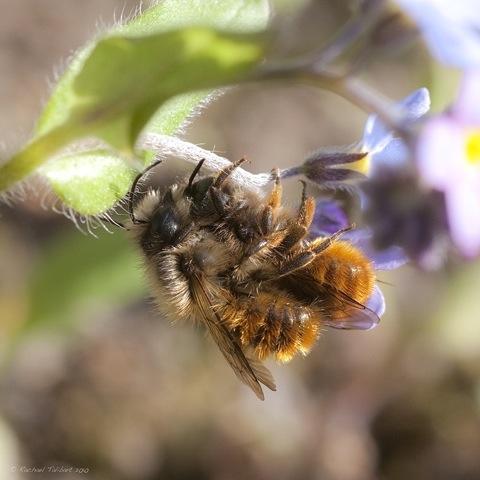
At this time of year there are already many bees busy in the garden but not yet many honey bees. The bumble bees are around, fat, noisy and fairly recognisable. But there are also a lot of solitary bees. In Britain we have more than 250 types of solitary bee, bees that have single nest cells rather than communal hives.
With so many types, I am not going to try to identify the subjects of today’s photographs. To know more, try here. Suffice it to say that solitary bees do have to get together occasionally to obey one particular biological imperative!

20120423-104029.jpg

And, just to prove that they do appear in ones:

20120423-104128.jpg

Earth Day


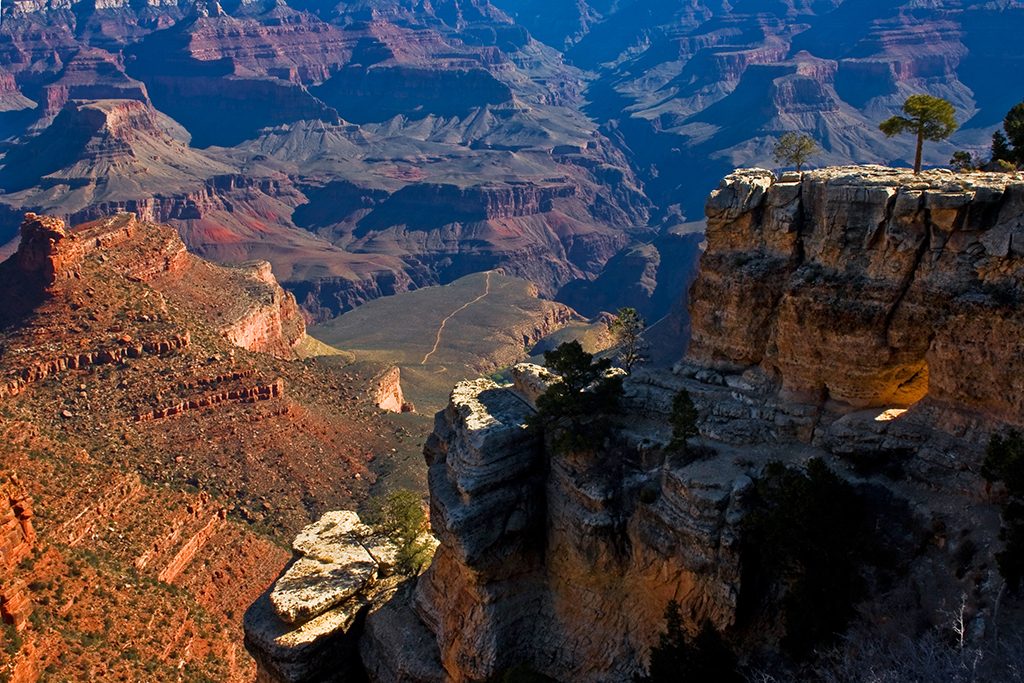
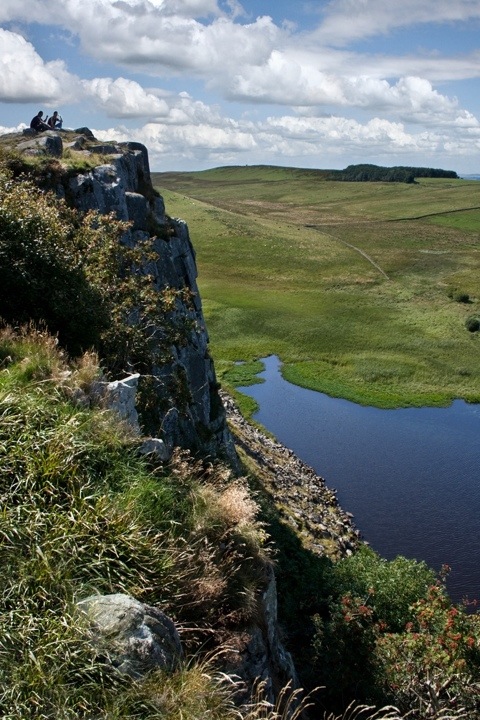
To celebrate Earth Day, here are some images I have taken over the years of our beautiful planet.  The top one is, of course, the Grand Canyon.

20120422-103316.jpg
Painted Desert, Arizona

20120422-103425.jpg
Haleakala Crater, Maui

20120422-103529.jpg
Monument Valley, Arizona and Utah

20120422-103623.jpg
New earth forming, Volcanoes National Park, Hawaii

Northumberland National Park, England

20120422-103724.jpg
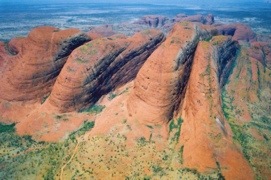
The Olgas, Australia

20120422-103802.jpg
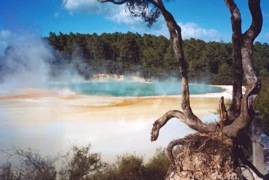
Champagne Pools, Rotorua, New Zealand

20120422-103846.jpg
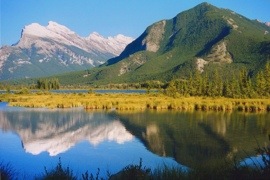
Vermilion Lakes, Alberta


Coffee break

20120421-110012.jpg

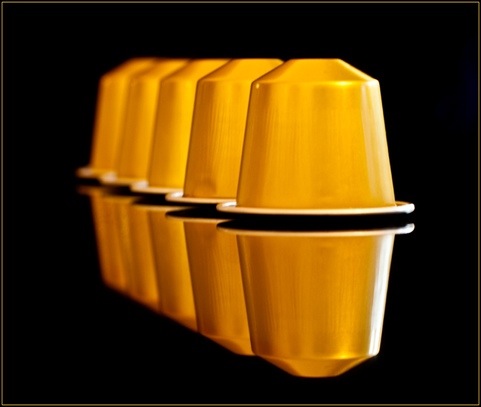
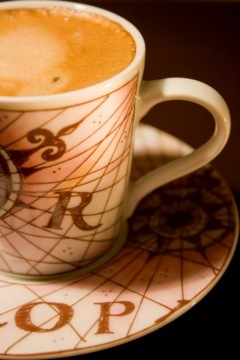
Nespresso doesn’t really need any advertising help from me. After all, they have George Clooney. But much as I like (lust after) the Cloonster, I was already a fan of those little capsules. And not for the coffee. Don’t get me wrong, I love to drink it. Indeed, my day hasn’t started right until I’ve had a cosy lungo, and my status as homemaker-in-chief is seriously threatened if we run out before I remember to order more. But the real reason I like Nespresso is because the capsules are so darned photogenic. They are colourful, and have a nice shape. And they go well with the espresso cups we bought on holiday in Portugal. The only downside is the coffee tends to get cold while I am photographing it. But I can hardly blame Nespresso for that. Until they invent a never-gets-cold coffee, I will just have to put up with it.

20120421-111231.jpg

20120421-115934.jpg

The best camera

20120420-153818.jpg

“The best camera is the one that’s with you.” It’s such a well-known phrase that I couldn’t find anyone to attribute it to, although I did discover that Chase Jarvis has used it as the title of a book (and an app!) about iPhone photography. I didn’t know about that before I conceived the idea for today’s post! Undaunted by the discovery that I am following an already well-trodden path, I will carry on regardless (and then I will go and read Jarvis’s book!).
So, I was thinking yesterday about the first camera I ever owned, a little 110-cartridge film camera. Those of you of my age may remember the little cameras where the case folded back to become a handle? Several years later I moved on to a Minolta compact 35mm camera. I remember still how luxurious it felt by comparison. That little camera saw me through my backpacking years, surviving Egyptian sand, Chinese rain (boy did it rain!) and then every other tricky condition nature could throw at it during my round-the-world tramp. Then I got a proper job, ironically finally earning enough to be able to buy my first SLR just as my travels became limited to four weeks a year. I was seduced to the dark side, aka Canon, by the advert at Balham tube station for their new EOS 1000. A fairly nasty bit of plastic but what did I know? Luckily, the chap in the camera shop, a family-owned local store (remember them?), did know and he persuaded me to get the 600D. I still have it. It’s a great camera and did sterling work for many years. It is still in perfect working order, with a half-exposed film inside (must finish that!).
I was not convinced by digital. Didn’t want to try it. Not proper photography, I thought. Then my husband bought me a 400D for Christmas 2007 and I was hooked! I now use a 5Dii with assorted very nice lenses. But a recent injury has meant I can’t handle a heavy camera very much or often. Luckily, the iPhone 4 has a nifty little camera and it is always with me. So, at the moment, it is my best camera. I do firmly believe that photography is, or should be, composition, composition, composition. Having 21 megapixels at my disposal had made me lazy, able to rely on cropping to improve average composition. Now I will have to think a little more before I shoot and that can only be a good thing.
All of the pictures in today’s post were taken with my iPhone.

20120420-153921.jpg

20120420-153948.jpg

20120420-154558.jpg

A challenge of distinction

20120419-092145.jpg

One year ago today, my heart was pounding and I was gripping the hand of my ever-supportive husband rather too hard for his comfort! What momentous event could have prompted this anguish, I hear you cry? Merely the awarding of a Royal Photographic Society (RPS) distinction! I know, perhaps a bit of an overreaction, but it was the culmination of nearly a year’s planning and I didn’t want anything to go wrong. Besides, watching a panel of ten of your favourite images being assessed by five distinguished photographers in front of a roomful of other photographers would be nerve-wracking for anyone!
The Royal Photographic Society offers three levels of distinction. I was being assessed for the entry level, success at which would make me a Licentiate of the RPS, known for short as LRPS. This is my panel. Each image and the panel as a whole have to satisfy a list of technical and visual criteria. First the five judges look at the whole panel as hung and then approach more closely to examine the images individually. Fortunately, they were quite quick in their deliberations on my panel so I wasn’t kept on the rack too long! It’s a great feeling when they announce your name and everyone claps. My husband commented on what a supportive bunch he found the other photographers to be.
Afterwards, many people asked me if I was going to move on to the next level, or Associateship. But I was happy with my LRPS and just wanted to bask in that feeling for a while. A year on and I am starting to think about the next step. I have some ideas brewing at the back of my mind…
If you fancy a new challenge, then a RPS distinction might be for you. If you want to know more, the RPS website has lots of information. Also, if you put them in a comment to this post, I will happily answer any questions.

Storytelling (again)

20120418-155511.jpg

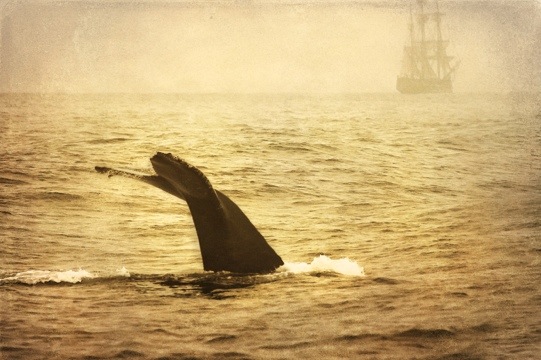
Yesterday’s post was about storytelling in a sequence of images. Today’s is about a one-image story. I call this picture ‘Escape’. To the viewer, it tells of a whale that escapes the whaler’s harpoon. It suggests a backstory, the hunt that has failed, and a future story: where is the whaler going, will it be back, and will the whale escape next time?
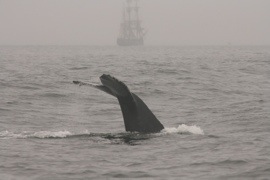
The original exposure is below. It tells its own tale to me, of a whale watching trip out of Monterey in summer 2008. It was hardy whale watching. By the time the whales appeared, I was one of only a few left on deck. The heavy grey mist never lifted but, when a tall ship ghosted past in the distance, I had my shot. However, it needed some work back at home to ‘age’ the shot in keeping with the historical fiction I wanted to tell. First, I moved the ship further along the horizon to make a more balanced composition and to make it clearer that the ship was disappearing into the distance. I converted the image to black and white and added a sepia tint. Then I added a texture and, finally, did some selective dodging and burning. The original was an unremarkable shot but a little editing turned it into an storytelling image worth keeping.

20120418-155448.jpg

Editing in Photoshop CS4. Texture courtesy of skeletalmess.

The shepherds and the wolf

A story in photographs.
(If you don’t like bugs you may want to look away now!)

20120417-122242.jpg

I took this image in my garden last summer. It is part of a story I told with my camera on Flickr over a few days. Here’s the whole thing:

20120417-122426.jpg
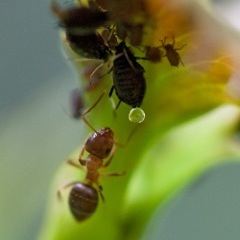
Some species of ant ‘milk’ aphids by stroking them with their antennae. This encourages the aphids to secrete a sticky substance known as honeydew which the ants eat. Here an ant is caught in the act of doing just that. The ants tend their aphid herds like shepherds, protecting them from predators.

20120417-123255.jpg
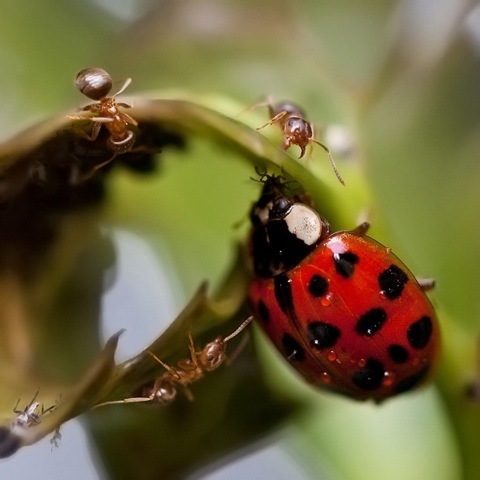
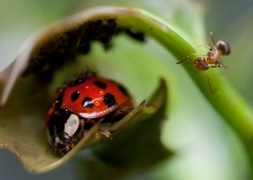
The next day a visitor has appeared. A hungry ladybird (ladybug to my American friends) can think of nothing better than this ready-prepared banquet of its favourite food, aphids. An angry ant-shepherd glares at this wolf in the fold.

20120417-123511.jpg
A day later and the voracious ladybird is still laying siege to aphid city. The ant shepherd has brought in reinforcements but to no avail. The ladybird is like a Sherman tank and angry looks just aren’t going to work. If you look closely you can see an aphid’s legs sticking out of the ladybird’s mouth.

20120417-123709.jpg
Another day later and the shepherds appear to have given up and left their flock to their fate. However, that is not the end of the story. The next day, there was no sign of the ladybird and the ants were back tending their flock as if nothing had ever happened.

Of course, really one should not anthropomorphise animals, but sometimes it is just too tempting.

The art of kindly vacancies

20120416-105232.jpg

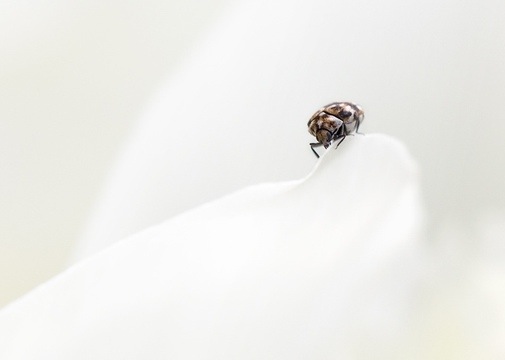
This photograph, taken in my garden, demonstrates a style of composition that I often adopt. Particularly when shooting insects, I strive to create simple images, with a bold use of negative space, to show that the subject is small but its world is big. As a viewer of images, I enjoy compositions that are pared down to the minimal, devoid of distracting elements. They are such a direct communication between the photographer and the viewer. At the same tme, they give space for the imagination to become involved.
Once again I find myself calling on John Ruskin as authority:
“It is a great advantage to the picture that it need not present too much at once, and that what it does present may be so chosen and ordered as not only to be more easily seized, but to give the imagination rest, and, as it were, places to lie down and stretch its limbs in; kindly vacancies, beguiling it back into action, with pleasant and cautious sequence of incident; all jarring thoughts being excluded, all vain redundance denied, and all just and sweet transition permitted.” (Modern Painters, Vol III, Part IV, Ch. X)

I have put together a small gallery of images by other photographers, in many different genres, that all display this approach to composition, masters of the art of kindly vacancies. Click here if you’d like to see.