
“Light always follows the path of the beautiful.” (Anon.)
By evening’s light
12

“Light always follows the path of the beautiful.” (Anon.)
 Certain iconic locations for landscape photography are known as ‘honeypot’ sites. Kimmeridge Bay on Dorset’s Jurassic Coast is one such site. I visited it for the first time on holiday this summer. Sadly, I was not treated to one of the spectacular sunsets one sees so often captured at this location but I made the best of what I had. There was only one other photographer on the beach, a local, who told me that if there had been the merest whiff of a good sunset the beach would have been heaving with tripods etc. Perhaps I was lucky after all.
 A helpful friend on Facebook suggested the mystery plant from yesterday might be a member of the mint family so I went outside and did the leaf-rub test. Low and behold, and without a shadow of a doubt, it is spearmint. Thanks, Harry.
I was pleased to find the following interesting, and apposite, minty mythology:
“Mint has been regarded as a symbol of Hospitality; ancient Romans strewed it around at feasts and banquets as a sign of welcome to guests.
The genus name Mentha comes from Greek Mythology. Legend has it that Menthe was a nymph who loved Pluto; when Pluto’s wife Persephone discovered this she turned the nymph into a mint plant.
It is also believed that the Ancients scoured their tables with this herb when preparing for the gods. Furthermore, the gods had fields of mint that bees used to make honey.
According to an ancient legend, Demeter drank a special drink called cecyon (kekyon) at Eleusis. This sacred drink of the Eleusine Mysteries was made by blending wheaten gruel with mint. Female initiates carried vessels of cecyon bound to their heads. The Greeks also believed that mint increased love-making. Moreover, mint, rosemary and myrtle were used in the final preparations of the dead in ancient Greece.”
www.modeflowers.com/flower-varieties/mentha-flowers
 I like it that the gods grew fields of mint for bees. They knew a thing or two, because the bees really do love these flowers! (Although I haven’t noticed any honey bees on them yet.)

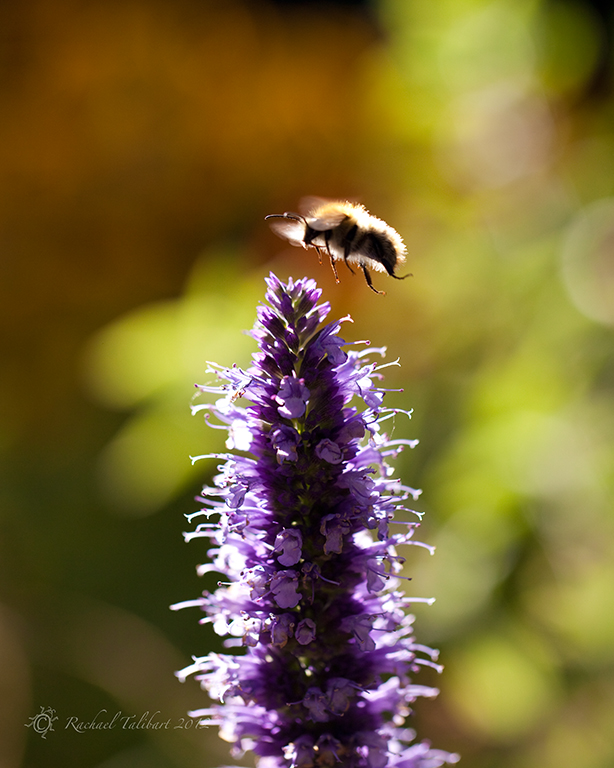
Carder bees are smallish bumble bees and they make their nests in old mammal burrows or tussocks of grass. They have a reputation for being feisty if their nest is threatened but while foraging in the garden they are as harmless as any other bumble bee. In fact, even more placid in my experience.

For more information on carder bees see here.

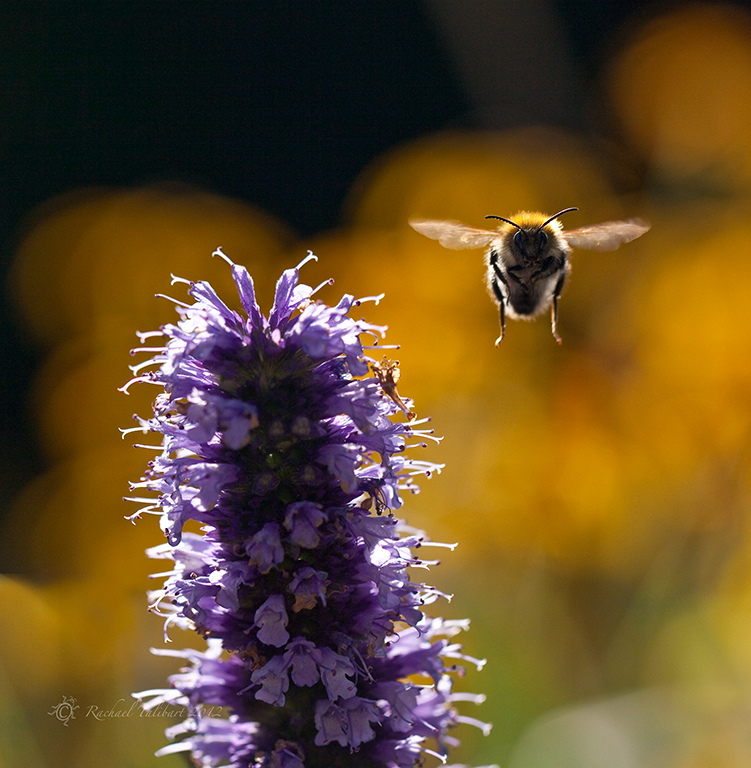
It has been several days since a buggy post! Most unlike me. But never fear, the carder bees are here! They have been very happy this weekend, enjoying the lovely warm weather among the late summer flowers in my garden.

I have forgotten the name of this purple flower but no matter; it shall henceforth be known as carder bee heaven.

Making a bee line
It was rather special, sitting in the border surrounded by gorgeous late summer colour and hordes of very happy bees.

Nearly there!
These small bumble bees are very cute. Or is that just me?
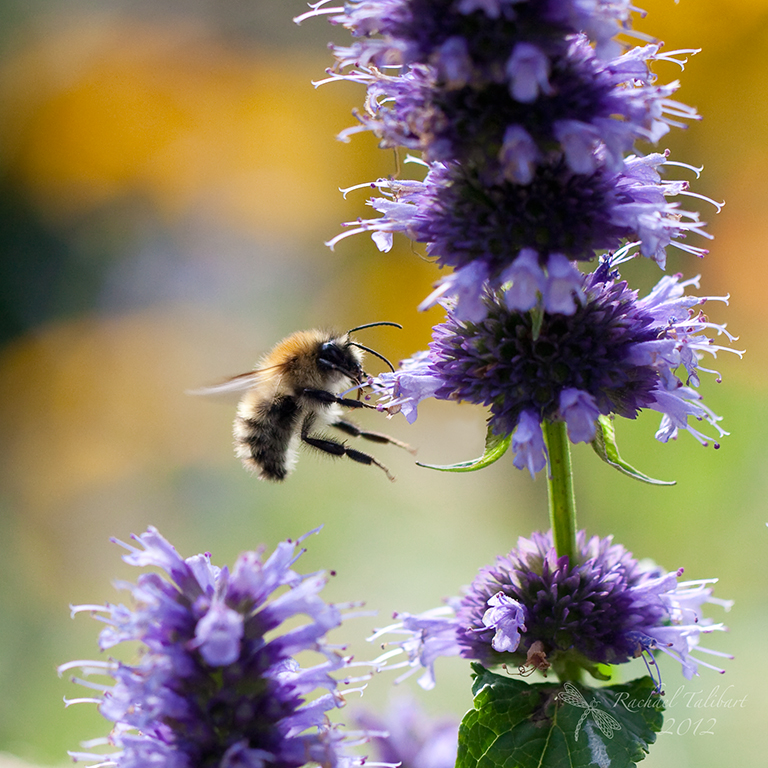
My favourite
This last shot isn’t quite as sharp as I would normally like but I just couldn’t help include it: geronimo!
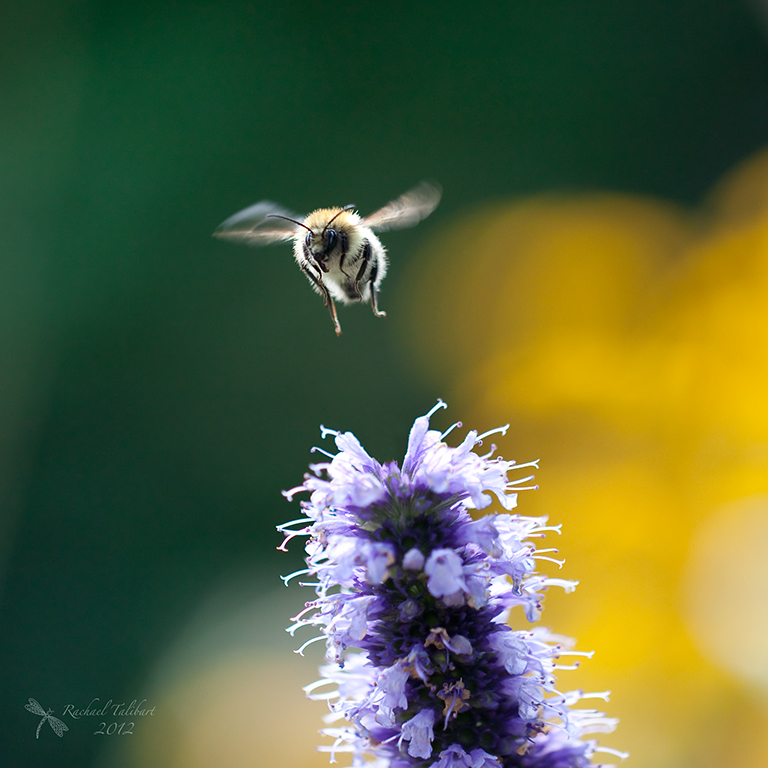
Heavy lifter
If you want to know my technique for shooting flying bugs, see my earlier post, In-flight entertainment where I reveal all my secrets!
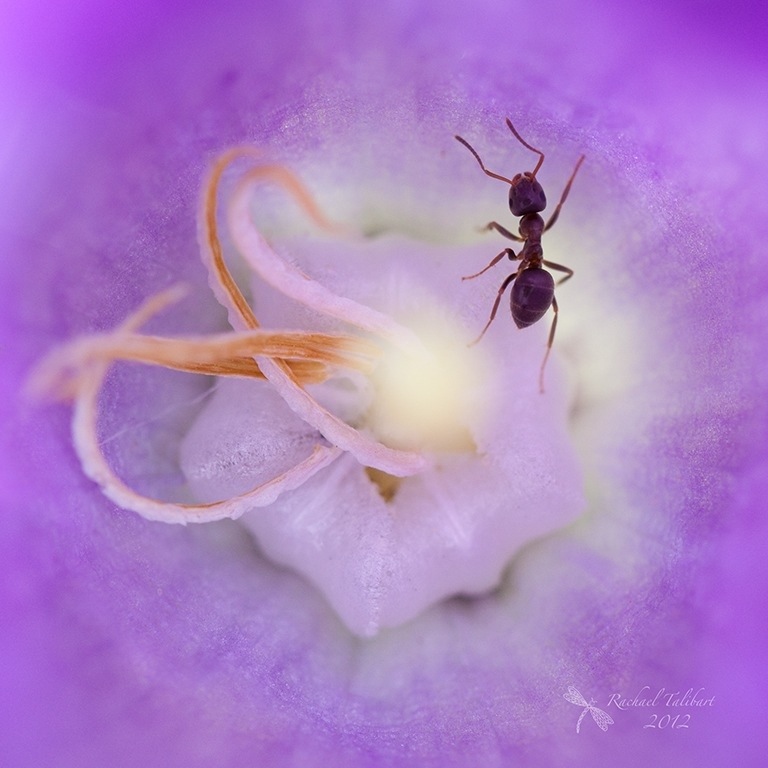
An ant investigates a tentacled alien in a mauve world.

Whee!
A beetle enjoying a spot of bungee. I think this is a field chafer, phyllopertha horticola. Taken from the towpath of the River Wey Navigations.

I love shooting macro into the light. You never know quite what you’re going to get, which is a huge part of the fun. In this image, I enjoy the rim lighting on the bumble bee as it visits verbena bonariensis in my garden. Incidentally, if you are looking to plant for wildlife, this verbena is a must.

This little bee is only slightly larger than a garden ant. There are more than 200 species of solitary bee in the UK and I have to declare I am stumped when it comes to identifying this little beauty. Any experts out there? Whatever its name, I think it is a very fetching little critter with its metallic green livery and pollen breeches.

Bees are super pollinators. We all know that. But sometimes the evidence is as plain as the nose on your face or, to be a little more literal, the pollen on their face.
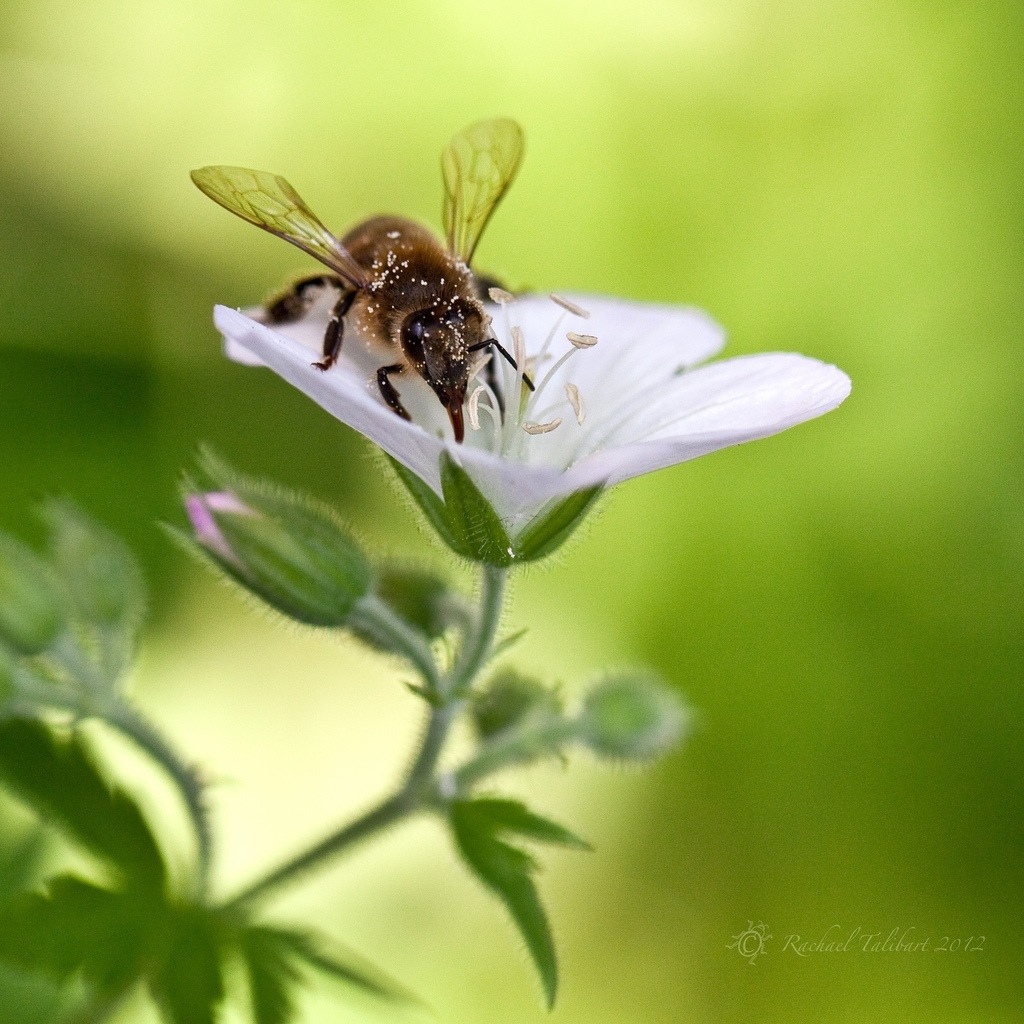
Just a little on this busy honey bee, but what about the bumble bee in the next image?
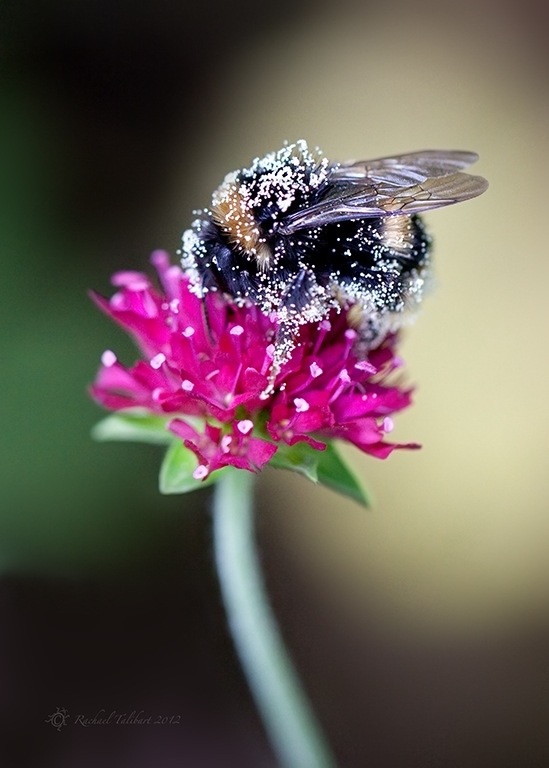
Sometimes I wonder how they can even see where they are going.

I couldn’t resist using the title of the classic Cagney, Bogart, O’Brien movie for these images. Classic movie, classic critters.

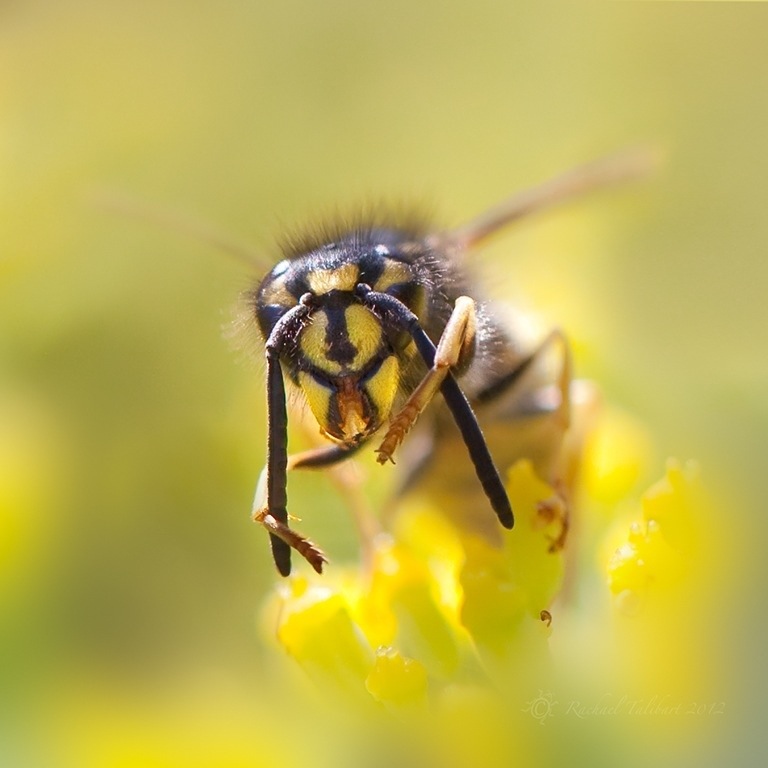
A fastidious wasp cleans its antennae. Close up, wasps are quite beautiful creatures, at least I see them that way. However, I must confess that I am not sorry their numbers are down this year. It is so pleasant being able to eat outside without the constant attentions of the usual pesky band of vespula vulgaris. This shot is from last year.
 Focused Moments