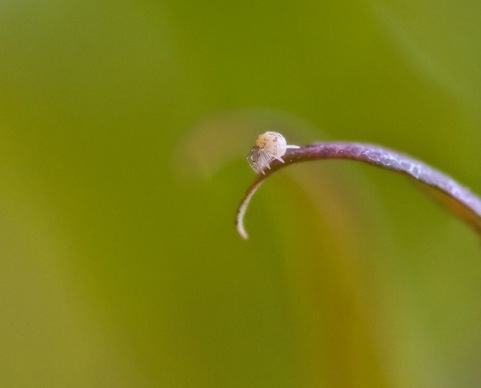
A tiny spider pauses…
…before parachuting away on a strand of silk.


A tiny spider pauses…
…before parachuting away on a strand of silk.

There are many different types of wasp in the UK. The one we all know is the common wasp (above), the ruin of many a barbecue in summer and autumn. I call this shot, “Mirror, mirror on the wall”.
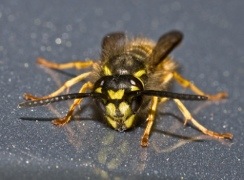
Common wasps are social wasps, living in colonies. There are also many different types of solitary wasp, that dig burrows and, very often, have a parasitic life-cycle, such as the wasp in the next picture.

Your eyes are not deceiving you; this wasp is indeed pulling the legs off a spider! It is a type of spider wasp of the family pompilidae. (Identification for an amateur is not straightforward but I think this is probably pompilus cinereus.) They find a spider, paralyse it with their sting, and drag it back to their burrow. Then they lay an egg inside the spider. Once the egg hatches, the larva eats the spider alive, from the inside out. Sometimes, if the spider is too big for the burrow, the wasp will pull its legs off. The expression, “feeling waspish”, takes on new significance!
Some wasps have an elegance about them, like the slim-waisted society belle below. Hence the expression, “waspish figure”.
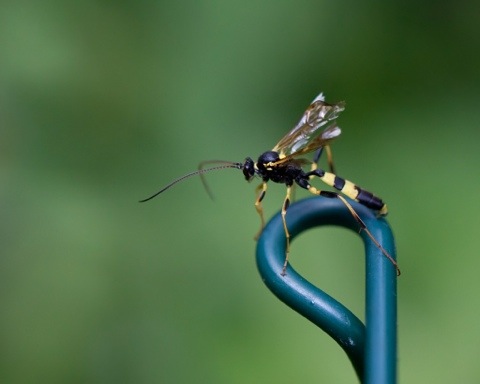
I think this is probably a type of digger wasp. This one has a damaged wing, which is why it stuck around long enough for me to get a shot off. Do not be fooled, however, by its stylish gown and slender grace. If my identification is correct, this beguiling debutante is parasitic too; the female lays its eggs in flies. Waspish in appearance and intent.
In Summer 2010, we spent three weeks in British Columbia, Canada. The standout highlight of the trip was the three days we spent at Knight Inlet Lodge in Glendale Cove.

The floating lodge is deep within Knight Inlet, one of the many huge inlets that serrate the coast of this beautiful province. It can only be reached by float plane or boat.

Like most visitors to the Lodge, we travelled by float plane from Campbell River on Vancouver Island. Living just outside London, England, we don’t get to travel this way very often so our stay was off to an exciting start before we’d even arrived!
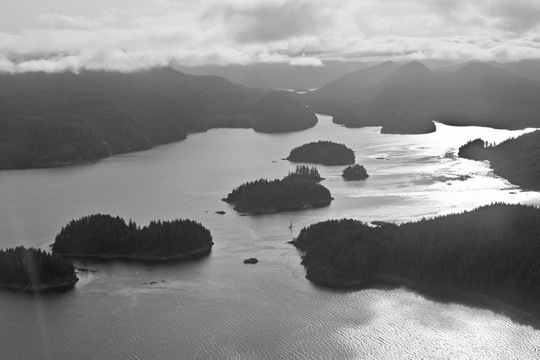
The views were superb despite the weather; it rains a lot here.

On arrival, after a short introduction to the guides and resident dogs, we were soon in a boat out in the Cove scouring the banks for signs of bears. Although we were too early for the salmon run when bears gather in numbers to fish and can be watched from hides, there was a good chance of finding some foraging on the shoreline.
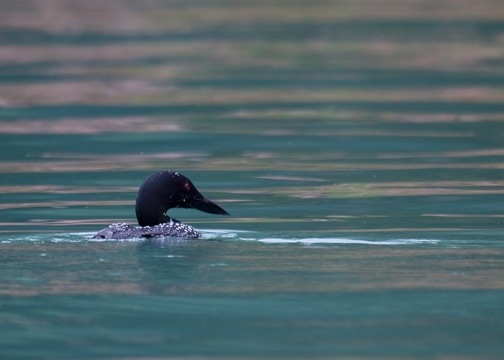
We saw some mergansers, a kingfisher, several curious seals and a loon before a call came over the radio to return to base immediately; bears had been spotted near the lodge!
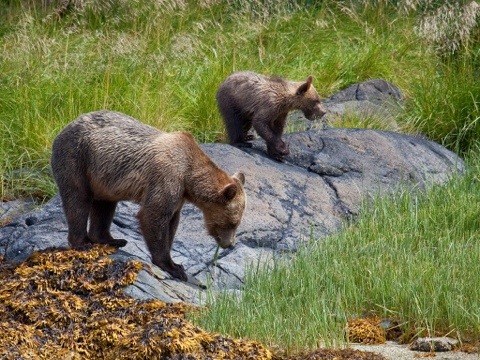
I wasn’t prepared for how breathtaking it was to see these wonderful creatures in the wild.

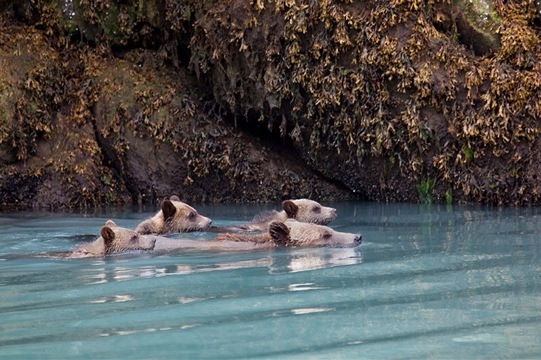
We watched this female, ‘christened’ Bella by the guides, and her three cubs as they foraged along the shoreline. Although we were separated by several feet of water, I felt very aware of my proximity to this powerful mother, who would not hesitate to defend her cubs.

We would be lucky enough to watch Bella and her cubs several more times during our stay as well as two other grizzly families. Wildlife abounds in Glendale Cove; we also saw a black bear and some black-tailed deer.

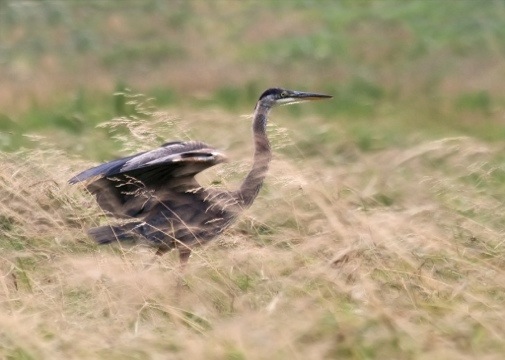

There were many bald eagles and herons as well as numerous smaller species of bird, including swallows who nested in the eaves of the lodge.
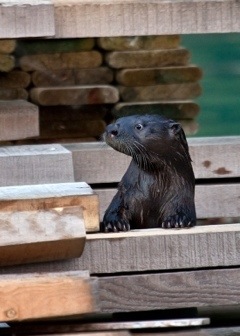
Not to be outdone, some smaller mammals shared the limelight. We saw mink on the shore and the lodge was frequently visited by a cheeky band of river otters.

For a change of pace, we could bear-watch from kayaks.
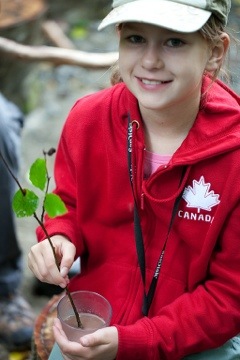
Or go on a guided forest hike. Here, my town-bred daughter can’t quite believe I am letting her stir her hot chocolate with a twig!
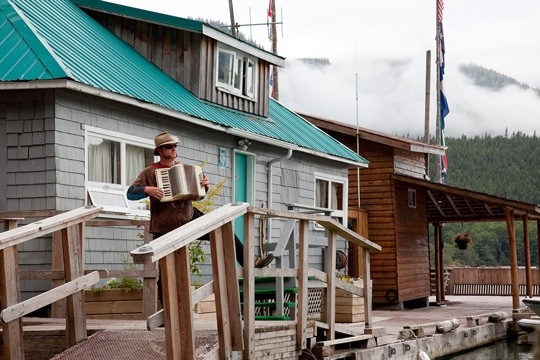
The evenings were spent socialising in the bar or enjoying entertaining and interesting talks by the friendly and knowledgeable guides. We had read on Tripadvisor that the food was great but it was even better than we expected.

Knight Inlet Lodge is a founding member of the Commercial Bear Viewing Association of British Columbia (CBVA). The CBVA campaigns to ban the currently legal trophy hunting of grizzly bears in British Columbia. Watching these magnificent creatures in the wild, I could not imagine ever being able to shoot one with anything other than a camera.

It was a privilege seeing these animals in their natural habitat. To be able to share an experience like this with my children, and to hear them talk about it still, is even better.

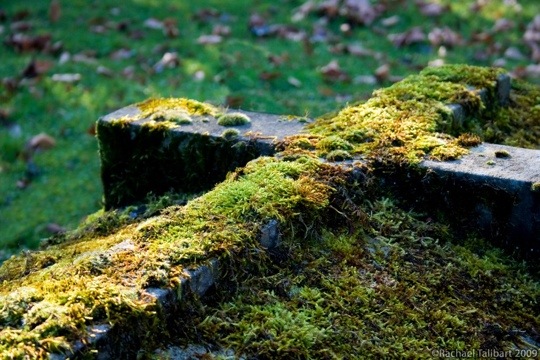
‘A child said What is the grass? fetching it to one with full hands,
How could I answer the child? I do not know what it is any more than he.
I guess it must be the flag of my disposition, out of the hopeful green stuff woven.
Or I guess it is the handkerchief of the Lord,
A scented gift and remembrancer designedly dropt,
Bearing the owner’s name someway in the corners, that we may see and remark,
and say Whose?…
And now it seems to me the beautiful uncut hair of graves.’
Walt Whitman, ‘Song of Myself’ (1855), 6
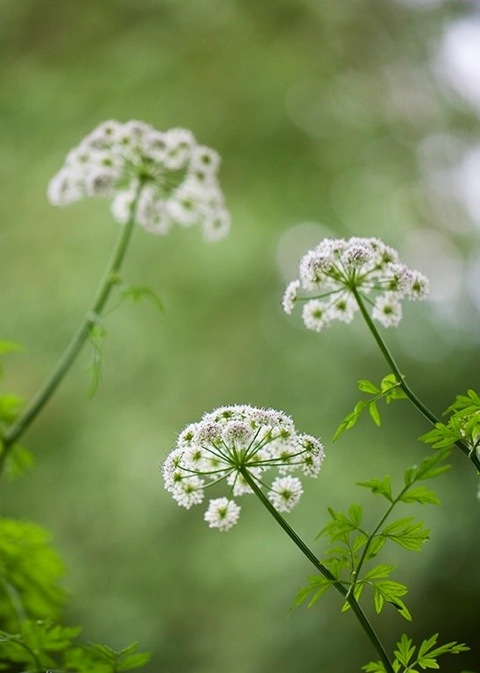
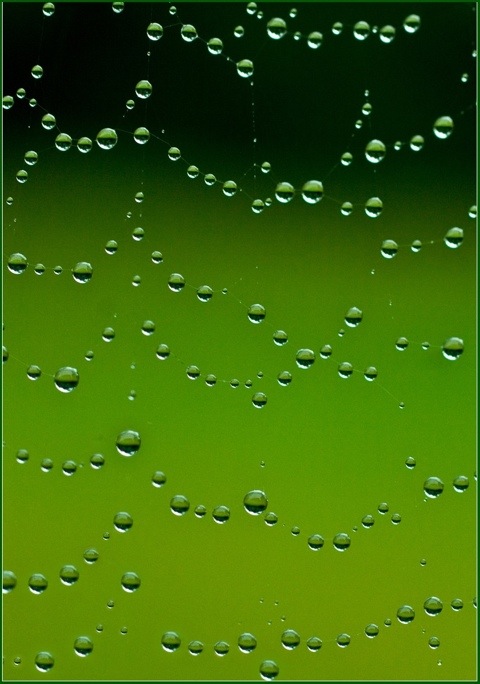
April has been a month of rain for us here in England. As I travelled in a taxi through Hyde Park this morning I noticed how gloriously green everything was, drenched in refreshing spring showers. So today’s post is simply a celebration of green.
The top image was taken in the churchyard of St. James’s, Weybridge.



At this time of year there are already many bees busy in the garden but not yet many honey bees. The bumble bees are around, fat, noisy and fairly recognisable. But there are also a lot of solitary bees. In Britain we have more than 250 types of solitary bee, bees that have single nest cells rather than communal hives.
With so many types, I am not going to try to identify the subjects of today’s photographs. To know more, try here. Suffice it to say that solitary bees do have to get together occasionally to obey one particular biological imperative!
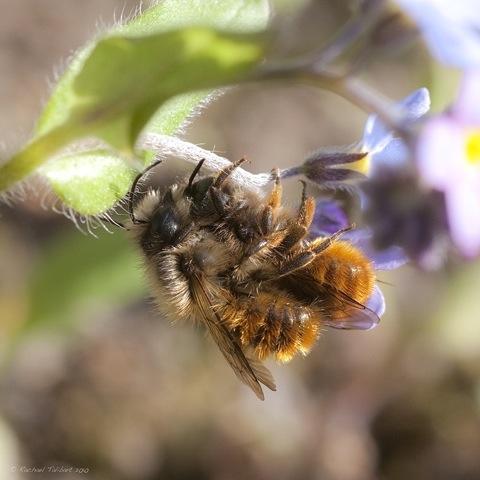
And, just to prove that they do appear in ones:
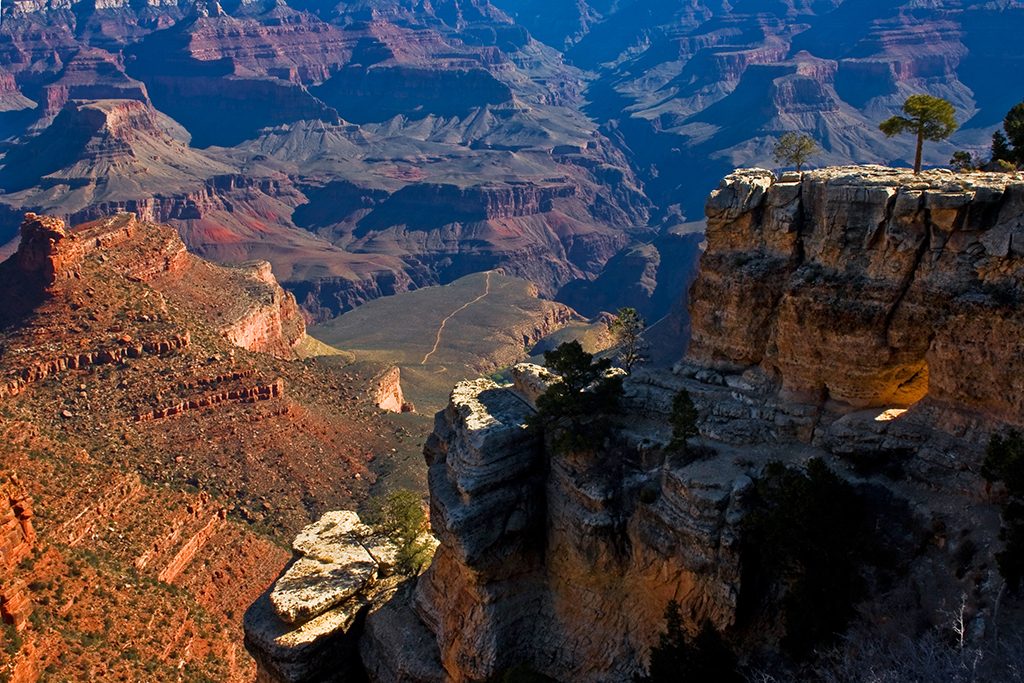
To celebrate Earth Day, here are some images I have taken over the years of our beautiful planet. The top one is, of course, the Grand Canyon.

Painted Desert, Arizona

Haleakala Crater, Maui

Monument Valley, Arizona and Utah

New earth forming, Volcanoes National Park, Hawaii
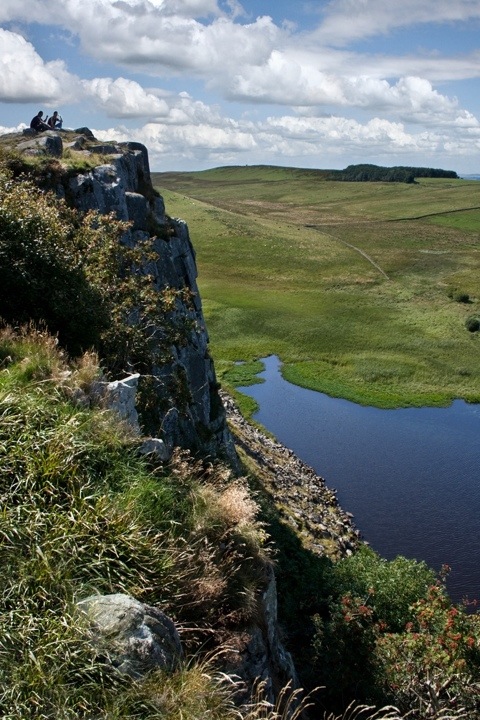
Northumberland National Park, England
The Olgas, Australia
Champagne Pools, Rotorua, New Zealand
A story in photographs.
(If you don’t like bugs you may want to look away now!)
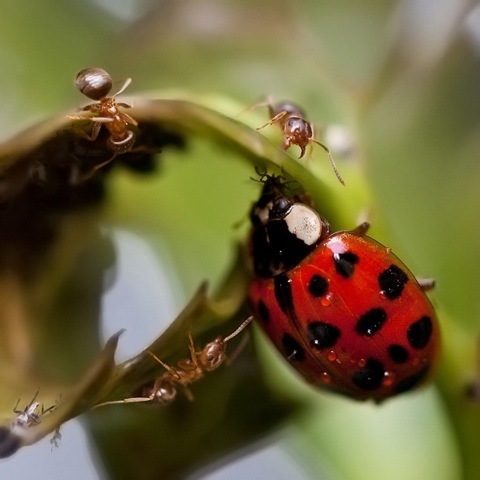
I took this image in my garden last summer. It is part of a story I told with my camera on Flickr over a few days. Here’s the whole thing:
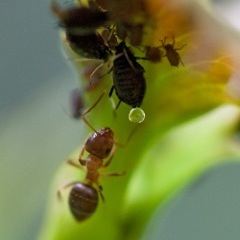
Some species of ant ‘milk’ aphids by stroking them with their antennae. This encourages the aphids to secrete a sticky substance known as honeydew which the ants eat. Here an ant is caught in the act of doing just that. The ants tend their aphid herds like shepherds, protecting them from predators.
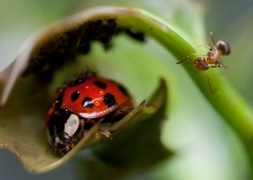
The next day a visitor has appeared. A hungry ladybird (ladybug to my American friends) can think of nothing better than this ready-prepared banquet of its favourite food, aphids. An angry ant-shepherd glares at this wolf in the fold.

A day later and the voracious ladybird is still laying siege to aphid city. The ant shepherd has brought in reinforcements but to no avail. The ladybird is like a Sherman tank and angry looks just aren’t going to work. If you look closely you can see an aphid’s legs sticking out of the ladybird’s mouth.

Another day later and the shepherds appear to have given up and left their flock to their fate. However, that is not the end of the story. The next day, there was no sign of the ladybird and the ants were back tending their flock as if nothing had ever happened.
Of course, really one should not anthropomorphise animals, but sometimes it is just too tempting.
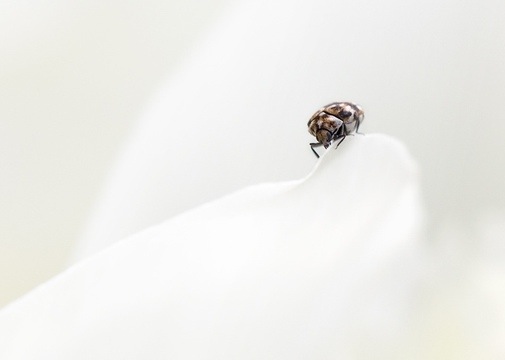
This photograph, taken in my garden, demonstrates a style of composition that I often adopt. Particularly when shooting insects, I strive to create simple images, with a bold use of negative space, to show that the subject is small but its world is big. As a viewer of images, I enjoy compositions that are pared down to the minimal, devoid of distracting elements. They are such a direct communication between the photographer and the viewer. At the same tme, they give space for the imagination to become involved.
Once again I find myself calling on John Ruskin as authority:
“It is a great advantage to the picture that it need not present too much at once, and that what it does present may be so chosen and ordered as not only to be more easily seized, but to give the imagination rest, and, as it were, places to lie down and stretch its limbs in; kindly vacancies, beguiling it back into action, with pleasant and cautious sequence of incident; all jarring thoughts being excluded, all vain redundance denied, and all just and sweet transition permitted.” (Modern Painters, Vol III, Part IV, Ch. X)
I have put together a small gallery of images by other photographers, in many different genres, that all display this approach to composition, masters of the art of kindly vacancies. Click here if you’d like to see.
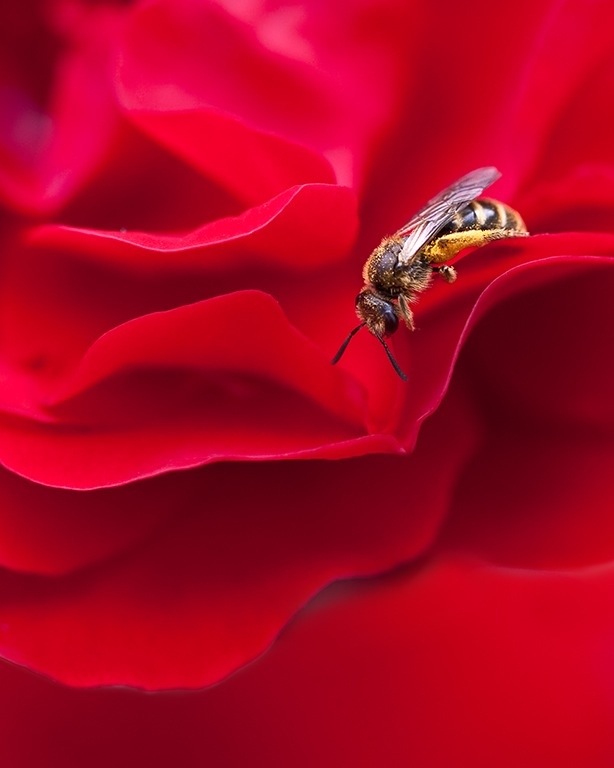
Rose explorer (a tiny bee explores a rose in my garden)
Macro is one of my favourite modes of photography, particularly when the subject is mini-beasts. Perhaps with this subject more than any other, photography has revealed to me a secret world. I try to find points of view that create the impression of seeing the macro landscape as an insect might. My subjects are photographed in natural light, as I find them. I will never move them or otherwise deliberately interfere in their behaviour. I certainly will not immobilise them by putting them in the fridge as many photographers do! If they fly/crawl away before I get my shot, then so be it; it’s part of the challenge. I prefer to show insects interacting with their environment rather than zooming in really close for a ‘scientific’ style of shot.
My family find it strange that I photograph bugs as I used to be afraid of them. Could another benefit of photography be phobia busting? (But I am still afraid of spiders – don’t tell!)
 Focused Moments